
Short Hairstyles for Men: The Complete Guide to Cuts, Texture, and Styling

Short hairstyles for men remain the most consistently requested category in barbershops for a simple reason: they offer a rare combination of low maintenance and genuine versatility. A well executed short cut can look sharp for the office, relaxed for the weekend, and polished for a night out, often with nothing more than a change in product or a few minutes with a comb. However, choosing the right short hairstyles for men involves more than picking a length face shape, hair texture, and fade placement all shape which version of a short cut will genuinely work.
This guide goes beyond a simple gallery of short hairstyles for men. It explains how hair texture and growth pattern should influence cutting decisions, along with details most articles skip entirely like why the exact same fade request can look completely different depending on hair density, and why certain short cuts actually require more regular maintenance than people expect. Whether you’re considering a short cut for the first time or refining one you already wear, this is the deeper, more practical guide.
Why Short Hairstyles for Men Need a Precise Cutting Approach
Short hairstyles for men require more precision than longer cuts, largely because there’s less length to disguise unevenness or hide a poorly blended fade. A slight inconsistency that would go unnoticed on longer hair becomes immediately visible on a short crop or fade, making barber skill and technique especially important for this category of cuts specifically.
This precision requirement matters because it directly affects which barbers can execute short hairstyles for men well. A barber experienced specifically in fades and precise short cutting techniques tends to produce noticeably cleaner, more polished results than one who primarily works with longer, more forgiving styles. This distinction is worth discussing during a consultation rather than assuming any barber can achieve the same sharp outcome.
A helpful example: someone requesting a skin fade from a barber unfamiliar with precise blending techniques might end up with visible lines or uneven gradients between lengths, even if the overall cut looked fine immediately after leaving the chair. Seeking a barber who specifically showcases fade work in their portfolio helps avoid this frustrating, all too common outcome among short hairstyles for men.
Because short hairstyles for men also grow out more visibly than longer cuts, regular trims become especially important, generally every 2–4 weeks depending on the specific style, since even minor growth can noticeably soften the sharp lines and fades that define this category of haircuts.
Related Content: https://magzyhair.com/short-layered-haircut-ideas/
Classic Crew Cut
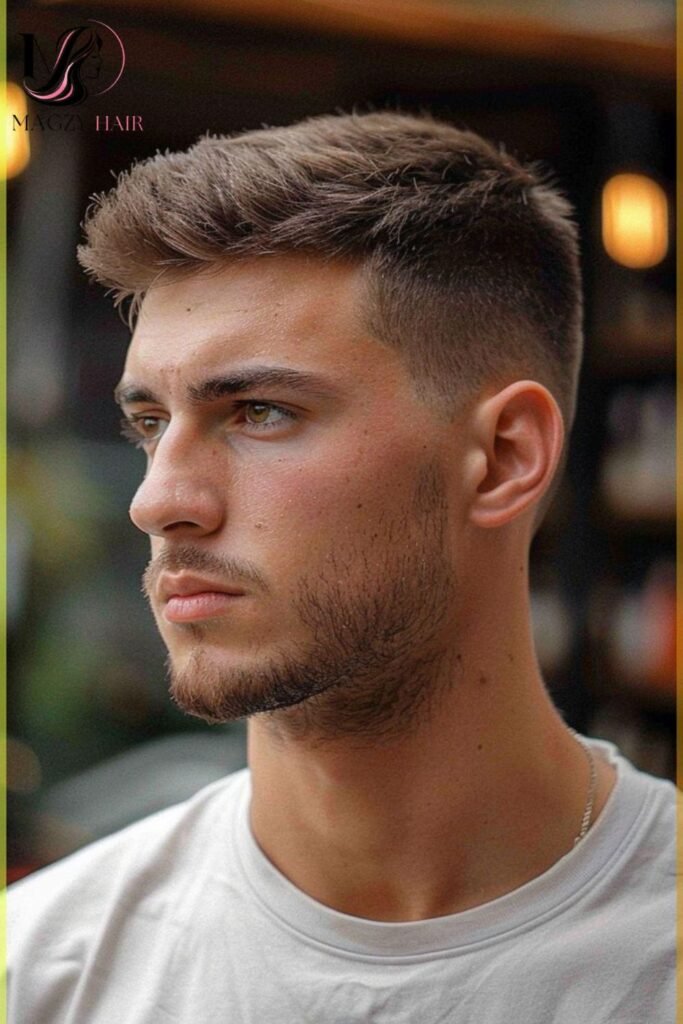
The classic crew cut remains one of the most timeless short hairstyles for men, featuring short, even length on top that gradually tapers into shorter sides and back. This style offers genuine versatility, working equally well in professional, athletic, and casual settings, which explains its enduring popularity across generations.
What distinguishes a well executed crew cut from a mediocre one is the taper technique connecting the top length to the shorter sides. A skilled barber blends this transition gradually, avoiding an abrupt line between the two lengths, creating a cohesive, polished shape rather than a cut that looks like two separate lengths simply placed next to each other.
A helpful example: someone with thick, coarse hair who requests a crew cut might need a slightly different top length than someone with fine, thin hair to achieve a comparably full, textured look, since hair density directly affects how much the top section can be styled upward. Discussing your specific hair density with your barber helps calibrate this classic style appropriately for your particular hair type.
This particular cut among short hairstyles for men also tends to require minimal daily styling effort, since the short, uniform length naturally holds its shape with just a small amount of product worked through with fingers.
Buzz Cut
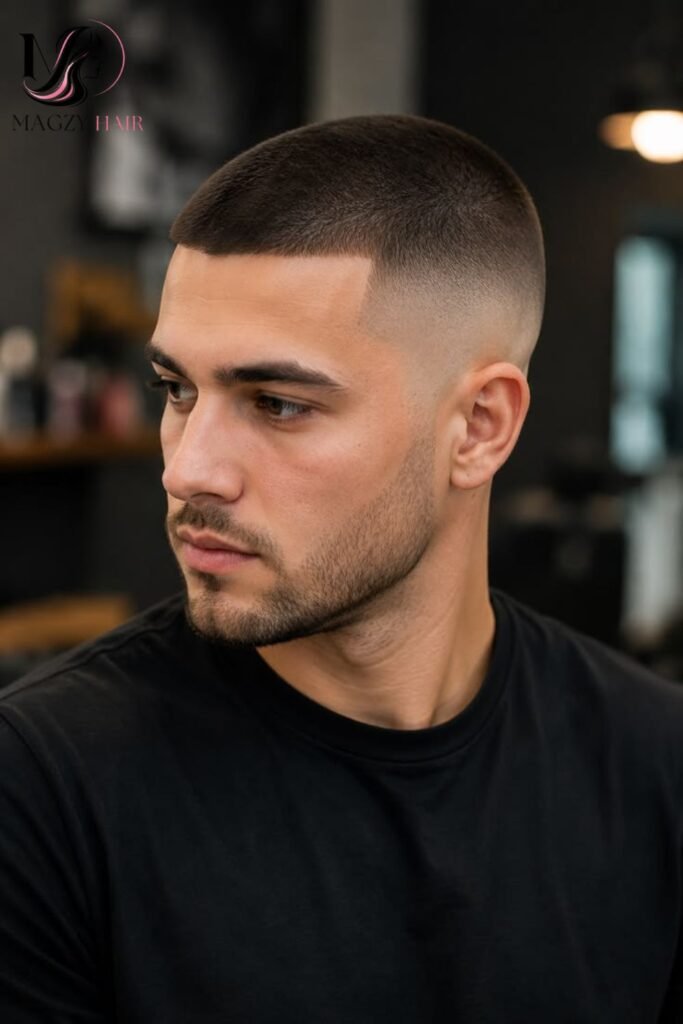
The buzz cut represents the most minimal maintenance option among short hairstyles for men, using clippers set to a uniform length across the entire head with no distinct sections or blending required. This style offers genuine practicality for those wanting to eliminate daily styling entirely, requiring essentially no products or tools beyond the initial cut itself.
Despite its apparent simplicity, achieving a genuinely clean buzz cut still requires attention to detail, particularly around the ears, neckline, and hairline, where uneven trimming becomes immediately obvious given the uniform length throughout the rest of the head. A skilled barber pays particular attention to these edges, ensuring clean, sharp lines rather than a rushed, uneven finish.
A practical example: someone attempting to maintain their own buzz cut at home between barbershop visits often finds the most common mistake involves rushing the edges around the ears and neckline, areas that require more careful attention than the flat, uniform top and sides. Taking extra time specifically on these edge areas helps maintain a polished look between professional trims.
This style also tends to work particularly well for those with receding hairlines or early thinning, since the uniform, very short length minimizes the visual contrast between areas of different density that longer short hairstyles for men sometimes emphasize.
Textured Crop
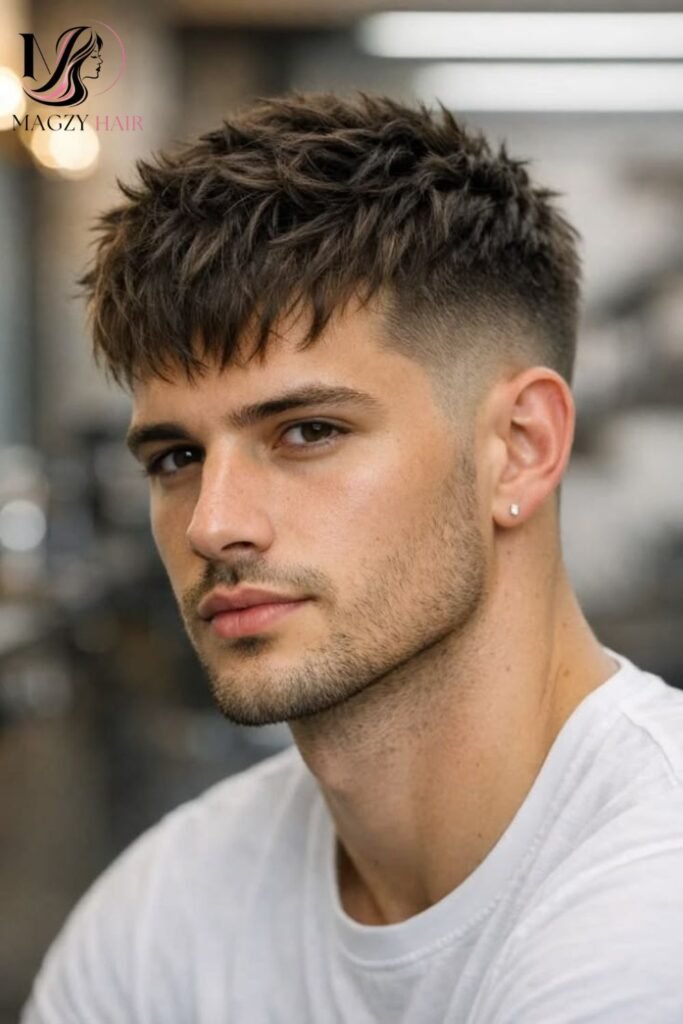
The textured crop brings deliberate, piece-y texture to short hairstyles for men, using point cutting or razor work throughout the top to create separation and movement rather than a smooth, uniform surface. This technique has grown significantly in popularity, offering a more modern, textured alternative to classic, smoother short cuts.
Achieving genuine texture rather than simply choppy, uneven looking hair requires controlled, strategic cutting technique applied specifically to create intentional separation. A skilled barber texturizes methodically, checking the overall effect periodically, rather than cutting the entire top in one continuous, unchecked pass.
A helpful example: someone with naturally straight, fine hair who requests heavy texturizing might need a lighter touch than someone with thicker, coarser hair, since fine hair shows aggressive texturizing more dramatically and can end up looking overly thin if the technique isn’t calibrated appropriately. Discussing your specific hair density helps your barber adjust the intensity of texturizing accordingly.
This particular style among short hairstyles for men also tends to require minimal daily styling, since the built in texture already provides movement and separation that a completely smooth, unlayered cut would otherwise require additional product and effort to achieve.
Undercut With Longer Top
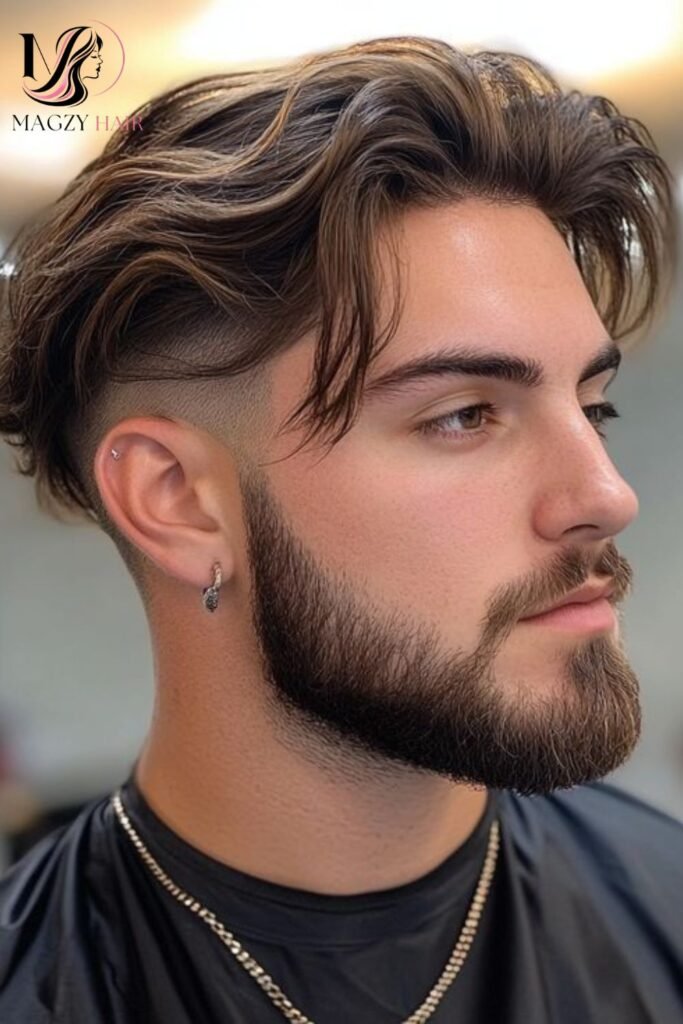
The undercut pairs very short, often shaved sides and back with noticeably longer hair on top, creating one of the more dramatic contrasts among short hairstyles for men. This combination offers significant styling versatility, since the longer top section can be styled in numerous ways, from slicked back to textured and messy, while the shorter sides remain low maintenance.
This style requires more precise blending than a standard fade, since the dramatic length difference between the shaved sides and longer top needs careful transition to avoid looking like two disconnected sections rather than one cohesive cut. A skilled barber creates a gradual, well blended transition even within this more dramatic style.
A helpful example: someone with thick, heavy hair on top might find their undercut requires more frequent thinning of the top section to prevent it from looking overly bulky or difficult to style, while someone with finer hair might need the opposite approach, maintaining more length and weight to avoid a sparse, thin appearance. Communicating your specific hair density helps your barber calibrate this particular style appropriately.
Maintenance for the undercut requires attention to two different growth rates, since the shaved or closely cropped sides need trimming more frequently than the longer top, generally every 3–4 weeks to maintain the sharp, intentional contrast this style depends on.
Slick Back
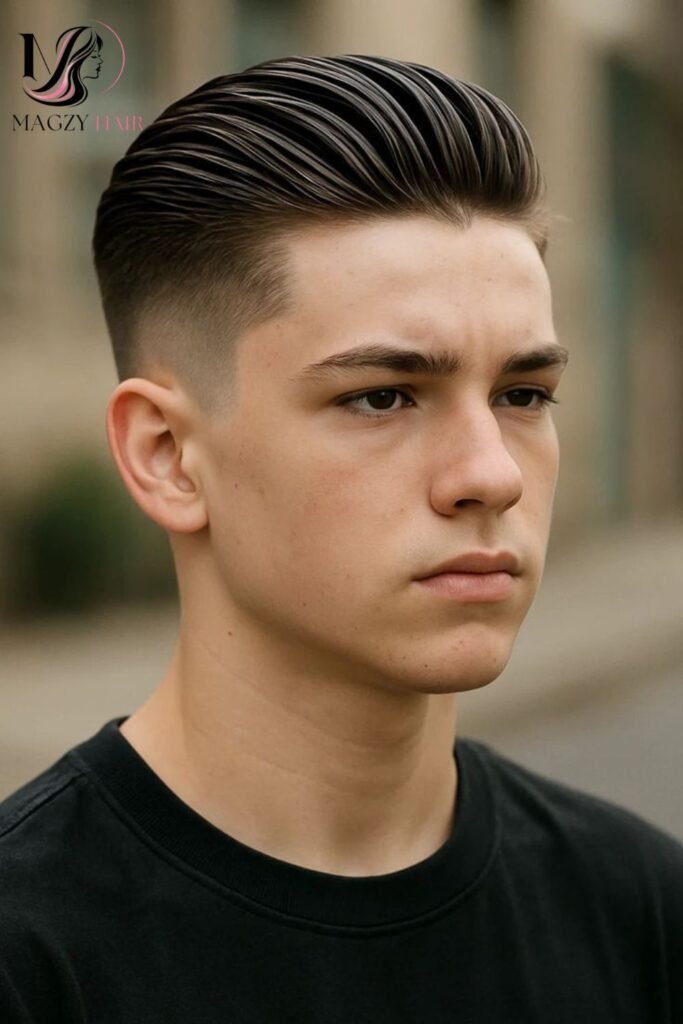
The slick back styles hair straight back from the forehead using a strong hold product, creating a polished, sophisticated look among short hairstyles for men that works particularly well for professional or formal settings. This style typically requires the top section to have enough length to actually sweep backward, meaning it often pairs with a shorter fade or undercut on the sides.
Achieving a genuinely polished slick back requires product specifically formulated for strong hold and shine, rather than a matte, texturizing product designed for a more casual, disheveled look. Applying product to damp hair, then combing straight back while blow drying, typically produces the smoothest, most controlled finish this particular style depends on.
A helpful example: someone attempting a slick back with a lightweight, matte product designed for textured styles often finds their hair doesn’t hold the smooth, controlled shape throughout the day, since that product type simply isn’t formulated for this level of hold and control. Switching to a proper pomade or strong hold gel specifically resolves this common styling mismatch among short hairstyles for men.
This style also tends to photograph particularly well for formal occasions, given its clean, structured silhouette, making it a popular choice for weddings, professional events, and other situations calling for a more elevated take on short hairstyles for men.
Fade With Textured Top
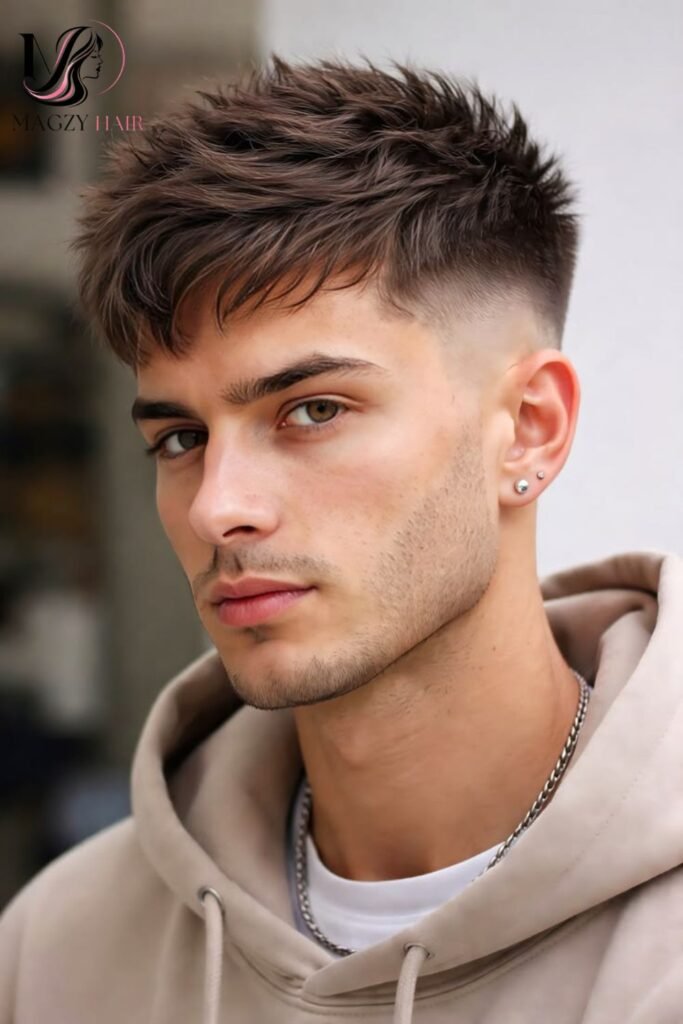
The fade, whether low, mid, or high, gradually transitions from very short at the neckline and sides to longer length toward the crown, creating one of the most requested categories among short hairstyles for men today. Pairing this technique with a textured top, rather than a smooth, uniform length, adds contemporary movement and dimension to the overall style.
The specific placement of the fade, low, mid, or high on the head, significantly changes the overall look and should be chosen based on personal preference alongside face shape and hair density. A low fade offers a more subtle transition, while a high fade creates a bolder, more dramatic contrast between the shaved sides and the textured length on top.
A practical example: someone with a rounder face shape might find a higher fade helps create the illusion of added height and a more elongated appearance, while someone with a longer face shape might prefer a lower fade to avoid emphasizing additional vertical length. This face shape consideration is a detail many general guides overlook when discussing short hairstyles for men and fades specifically.
Maintenance for a fade requires particularly frequent trims among short hairstyles for men, generally every 2–3 weeks, since the gradual blend softens and loses its crisp definition more quickly than other short cut variations as hair grows.
Side Part
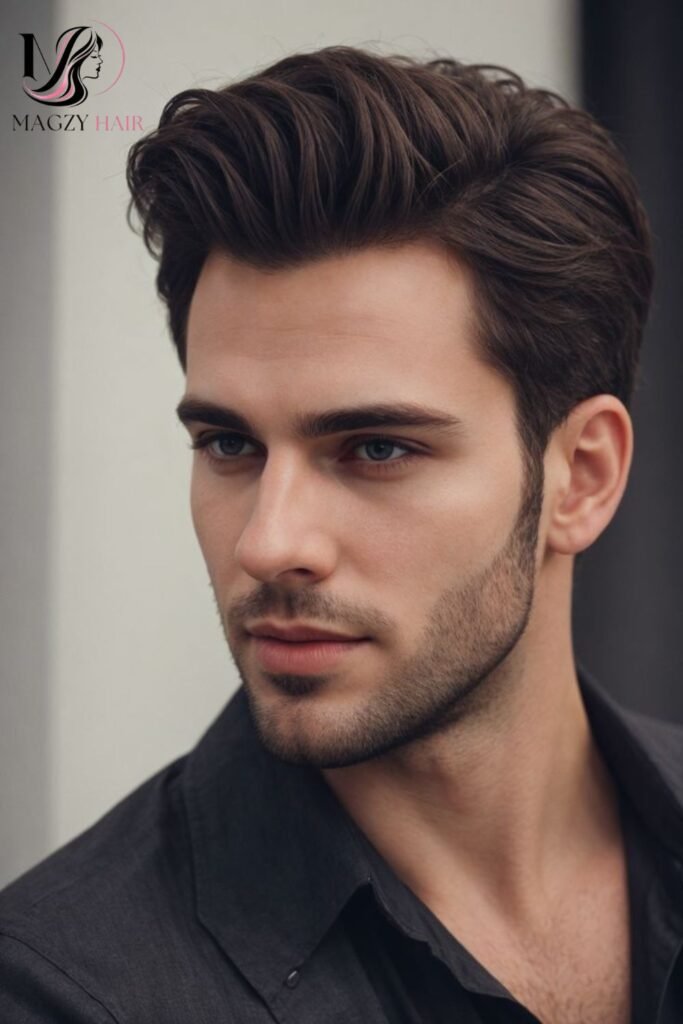
The side part brings a classic, deliberate part line to short hairstyles for men, creating a polished, structured look that works well for both professional settings and more casual, put together everyday styling. This style typically pairs a defined part with a moderate length on top, styled to one side rather than straight back or left loose and textured.
Achieving a clean, defined side part requires the hair to have enough length and appropriate product to hold the deliberate shape throughout the day, generally a light to medium hold pomade or cream applied to damp hair before combing the part into place and blow drying to set the shape.
A helpful example: someone with naturally wavy or textured hair attempting a crisp side part might find their natural texture fights against the smooth, defined line this style depends on. A slightly stronger hold product, along with a comb rather than fingers to create the initial part, typically helps textured hair achieve the same clean definition straighter hair produces more naturally among short hairstyles for men.
This style also tends to work well paired with a fade or tapered sides, creating a cohesive, polished silhouette that photographs particularly well for professional headshots and formal occasions.
French Crop
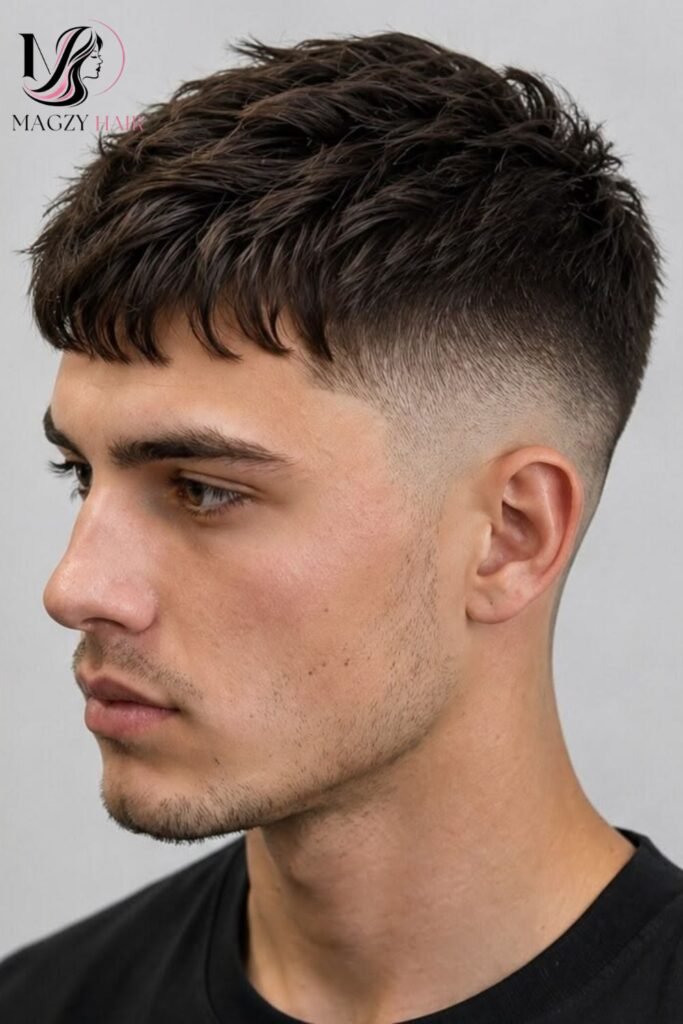
The French crop combines short, tapered or faded sides with a slightly longer, textured fringe left at the front, creating a distinctive, contemporary look among short hairstyles for men. This style differs from a standard crop by specifically emphasizing the front section, which is typically styled forward or textured rather than swept back or to the side.
This particular cut works especially well for those with naturally straight to slightly wavy hair, since the front fringe relies on some manageable texture to achieve the desired forward, slightly tousled effect without looking flat or overly structured. Very curly hair can still work with this style, though the front section may need more product to achieve the intended shape.
A helpful example: someone with naturally curly hair attempting a French crop might find their front section curls upward rather than laying forward as intended, requiring a stronger hold, curl taming product specifically to achieve the classic forward styled fringe this particular cut is known for. Discussing your natural texture with your barber helps set realistic styling expectations for this style among short hairstyles for men.
Maintenance for the French crop requires attention to both the fade and the front fringe separately, since these two sections often need different trimming schedules to maintain their intended contrast and shape.
Short Pompadour
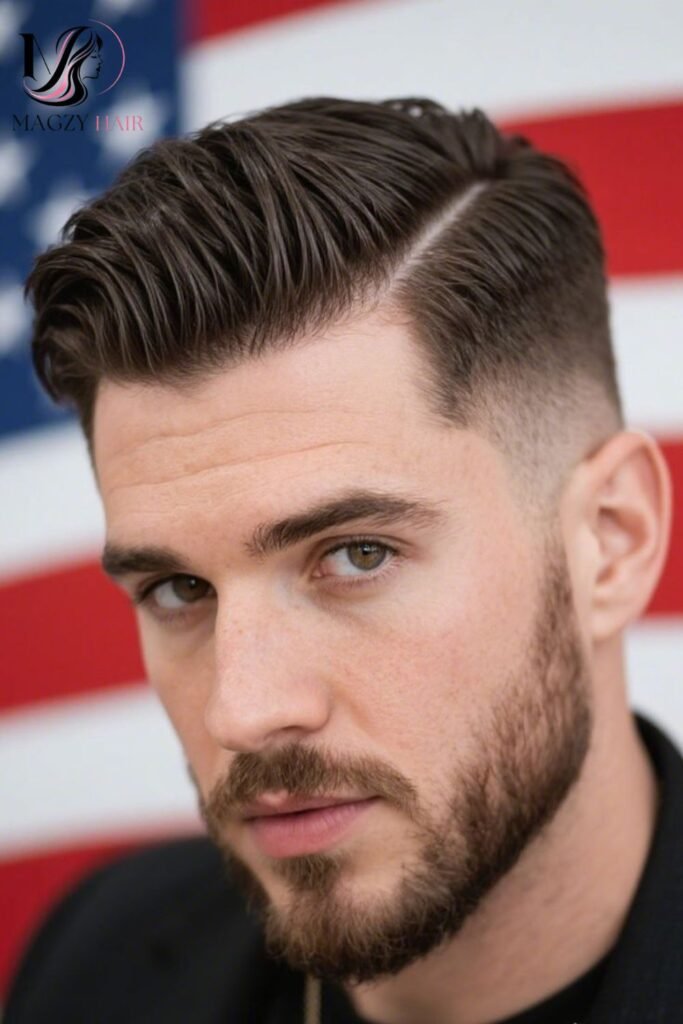
The short pompadour offers a more compact take on the traditional pompadour style, maintaining the signature swept back volume at the front while keeping the overall length shorter and lower maintenance than the classic, more dramatic version. Among short hairstyles for men, this style provides a distinctive, retro inspired silhouette without requiring extensive daily styling time.
Achieving genuine volume and lift at the front requires both adequate length in that specific section and a strong hold, volumizing product applied to the roots before blow drying the hair upward and back. This combination of cutting technique and styling product works together to create the signature pompadour shape.
A helpful example: someone with fine, thin hair attempting a pompadour might find achieving lasting volume more challenging than someone with thicker hair, since fine hair naturally holds less lift throughout the day. Using a lightweight volumizing powder at the roots before the main styling product can help fine haired individuals achieve more lasting height with this particular style among short hairstyles for men.
This style also tends to pair particularly well with a fade or tapered sides, creating contrast that emphasizes the volume and height at the front, a combination that has become increasingly popular in modern interpretations of this classic look.
Caesar Cut
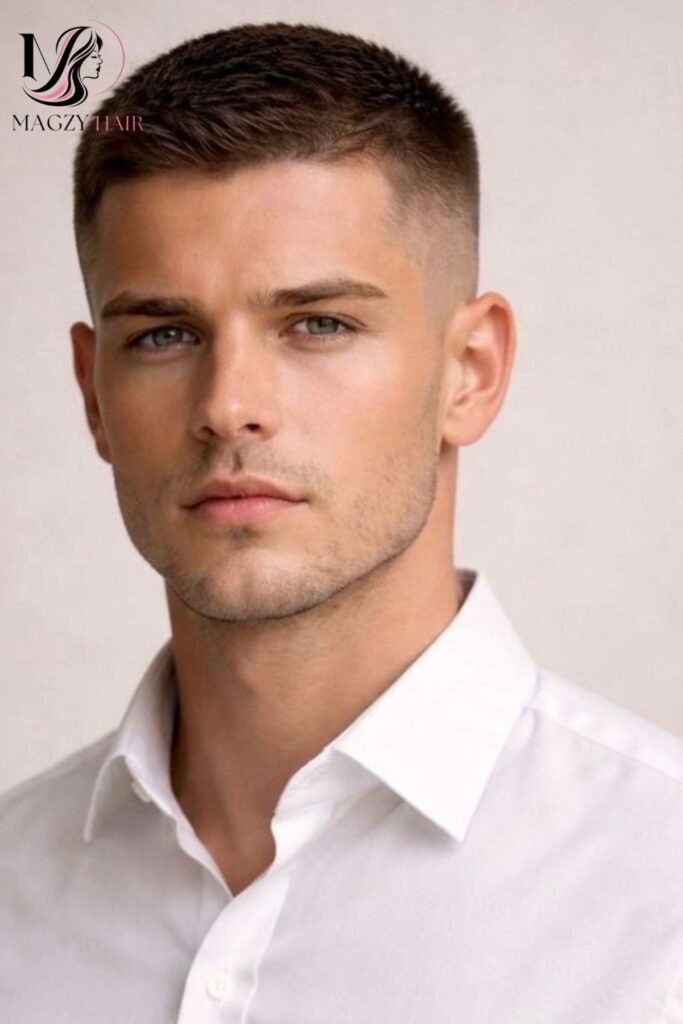
The Caesar cut features short, horizontally fringed bangs combined with closely cropped sides, creating a distinctive, low maintenance silhouette among short hairstyles for men that has remained popular for decades. This style works particularly well for those wanting a short cut with a bit of texture at the front, without the styling commitment a longer fringe or crop might require.
This particular cut tends to be genuinely one of the lowest maintenance styles on this list, since the uniform, short length throughout requires minimal daily product or styling time. A small amount of texturizing paste worked through with fingers typically completes the look, making it a practical choice for those wanting a polished appearance without an extensive morning routine.
A helpful example: someone new to short hairstyles for men and unsure where to start might find the Caesar cut offers an accessible entry point, combining classic, easy to maintain styling with enough texture and shape to still feel distinctly stylish rather than purely utilitarian. This balance of simplicity and style is part of why the cut has remained a consistent choice across changing trends.
Maintenance for the Caesar cut generally requires trims every 3–4 weeks to maintain the short, uniform length and crisp fringe that define this particular style’s silhouette.
Curly or Textured Short Cut
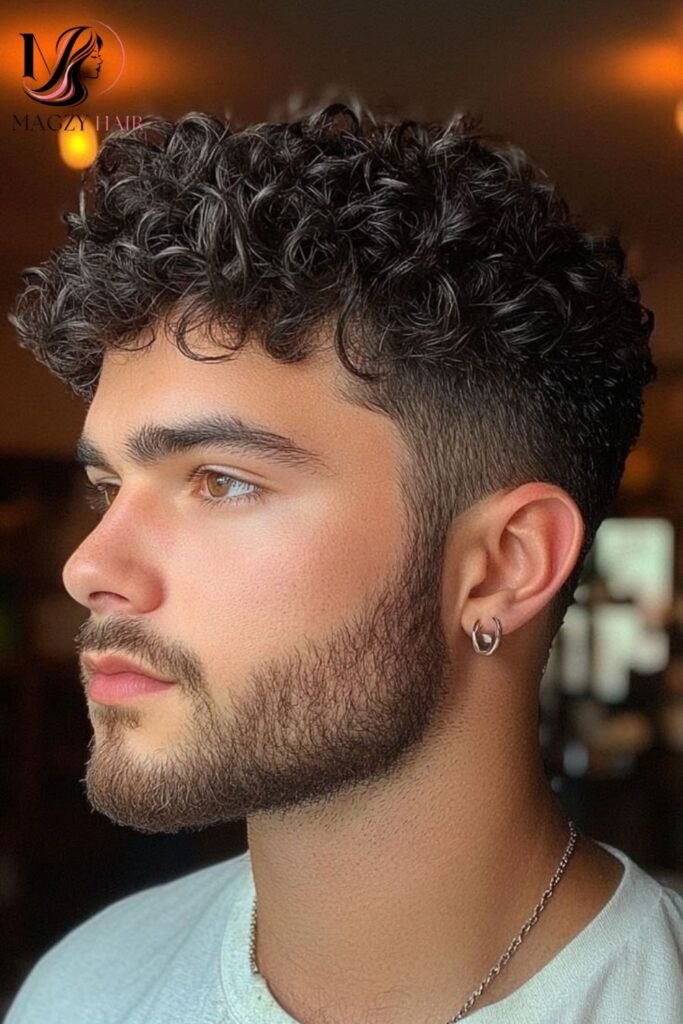
Short hairstyles for men with naturally curly or textured hair require a distinct cutting approach, since curl pattern significantly affects how length behaves once cut, often appearing shorter than intended once curls fully spring into their natural shape. A barber experienced specifically with curly hair typically accounts for this shrinkage when determining how much length to leave throughout the cut.
Embracing natural curl or wave pattern, rather than fighting it with heavy styling products or heat tools, tends to produce more genuinely low maintenance results for this hair type specifically. Many barbers now recommend cutting curly hair while dry, allowing them to see exactly how each curl falls and behaves before making final cutting decisions.
A helpful example: someone with naturally curly hair who has always had their hair cut wet and stretched, using techniques designed for straight hair, might find their curls spring up shorter and less predictably than intended. Seeking a barber specifically experienced in cutting curly and textured hair helps achieve more consistent, flattering results among short hairstyles for men with this specific texture.
Styling curly short cuts typically involves a lightweight curl cream applied to damp hair, then air drying, allowing the natural texture to define itself rather than relying on heavy products or heat styling that can disrupt the curl pattern this particular cut is designed to showcase.
Comb Over Fade
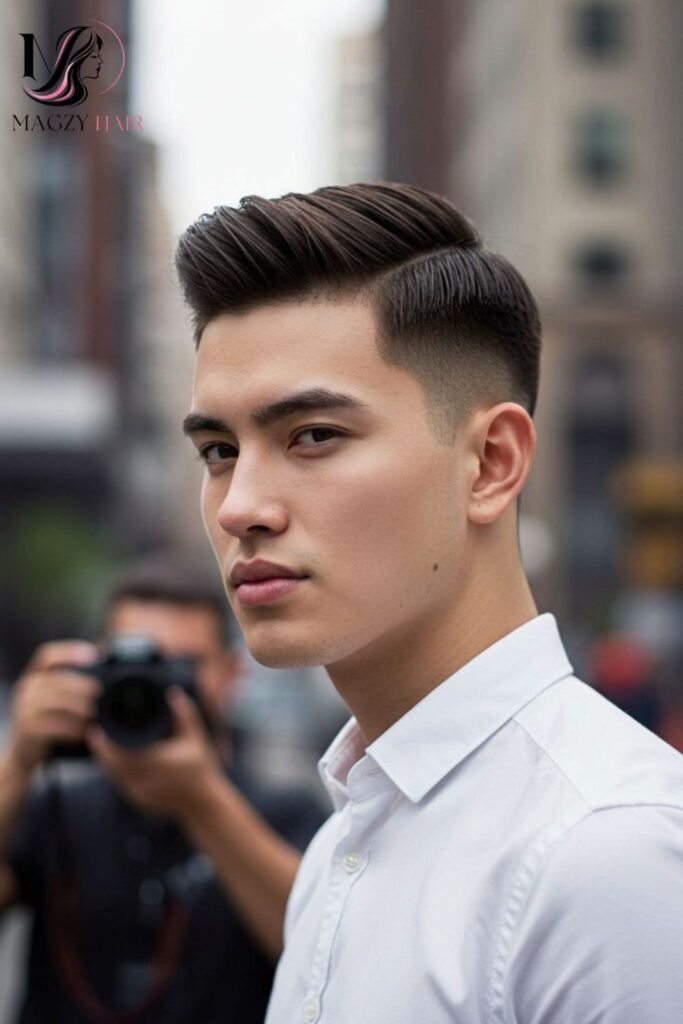
The comb over fade combines a classic, side swept comb over on top with a modern, gradual fade on the sides, blending traditional and contemporary elements among short hairstyles for men. This combination offers a polished, sophisticated look that works well for both professional settings and more casual, everyday styling, depending on how much product and structure is applied.
This style requires enough length on top specifically for the classic comb over sweep to actually work, meaning the top section typically needs more length than a standard fade with a shorter, uniform top would require. A skilled barber calibrates this length specifically to support the desired comb over shape once fully styled.
A helpful example: someone with a receding hairline considering a comb over fade might worry the style will emphasize this concern, though a skilled barber can often adjust the specific comb over angle and fade height to work with, rather than against, an existing hairline pattern. This is a detail worth discussing directly during a consultation for this particular style among short hairstyles for men.
Maintenance for the comb over fade requires regular trims, generally every 2–3 weeks, to maintain both the crisp fade and the appropriate length balance the comb over styling depends on.
Low Maintenance Textured Quiff
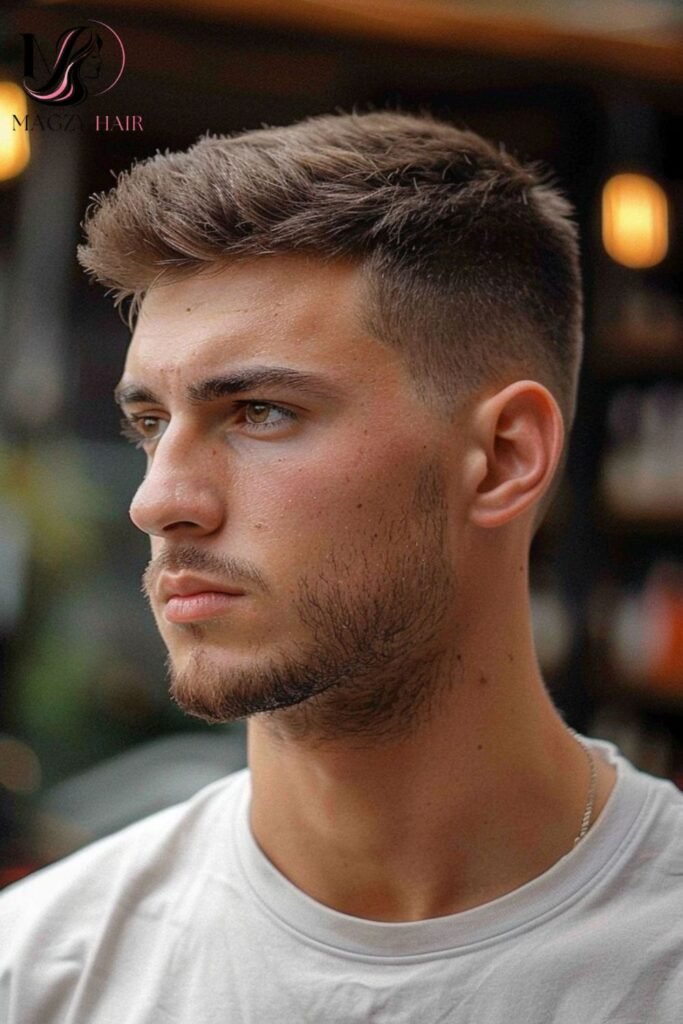
The textured quiff brings soft volume and forward movement to the front of the hair, paired with shorter, often faded sides, creating a versatile, moderately low maintenance style among short hairstyles for men. Unlike the more structured pompadour, the quiff embraces a softer, more textured finish that doesn’t require as much precise styling to look intentional.
Achieving this look typically involves a lightweight to medium hold texturizing product worked through damp hair, then blow dried upward and slightly forward at the front, creating soft volume without the polished, controlled finish a slicked back style or classic pompadour requires.
A helpful example: someone wanting the volume and visual interest of a pompadour but without its more demanding daily styling routine often finds the textured quiff offers a genuinely practical middle ground, providing meaningful height and movement with considerably less product and time investment. This makes it one of the more versatile, everyday friendly options among short hairstyles for men.
This style also tends to grow out relatively gracefully compared to more precisely structured options, since its inherently textured, less rigid shape doesn’t rely on an exact length or sharp line to maintain its overall silhouette between barbershop visits.
Choosing Short Hairstyles for Men by Face Shape
Face shape plays a significant role in which short hairstyles for men look most flattering, a detail often overlooked in generic style roundups. Round faces tend to benefit from styles with more height at the crown, like a pompadour or textured quiff, since added vertical volume helps elongate the face rather than emphasizing its width.
Square faces generally look best with textured, slightly softer styles rather than very sharp, geometric cuts, since some natural movement helps balance a strong, angular jawline rather than emphasizing it further. Oval faces tend to have the most flexibility among short hairstyles for men, generally suiting nearly any style discussed in this guide without significant adjustment.
A helpful example: two men requesting the “same” fade from a reference photo may need genuinely different top length and styling to achieve an equally flattering result, simply because their face shapes differ significantly. This is why clearly communicating your face shape and specific priorities to your barber leads to a far more personalized, satisfying outcome than a reference photo alone can provide.
For longer face shapes specifically, a lower fade combined with more width at the sides, rather than significant height on top, tends to create better overall facial proportion, an important consideration many people overlook when choosing among short hairstyles for men.
Common Mistakes to Avoid With Short Hairstyles for Men
One of the most frequent mistakes is choosing a barber without specific experience in precision fading and short cutting techniques, leading to uneven blends or inconsistent lines. Reviewing a barber’s portfolio specifically for short, faded styles, rather than assuming any barber can execute this well, helps avoid this common and frustrating outcome.
Another common error involves skipping regular trims, since short hairstyles for men rely on maintained precision to look intentional, and growing hair softens defined fades and lines considerably faster than it would on longer, more layered cuts. Regular trims, generally every 2–4 weeks depending on the specific style, help maintain the sharp shape these cuts depend on.
Using the wrong product type for a specific style is another frequently repeated mistake, since a lightweight, matte texturizing product won’t achieve the smooth control a slick back requires, and a heavy, strong hold pomade can look overly stiff on a style meant to look textured and natural. Matching product choice to the specific style helps short hairstyles for men look as intended.
Finally, neglecting scalp and hair health specifically because a cut is short is a mistake worth avoiding, since short hairstyles for men still benefit from regular conditioning and scalp care, particularly for those with fades where scalp visibility makes any dryness or irritation more noticeable.
The Future of Short Hairstyles for Men
Short hairstyles for men continue to evolve alongside broader advances in precision cutting tools and barber training specifically focused on fade technique and texture work. As more barbershops invest in specialized education around exact, blended cutting methods, the historically common problem of visibly uneven fades is becoming less frequent, particularly among barbers who pursue continued education in these specific techniques.
There’s also a noticeable shift toward more personalized customization within this category, with more barbers discussing subtle variations in fade height, texture intensity, and top length as legitimate options tailored to individual face shape and hair type, rather than applying a single, generic version of any given style.
Product technology is advancing alongside this trend as well, with more brands developing formulations specifically suited to different hair textures and styling goals, from lightweight texturizing products for natural, undone looks to stronger hold formulas for more structured, polished styles among short hairstyles for men.
Looking ahead, digital tools like AI based style previews are beginning to help men visualize how different short hairstyles might specifically suit their face shape and hair texture before committing to a cut. This kind of technology assisted planning could meaningfully reduce the uncertainty many people feel when considering a new short style, particularly given how much these cuts depend on precise technique and personalized fit.
Conclusion
Short hairstyles for men offer genuine versatility once you understand how face shape, hair texture, and cutting technique work together. From the classic crew cut to a modern textured crop, there’s an option here suited to nearly every lifestyle and personal style. The key is choosing a skilled barber who understands precision cutting and fading. Ready to try one of these short hairstyles for men Bring this guide to your next appointment and start the conversation with your barber.
Ayesha Noor is the founder and lead writer behind Magzy Hair. With 4 years of experience researching hairstyles, hair care, and beauty trends, she enjoys helping readers discover styles that suit their unique personality and lifestyle.


