
Thick Wavy Haircuts: The Complete Guide to Styles, Cuts, and Care

Thick wavy hair is often called a “blessing and a curse” and anyone who has it knows exactly why. It has volume most people pay salons for, yet it can feel unruly, heavy, or hard to shape without the right cut. The good news is that thick wavy hair responds beautifully to the right technique. With the correct haircut, it can look effortlessly styled, full of movement, and low maintenance at the same time.
This guide breaks down the best thick wavy haircuts, cutting techniques, and styling insights that most articles skip over. Instead of generic “10 haircuts to try” lists, you’ll get practical, expert level reasoning behind why certain cuts work for thick wavy textures and how to talk to your stylist so you actually leave the salon happy.
Why Thick Wavy Hair Needs a Different Cutting Approach
Thick wavy hair behaves differently under the scissors than straight or fine hair. Because each strand carries more weight and the wave pattern creates uneven density, a standard blunt cut often turns into a heavy, triangle shaped mass rather than soft, bouncy layers. Stylists trained in texture cutting understand that thick wavy hair needs weight removed strategically, not evenly, to let the natural wave show instead of getting weighed down.
A common mistake is cutting thick wavy hair while it’s wet and stretched straight. This hides the true wave pattern, and the cut often looks uneven once the hair dries and springs back into shape. Experienced stylists now recommend a hybrid approach: cutting on damp hair, then checking the shape dry before finalizing layers. This small step makes a massive difference in how natural the final result looks.
Another overlooked factor is porosity. Thick wavy hair is often more porous at the ends due to years of heat or environmental exposure, which changes how it falls after cutting. A skilled stylist will factor this in, sometimes leaving slightly more length at the ends to account for how the hair will “settle” over the following weeks. This is the kind of detail salons rarely explain, but it directly affects how long a haircut looks good.
Understanding these mechanics before your appointment helps you communicate better with your stylist. Instead of just saying “I want layers,” you can say “I want the weight removed without losing density,” which immediately signals that you understand your hair type. This small shift in vocabulary often leads to noticeably better results.
Long Layers: The Most Requested Thick Wavy Haircut

Long layers remain the most popular cut for thick wavy hair, and for good reason. Removing internal weight while keeping the overall length allows the wave pattern to move freely instead of being crushed under bulk. This creates a shape that looks full without appearing bulky, which is the exact balance most people with thick wavy hair are searching for.
The key to long layers working well is where the first layer starts. Starting too high near the crown can create unwanted poof, while starting too low may barely reduce weight at all. Most experienced stylists begin the first layer around cheekbone to jaw level, which softens the face and lets the wave pattern cascade naturally from the mid length down.
A useful real world example: someone with dense, medium length wavy hair often complains their hair “looks like a triangle.” This typically happens because the bottom third holds too much unremoved weight. Long layers fix this by thinning the interior sections without shortening the visible length, instantly making the silhouette look more rounded and intentional rather than boxy.
Long layers also age well between appointments. Because the cut relies on internal shaping rather than a precise blunt line, small amounts of regrowth don’t disrupt the overall shape. This makes it a smart choice for people who want a low-maintenance schedule, often stretching to 10-12 weeks between trims without losing the style’s integrity.
The Shag Cut: Why It’s Perfect for Thick Wavy Texture
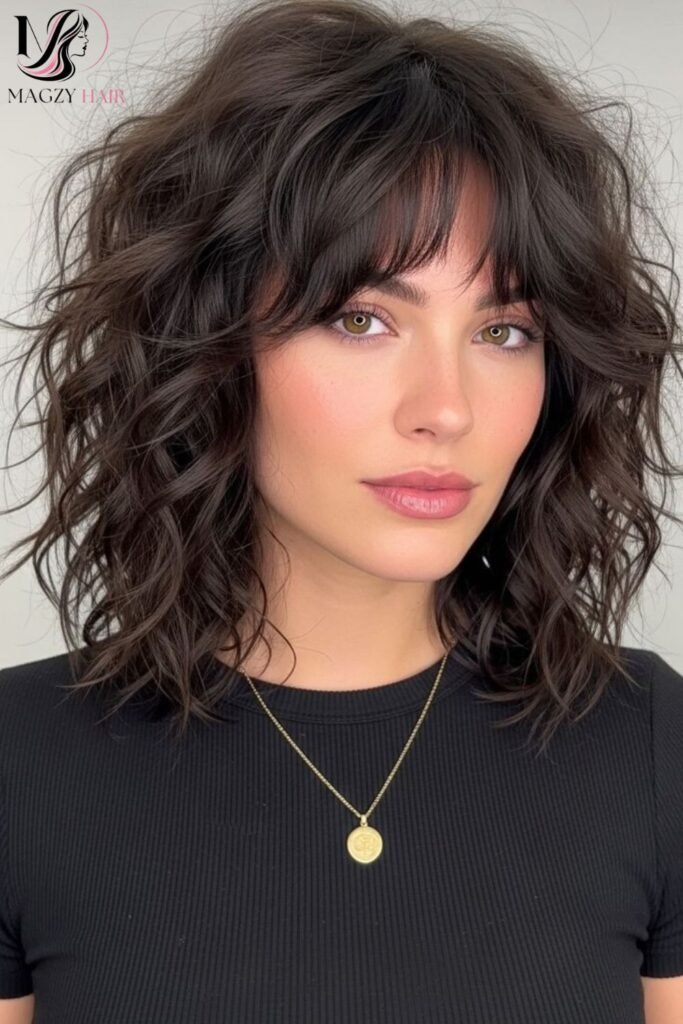
The modern shag haircut has made a strong comeback, and thick wavy hair is arguably the best texture for it. Shags rely on heavily textured, choppy layers throughout the head, which naturally complements the irregular movement of wavy hair. Instead of fighting the wave pattern, this cut is built around it, making styling faster and more forgiving.
What makes a shag work specifically for thick hair is the razor or point-cutting technique used to remove bulk at the ends. This softens the hair’s natural thickness without making it look thin, creating that “lived-in” texture seen in editorial styling. For thinner wavy hair, this same cut can look sparse but on thick strands, it creates exactly the right amount of controlled chaos.
A mini scenario worth noting: many people with thick wavy hair avoid bangs because they fear added bulk on the forehead. However, shag-style curtain bangs are cut with heavy texturizing, which prevents the thick, blocky look often associated with traditional fringe. This is a detail most generic haircut lists never mention, yet it’s often the deciding factor in whether bangs work for a thick haired client.
Shags also require less daily styling effort. Because the layers are already textured, wavy hair tends to fall into place with minimal product usually just a curl cream and air-drying. This makes it an excellent option for people who want a stylish look without a lengthy morning routine.
Butterfly Layers: A Newer Trend That Suits Thick Waves
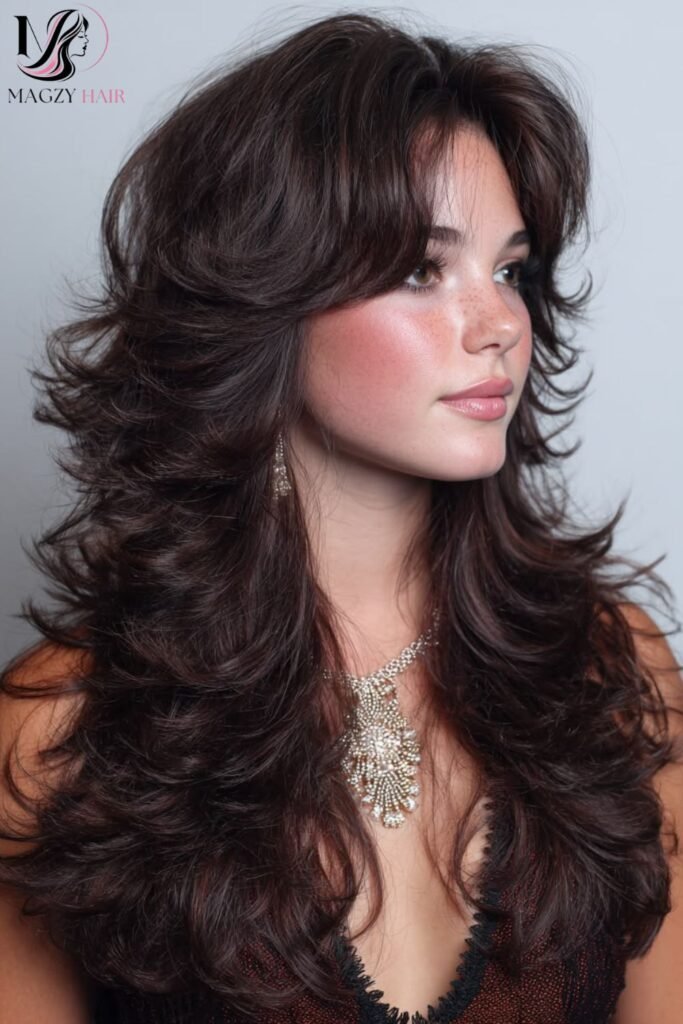
Butterfly layers are a newer, more dramatic layering technique that has quickly gained popularity for thick wavy hair. Unlike traditional long layers, butterfly layers are cut shorter and closer to the face, framing the cheekbones while leaving the back length mostly intact. This creates a striking contrast between structured framing layers and flowing length behind them.
For thick wavy hair specifically, butterfly layers solve a common problem: excess volume around the jawline that makes the face look wider than intended. By removing weight strategically near the front, this cut slims the face shape while still keeping the overall thickness and length most people want to preserve. It’s a technique that requires precision, so it’s best done by a stylist experienced in texture-specific cutting.
One nuance competitors rarely mention is timing. Butterfly layers on thick wavy hair take slightly longer to “settle” into their intended shape, often needing two to three wash cycles before the wave pattern fully reveals the layering. Clients who judge the cut immediately after leaving the salon sometimes feel disappointed, not realizing the true shape emerges once the hair dries naturally at home.
This cut pairs especially well with curl enhancing styling products, since the shorter framing pieces benefit from defined, bouncy movement. Diffusing with a curl cream, rather than air-drying alone, tends to bring out the full effect of butterfly layers on thick wavy strands, making the framing pop against the longer back sections.
Curtain Bangs for Thick Wavy Hair: What Actually Works
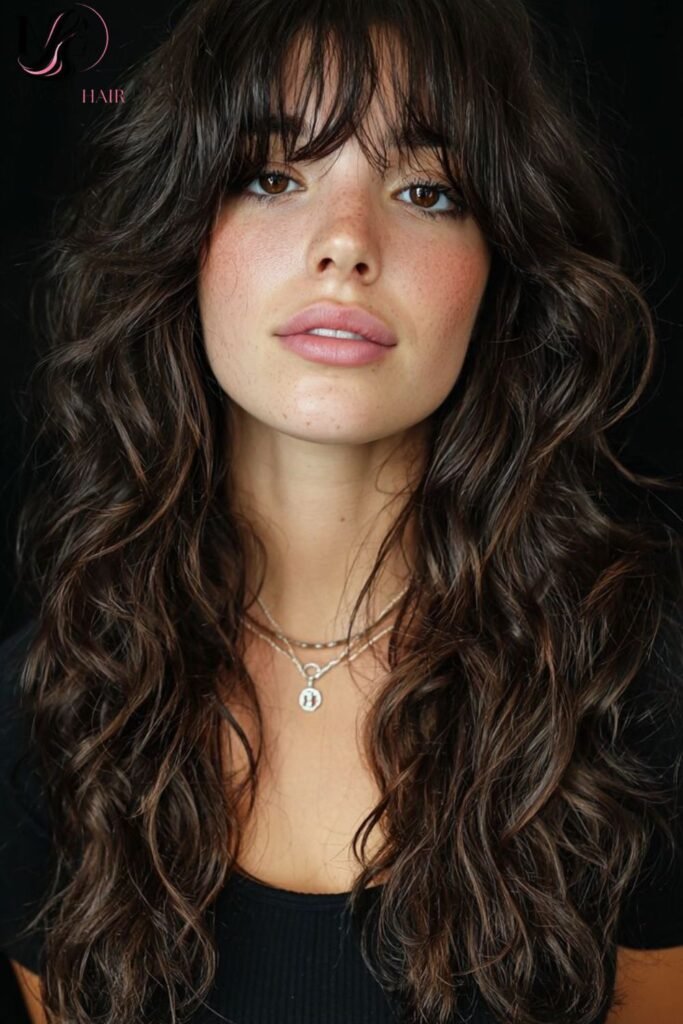
Curtain bangs are one of the most requested additions to thick wavy haircuts, but they’re also frequently cut incorrectly for this texture. The biggest issue is that stylists sometimes cut curtain bangs the same way for every hair type, forgetting that thick wavy hair expands significantly once it dries and the wave pattern activates. What looks perfectly parted and soft when wet can look thick and stubborn once fully dry.
To avoid this, experienced stylists cut curtain bangs on thick wavy hair slightly longer than they would for straight hair, anticipating the natural shrinkage and outward movement waves create. They also point-cut the ends heavily to prevent a blunt, heavy line across the forehead, which can look disproportionate on thicker textures.
A practical example: someone with fine, straight hair might get curtain bangs that reach the eyebrows and stay put. On thick wavy hair, that same length often springs upward and outward within a day, landing higher and wider than expected. This is why length adjustments and texturizing are essential steps that generic tutorials tend to overlook.
Maintenance also differs for thick wavy curtain bangs. Because the wave pattern causes more movement, occasional light trims every four to five weeks are recommended to keep the shape controlled without losing the soft, face-framing effect that makes curtain bangs so popular in the first place.
Short Wavy Bob: Bold, Modern, and Surprisingly Manageable

A short wavy bob might seem like a risky choice for thick hair, but when cut correctly, it’s one of the most manageable options available. The key is internal layering combined with a slightly angled shape, which prevents the classic “triangle bob” problem where thick hair balloons outward instead of curving inward. Done right, a wavy bob looks polished, modern, and full of natural texture.
Length placement matters significantly here. A bob that hits right at the jawline tends to amplify width on thick wavy hair, while one that falls just below the jaw or at collarbone length allows gravity to help the wave pattern settle downward instead of outward. This subtle length difference is often the deciding factor between a bob that looks chic versus one that looks bulky.
An underrated technique for thick wavy bobs is slide cutting, which removes weight along the length rather than just at the ends. This keeps the wave pattern visible and bouncy instead of collapsing into a dense, uniform mass. Many salons skip this step, resulting in bobs that look great on day one but lose shape quickly as the hair settles.
Styling a wavy bob is generally fast, often requiring just a leave-in conditioner and scrunching technique to enhance natural movement. This makes it an appealing option for anyone wanting a shorter, lower maintenance style without sacrificing the fullness that makes thick hair distinctive.
Face-Framing Layers: Enhancing Natural Movement Without Bulk
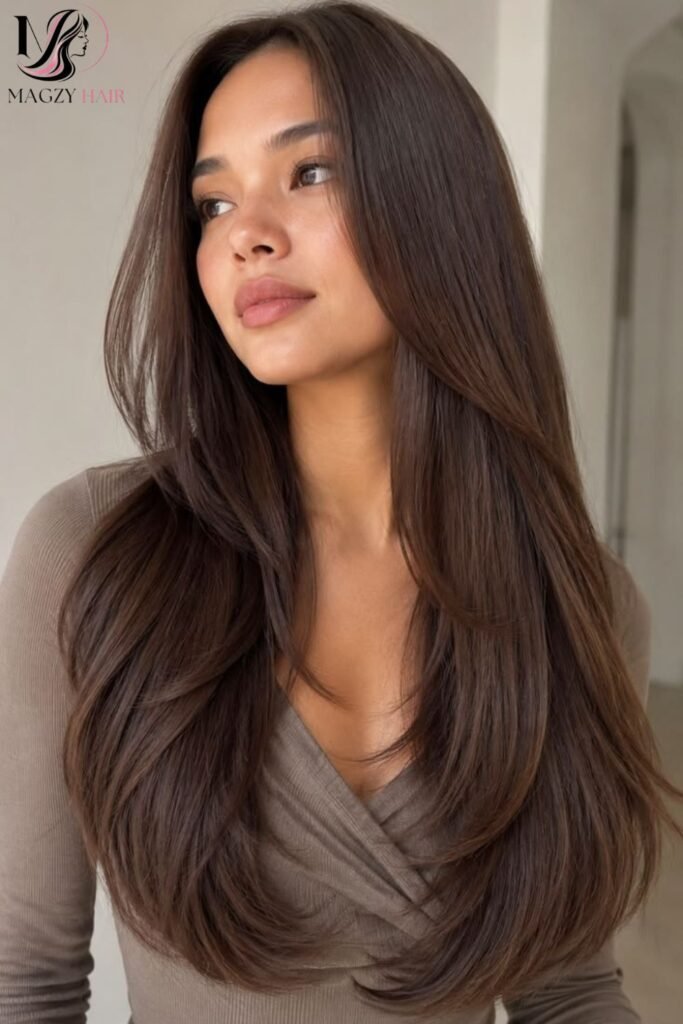
Face-framing layers are one of the simplest yet most effective additions to any thick wavy haircut. Rather than restructuring the entire head, these layers focus specifically on the pieces around the face, softening harsh lines and drawing attention to the cheekbones and jaw. For thick wavy hair, this technique reduces the “heavy curtain” effect that can happen when all the hair falls at one uniform length.
The best results come from layers that start no shorter than chin length, gradually blending into the rest of the haircut. Cutting them too short creates a disconnected, stringy look on thick hair, since the wave pattern needs enough length to form a full, rounded curl rather than a short, awkward flip. This is a detail worth specifically requesting during a consultation.
A helpful comparison: think of face-framing layers like curtains on a window. Too short, and they look abrupt and out of place; too long, and they barely change the overall silhouette. The right length lets light and in this case, the wave pattern flow naturally, creating movement that looks intentional rather than accidental.
These layers also work exceptionally well for growing out bangs. Instead of an awkward, flat-out phase, face-framing layers blend the growing sections into the surrounding hair, keeping the transition looking styled rather than unfinished. This makes it a smart, flexible choice for anyone unsure about committing to a bigger change.
Best Haircut Lengths for Thick Wavy Hair by Face Shape
Face shape plays a bigger role in thick wavy haircuts than most people realize, because volume interacts differently with each shape. For round faces, longer layers starting below the chin help elongate the face, while shorter, blunt cuts can add unwanted width. For square faces, softer, rounded layers reduce the appearance of a strong jawline, letting the wave pattern soften angular features naturally.
Oval faces have the most flexibility, generally suiting almost any length or layering style since the proportions are already balanced. However, even oval faces benefit from at least some layering on thick hair, simply to prevent excess bulk from overwhelming the frame. Heart-shaped faces often do best with chin-to-shoulder length layers, which balance a narrower jawline against a fuller forehead area.
A mini scenario helps illustrate this: two people with identical thick wavy hair but different face shapes may need completely different cuts to achieve the same “balanced” look. Someone with a round face might need longer layers to create length, while someone with a square face might need the same haircut adjusted with softer, rounded ends to avoid emphasizing angles. This is why copying a haircut photo without adjusting for face shape often leads to disappointing results.
Bringing reference photos to a consultation is helpful, but explaining your face shape and priorities reducing width, softening angles, adding length gives your stylist far more useful information than the photo alone. This combination of visual reference and verbal context consistently produces better, more personalized outcomes.
Styling Techniques That Enhance Thick Wavy Haircuts
Even the best haircut can look flat or frizzy without the right styling approach. For thick wavy hair, the biggest styling mistake is over-brushing dry hair, which breaks up the natural wave pattern and creates frizz instead of defined texture. Detangling should happen only when hair is wet and coated with conditioner, using fingers or a wide-tooth comb rather than a brush.
Scrunching is one of the most effective techniques for enhancing wave definition. Applying a lightweight curl cream or mousse to soaking-wet hair, then scrunching upward from the ends toward the roots, encourages the wave pattern to clump together instead of separating into frizz. This single step often makes the biggest visible difference in how “intentional” a wavy haircut looks day to day.
Diffusing on low heat is another technique that pairs well with thick wavy haircuts, especially shorter or layered styles. Unlike regular blow-drying, which can disrupt wave patterns and cause frizz, diffusing dries hair gently while cupping the waves in place. This is particularly useful for styles like shags or bobs, where texture and shape need to be preserved as the hair dries.
Overnight styling also deserves more attention than it typically gets. Sleeping on a silk or satin pillowcase reduces friction, which helps preserve wave definition from the previous day’s style. This small, often-overlooked habit can extend the life of a haircut’s shape between wash days, reducing the need for daily restyling.
Common Mistakes to Avoid With Thick Wavy Hair
One of the most frequent mistakes is requesting a blunt, one-length cut without layers. On thick wavy hair, this almost always results in a heavy, triangular shape that’s difficult to style and doesn’t allow the natural wave pattern to move freely. While blunt cuts can look striking on straight hair, they rarely translate well to thick wavy textures.
Another common error is over-thinning with texturizing shears. While some weight removal is necessary, excessive thinning can create frizz and split ends, especially at the mid-lengths where wavy hair is most fragile. A skilled stylist knows how much thinning is appropriate based on hair density, rather than applying the same technique to every client regardless of texture.
Skipping regular trims is another mistake that compounds over time. Thick wavy hair is more prone to split ends due to its texture, and neglected ends can make even a well-cut style look frayed and shapeless within a few months. Trimming every 8–10 weeks helps maintain the intended shape and prevents gradual, unnoticed damage from accumulating.
Finally, many people style thick wavy hair the same way they would straight hair, using heavy products or excessive heat that weighs down natural texture. This often flattens waves instead of enhancing them. Choosing lightweight, wave-specific products and minimizing heat styling helps preserve both the health and definition of thick wavy hair over time.
How Often to Trim and Maintain Thick Wavy Haircuts
Maintenance schedules for thick wavy hair depend heavily on the chosen haircut. Layered styles like shags or long layers generally need trims every 8 10 weeks to keep the shape intact, since uneven growth can quickly disrupt the balance between sections. Bobs and shorter cuts require slightly more frequent visits, typically every 6 8 weeks, because shorter lengths make growth changes more noticeable.
Between salon visits, at-home maintenance plays a bigger role than most people expect. Regular deep conditioning, ideally once a week, helps prevent the dryness and frizz that thick wavy hair is prone to, especially at the ends where the hair is oldest and most exposed to damage. Skipping this step often leads to a haircut looking “tired” well before the next scheduled trim.
A useful long-term insight is tracking how your specific hair grows and reacts to different products or seasons. For example, thick wavy hair often behaves differently in humid summer months compared to drier winter conditions, sometimes requiring adjusted product routines or slightly earlier trims to manage increased frizz. Paying attention to these patterns helps maintain a consistent look year-round rather than reacting only after problems appear.
Building a relationship with one trusted stylist, rather than switching salons frequently, also improves long-term results. A stylist familiar with your hair’s specific density, wave pattern, and growth habits can make more precise adjustments over time, leading to haircuts that consistently suit your hair rather than requiring guesswork at every appointment.
Future Trends in Thick Wavy Haircuts
Texture-forward cutting techniques are becoming increasingly popular as more stylists train specifically in curly and wavy hair methods, rather than treating wavy textures as an afterthought to straight-hair training. This shift means better-tailored haircuts are becoming more accessible, with more salons now offering dry-cutting techniques designed specifically to reveal natural wave patterns before finalizing a shape.
There’s also a growing movement toward “low-manipulation” styling, where haircuts are designed to require less daily product and heat styling. For thick wavy hair, this means cuts are increasingly built around natural drying methods, such as air-drying or diffusing, rather than assuming the client will straighten or heavily style their hair regularly. This trend supports both healthier hair and simpler routines.
Personalization is another emerging focus, with more stylists using tools like curl pattern mapping to identify the specific wave types present across a single head of hair. Since thick wavy hair often contains multiple wave patterns in different sections, this more detailed approach allows for haircuts that work with every section’s unique texture, rather than applying a single technique across the entire head.
Looking ahead, sustainability is also influencing haircut choices, with longer-lasting layered styles gaining popularity as people aim to reduce the frequency of salon visits. Cuts like long layers and shags, which grow out more gracefully than precise, structured styles, are likely to remain popular as both a practical and stylish choice for thick wavy hair in the coming years.
Conclusion
Choosing the right thick wavy haircut comes down to understanding your hair’s natural density, wave pattern, and growth habits. From long layers and shags to butterfly layers and bobs, the best results happen when the cut works with your texture rather than against it. With proper cutting techniques, regular maintenance, and wave-friendly styling habits, thick wavy hair can look effortlessly full and beautifully defined. Ready for a change? Bring these ideas to your next salon visit and let your natural texture shine.

Ayesha Noor is the founder and lead writer behind Magzy Hair. With 4 years of experience researching hairstyles, hair care, and beauty trends, she enjoys helping readers discover styles that suit their unique personality and lifestyle.


