
Pixie Haircut Ideas: The Complete Guide to Cuts, Styling, and Face Framing

Pixie haircut ideas cover far more ground than most people realize before their first consultation. This length can read as delicate and romantic or sharp and editorial, depending entirely on texturizing technique, length distribution, and how the cut is styled day to day. It’s one of the boldest choices in hairstyling, but it’s also one of the most customizable, which is exactly why it remains a consistently popular request despite requiring real confidence to commit to.
This guide goes beyond a simple photo gallery. It explains how pixie cuts should be adjusted based on face shape, hair texture, and density, the cutting techniques that make the biggest visual difference, and details most articles skip entirely like why the same pixie length can look dramatically different depending on how much length is left at the crown versus the sides. Whether you’re considering pixie haircut ideas for the first time or want more out of the cut you already wear, this is the deeper, more practical guide.
Why Pixie Haircut Ideas Offer More Range Than People Expect
Pixie haircut ideas cover a genuinely wide spectrum, from extremely short, cropped versions to longer, more grown out variations that retain significant length on top. This range means the term “pixie” doesn’t refer to one single style, but rather a broad category defined mainly by short sides and back paired with varying amounts of length through the crown and front.
Understanding this range matters significantly before a consultation, since bringing a reference photo labeled simply “pixie cut” without further specification can lead to a result quite different from what was actually pictured in your mind. Clarifying whether you want a very cropped, editorial version or a softer, longer pixie helps ensure the stylist understands your actual intention.
A helpful example: two people both requesting “a pixie cut” might receive dramatically different results if one specifically wanted the closely cropped, textured version associated with bold, editorial styling, while the other envisioned a longer, softer pixie with more length left at the crown for styling flexibility. This distinction is worth clarifying explicitly rather than assuming a shared understanding.
Because pixie haircut ideas encompass such a broad range, this length also tends to suit a wider variety of face shapes and hair textures than people commonly assume, provided the specific version chosen is tailored appropriately to individual features and hair characteristics.
Related Post: https://magzyhair.com/hairstyles-for-medium-length-hair/
Classic Cropped Pixie for Maximum Boldness
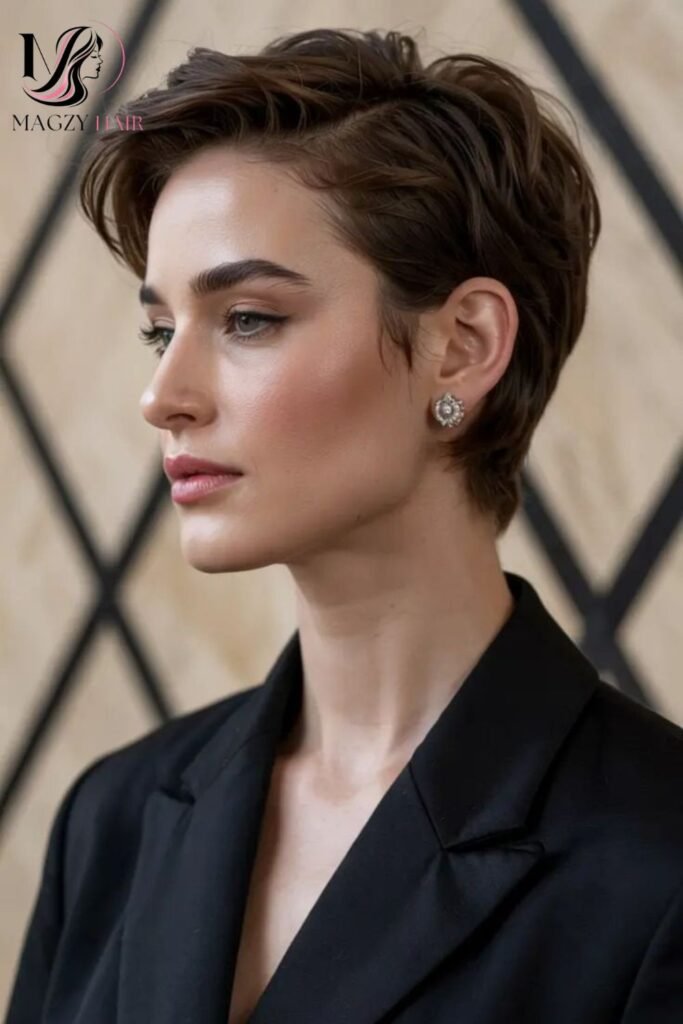
The classic cropped pixie represents the shortest, boldest version among pixie haircut ideas, featuring minimal length throughout with heavy texturizing at the crown to create movement despite the dramatically short overall length. This version tends to work particularly well for those wanting a genuinely striking, confident change rather than a subtle adjustment.
This style requires precise, skilled execution to avoid looking flat or severe, particularly since there’s minimal length available to disguise any unevenness in the cutting technique. Strategic texturizing around the crown and sides helps create volume and movement even at this closely cropped length, relying on cutting technique rather than length to achieve visual interest.
A helpful example: someone with fine hair who assumes a cropped pixie will emphasize thinness might actually find the opposite true once properly executed, since this length concentrates existing volume into a smaller space, often creating a fuller looking result than the same fine hair would achieve at a longer length where it has more room to fall flat.
Maintenance for a classic cropped pixie is among the most frequent within pixie haircut ideas, generally requiring trims every 3–4 weeks to maintain its precise, intentional shape as hair grows and begins softening the cut’s defining edges.
Longer Pixie for Styling Versatility
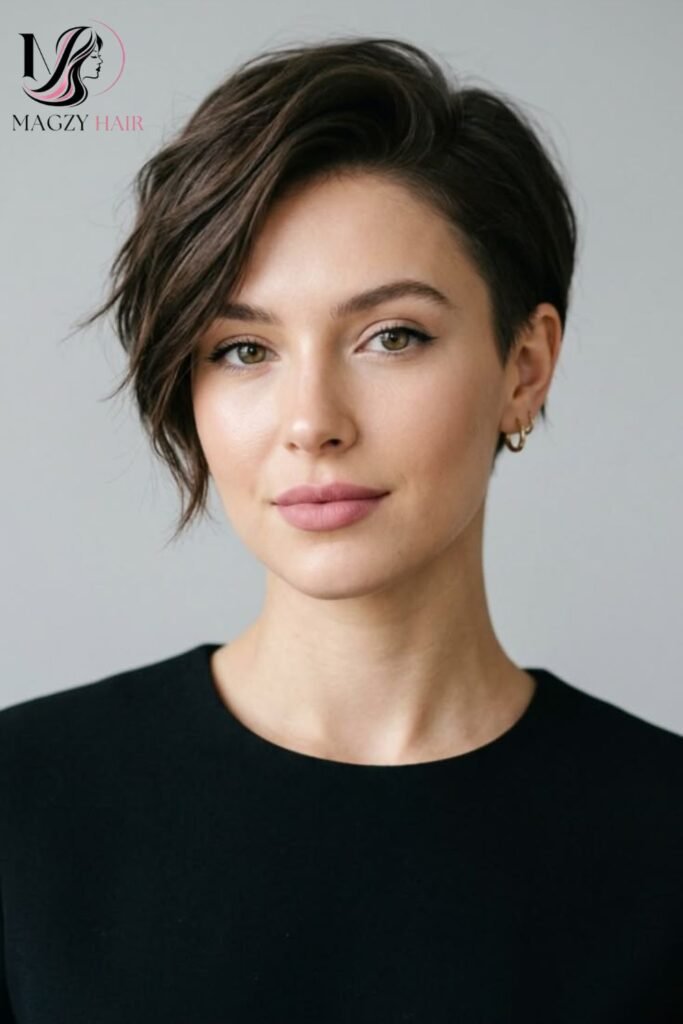
A longer pixie, retaining more length through the crown and front while keeping the sides and back considerably shorter, offers genuine versatility among pixie haircut ideas. This version allows for more varied daily styling, from a smoothed down, polished look to a more textured, tousled finish, without requiring dramatically different cutting techniques between styles.
This length also tends to be a popular choice for those transitioning into a pixie for the first time, since the additional length at the crown offers a slightly less dramatic change than the most closely cropped versions, while still delivering the meaningful transformation and reduced styling time that draws people toward pixie haircut ideas generally.
A helpful example: someone nervous about committing to an extremely short pixie might find a longer version offers a genuinely satisfying middle ground, providing enough length at the top to pull into a very small ponytail on occasion or use bobby pins for added styling variety, benefits the most cropped pixie versions typically don’t offer.
Maintenance for a longer pixie tends to be slightly more forgiving than the classic cropped version, generally requiring trims every 5–6 weeks, since the additional length provides more room for growth before the cut’s overall shape becomes noticeably compromised.
Textured Pixie for Effortless Movement
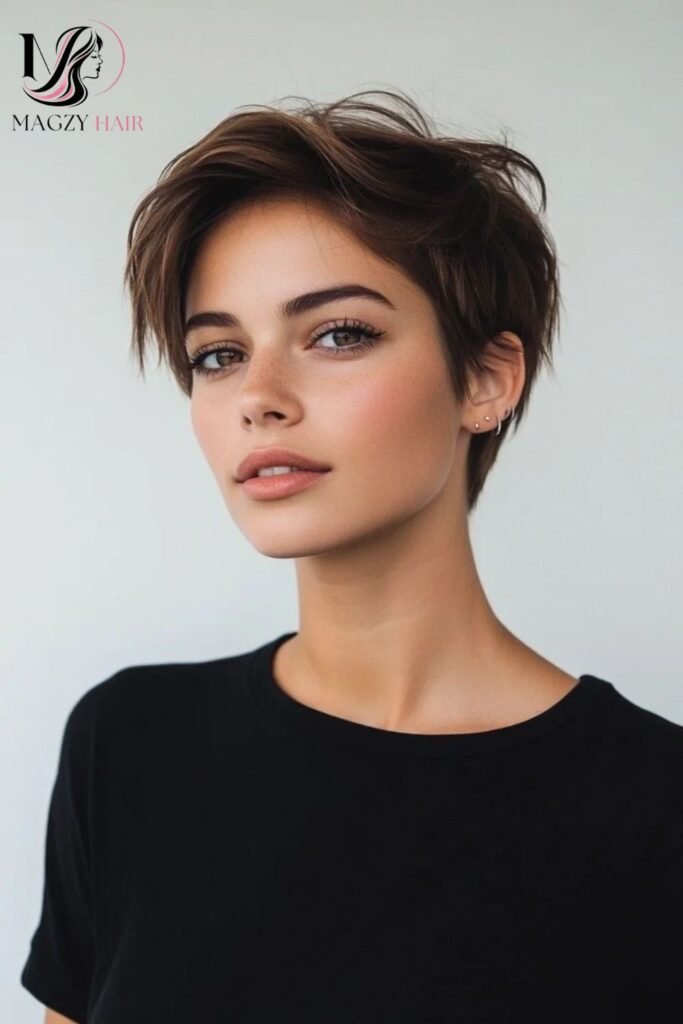
A textured pixie brings deliberate, piece-y texturizing to pixie haircut ideas, using point cutting or razor work throughout to create separation and movement rather than a smooth, uniform finish. This technique disguises minor styling imperfections particularly well, since individual pieces are meant to look slightly undone rather than perfectly polished.
This particular style tends to require less precise daily styling than sleeker pixie variations, since the textured, separated pieces are easier to tousle back into shape with fingers alone throughout the day, without demanding a full re styling session each time the cut loses some shape from wear or weather.
A mini scenario worth noting: someone who previously wore a smooth, unlayered pixie might notice their hair looking noticeably flattened by midday, requiring a full restyle to look presentable again. A textured pixie, by contrast, tends to spring back into shape with just a quick finger tousle and a small amount of texturizing paste, saving valuable time throughout a busy day.
Finishing this style typically involves a lightweight texturizing paste worked through with fingers, enhancing rather than weighing down the separation this particular pixie haircut idea depends on for its effortless character.
Pixie Haircut Ideas With Undercut Details
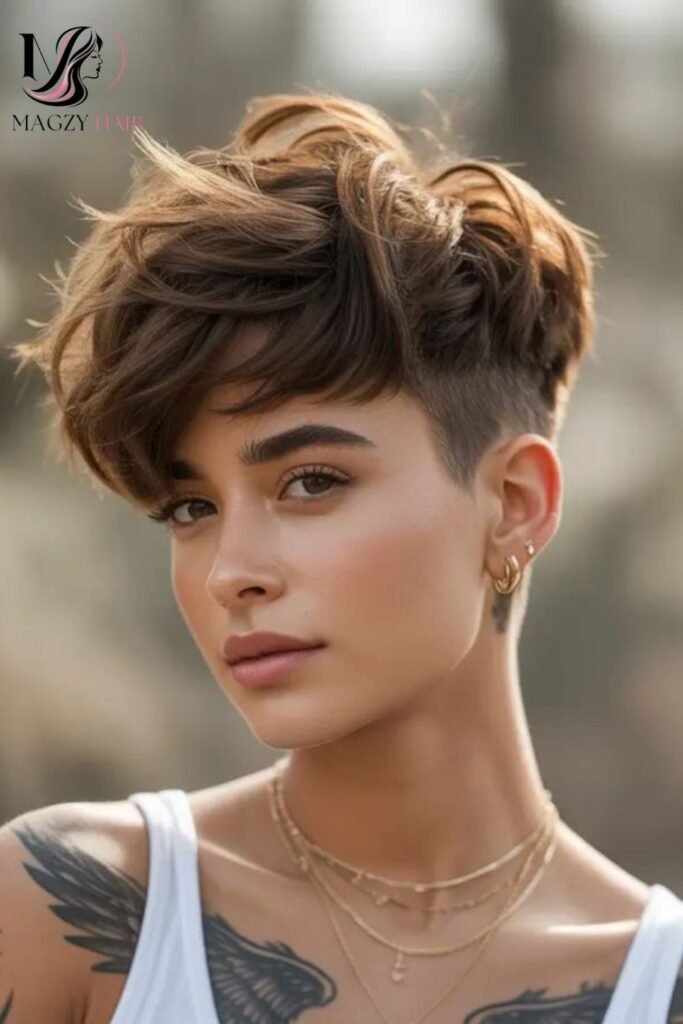
Adding an undercut to a pixie introduces a bold, modern edge among pixie haircut ideas, using a closely shaved or clippered section beneath longer top layers to create dramatic contrast in length and texture. This detail can be as subtle or as pronounced as desired, ranging from a barely there undercut visible only when hair is styled up, to a striking, fully exposed shaved section.
This particular variation works especially well for those wanting the option to reveal or conceal the undercut depending on styling choice and occasion, since longer top sections can be styled to fully cover the shorter underneath portion, or swept back and pinned to expose it deliberately.
A helpful example: someone wanting a pixie that reads as more conservative for a professional setting but edgier for personal time might specifically request an undercut positioned low enough to remain hidden under everyday styling, while still being easily revealed by simply changing how the top sections are styled and directed.
Maintenance for an undercut pixie requires attention to two different growth rates, since the shaved or clippered section needs considerably more frequent touch ups, generally every 3–4 weeks, than the surrounding longer pixie length requires to maintain its intended shape.
Curly Pixie Haircut Ideas
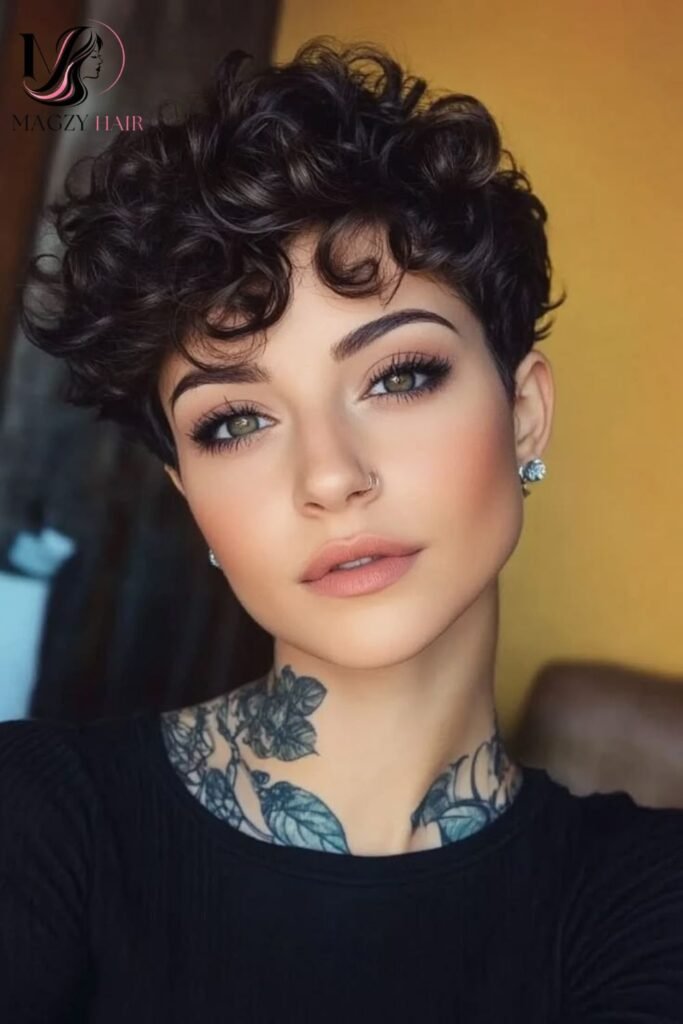
Curly hair requires a distinctly different cutting approach within pixie haircut ideas, since curl pattern significantly affects how the cut will ultimately settle once fully dry. Dry cutting, where a stylist shapes hair in its natural, unstretched curl pattern, tends to produce far more predictable, accurate results than cutting curly hair wet and stretched for this particular length.
This consideration matters significantly given how short pixie cuts already are, since even small miscalculations in accounting for curl shrinkage can dramatically alter the cut’s intended proportions at this length. A stylist unfamiliar with curly specific cutting techniques might cut hair to an intended length while stretched, only for it to shrink up considerably shorter and rounder than planned once fully dry.
A helpful example: someone with tight, coily curls requesting a pixie cut might find that hair cut to an intended length while wet and stretched shrinks up noticeably once fully dry, altering the cut’s overall shape and proportion from what was originally discussed. Seeking a stylist specifically experienced with both pixie cutting and curly hair helps avoid this common and often disappointing mismatch.
Styling curly pixie haircut ideas typically benefits from the same curl specific approach used for other curly cuts, applying lightweight, moisture rich products to wet hair followed by diffusing or air drying, allowing natural curl pattern to enhance the cut’s texture and shape.
Pixie Haircut Ideas for Thick Hair
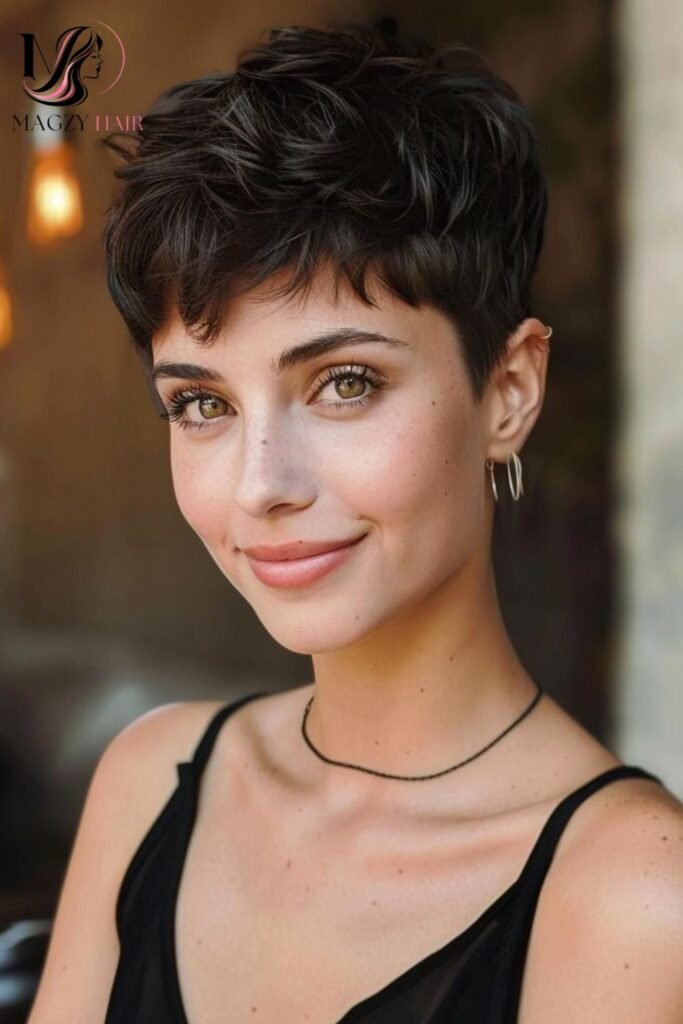
Thick hair often suits pixie haircut ideas particularly well, since there’s ample density to support meaningful texturizing without the risk of looking sparse or thin. Careful thinning throughout the cut helps manage thick hair’s natural volume, creating movement and shape rather than one dense, heavy mass concentrated at the crown.
This combination does require skilled execution, however, since improperly thinned thick hair can sometimes still look bulky even within an otherwise well shaped pixie, particularly if internal thinning isn’t distributed thoughtfully throughout the cut’s various sections. Slide cutting and heavy point cutting techniques help remove appropriate weight while still preserving the pixie’s characteristic shape.
A helpful example: someone with very thick, dense hair who receives a pixie without adequate internal thinning might find their hair still looks heavy or helmet like at the crown despite the shorter overall length, since the sheer volume of hair can sometimes overwhelm standard cutting techniques applied at this length. Communicating hair density clearly to your stylist helps ensure appropriate thinning throughout.
Styling thick pixie haircut ideas generally requires less volumizing product and more focus on definition and control, since natural density typically provides sufficient volume without additional help, allowing the cutting technique itself to be the primary source of the style’s shape and movement.
Pixie Haircut Ideas for Fine or Thin Hair
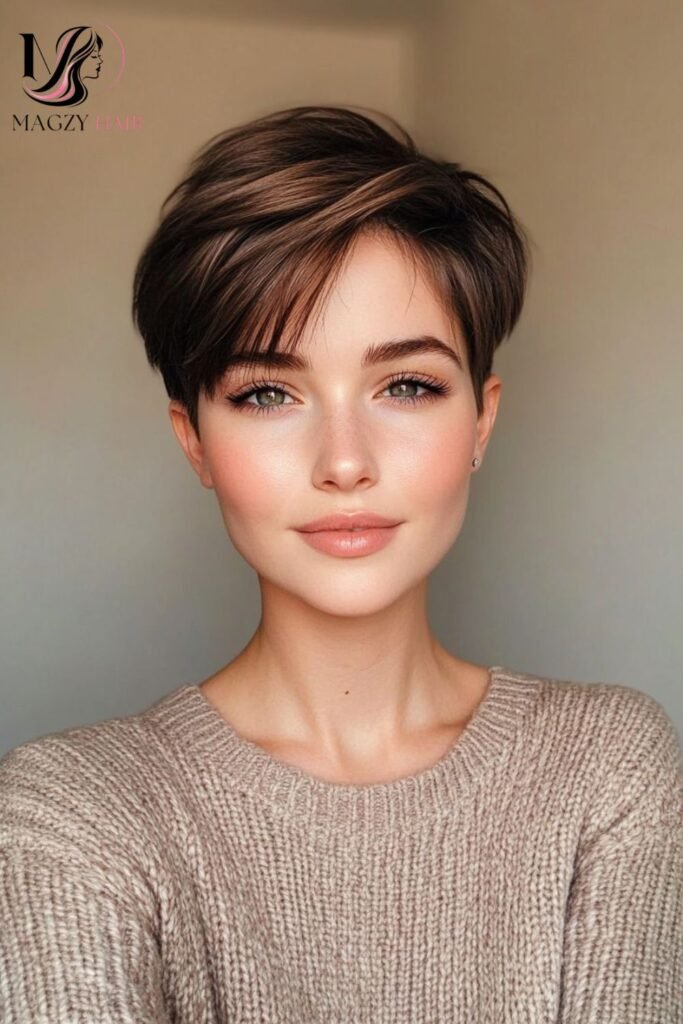
Fine or thin hair benefits significantly from pixie haircut ideas, since this length concentrates existing volume into a considerably smaller space, often creating the appearance of increased density and fullness compared to how the same hair would look at a longer length. The choppy, textured quality many pixie variations incorporate further enhances this fuller looking effect.
However, over thinning remains a genuine risk for fine hair pursuing this length, since excessive texturizing on already fine strands can sometimes create sparse, patchy looking results rather than the fuller, more voluminous look pixies are generally intended to achieve for this hair type. A more measured approach to thinning, while still achieving meaningful texture, tends to work better for fine hair.
A helpful example: someone with fine hair who requests extremely heavy texturizing throughout their pixie, matching an approach that might suit thick hair, might find certain sections look thin or patchy rather than appropriately full and textured. A stylist experienced with fine hair typically moderates texturizing intensity specifically for this hair type, achieving meaningful movement without compromising overall fullness.
Root lifting styling techniques and volumizing products become particularly valuable for fine haired pixie haircut ideas, helping maintain lift and fullness throughout the day in a way the cut alone may not fully achieve without deliberate styling support.
Pixie Haircut Ideas for Round Faces
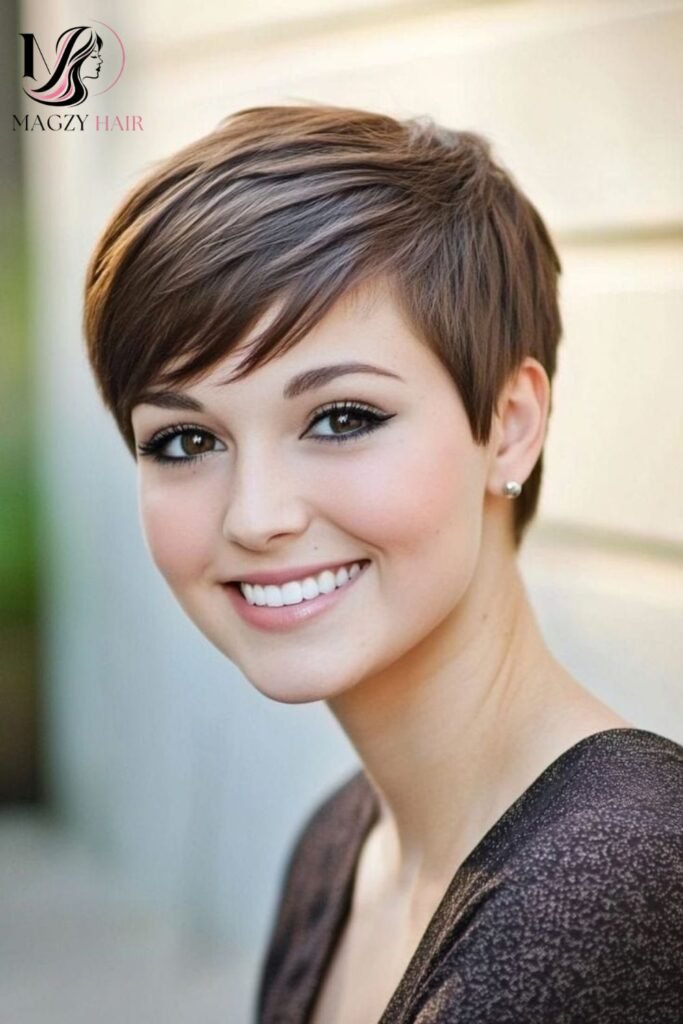
For round faces, pixie haircut ideas benefit from added height at the crown paired with longer, more angled pieces around the front, since these elements help elongate the face rather than adding width at its widest point. A very short, uniformly rounded pixie, by contrast, can sometimes emphasize roundness rather than balancing it.
Side swept fringe or asymmetrical front pieces also work particularly well for round faces within pixie haircut ideas, since the diagonal line helps break up facial roundness more effectively than a symmetrical, straight across styling approach at this particular length.
A helpful mini scenario: a woman with a round face who requests a very short, evenly rounded pixie without additional shaping may find the cut emphasizes fullness in her face more than intended. Adjusting to include crown height and longer, side swept front pieces typically achieves a more balanced, elongating result while still delivering the fresh, dramatic change pixie cuts are known for.
Consulting with a stylist about specific round face priorities leads to far more personalized recommendations among pixie haircut ideas than requesting a style based on a photo alone, since the same photographed pixie may need genuine adjustment to suit a round face shape effectively.
Pixie Haircut Ideas for Square and Heart Shaped Faces
Square faces, characterized by a strong, defined jawline, generally benefit from pixie haircut ideas featuring soft, textured layers rather than sharp, geometric edges, since gentle movement helps soften a strong jaw without requiring any change to the underlying bone structure itself. Longer, side swept front pieces also help break up angular features more effectively than symmetrical styling.
Heart shaped faces, featuring a narrower jawline and fuller forehead, tend to look particularly striking with pixie haircut ideas that add some fullness or texture specifically around the jaw and chin area, helping balance proportions by visually widening the appearance of the lower face to better match a fuller forehead above.
A helpful example: a woman with a heart shaped face might find that a pixie with added texture and slight length concentrated near the jaw creates a noticeably more balanced overall silhouette compared to a uniformly short, cropped version, since this targeted approach specifically addresses where heart shaped faces typically benefit most from additional visual weight.
Side swept fringe also works particularly well for heart shaped faces within pixie haircut ideas specifically, helping balance a fuller forehead without creating a harsh, straight across line that could draw additional attention to forehead width.
Color Techniques That Enhance Pixie Haircut Ideas
Color placement plays a particularly significant role in how pixie haircut ideas read visually, since this short length draws considerable direct attention to the face and puts the entire color on immediate display without the graduation longer hair provides. Soft, dimensional highlights placed strategically throughout can enhance a pixie’s texture and movement considerably more effectively than flat, single process color.
For those wanting a bolder statement, more contrasting highlights or lowlights placed specifically to emphasize the cut’s texturizing can create additional visual interest, drawing attention to the pixie’s dimensional quality in a way flat color simply can’t replicate at this particular length.
A helpful example: a pixie styled with flat, single process color often looks noticeably less dynamic than the identical cut finished with strategic highlighting, since the color simply reveals and enhances the texturizing that’s already built into the cut itself. This is a significant reason many stylists specifically recommend discussing dimensional color alongside a pixie haircut request.
For those embracing natural gray, subtle lowlights blended throughout pixie haircut ideas can help ease this color transition while still adding dimension and texture, working particularly well given how directly this short length showcases color placement throughout the entire style.
Common Mistakes to Avoid With Pixie Haircut Ideas
One frequent mistake is choosing a specific pixie style based purely on a trend photo without considering personal hair texture, density, and face shape. A pixie that looks stunning on someone with thick, straight hair might translate very differently on someone with fine or curly hair, leading to disappointment rooted more in mismatched expectations than the haircut choice itself.
Skipping regular trims is a mistake with particularly noticeable consequences for pixie haircut ideas specifically, since this length relies on precise, well maintained shaping to look intentional rather than simply grown out. Waiting too long between trims often results in a cut that loses its defining shape well before it appears obviously overdue for a fresh cut.
Over thinning fine hair remains a commonly repeated error at this length as well, since excessive texturizing can create sparse, patchy looking sections that undermine the fuller appearance pixie cuts are generally meant to achieve for finer hair textures. Clearly communicating hair density to your stylist, rather than simply requesting texture without further context, helps avoid this frequently made mistake.
Finally, using the wrong styling products for a pixie’s specific texture can undermine an otherwise well executed cut. Heavy, matte products can weigh down fine or textured pixies, while lightweight products may not provide enough control for thick or coarse hair, making it worth discussing product recommendations specifically suited to your hair type during your salon appointment.
The Future of Pixie Haircut Ideas
Pixie haircut ideas continue to evolve alongside broader industry shifts toward more personalized, texture specific cutting rather than standardized, one size fits all short haircut templates. As more stylists specialize in texture specific and face shape specific cutting, pixie haircuts are becoming increasingly tailored to individual bone structure, hair density, and natural movement rather than relying on generic techniques across different clients.
Low maintenance, air dry friendly cutting approaches are also shaping the future of this category, as more people seek haircuts that look polished with minimal daily styling effort. This trend aligns particularly well with the inherent practicality pixie cuts already offer, likely resulting in more salons specifically marketing “wash and go” variations designed around natural texture rather than requiring daily heat styling.
Color and cut integration is another area of continued growth, with dimensional techniques increasingly designed specifically to enhance a pixie’s particular texturizing pattern and face framing effect, rather than being applied as a generic, separate service. This integrated approach is likely to become increasingly standard as stylists recognize how significantly color placement affects this length’s perceived movement and dimension.
Looking further ahead, personalized digital consultation tools, including AI based hair and face shape simulation technology, are beginning to help clients preview how different pixie haircut ideas might look on their specific facial structure and hair texture before committing to a cut, meaningfully reducing the trial and error historically associated with choosing the right short haircut approach.
Conclusion
Pixie haircut ideas offer a genuinely bold yet remarkably versatile way to embrace short hair, with far more customization available than most people initially realize. From cropped and longer variations to undercut details, texture specific cutting, and face shape adjustments, there’s a version of this cut suited to nearly everyone. If you’ve been considering a change, use these ideas to guide your next conversation with a trusted stylist.
Ayesha Noor is the founder and lead writer behind Magzy Hair. With 4 years of experience researching hairstyles, hair care, and beauty trends, she enjoys helping readers discover styles that suit their unique personality and lifestyle.


