
Layered Bob Hairstyles for Women Over 60: The Complete Guide to Flattering, Easy Care Cuts

Layered bob hairstyles for women over 60 are some of the most consistently recommended cuts in the industry, and it’s not just because they look polished. As hair naturally changes with age often becoming finer, drier, or less dense a well cut layered bob works with these changes instead of against them. It adds movement where hair might otherwise fall flat, softens the face in ways longer or blunt cuts often can’t, and simplifies daily styling without sacrificing style.
This guide goes beyond a simple photo roundup. It explains the specific cutting techniques that make layered bob hairstyles for women over 60 work so well on mature hair, how to communicate with a stylist about aging hair texture, and the details most articles never mention like why certain layering techniques can actually make hair look thinner, and how to avoid that mistake. Whether you’re considering your first bob or refreshing a style you’ve worn for years, this is the deeper, more practical resource.
Why Layered Bob Hairstyles Work So Well for Women Over 60
Hair changes in predictable ways as we age, and understanding these changes explains why layered bob hairstyles for women over 60 are so frequently recommended. Hair strands often become finer in diameter, and the overall density on the scalp can decrease, which means styles relying on heavy length or blunt weight tend to look flat and lifeless rather than full and healthy. Layering redistributes weight, allowing hair to appear fuller through calculated movement instead of density alone.
A layered bob also addresses common texture changes, such as increased dryness or a slight loss of natural shine that comes with age. Shorter, layered styles reflect light differently than long, heavy hair, often creating the appearance of more shine and vibrancy. This is a subtle but meaningful reason layered bobs frequently look more youthful and healthy than longer styles on the same hair.
A practical example illustrates this well: two women with the same hair density, one wearing a long, one length style and the other a layered bob, will often appear to have visibly different amounts of hair. The layered bob creates movement and dimension that tricks the eye into perceiving more fullness, while the long, heavy style compresses under its own weight, making even healthy hair look thinner than it actually is.
Beyond the visual benefits, layered bobs also tend to be significantly easier to maintain, which matters for many women prioritizing efficient routines. Shorter, well layered hair generally requires less daily styling time and fewer products to look polished, an important practical consideration alongside the style’s flattering visual effects.
Previous: https://magzyhair.com/wavy-bob-hairstyles/
Choosing the Right Length for Layered Bob Hairstyles After 60
Length selection matters more than many realize when choosing layered bob hairstyles for women over 60. A chin length or slightly longer bob tends to be one of the most universally flattering choices, since it sits close enough to the face to create a youthful framing effect without appearing severe or overly cropped. This length also works well with the natural volume loss that can occur at the crown with age.
Shorter, cropped bobs sometimes ending above the jaw can look striking and modern, but they require more precise, well maintained styling to avoid appearing unintentionally severe. This length works particularly well for women with strong facial features and good bone structure definition, since the shorter length draws more direct attention to the face itself.
A slightly longer bob, falling just at or below the collarbone, offers a softer, more versatile option that some women over 60 prefer, particularly if they’re transitioning from longer hair and aren’t ready for a dramatically shorter change. This length still allows for meaningful layering to add movement while easing into a shorter routine gradually rather than all at once.
A useful comparison worth considering: think of bob length selection like choosing eyeglass frames the goal is finding a length that complements your specific bone structure rather than simply following what’s currently trending. A stylist experienced with mature clients will typically assess jawline definition, neck length, and face shape together before recommending a specific length, rather than defaulting to one standard bob length for every client.
Best Layered Bob Styles for Round Faces
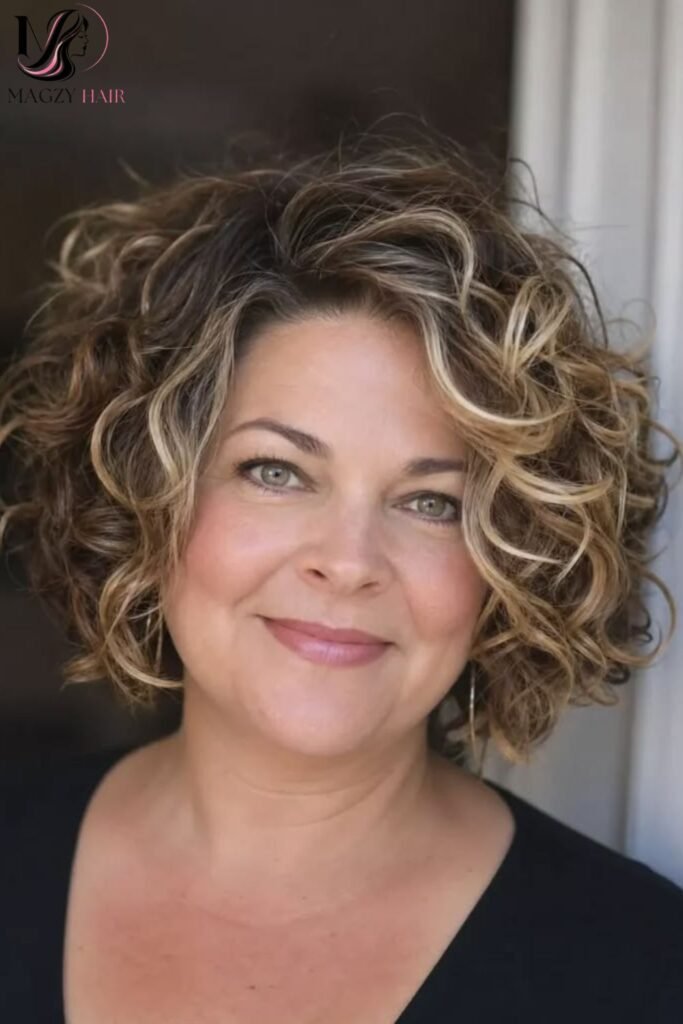
For round faces, layered bobs that add height at the crown while keeping some length around the jaw tend to be the most flattering choice. This combination creates the illusion of a more elongated face shape, counterbalancing the natural roundness rather than emphasizing it further. Avoiding bobs that sit right at the widest part of the cheeks is particularly important, since this length can inadvertently emphasize width.
Face framing layers that graze just below the chin, combined with subtle volume at the crown, work particularly well for round face shapes. This combination draws the eye vertically rather than horizontally, creating a more balanced, proportional appearance. Stylists often achieve this using root lifting cutting techniques combined with strategic layering around the perimeter.
A helpful mini scenario: a woman with a round face and fine, thinning hair might initially assume a fuller, rounder bob would help compensate for thinning texture. In reality, this choice typically emphasizes roundness even further. A better approach involves layers that create asymmetrical movement and vertical lift, addressing both the round face shape and the finer hair texture simultaneously rather than treating them as separate problems.
Side swept bangs, cut with soft, textured ends rather than a blunt line, can further enhance this face slimming effect for round faces. This detail is often overlooked in generic style guides, yet it makes a meaningful difference in how the overall layered bob frames and balances rounder facial proportions.
Best Layered Bob Styles for Square Faces
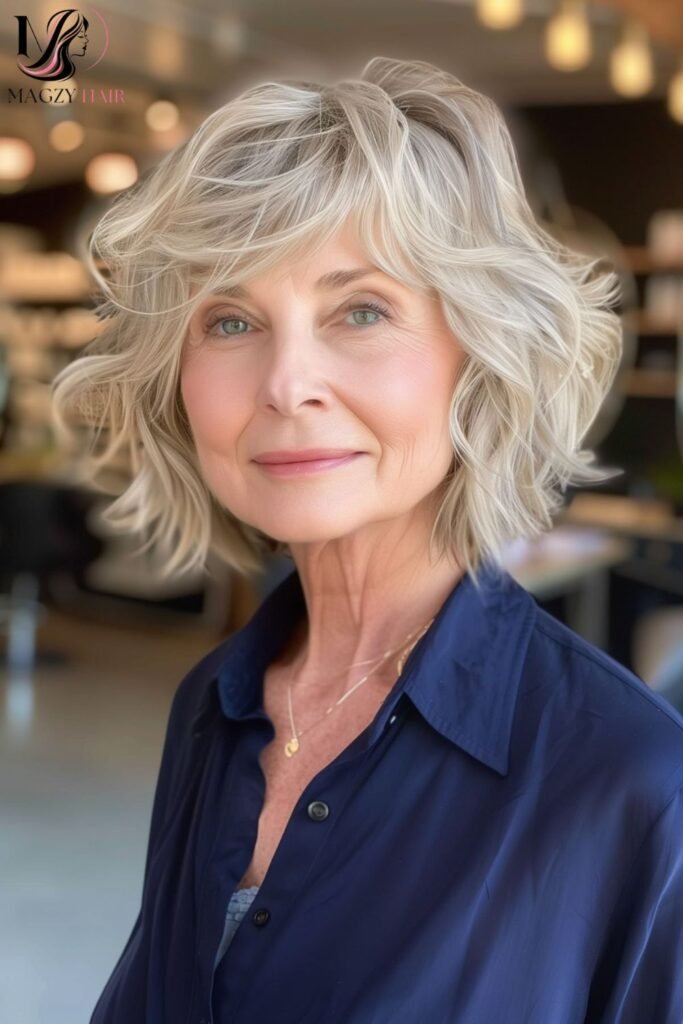
Square face shapes, characterized by a strong, angular jawline, generally benefit from layered bobs featuring soft, rounded ends rather than sharp, geometric lines. This softens the jaw’s natural angularity, creating a more balanced overall appearance without requiring dramatic changes to the underlying face shape itself. Blunt cut bobs, by contrast, can sometimes emphasize jaw angularity rather than softening it.
Longer, side swept layers that fall diagonally across the face tend to work particularly well for square faces, since the diagonal line breaks up the jaw’s straight angles more effectively than symmetrical, straight across styling. This technique is commonly used by experienced stylists specifically to address angular bone structure through strategic layering placement.
A practical example: a woman with a strong jawline requesting a very short, blunt bob might find the cut emphasizes her jaw more than she intended, even though the same length on a softer face shape might look perfectly balanced. Adjusting the cut with rounded layers and slightly longer face framing pieces typically resolves this issue while still achieving a similar overall short length.
Textured, piece-y layers throughout the bob also help square faces by creating visual softness through movement rather than sharp, defined sections. This textured approach works in tandem with rounded perimeter shaping to create an overall softer effect, addressing angularity from multiple angles within the same haircut rather than relying on a single styling element alone.
Best Layered Bob Styles for Oval and Heart Shaped Faces
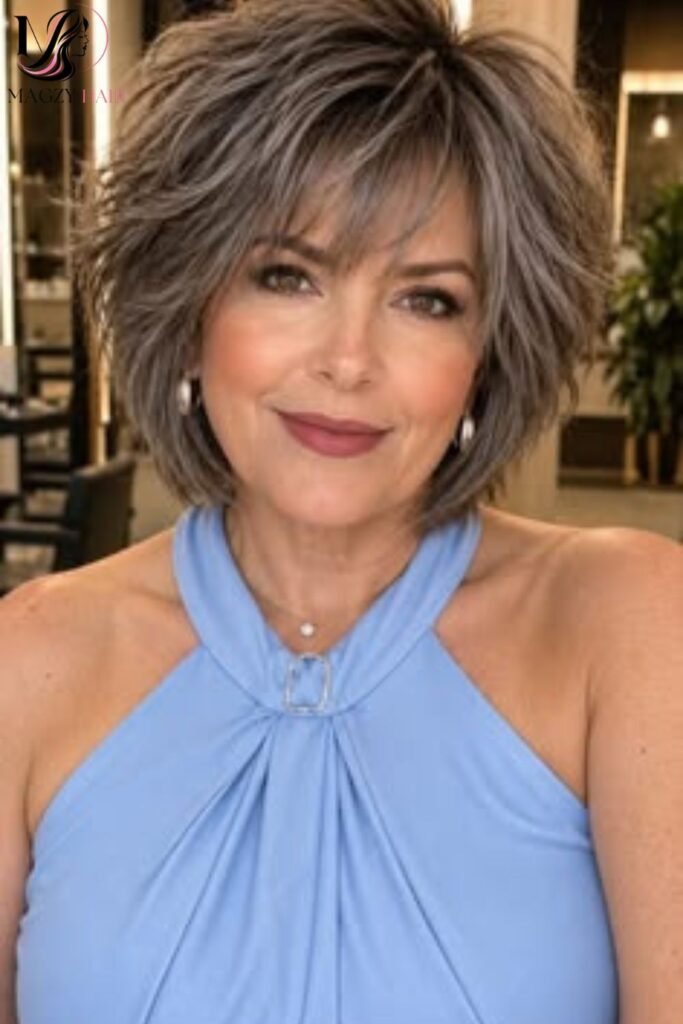
Oval faces have the most flexibility when it comes to layered bob styles, generally suiting nearly any length or layering technique due to naturally balanced proportions. However, even with this flexibility, adding some layering remains beneficial for maintaining movement and preventing hair from looking flat, particularly as hair texture changes with age and may need extra help holding shape and volume.
Heart shaped faces, which typically feature a narrower jawline and fuller forehead, benefit most from layered bobs that add width and fullness around the jaw and chin area. This balances the proportions by visually widening the lower portion of the face to better match the fuller forehead, creating a more harmonious, balanced overall silhouette.
A useful example: a woman with a heart shaped face might find that a very short, cropped bob emphasizes the narrower jawline too much, making the forehead appear disproportionately larger by comparison. A slightly longer bob with fuller, rounded layers specifically positioned around the jaw addresses this imbalance far more effectively than adjusting length alone.
Side swept bangs also work well for heart shaped faces specifically, since they help balance a fuller forehead without creating a harsh, straight across line that can draw additional attention to forehead width. This detail, combined with jaw area layering, creates a cohesive styling approach that addresses the heart shape’s specific proportional challenges.
Layered Bob Hairstyles for Fine or Thinning Hair Over 60
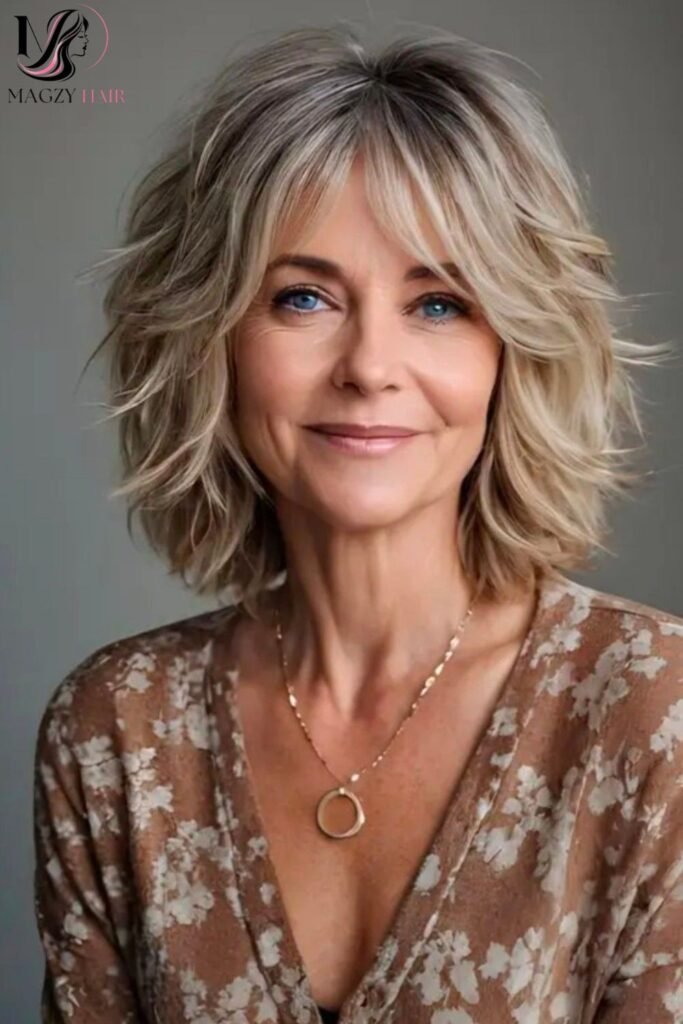
Fine or thinning hair, a common change many women experience after 60, requires particularly thoughtful layering to avoid making the hair appear even sparser. Contrary to popular belief, heavy layering isn’t always the answer excessive thinning can actually create wispy, insubstantial ends that emphasize rather than disguise thinning hair. A more conservative layering approach, focused on subtle movement rather than dramatic weight removal, often works better.
Blunt or minimally layered perimeter lines paired with subtle internal layering tend to create the fullest appearance for fine hair. This technique keeps more weight at the ends, which creates the visual density fine hair often lacks, while still allowing some internal movement to prevent the style from looking flat or static.
A helpful real world example: a woman with noticeably thinning hair who requests heavy, choppy layers throughout might end up disappointed with a sparse, uneven looking result. A stylist experienced with fine or thinning hair would typically recommend a blunter perimeter with only light layering around the face, achieving movement without sacrificing the appearance of fullness that heavier layering can compromise.
Volumizing cutting techniques, such as point cutting rather than heavy thinning shears, also make a meaningful difference for fine hair. Point-cutting removes weight from the very ends of the hair rather than throughout the entire strand, preserving more overall density while still softening the cut’s edges a technical distinction worth specifically discussing with your stylist.
Layered Bobs for Thick or Coarse Gray Hair
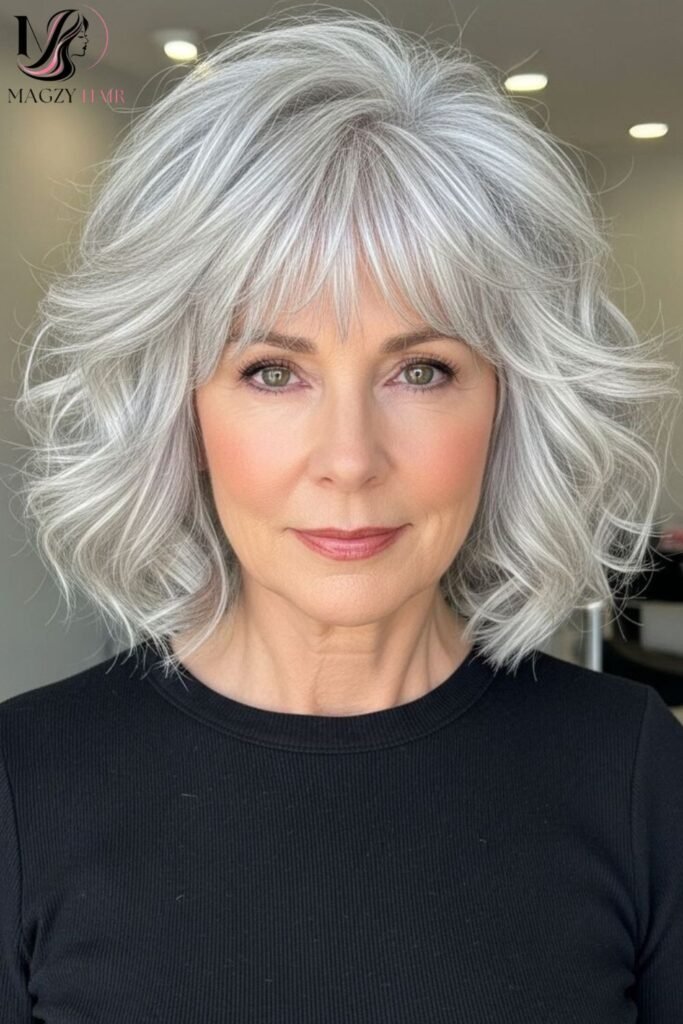
Thick or coarse gray hair, which some women develop or maintain into their 60s and beyond, benefits from a different layering strategy than fine hair. Here, the goal typically shifts from adding volume to managing and controlling existing fullness, using layers to remove bulk and create shape rather than trying to create the illusion of more hair.
Gray and white hair also has unique textural qualities worth considering during layering. This hair type is often coarser and can be more resistant to lying flat, meaning layers need to be cut with enough precision to control shape without leaving hair looking overly voluminous or difficult to manage day to day. Slide cutting techniques, which remove weight gradually along the length, work particularly well for this texture.
A practical scenario: a woman with thick, coarse gray hair who receives only minimal layering might find her bob looks bulky and triangle shaped rather than rounded and polished. Increasing the layering, particularly through the interior sections, typically resolves this issue by removing enough internal weight to let the cut fall into a more controlled, flattering shape.
Gray hair’s unique light reflection also plays a role in how layered bobs look on this hair color specifically. Because gray and white hair reflects light differently than pigmented hair, well placed layers can create striking dimension and shine that’s particularly noticeable and flattering, making thoughtful layering an especially worthwhile investment for this hair color and texture combination.
Low Maintenance Layered Bob Hairstyles for Busy Women Over 60
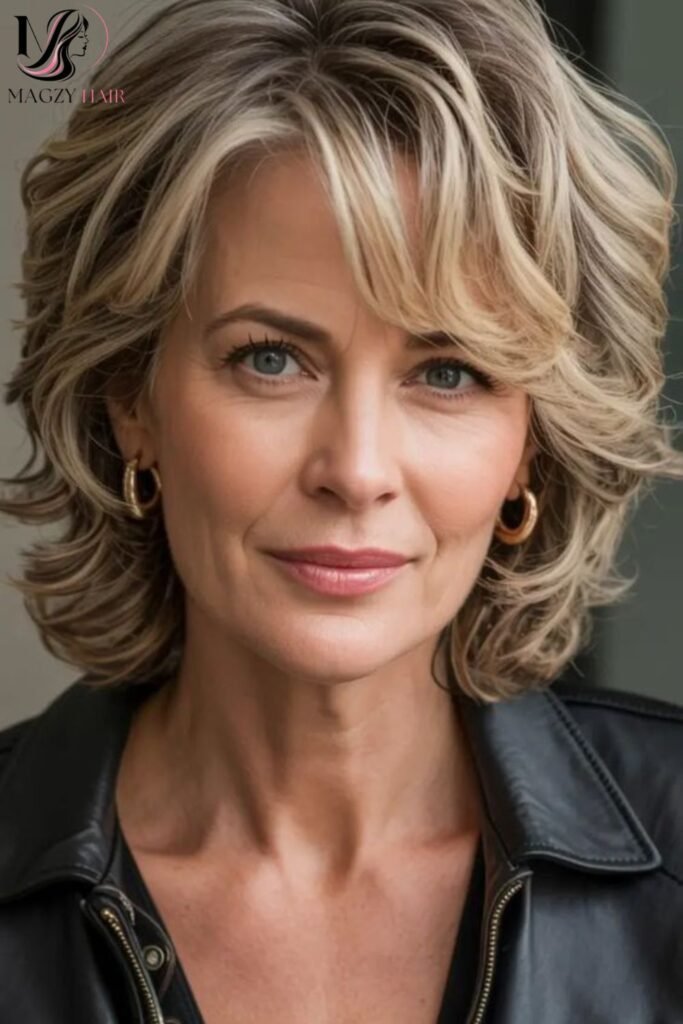
For women prioritizing simplicity, certain layered bob variations are specifically designed to minimize daily styling time without sacrificing a polished appearance. A one length bob with subtle, barely there layering requires the least daily effort, since the simpler shape naturally falls into place with minimal product or tool use, making it ideal for wash and go routines.
Textured, choppy layered bobs, while appearing more elaborate, can actually be surprisingly low maintenance once properly cut, since the built in texture disguises small styling imperfections that would be more noticeable on a sleeker, more precise cut. This makes textured layering a smart choice for those wanting visual interest without committing to daily precise styling.
A helpful example: a woman with a busy schedule who previously wore long hair requiring daily blow drying often finds that switching to a well layered bob significantly reduces her morning routine, sometimes from twenty or more minutes down to five or ten. This time savings, combined with less product needed for shorter hair, represents a practical lifestyle benefit beyond the style’s visual appeal alone.
Choosing a layered bob length and style that air dries well is another practical consideration for low maintenance routines. Stylists can specifically cut layers to fall naturally into place without heat styling, a detail worth requesting directly during a consultation if minimizing daily tool use is a priority for your lifestyle.
How to Style a Layered Bob for Everyday Elegance
Everyday styling for a layered bob doesn’t need to be complicated to look polished. A simple technique involves rough drying hair with fingers to about 80% dry, then finishing with a round brush focused primarily at the roots for lift, followed by smoothing the length with a flat brush or paddle brush. This combination creates volume without requiring extensive tool time.
A lightweight volumizing mousse applied to damp roots before drying helps combat the volume loss common with finer, aging hair, while a small amount of smoothing serum applied only to the ends helps control any frizz without weighing down the crown area. This targeted product application different products for different sections is a technique many generic styling guides overlook.
A practical example: applying the same heavy styling product uniformly throughout a layered bob often flattens the crown while doing little to control frizz at the ends effectively. Separating product application by section lightweight volumizer at the roots, smoothing serum at the ends addresses both concerns more effectively than a single, all purpose product used throughout.
For added polish on days when more styling time is available, a light curling iron pass through the ends, curling away from the face, adds a subtle, elegant flip that enhances the layered shape without requiring a full, time consuming curl set throughout the entire head.
Color Techniques That Complement Layered Bobs
Color placement plays a significant role in how a layered bob’s shape reads visually, making it worth discussing alongside the haircut itself rather than as a separate decision. Soft, dimensional highlights placed strategically around the face and through the layers can enhance the cut’s movement, drawing attention to the layering technique in a way flat, single process color often can’t achieve.
For women embracing natural gray, subtle lowlights can help blend the transition and add dimension without fully covering the gray, working in tandem with layering to create texture and visual interest throughout the cut. This combined approach cut and color working together intentionally tends to produce more cohesive, polished results than treating each as an independent styling decision.
A helpful example: a layered bob with flat, single process color often looks less dimensional than the same haircut with strategic highlighting, even though the actual layering technique is identical in both cases. The color simply helps reveal and emphasize the layers’ movement more effectively, which is why many stylists recommend discussing color alongside cutting decisions from the start.
Warmer color tones, such as soft copper or golden blonde highlights, can also help combat the sometimes duller, ashier cast that hair color can develop with age due to changes in hair’s natural pigment and texture. Choosing warmer undertones within your color palette can keep a layered bob looking vibrant and healthy rather than flat or lackluster.
Common Mistakes to Avoid With Layered Bob Hairstyles After 60
One frequent mistake when choosing layered bob hairstyles for women over 60 involves picking a haircut based purely on trend photos, without considering how significantly hair texture and density may have changed over the years. A layered bob that looks stunning on someone with thick, youthful hair density might require substantial adjustments to work well on finer, more mature hair, and skipping this consideration often leads to disappointing results.
Another common error is over layering fine or thinning hair in an attempt to create more texture and movement. As discussed earlier, excessive thinning can backfire, creating sparse, wispy ends that emphasize thinning rather than disguising it. Communicating hair density changes clearly to your stylist, rather than simply requesting “lots of layers,” helps avoid this frequently made mistake.
Neglecting regular trims is a mistake with particularly noticeable consequences for layered bobs, since the precise shaping these cuts rely on tends to grow out more visibly than looser, longer styles. Skipping scheduled trims generally recommended every 6–8 weeks often results in a bob that loses its intended shape and flattering effect well before it appears obviously overdue for a cut.
Finally, using heavy, matte styling products can work against the natural shine and dimension a well cut layered bob is meant to showcase, particularly as hair can develop a duller texture with age. Choosing lightweight, shine enhancing products rather than heavy, matte formulas helps ensure the styling routine supports rather than diminishes the haircut’s overall polished effect.
Transitioning to Layered Bob Hairstyles: What to Expect
For women transitioning from long hair to layered bob hairstyles for the first time after 60, understanding what to expect can ease any hesitation about making a significant change. The first few weeks often involve an adjustment period, both in terms of how the new length feels and in learning updated styling techniques suited to the shorter length rather than long hair habits.
A gradual transition approach works well for those hesitant about a dramatic, all at once change. Starting with a longer, lightly layered bob and gradually going shorter with subsequent trims allows for a more comfortable adjustment period, both practically and emotionally, compared to cutting straight to a significantly shorter length in a single appointment.
A helpful real world example: a woman transitioning from waist length hair directly to a short, heavily layered bob in one appointment often experiences more adjustment difficulty than someone who first moves to a longer lob, then gradually shortens over several appointments across a few months. This staged approach, while requiring more patience, tends to result in less styling shock and more confidence with the eventual shorter length.
Bringing multiple reference photos showing different layering intensities, rather than just one specific style, helps communicate preferences more effectively during this transition. This approach gives your stylist a clearer sense of your comfort level with layering and length, leading to a first cut that feels like a comfortable starting point rather than an overwhelming, unfamiliar change.
The Future of Layered Bob Hairstyles for Women Over 60
The layered bob continues evolving alongside a broader industry shift toward more personalized, texture specific cutting rather than generic, one size fits all approaches. As more stylists receive specialized training in cutting for changing, mature hair textures, layered bobs are becoming increasingly tailored to individual density and texture changes rather than applying identical techniques across all age groups and hair types.
There’s also a growing recognition within the industry that mature hair deserves specialized styling attention rather than being treated as simply “aged” versions of younger cutting techniques. This shift is leading to more salons offering specific consultations focused on hair changes related to aging, helping ensure layered bob recommendations account for these changes accurately rather than defaulting to generic advice.
Low-maintenance, air dry friendly cutting techniques are also likely to become increasingly popular within this specific style category, as more women prioritize haircuts that look polished with minimal daily styling effort. This aligns with broader lifestyle trends favoring efficiency without sacrificing a put together appearance, a combination the layered bob has long been well suited to deliver.
Looking ahead, increased representation of women over 60 in mainstream hairstyling content and marketing is likely to continue expanding the range of layered bob variations specifically showcased and recommended for this age group. This growing visibility helps ensure future style guides and salon consultations reflect a fuller, more accurate range of options rather than a narrow, outdated set of “acceptable” styles for mature women.
Conclusion
Layered bob hairstyles remain one of the most flattering and practical choices for women over 60, offering movement, softness, and ease of styling that work with not against natural hair changes over time. From face shape specific layering to color techniques and low maintenance styling tips, there’s a version of this cut suited to nearly every texture and lifestyle. If you’ve been considering a refresh, use these ideas as a starting point for your next conversation with a trusted stylist.
Ayesha Noor is the founder and lead writer behind Magzy Hair. With 4 years of experience researching hairstyles, hair care, and beauty trends, she enjoys helping readers discover styles that suit their unique personality and lifestyle.


