
Short Haircuts for Older Women: The Complete Guide to Chic, Easy Care Styles

Short haircuts for older women have become one of the most searched hair topics for a good reason: they solve real, practical problems. As hair changes with age often thinning, drying out, or losing its natural bounce a well cut short style can restore volume, cut down styling time, and create a more youthful, polished look, all without fighting the hair’s new texture. It’s less about “going short” and more about working smarter with the hair you actually have now.
This guide goes beyond the typical photo gallery of short cuts. It covers the specific techniques stylists use to make short haircuts for older women look full rather than flat, how to match a style to your face shape and hair texture, and details most articles skip entirely like why the same pixie cut can look completely different depending on how your hairline and neck shape are handled. If you’re considering going shorter, or want more from the short cut you already have, this is the deeper, more useful resource.
Why Short Haircuts Work So Well for Older Women
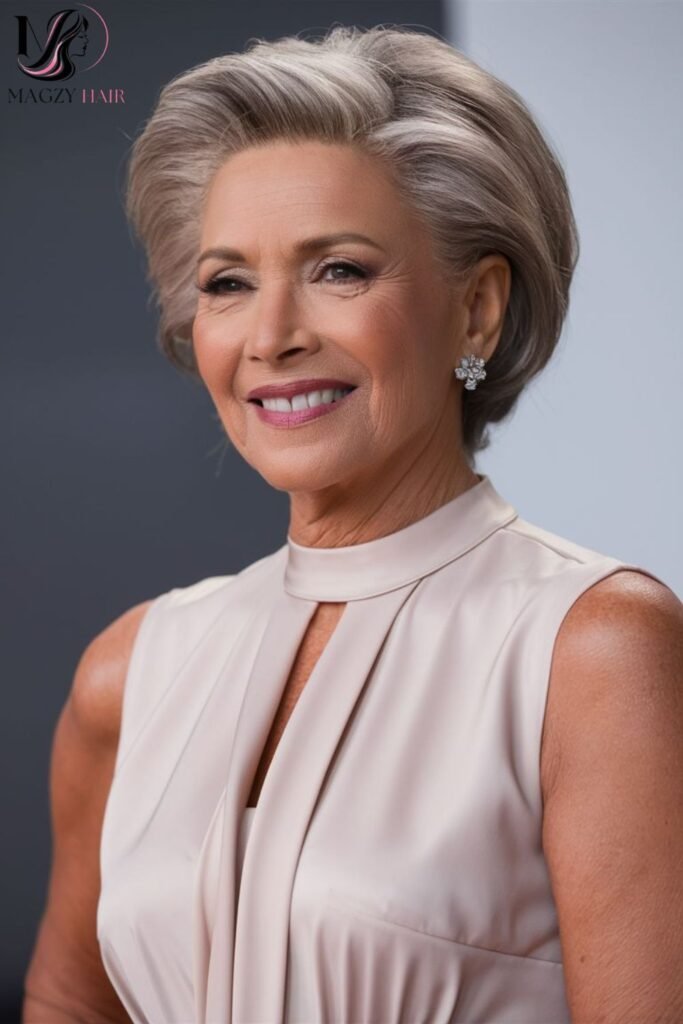
Hair undergoes real, measurable changes with age, and understanding them explains why short haircuts for older women are so consistently recommended by stylists. Strand diameter often decreases, overall density on the scalp can drop, and natural growth cycles slow down, meaning long hair frequently looks thin and stringy rather than full. Shorter cuts redistribute the hair’s existing volume into a smaller space, creating a fuller, healthier appearance without adding a single extra strand.
Shorter styles also interact with light differently than long hair. Because short hair sits closer to the scalp with less length to weigh it down, it tends to catch and reflect more light, which reads visually as shine and vitality. This is one reason well cut short haircuts often look more vibrant than the same hair worn long, even when hair color and texture haven’t changed at all.
A practical comparison helps illustrate this: think of hair volume like a glass of water poured into different sized containers. The same amount of water looks nearly empty in a tall vase but looks full in a short, wide cup. Short haircuts function the same way they concentrate the hair’s natural volume into a shorter space, creating the appearance of thickness that long hair often can’t achieve as hair ages.
Beyond appearance, short haircuts for older women typically save significant time and effort in daily routines. Less length means less time spent washing, drying, and styling, which matters for anyone wanting a polished look without a lengthy morning routine. This practical benefit, paired with the flattering visual effect, explains the style’s lasting popularity.
Continue Reading: https://magzyhair.com/layered-bob-hairstyles-for-women-over-60/
The Classic Pixie Cut: Bold, Youthful, and Low Maintenance
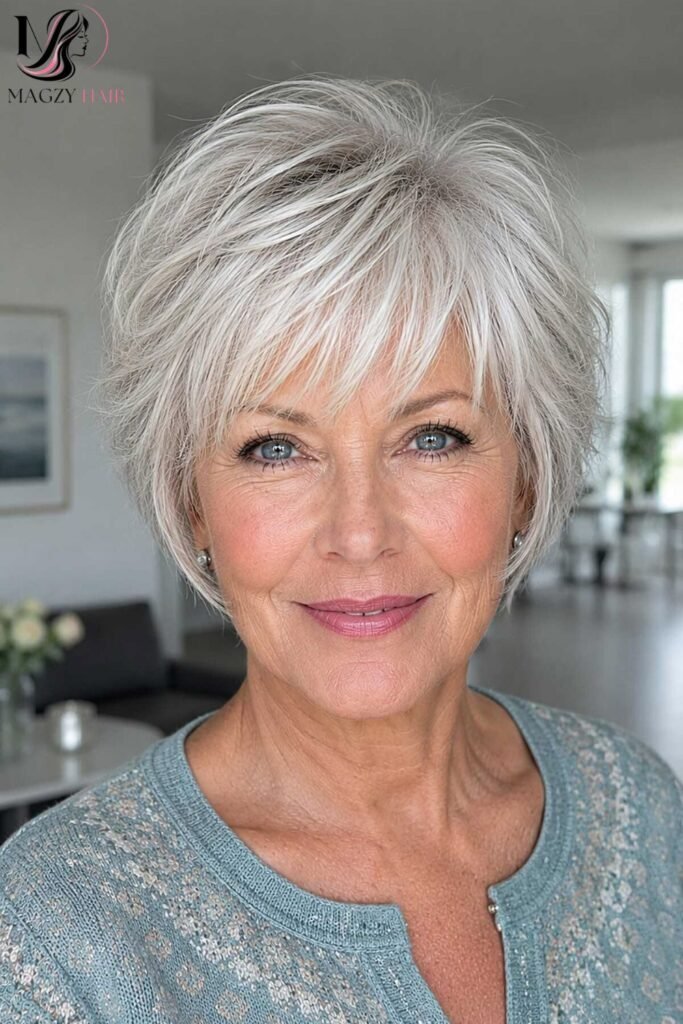
The pixie cut remains one of the most iconic short haircuts for older women, prized for its ability to look simultaneously youthful and sophisticated. A well executed pixie relies on precise, textured layering around the crown and sides, which prevents the style from looking flat or overly severe, especially on finer, more mature hair textures where volume needs extra help holding shape.
Customizing the pixie’s length matters significantly for how flattering it looks. A slightly longer pixie, with more length left through the top and fringe area, tends to be more universally flattering and easier to grow out if a client changes her mind, compared to a very short, cropped version that requires more confidence and precise, frequent maintenance to look intentional rather than unfinished.
A helpful example: a woman with fine, thinning hair who chooses an overly short, tightly cropped pixie may find the style emphasizes thin patches at the scalp rather than disguising them. A slightly longer pixie with textured, piece-y layers on top creates more coverage and dimension, achieving the same bold, short aesthetic while working more effectively with finer hair density.
Styling a pixie cut is refreshingly simple once properly cut, typically requiring just a small amount of texturizing paste worked through damp hair with fingers, followed by air drying or a quick blast with a diffuser. This low daily effort, combined with its striking visual impact, is a major reason the pixie remains a consistently popular choice among short haircuts for older women.
Textured Bob: A Versatile Middle Ground Option
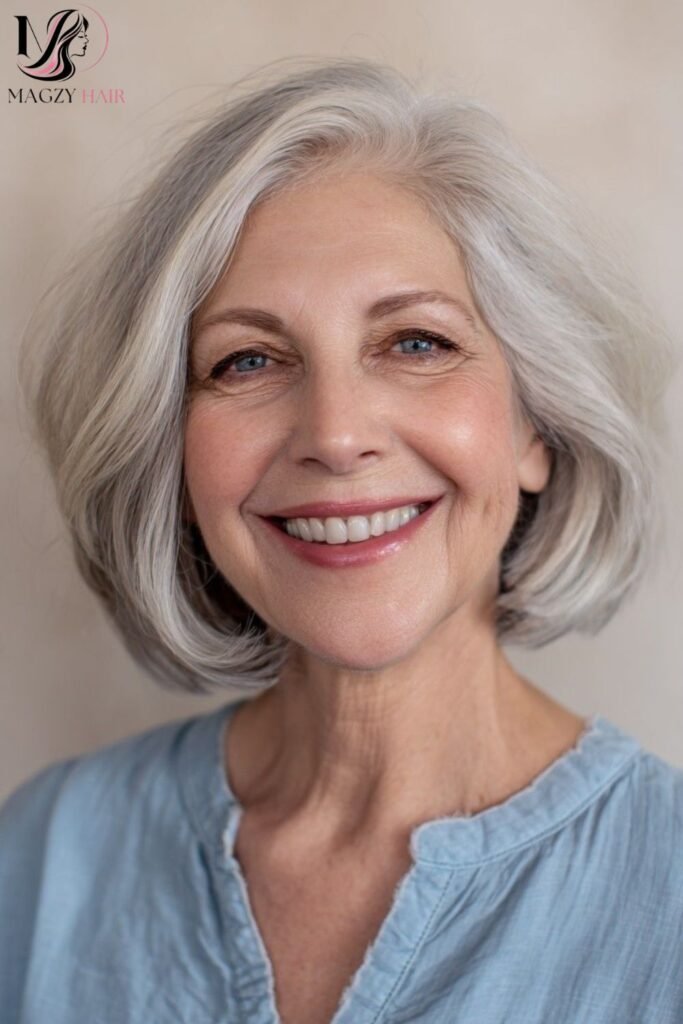
For women wanting a short haircut without going as dramatically short as a pixie, a textured bob offers an excellent middle ground. Falling anywhere from chin to jaw length, this style provides more versatility for those unsure about committing to the shortest options, while still delivering the volume boosting and low maintenance benefits that make short haircuts for older women so popular.
Texturizing techniques, such as point-cutting or razor cutting the ends, are essential to this style’s success. Rather than a heavy, blunt line, textured ends create soft, piece-y movement that photographs and wears more naturally day to day. This texturizing also helps disguise any unevenness in hair density, a particularly useful benefit for hair that has changed texture over the years.
A mini scenario demonstrates this well: a woman transitioning from long hair directly to a very short pixie sometimes feels the change is too dramatic and difficult to adjust to all at once. A textured bob offers a meaningful length reduction and styling time savings without the full commitment of a pixie, making it a popular “first step” for those testing shorter hair before going even shorter later.
Textured bobs also pair exceptionally well with subtle layering around the face, which helps soften features and draw attention upward toward the eyes. This detail, combined with the style’s inherent flexibility across different hair textures and densities, explains why it remains one of the most requested options within the broader category of short haircuts for older women.
Short Shag Haircut: Effortless Texture and Movement
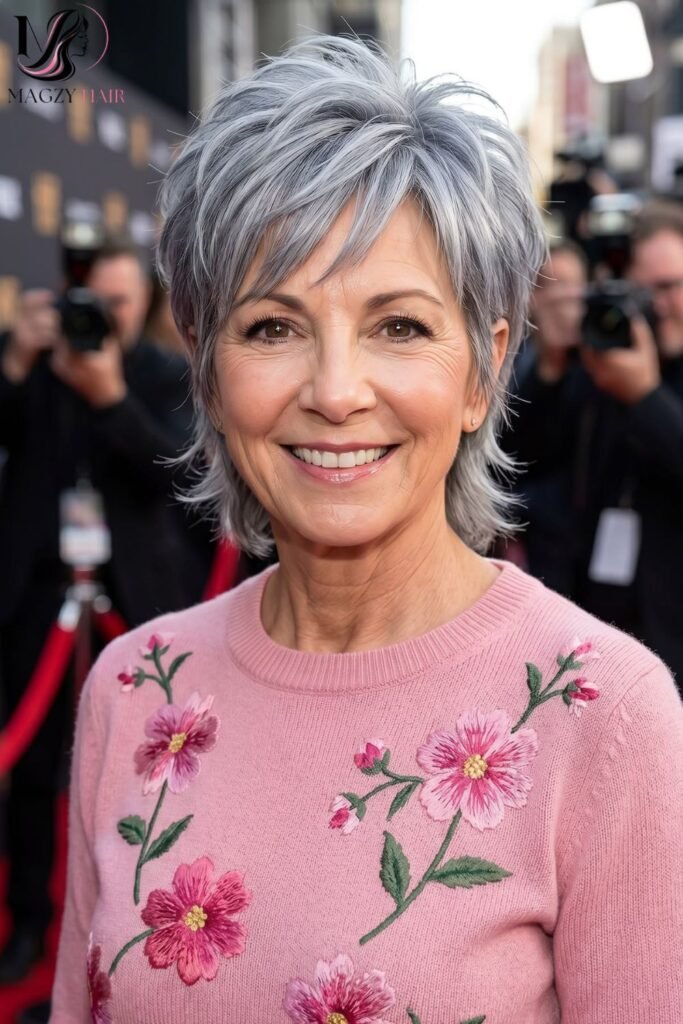
The short shag has seen a significant resurgence, and it’s particularly well suited to older women wanting texture and personality without a high maintenance styling routine. Built around heavily textured, choppy layers throughout, this cut naturally disguises fine lines in hair density while adding visible movement that a smoother, more uniform short cut often lacks.
What makes the shag work so well for mature hair specifically is its forgiving nature. Because the cut relies on intentional textural irregularity rather than precise, symmetrical shaping, small amounts of regrowth or slight styling imperfections blend naturally into the overall look rather than standing out. This makes it a lower stress option for those who don’t want to worry about every strand being perfectly placed.
A practical example: a woman with graying, slightly coarse hair who’s hesitant about a very structured, precise short cut often finds the shag more approachable, since its inherent messiness works with unpredictable hair behavior rather than against it. This is a detail rarely highlighted in generic short haircut guides, yet it’s often the deciding factor in whether a client feels confident maintaining the style at home.
Curtain bangs, often paired with the short shag, add further face framing softness without requiring precise, daily styling. Textured and piece-y rather than blunt, these bangs blend naturally into the surrounding shag layers, reinforcing the effortless, lived in quality that defines this increasingly popular style among short haircuts for older women.
Choosing the Right Short Haircut for Your Face Shape
Face shape plays a significant role in which short haircuts for older women look most flattering, since shorter lengths draw far more direct attention to facial features than longer styles do. For round faces, cuts with height at the crown and shorter sides tend to elongate the face, while very short, rounded styles close to the head can sometimes emphasize width rather than balancing it.
Square faces generally benefit from short cuts featuring soft, textured layers rather than sharp, geometric lines, since rounded texture helps soften a strong jawline. Meanwhile, oval faces have the most flexibility, typically suiting nearly any short haircut style, though even oval faces benefit from some layering to maintain movement rather than a flat, uniform silhouette.
A helpful example: two women requesting the same pixie cut photo might need meaningfully different execution to achieve an equally flattering result. Someone with a square face may need the sides kept slightly longer with softer texture near the jaw, while someone with a round face might need more height built into the crown to create length. Communicating your face shape priorities clearly helps your stylist adjust accordingly.
Heart shaped faces, which often feature a narrower jawline and fuller forehead, tend to look best with short cuts that add some fullness or texture around the jaw and chin area, balancing the proportions rather than emphasizing the forehead further. Side swept fringe, rather than a blunt, straight across style, also helps soften this face shape effectively.
Short Haircuts for Fine or Thinning Hair
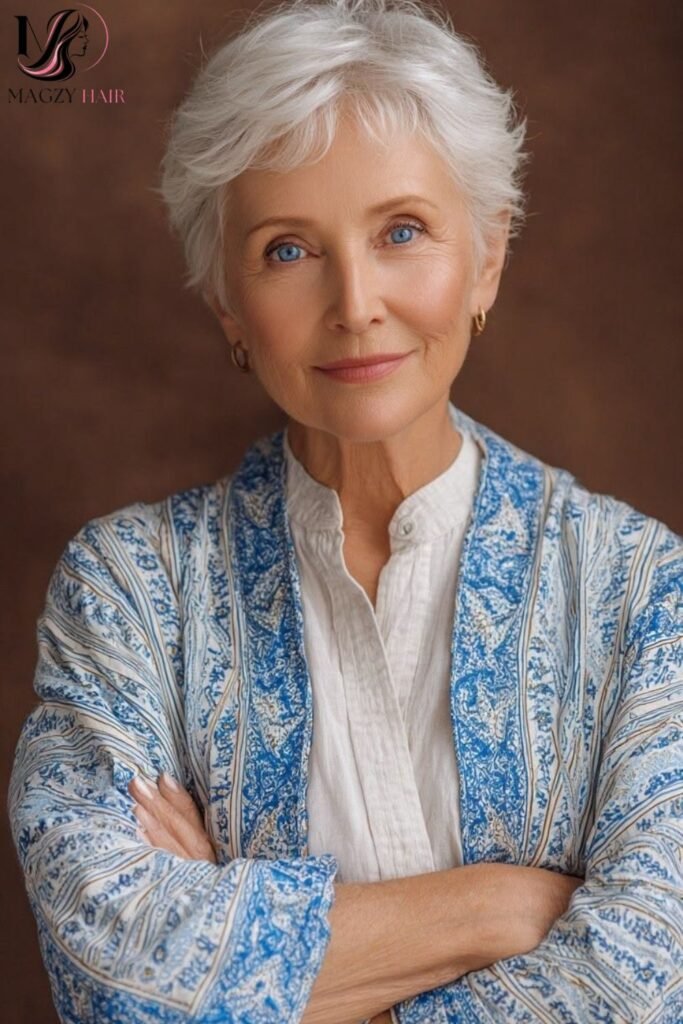
Fine or thinning hair, a common change many women experience with age, requires particularly thoughtful cutting to avoid making hair look even sparser. Contrary to a common assumption, heavy layering isn’t always the right solution excessive thinning can create wispy, insubstantial ends that draw more attention to thin areas rather than disguising them effectively.
A more conservative approach, using point cutting rather than heavy thinning shears, tends to work better for fine hair. This technique removes weight gradually from the very ends of the hair rather than throughout the entire strand, preserving more overall density while still creating some textured movement a technical distinction well worth discussing directly with your stylist.
A helpful real world example: a woman with visibly thinning hair who requests heavy, choppy layers throughout her short cut might be disappointed with a sparse, uneven-looking result. A stylist experienced with fine or thinning hair typically recommends keeping more length and weight through the crown specifically, since this area often shows thinning most noticeably, while using lighter texturizing elsewhere.
Volumizing cutting techniques, combined with strategic use of root lifting products during styling, make a meaningful difference for fine hair specifically. A cut designed with volume building in mind from the very first snip tends to look fuller day to day than a cut styled to compensate for volume loss after the fact, which is why the initial cutting technique matters as much as the styling routine that follows.
Short Haircuts for Thick or Coarse Gray Hair
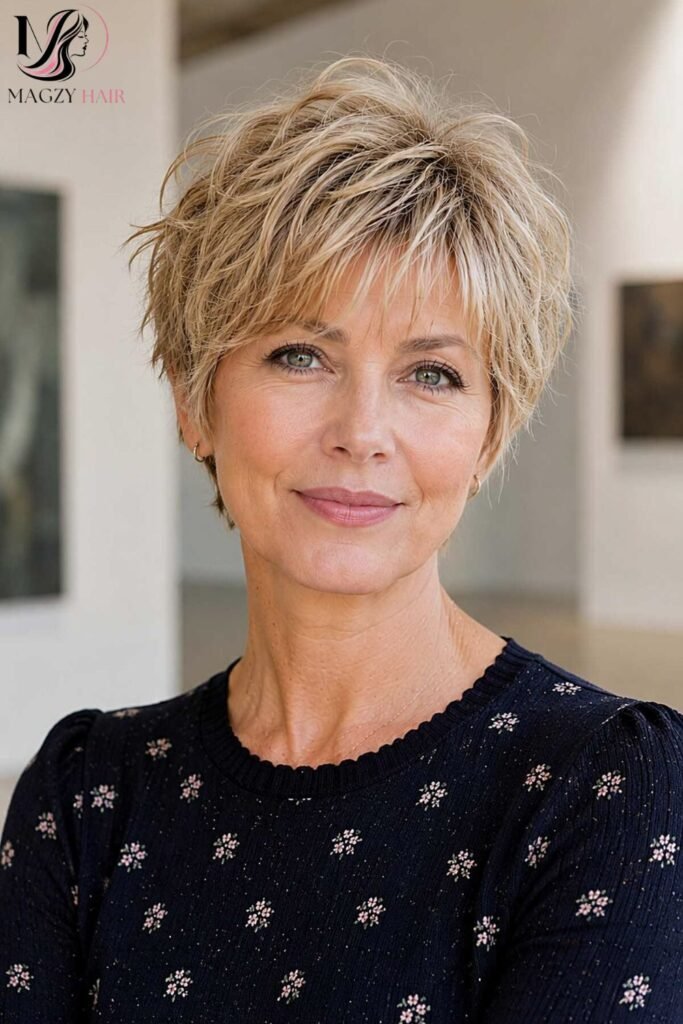
Thick or coarse gray hair, common among many older women, requires a different cutting strategy than fine hair. Here, the priority typically shifts from creating the illusion of volume to managing and controlling existing fullness, using layering and thinning techniques to remove bulk without leaving the cut looking heavy, blocky, or difficult to style day to day.
Gray and white hair also has distinct textural properties worth factoring into short cuts specifically. This hair type is often coarser and more resistant to lying flat than pigmented hair, meaning cuts need enough precision and appropriate thinning to control shape effectively. Slide cutting techniques, which remove weight gradually along the length, work particularly well for managing this texture within a short haircut.
A practical scenario: a woman with thick, coarse gray hair who receives minimal thinning during her short cut may find the style looks bulky or triangular rather than sleek and controlled, even at a shorter length. Increasing internal thinning, particularly around the crown and sides, typically resolves this by removing enough weight to let the cut fall into a more polished, intentional shape.
Gray hair also reflects light distinctively compared to pigmented hair, meaning well executed short cuts on this hair color often show off texture and dimension in a particularly striking way. This unique light interaction is one more reason thoughtful, texture specific cutting is such a worthwhile investment for thick or coarse gray hair specifically.
Styling Tips to Add Volume to Short Haircuts
Even a well cut short haircut benefits significantly from the right styling approach, particularly when combating natural volume loss that comes with aging hair. Applying a lightweight volumizing mousse to damp roots before drying, then blow drying with a round brush focused specifically at the crown, creates lift precisely where it’s needed most, rather than relying on the cut alone to generate fullness.
Root lifting sprays, applied directly at the scalp before any other styling product, offer another effective volume boosting technique specifically useful for short haircuts on fine or thinning hair. Unlike heavier styling creams, these lightweight formulas add lift without weighing hair down, which matters significantly on shorter lengths where any extra product weight becomes immediately noticeable.
A helpful example: blow drying short hair by simply pointing the dryer downward from the top, a common but outdated habit from styling longer hair, often flattens volume rather than building it. Instead, directing airflow against the direction of hair growth at the roots essentially drying “against the grain” briefly before smoothing creates noticeably more lift and lasting volume throughout the day.
For those wanting minimal daily styling effort, a texturizing spray applied to dry hair, followed by lightly scrunching with fingers, can refresh volume and definition on day two or three without a full restyling session. This quick refresh technique is particularly useful for busy women wanting their short haircut to look intentional even on lower effort days.
Color Techniques That Enhance Short Haircuts
Color placement significantly affects how a short haircut’s shape and texture read visually, making it worth discussing alongside the cut itself. Soft, dimensional highlights placed strategically through the crown and around the face can enhance a short cut’s built in movement and layering, creating visual depth that flat, single process color often fails to achieve on shorter lengths specifically.
For women embracing natural gray, subtle lowlights can help blend the transition while still adding dimension, working in tandem with the haircut’s layering to create texture throughout. This combined cut and color approach tends to produce a noticeably more polished, cohesive result than treating the two as entirely separate, unrelated decisions.
A helpful example: a short pixie or bob styled with flat, single process color often appears less dimensional than the identical cut finished with strategic highlighting, even though the underlying cutting technique is exactly the same in both cases. The color simply reveals and emphasizes the cut’s texture more effectively, which is why experienced stylists often recommend discussing color choices during the same consultation as the haircut itself.
Warmer highlight tones, such as soft copper, caramel, or golden blonde, can also help counteract the duller, sometimes ashier cast that hair color can develop with age due to natural changes in hair pigment and texture. Choosing warmer undertones within your color palette helps keep short haircuts looking vibrant and healthy rather than flat or lackluster over time.
Common Mistakes to Avoid With Short Haircuts for Older Women
One frequent mistake is selecting short haircuts for older women based purely on a trend photo, without factoring in personal hair texture, density, and face shape. A pixie or bob that looks stunning on a model with thick, youthful hair density may require meaningful adjustments to work equally well on finer, more mature hair, and skipping this consideration often leads to a disappointing, poorly fitted result.
Over layering fine or thinning hair remains a common and easily avoidable error, since excessive thinning frequently creates sparse, wispy ends that emphasize rather than disguise thinning areas. Clearly communicating changes in hair density to your stylist rather than simply requesting “lots of texture” helps prevent this frequently repeated mistake from undermining an otherwise well intentioned cut.
Neglecting regular trims is a mistake with especially noticeable consequences for short haircuts, since the precise shaping these cuts rely on tends to grow out and lose its intended silhouette faster than longer, looser styles. Skipping scheduled trims generally recommended every 4–6 weeks for shorter cuts specifically often results in a haircut that looks shapeless well before it appears obviously overdue.
Finally, using heavy, matte styling products can work directly against the natural shine and dimension a well-cut short haircut is meant to showcase, particularly since hair can develop a duller texture with age. Choosing lightweight, shine enhancing formulas over heavy, matte products ensures the daily styling routine supports rather than diminishes the haircut’s overall polished, healthy appearance.
The Future of Short Haircuts for Older Women
Short haircuts for older women continue evolving alongside a broader industry shift toward more personalized, texture specific cutting rather than generic, one size fits all approaches. As more stylists receive specialized training in cutting for changing, mature hair textures, short cuts are becoming increasingly tailored to individual density and texture changes rather than applying identical techniques across every age group and hair type.
There’s also a growing recognition within the hairstyling industry that mature hair deserves dedicated styling attention rather than being treated as simply an “aged” version of younger cutting techniques. This shift is leading more salons to offer consultations specifically focused on age related hair changes, helping ensure recommendations for short haircuts for older women are genuinely tailored rather than defaulting to generic, outdated advice.
Low maintenance, air dry friendly cutting techniques are also likely to grow in popularity within this category, as more women prioritize haircuts that look polished with minimal daily styling effort. This aligns with a broader lifestyle trend favoring efficiency without sacrificing a put together appearance, something well executed short haircuts have long been particularly well suited to deliver.
Looking further ahead, increased representation of older women in mainstream hairstyling content and marketing is likely to continue expanding the range of short haircut styles specifically showcased and recommended for this age group. This growing visibility helps ensure future style guides and salon consultations reflect a fuller, more accurate, and more inspiring range of options for short haircuts for older women.
Conclusion
Short haircuts for older women offer a practical, flattering solution for hair that’s changing with age, combining reduced styling time with a fuller, more youthful appearance. From bold pixies to soft, textured bobs and shags, there’s a version of this style suited to nearly every face shape and hair texture. If you’ve been considering a change, use these ideas as a starting point for your next conversation with a trusted stylist.
Ayesha Noor is the founder and lead writer behind Magzy Hair. With 4 years of experience researching hairstyles, hair care, and beauty trends, she enjoys helping readers discover styles that suit their unique personality and lifestyle.


