
Short Hairstyles With Bangs: The Complete Guide to Cuts, Styling, and Face Framing

Short hairstyles with bangs pair two of the most impactful hair decisions someone can make into a single, cohesive look. The shorter length brings a fresh, low maintenance quality, while bangs add an immediate face framing element that can change how the entire style reads. Done well, this combination feels polished and intentional rather than like two separate choices layered on top of each other.
This guide goes beyond a simple photo gallery. It explains how different bang styles pair with different short cuts, how face shape and hair texture should influence the decision, and details most articles skip entirely like why the same fringe style can look completely different depending on how the shorter length underneath is layered. Whether you’re considering short hairstyles with bangs for the first time or refining a combination you already wear, this is the deeper, more practical guide.
Why Short Hairstyles With Bangs Work So Well Together
Short hairstyles with bangs succeed because they solve two styling goals simultaneously: a fresh, easy to manage cut and a face framing detail that flatters almost immediately. Unlike a short cut alone, adding bangs draws attention to the eyes and cheekbones, creating a more finished, intentional look without requiring additional length or extra daily styling steps.
This combination also tends to photograph and translate well across different hair textures, which partly explains its consistent popularity. Straight hair shows off clean, precise bang lines, while wavy or curly hair softens the fringe into a more relaxed, textured look. Because the pairing adapts so readily to natural texture, it doesn’t demand the same daily precision some other bang and haircut combinations require.
A mini scenario helps illustrate the appeal: someone hesitant about cutting bangs for the first time often worries the change will feel too dramatic all at once. Pairing bangs with an already short cut, rather than adding them to longer hair, actually normalizes the transition, since the shorter overall length already represents a meaningful style change the bangs simply become part of one cohesive new look rather than a separate, standalone risk.
Beyond aesthetics, short hairstyles with bangs tend to be genuinely efficient to maintain once properly cut. The shorter length reduces overall washing, drying, and styling time, while well cut bangs generally need only quick, periodic touch ups. This mix of visual impact and practical ease is a major reason the combination remains so consistently requested.
Keep Reading: https://magzyhair.com/bob-hairstyles-for-older-women/
Pixie Cuts With Bangs: A Bold, Confident Pairing
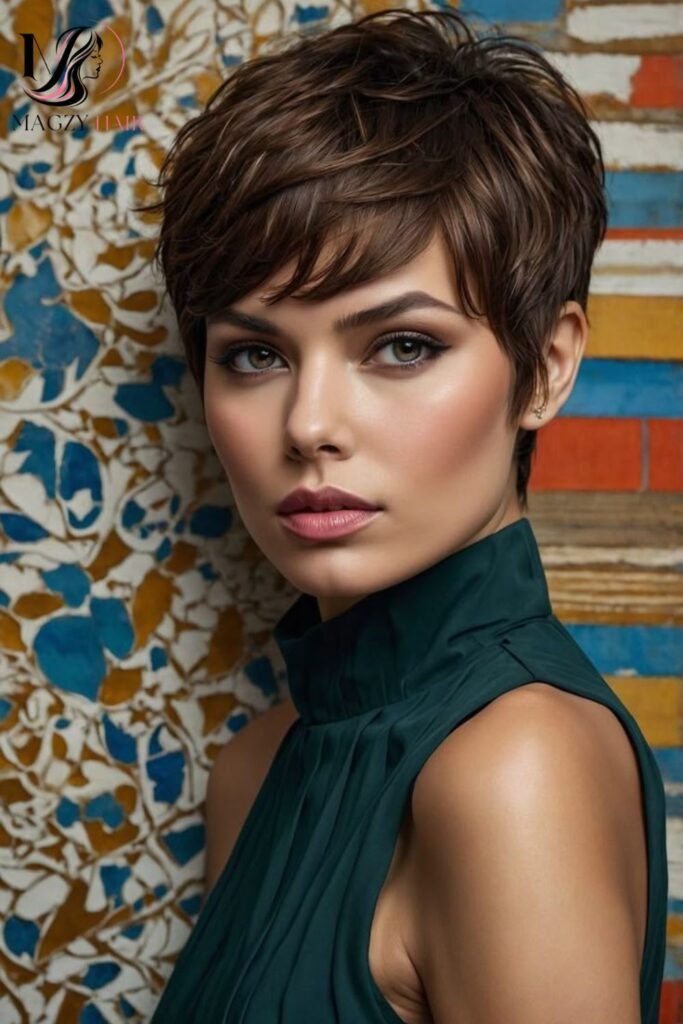
Pixie cuts paired with bangs create one of the boldest, most striking versions within short hairstyles with bangs, combining a dramatically short length with a face framing fringe for maximum visual impact. This pairing tends to work particularly well for those wanting a confident, statement making change rather than a subtle adjustment.
Textured, wispy bangs generally pair better with a pixie than heavy, blunt fringe, since two extremely bold elements together a very short crop and thick, blunt bangs can compete visually rather than complementing one another. A softer, piece-y bang style tends to balance the pixie’s dramatic shortness more gracefully.
A helpful example: someone with fine, thinning hair choosing a pixie with bangs might find that overly thinned, wispy fringe emphasizes sparseness near the hairline, while a slightly fuller, less texturized bang style paired with the same short pixie creates a more balanced, polished overall look. This distinction matters significantly for those with finer hair textures specifically.
Maintenance for pixie cuts with bangs tends to be more frequent than longer short hairstyles with bangs, generally requiring trims every 3–4 weeks to keep both the pixie’s shape and the bangs’ precise length looking intentional rather than overgrown.
Short Bob Haircuts With Blunt Bangs
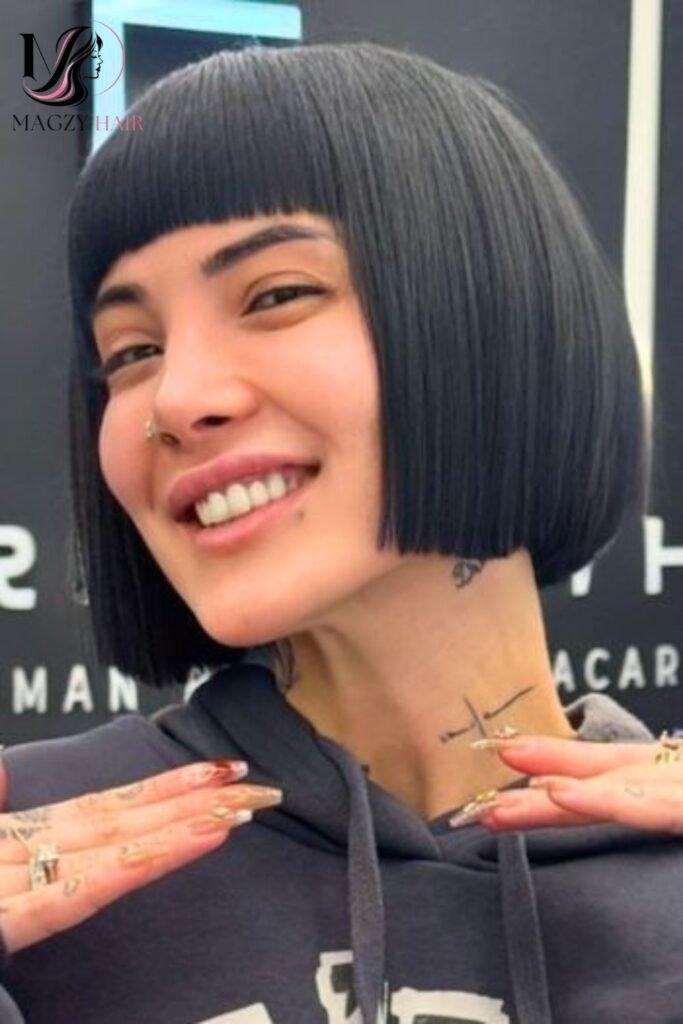
Short bob haircuts paired with blunt, straight across bangs create one of the most recognizable, graphic looks within short hairstyles with bangs, relying on precision and clean lines throughout both elements of the cut. This combination reads as polished and structured, making it a popular choice for those wanting a sharp, intentional overall aesthetic.
This pairing tends to work best on straight or only slightly wavy hair, since the style’s visual impact depends heavily on clean geometry throughout. On curlier or more heavily textured hair, blunt bangs can shrink upward significantly once dry, so stylists typically cut them somewhat longer than intended to account for this natural spring-back and ensure the final length lands appropriately.
A helpful example: someone with fine, straight hair choosing this exact pairing typically achieves the sharp, graphic look with minimal daily effort, since the hair naturally falls into the intended shape. Someone with thicker or coarser hair, however, may need additional thinning within the bangs specifically to prevent them from looking overly heavy or blocky against the forehead.
Maintenance for this combination is relatively frequent, often requiring trims every 3–4 weeks to preserve the sharp lines that define both the bob’s perimeter and the bangs’ straight edge, since even small amounts of growth can noticeably soften this style’s intentionally crisp geometry.
Short Shag Haircuts With Curtain Bangs
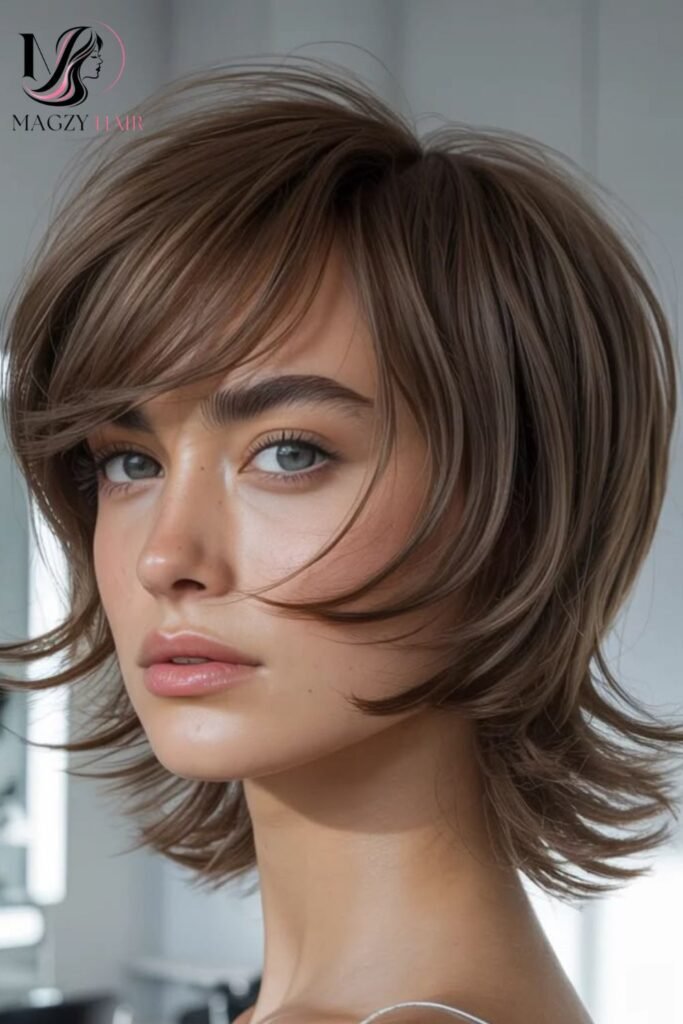
The short shag paired with curtain bangs has become one of the most popular combinations within short hairstyles with bangs, largely because both elements rely on soft, textured movement rather than precise, blunt lines. This pairing creates an effortlessly cool, undone quality that feels current without requiring extensive daily styling effort.
Curtain bangs blend particularly well into a short shag’s heavily textured layering, since both elements are cut using similar razor or point cutting techniques that create soft, piece-y movement throughout. This cohesion means the bangs feel like a natural extension of the cut rather than a separate, disconnected element layered on top.
A helpful example: someone growing out a previous fringe often finds that transitioning into curtain bangs specifically within a short shag haircut creates an easier, more forgiving transitional phase, since the shag’s overall texture disguises the awkward in between lengths that growing out bangs typically involves.
Maintenance for this combination tends to be more forgiving than blunt bang and bob pairings, since the shag’s inherent texture tolerates some growth and unevenness without looking obviously overdue for a trim, though light touch ups every 6–8 weeks help maintain the bangs’ intended shape and movement.
Choosing the Right Bang Style for Your Short Haircut
The specific bang style matters just as much as the short haircut itself when planning short hairstyles with bangs, since certain fringe types pair better with certain short lengths and shapes than others. Wispy, textured bangs tend to complement shorter, more heavily layered cuts, while blunt bangs pair particularly well with cleaner, more structured short haircuts like a classic bob.
Side swept bangs offer particular versatility across nearly every short haircut style, since the angled shape works well whether paired with a pixie, bob, or shag. This bang style also tends to be more forgiving as it grows out, blending into face framing layers rather than requiring the frequent, precise trims blunt bangs typically demand.
A helpful example: someone considering both a very short crop and blunt, heavy bangs simultaneously might achieve a more balanced overall result by choosing one bold element and one softer one, rather than maximizing boldness in both the cut and the fringe at the same time. This balance consideration is a detail worth discussing directly with your stylist before committing to both changes at once.
Communicating your priorities clearly whether that’s low maintenance, a bold statement, or a soft, face framing effect helps your stylist recommend a bang and cut pairing genuinely suited to your specific hair texture, face shape, and lifestyle rather than defaulting to whatever combination happens to be trending.
Short Hairstyles With Bangs for Round Faces
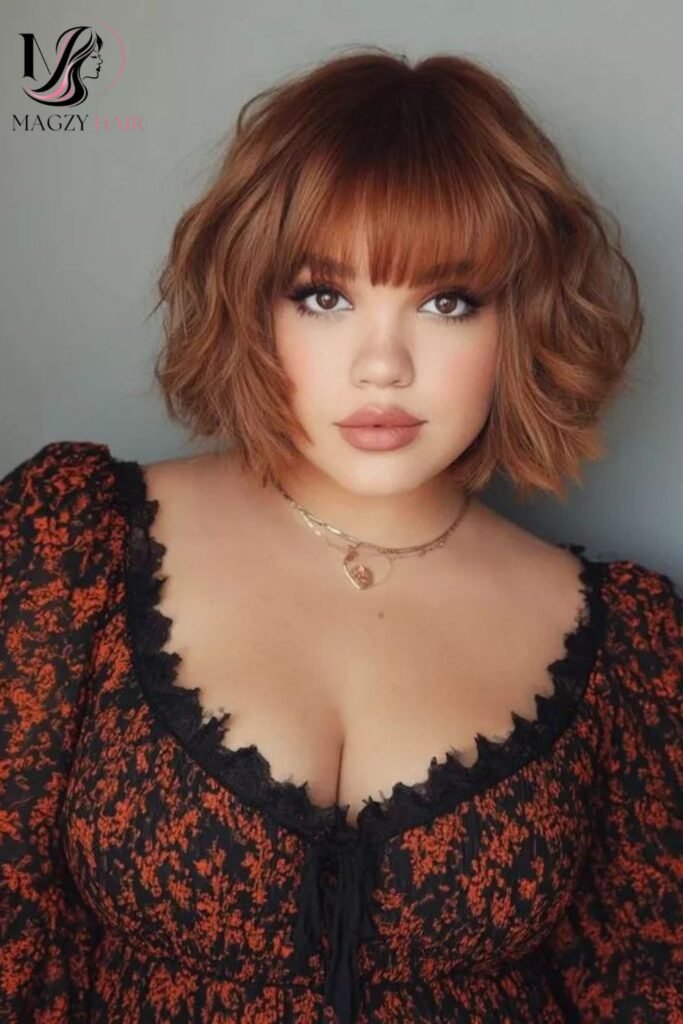
For round faces, certain bang and short haircut combinations work significantly better than others. Side swept bangs paired with a short cut that adds some height at the crown tend to elongate the face, while blunt, straight across bangs on a very short, rounded cut can sometimes emphasize width rather than balancing it.
Longer, side swept fringe that grazes the cheekbone diagonally creates a slimming, elongating effect particularly well suited to round faces, since the diagonal line visually breaks up the face’s natural roundness. This tends to be a more flattering choice than short, blunt bangs, which can create a horizontal line that inadvertently emphasizes a round face’s width.
A helpful mini scenario: a woman with a round face who requests very short, blunt bangs paired with an equally short, rounded haircut may find the combination emphasizes fullness in the face more than intended. Adjusting to side swept, slightly longer bangs paired with a cut that includes some crown height and face framing layers typically achieves a more balanced, flattering result while still delivering a fresh, short overall style.
Consulting with a stylist about specific face shape priorities such as wanting to elongate the face or soften roundness leads to far more personalized recommendations than requesting a specific bang and cut combination based on a photo alone.
Short Hairstyles With Bangs for Square Faces
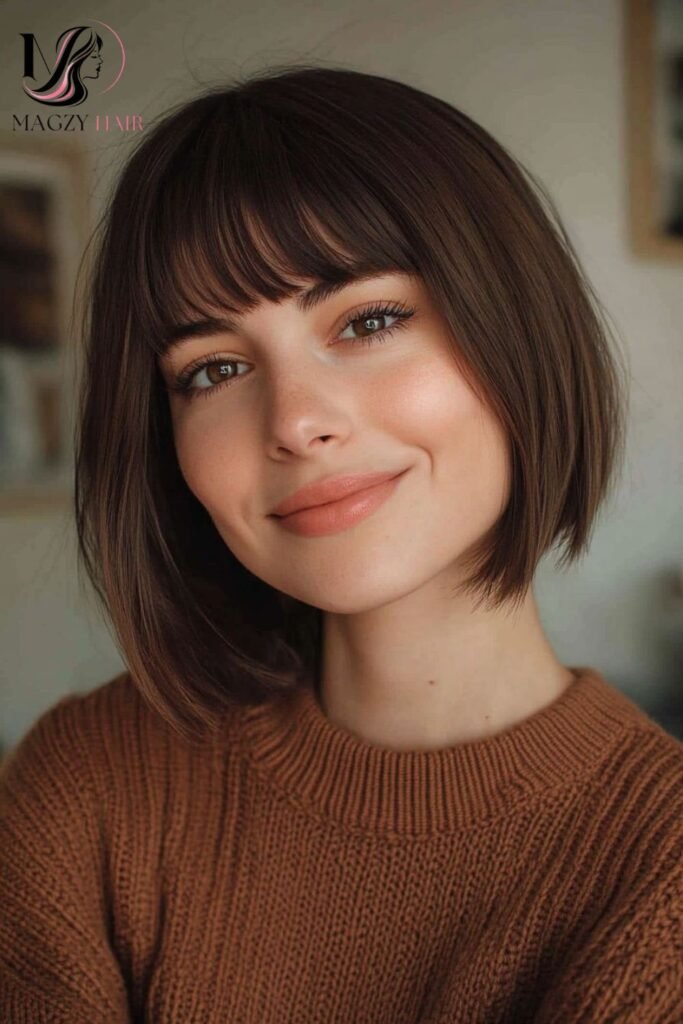
Square faces, characterized by a strong, angular jawline, generally benefit from softer, textured bang styles rather than sharp, blunt fringe within short hairstyles with bangs. Wispy or side swept bangs help soften the jaw’s natural angularity, creating a more balanced overall look without requiring changes to the underlying bone structure itself.
Blunt bangs, while striking, can sometimes emphasize angularity for square faces, particularly when paired with an equally blunt, sharp short haircut. If blunt bangs are still preferred despite a square face shape, softening the rest of the cut with slight layering or texturizing helps balance the overall geometry rather than doubling down on sharp lines throughout the entire style.
A practical example: a woman with a strong jawline who loves the graphic look of blunt bangs but wants to avoid emphasizing her jaw further might choose blunt bangs paired with a softly layered, slightly textured short cut rather than an equally blunt perimeter. This creates contrast sharp bangs, softer cut that balances rather than amplifies angular features throughout the whole style.
Longer, side swept fringe that falls diagonally across the face also works particularly well for square faces, since the diagonal line breaks up strong, straight angles more effectively than symmetrical, straight across styling, a detail worth prioritizing when choosing among short hairstyles with bangs for this particular face shape.
Short Hairstyles With Bangs for Fine or Thin Hair
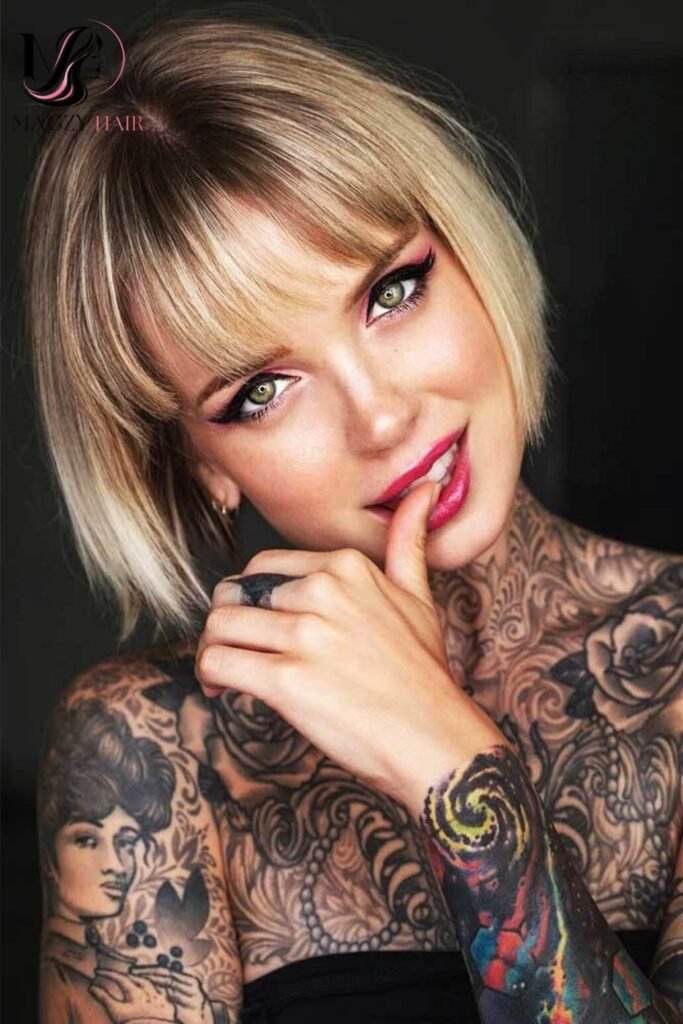
Fine or thin hair requires particular attention when choosing among short hairstyles with bangs, since certain bang styles can inadvertently emphasize a lack of density rather than disguising it. Heavily texturized, wispy bangs, while trendy, sometimes look sparse rather than intentionally airy on very fine hair, making a slightly fuller, less thinned bang style a better choice in many cases.
Blunt bangs, somewhat counterintuitively, can actually work well for fine hair, since keeping more weight and density in the fringe area helps it appear fuller rather than wispy or thin. The key is avoiding excessive thinning within the bangs themselves, keeping the perimeter relatively solid while allowing the rest of the short cut to carry any needed layering and movement.
A helpful example: someone with fine hair who requests heavily texturized, thinned bangs might find the fringe looks patchy or insubstantial rather than deliberately textured. Opting for a fuller, only lightly texturized blunt or curtain bang style typically creates a more polished, intentional look for finer hair textures, avoiding the sparse appearance heavy thinning can create.
Root lifting styling techniques also play an important role for fine hair paired with bangs, since flat, limp bangs can look immediately dated regardless of how well they were originally cut. A quick pass with a round brush at the root of the bangs during blow drying helps maintain lift and fullness throughout the day.
Short Hairstyles With Bangs for Thick or Curly Hair
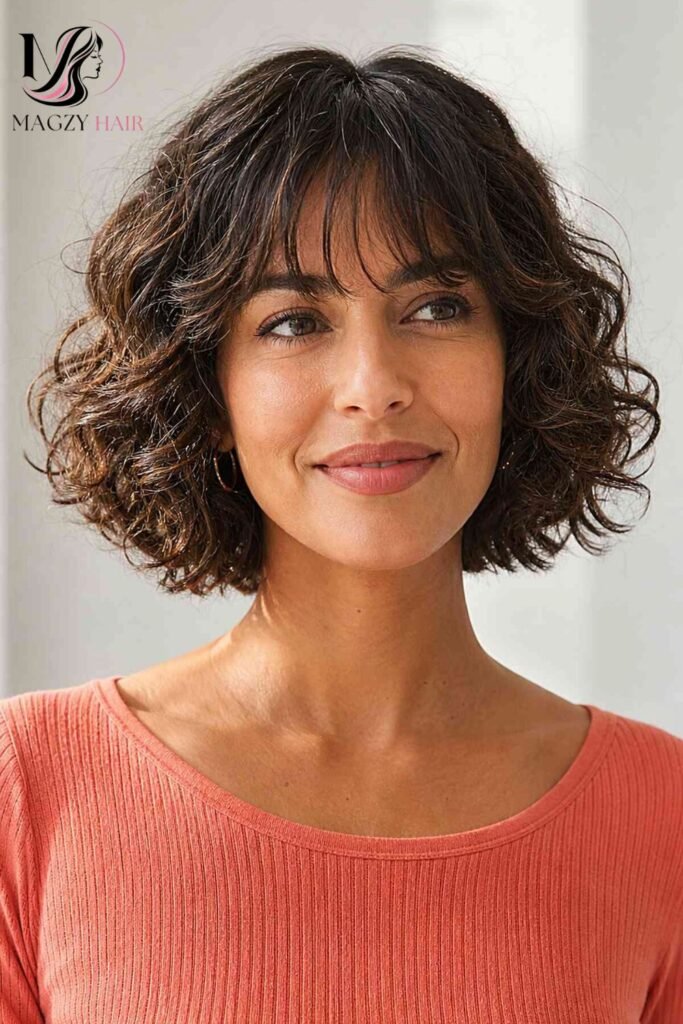
Thick or curly hair requires a different strategic approach within short hairstyles with bangs, since the primary challenge typically involves managing volume and bulk rather than creating the illusion of more fullness. Bangs on thick or curly hair generally need more aggressive thinning than on fine hair, preventing the fringe from looking heavy, blocky, or difficult to style day to day.
Curly hair specifically requires bangs to be cut dry, or at minimum checked and adjusted while dry, since curl shrinkage significantly affects how the bangs ultimately sit once fully styled. A stylist cutting curly bangs while the hair is wet and stretched risks a dramatic, unintended shortening once the curls spring back to their natural pattern, a common and frustrating mistake within this hair type specifically.
A practical example: someone with tight curls requesting eyebrow grazing bangs while their hair is wet and stretched might find the bangs shrink up significantly shorter than intended once fully dry and curled. Seeking a stylist specifically experienced in cutting bangs on curly hair, and having the cut finalized on dry, styled hair, helps avoid this frequently repeated and disappointing mistake.
Styling thick or curly bangs typically involves lightweight curl creams applied to damp hair, followed by air drying or diffusing to preserve natural texture without excess frizz. Avoiding heavy, greasy products is particularly important for bangs specifically, since product buildup in this smaller, more visible section becomes noticeable far more quickly than similar buildup throughout the rest of a short cut.
Styling Tips to Keep Bangs Looking Fresh on Short Cuts
Even a well cut fringe requires the right daily habits to look consistently polished within short hairstyles with bangs. Washing bangs slightly more frequently than the rest of the hair or at minimum rinsing and lightly restyling them between full washes helps prevent the oil buildup that occurs faster in this area due to its proximity to the forehead and natural oil production.
A small round brush, roughly one inch in diameter, is particularly useful for blow drying bangs into their intended shape, whether that’s a sleek, blunt line or a softer, side swept sweep. Using a brush significantly larger or smaller than the bang’s actual width often makes it harder to achieve the precise shape and direction the original haircut intended.
A helpful example: someone struggling with bangs that won’t lie flat despite proper brushing often benefits from a quick blast of cool air at the end of blow drying, which helps set the style in place more effectively than heat alone. This simple, often overlooked technique can make a noticeable difference in how long the bangs hold their shape throughout the day.
Dry shampoo applied specifically at the bang’s roots, even on days when the rest of a short haircut doesn’t need it, helps extend the fresh, just styled look between washes. This targeted, area specific approach to product application is a detail many generic styling guides overlook, yet it makes a meaningful difference in how polished short hairstyles with bangs look day to day.
Growing Out Bangs on a Short Haircut
For those who eventually want to grow out their bangs while keeping a short overall haircut, a strategic approach prevents the awkward, in between phase many people associate with this transition. Rather than letting bangs grow completely untouched, light trims every few weeks that gradually blend the fringe into face framing layers help maintain a styled appearance throughout the growing out process.
A useful technique involves using bobby pins or a small amount of texturizing product to sweep growing bangs to the side, blending them into the surrounding short length as they lengthen. This approach works particularly well with side swept or curtain bang styles specifically, since these were already designed to blend rather than stand apart from the rest of the cut.
A practical scenario: someone growing out blunt, eyebrow length bangs on a short haircut often experiences the most difficult transition period around the cheekbone length stage, when the bangs are too long to stay put but too short to blend seamlessly into the rest of the shorter cut. Requesting strategic face framing layers during this specific phase helps ease this typically frustrating transitional length.
Patience and realistic timeline expectations also matter significantly during this process. On average, bangs grow approximately half an inch per month, meaning a full transition from short, blunt bangs back to an even length within a short haircut can take anywhere from four to eight months, depending on the bang’s original length and individual hair growth rate.
Color Techniques That Complement Short Hairstyles With Bangs
Color placement plays a meaningful role in how bangs and short haircuts read visually together, a detail worth discussing alongside the cut itself. Soft, subtle highlights placed specifically within the bangs and around the face can draw additional attention to the eyes, enhancing the face framing effect that bangs are specifically meant to create within short hairstyles with bangs.
For those with naturally graying hair choosing to embrace it, subtle lowlights or toning treatments help ensure the color transition looks intentional both within the bangs and throughout the rest of the short cut, rather than creating an obvious contrast between the two areas. This cohesive approach tends to look more polished than treating bang color and overall hair color as separate considerations.
A helpful example: solid, single process color throughout a short haircut with bangs can sometimes make the bangs look visually separate or disconnected from the rest of the cut, particularly if the bangs are styled to fall differently than the rest of the hair. Strategic, dimensional coloring that flows naturally from the bangs into the short length helps create a more seamless, cohesive overall appearance.
Warmer color tones near the face, such as soft copper or golden highlights specifically placed within the bang area, can also help brighten the complexion and draw attention toward the eyes. This targeted color placement is a detail experienced colorists frequently use specifically for short hairstyles with bangs, even when the rest of the hair color remains relatively neutral or unchanged.
Common Mistakes to Avoid With Short Hairstyles and Bangs
One frequent mistake is choosing a specific bang and short haircut combination based purely on a trend photo without considering personal hair texture, density, and face shape. A pairing that looks stunning on a model with thick, straight hair might translate very differently on someone with fine or curly hair, leading to disappointment rooted more in mismatched expectations than the haircut choice itself.
Skipping regular trims is another common error, since bangs specifically grow out and lose their intended shape faster than almost any other part of a haircut. Waiting too long between bang specific touch ups even if the rest of the short cut still looks fine often results in fringe that falls into the eyes or loses the clean line that made the original style look polished and intentional.
Using the wrong products on bangs specifically is a subtler but common mistake, since heavy oils or thick creams meant for longer hair lengths can weigh down shorter bangs significantly, making them look greasy or flat far faster than the rest of a short haircut. Choosing lightweight, bang-specific styling products helps avoid this frequently overlooked issue.
Finally, attempting to trim bangs at home without proper technique or tools is a common mistake that can lead to uneven, choppy results, particularly with precise, blunt bang styles that rely on exact symmetry. While minor touch ups between salon visits are sometimes reasonable, significant at home bang cutting is generally best left to a professional stylist to avoid an outcome that’s difficult to correct quickly.
The Future of Short Hairstyles With Bangs
Short hairstyles with bangs continue to evolve alongside broader shifts in both cutting technique and personal styling preferences. Future trends are leaning toward more customized bang shapes tailored specifically to individual face structure and hair texture, rather than a handful of standardized bang styles applied broadly across very different hair types and face shapes.
There’s also growing emphasis on low maintenance bang styles that still deliver strong face framing impact, reflecting broader lifestyle trends favoring efficient routines without sacrificing a polished, intentional appearance. Curtain and side swept bangs, which already tolerate more growth between trims than blunt styles, are likely to remain especially popular as this preference continues shaping salon requests.
Technology is also beginning to play a role in this space, with some salons now using AI based simulation tools that allow clients to preview how different bang and short haircut combinations might look on their specific face shape and hair texture before any cutting begins. This kind of personalized, technology assisted consultation could meaningfully reduce the trial and error historically associated with committing to bangs.
Looking further ahead, increased focus on texture specific cutting training is likely to improve outcomes particularly for curly and coily hair types, ensuring bangs paired with short cuts are cut with genuine expertise across a wider range of natural textures. This broader expertise should make short hairstyles with bangs an increasingly accessible, well executed option regardless of a person’s specific hair type.
Conclusion
Short hairstyles with bangs offer a striking, versatile way to combine a fresh, low maintenance cut with genuine face framing impact. From pixies and bobs to shags, and blunt, curtain, or side swept bang styles, there’s a version of this pairing suited to nearly every face shape and hair texture. If you’ve been considering this look, use these ideas as a starting point for your next conversation with a trusted stylist.
Ayesha Noor is the founder and lead writer behind Magzy Hair. With 4 years of experience researching hairstyles, hair care, and beauty trends, she enjoys helping readers discover styles that suit their unique personality and lifestyle.


