
Shoulder Length Curly Hairstyles: The Complete Guide to Cuts, Care, and Styling

Shoulder length curly hairstyles solve a problem that most generic curly hair guides never actually address: curls at this specific length behave differently than short curls or long curls, and cutting or styling them the same way almost always leads to disappointment. Shrinkage, shape, and volume all shift once curls land between the collarbone and shoulders, which means the techniques that work beautifully on long curly hair can leave shoulder length curls looking triangular, unbalanced, or frizzy instead of full and defined.
This guide goes beyond a simple list of shoulder length curly hairstyles. It explains how curl pattern, hair density, and face shape specifically interact with this length, along with details most articles skip like why the exact same haircut request can shrink into two completely different shapes depending on curl type, and why shoulder length curls often need a different layering strategy than any other length. Whether you’re growing curls out or cutting them shorter, this is the deeper, more practical resource for shoulder length curly hairstyles.
Why Shoulder Length Curly Hair Needs a Different Cutting Approach
Shoulder length curly hairstyles require more precise planning than longer or shorter curly cuts, mainly because this length sits right in the range where shrinkage has the biggest visual impact. Curls that fall past the shoulders when stretched can shrink up several inches once dry, sometimes landing closer to chin length, which is why a stylist unfamiliar with curly hair often misjudges how much to cut at this specific length.
This length also tends to expose uneven density more than longer curls do, since there’s less overall weight to pull curls downward and disguise thin or sparse sections. A curly cut that looks full and balanced at a longer length can suddenly reveal gaps or unevenness once trimmed to shoulder length, making precise, curl by curl cutting far more important here than at other lengths.
A helpful example: someone requesting a “simple trim” to shoulder length from a stylist who cuts curly hair wet and straight often ends up with noticeably shorter, uneven results once the curls spring back into their natural pattern. Seeking a stylist who specifically dry cuts or cuts curl by curl helps avoid this frequently repeated and frustrating mistake at this particular length.
Because shoulder length curls sit at this sensitive shrinkage point, this is also the length where regular trims matter most. Even a small amount of unintentional length loss can shift the overall shape from a rounded, balanced silhouette into something noticeably more triangular, making consistent, curl specific maintenance especially important here.
Keep Reading: https://magzyhair.com/fall-hair-colors-for-blondes/
Layered Curly Shag
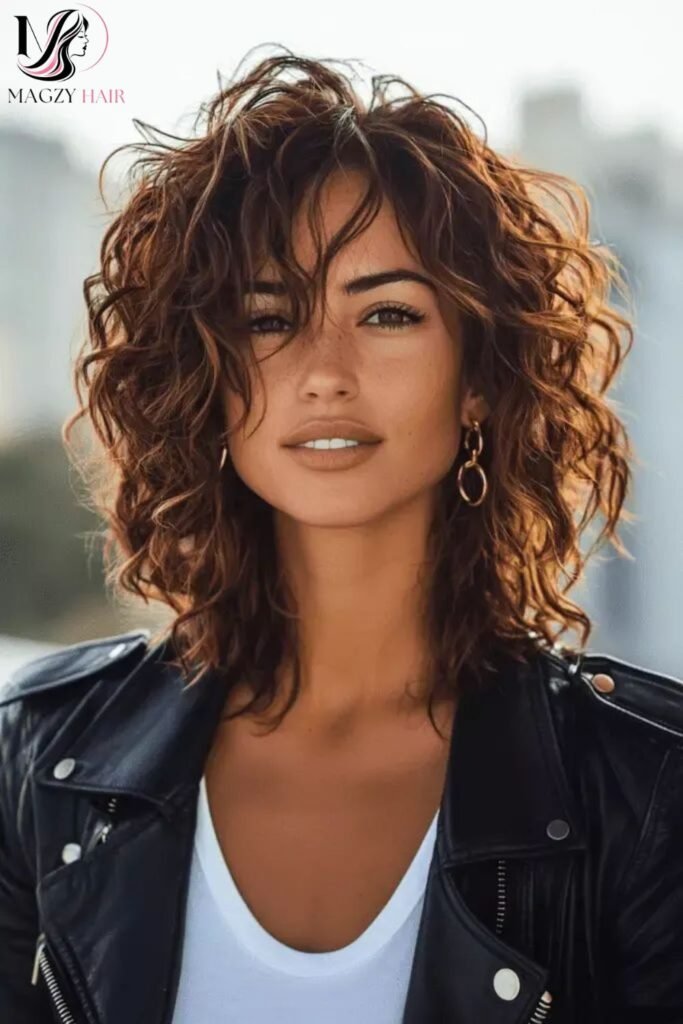
The layered curly shag brings choppy, textured layers to shoulder length curls, creating movement and reducing bulk without sacrificing the fullness curls naturally provide. This style works particularly well for medium to thick curly hair, where the internal layering prevents the classic “triangle” shape that can happen when curls are left too heavy at the bottom and untouched at the crown.
What makes this shoulder length curly hairstyle especially effective is where the shortest layers begin. Starting them around cheekbone level rather than too close to the crown allows the shag’s texture to blend naturally into the length below, rather than creating an abrupt, disconnected section that stands apart from the rest of the curls.
A mini scenario worth noting: someone with dense, tightly coiled curls who requests a shag without discussing layer placement might end up with a rounder, more bouffant shape than intended, since tighter curl patterns shrink and expand more dramatically than looser waves. Communicating your specific curl type alongside the shag request helps the stylist adjust layer length accordingly for a more predictable result.
This style also photographs and styles beautifully with minimal daily effort, since the built in layers already provide movement that straighter shag cuts typically require styling tools to achieve. For curly hair specifically, that’s a genuine time saving advantage most competitor guides don’t mention.
Curly Lob: Long Curly Bob
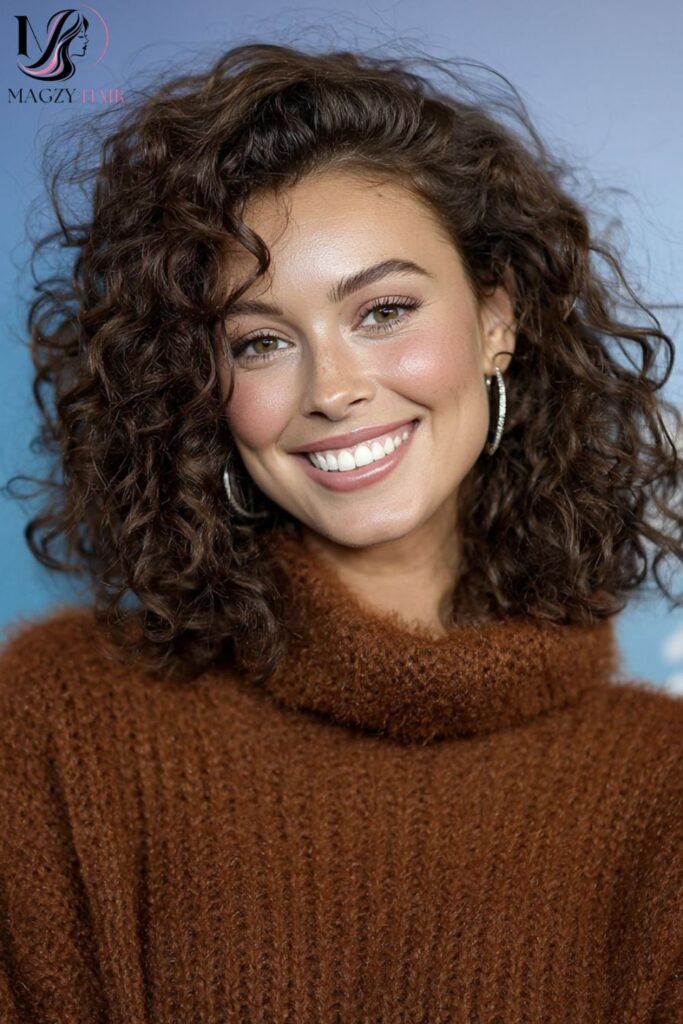
The curly lob takes the popular long bob silhouette and adapts it for natural texture, landing right at or just below the shoulders for a polished, rounded shape. This shoulder length curly hairstyle tends to suit a wide range of curl patterns, from loose waves to tighter coils, since the length itself does most of the visual work rather than relying on heavy layering.
Because the curly lob keeps more length and weight at the perimeter compared to heavily layered styles, it tends to create a fuller, denser looking silhouette, which is particularly flattering for finer or lower density curly hair that can look sparse with too much internal thinning. This makes it one of the more universally recommended shoulder length curly hairstyles for those unsure where to start.
A helpful example: someone with fine, loosely curled hair who wants a fuller looking style often achieves better results with a curly lob than a heavily layered shag, since the added length at the ends creates the appearance of more density than thinner, choppier layers would provide. This distinction is a detail many generic style guides overlook entirely.
The curly lob also tends to be relatively low maintenance in terms of trim frequency, since its more blunt, less heavily layered perimeter grows out gracefully without dramatically shifting shape. This makes it a practical choice for anyone wanting a polished shoulder length curly hairstyle without frequent salon visits.
Deva Cut for Shoulder Length Curls
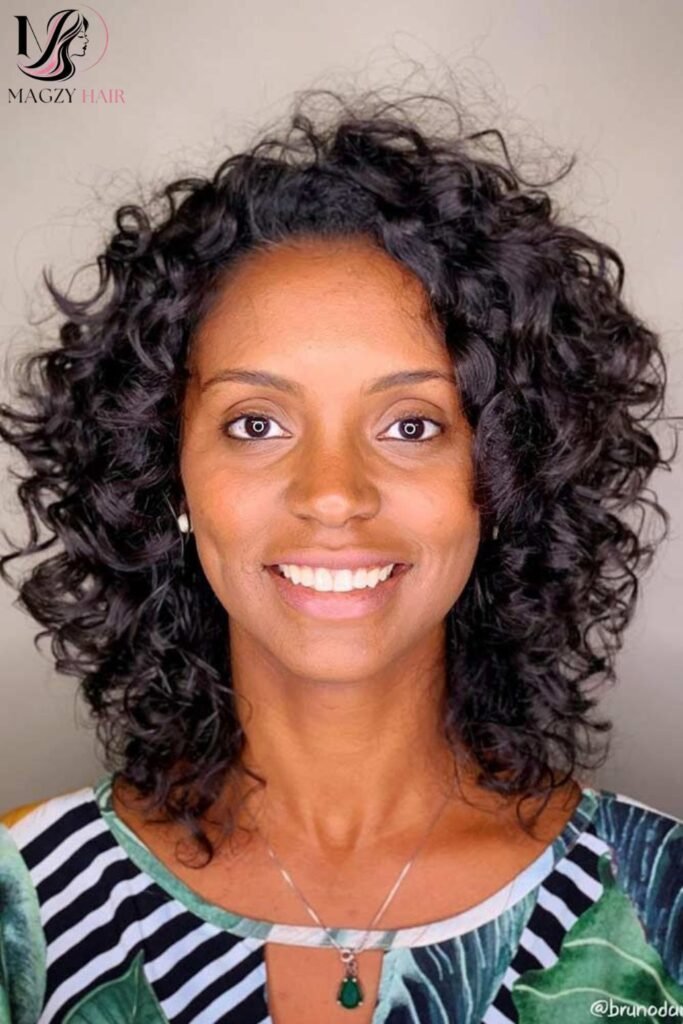
The Deva cut is a specialized dry cutting technique developed specifically for curly and coily hair, and it remains one of the most reliable ways to achieve a genuinely well shaped shoulder length curly hairstyle. Rather than cutting hair wet and stretched, a Deva trained stylist cuts each curl individually while dry, allowing them to see exactly how the hair falls and behaves before making any cutting decisions.
This method is particularly valuable at shoulder length specifically, since this is the range where shrinkage most dramatically affects the final shape. Cutting curl by curl allows the stylist to account for exactly how much each section will spring up, rather than estimating based on stretched, wet length, which is the single biggest cause of uneven or unexpectedly short results at this length.
A practical example: someone with a mix of curl patterns throughout their head tighter curls at the nape and looser curls on top, a common and often unaddressed reality often finds a Deva trained stylist accounts for this variation individually, rather than cutting the whole head to one uniform, wet length. This individualized approach produces a far more balanced final shape.
Because this technique is more time intensive, Deva cuts typically cost more and take longer than a standard trim, but the improved shape and reduced need for corrective cuts later often make it a worthwhile investment for anyone serious about maintaining shoulder length curly hairstyles long term.
Curly Shoulder Length Hair With Curtain Bangs
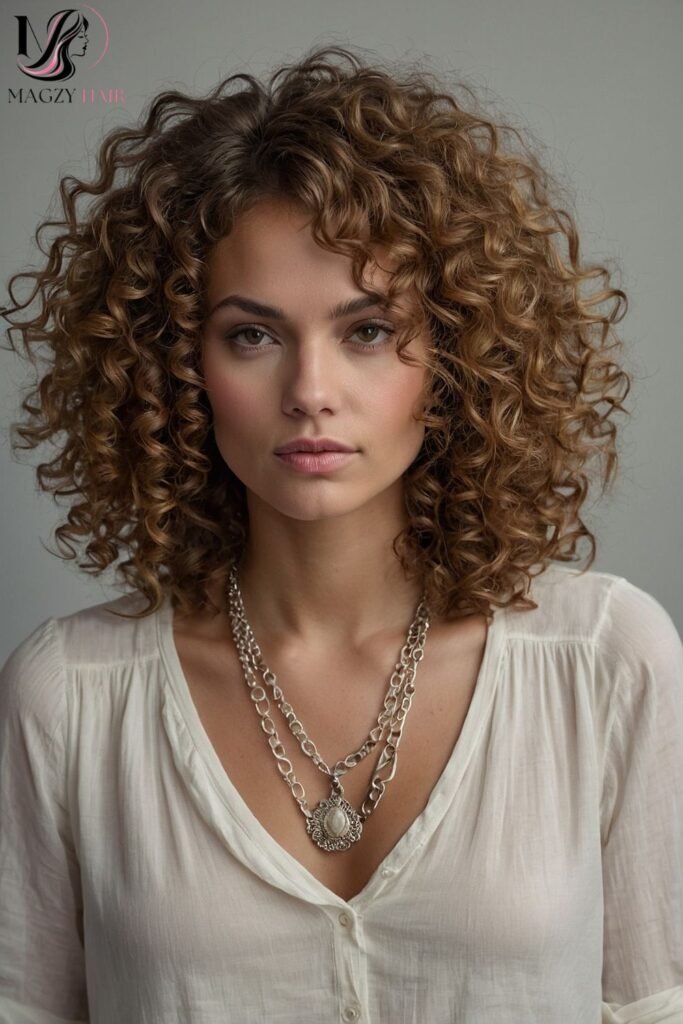
Curtain bangs bring a soft, face framing element to shoulder length curly hairstyles, parting naturally down the middle and blending gradually into the surrounding curls rather than creating a stark, disconnected fringe. This combination has become increasingly popular because curly curtain bangs tend to shrink less dramatically than a full, blunt fringe would, making them a lower risk way to add bangs to curly hair.
Getting curly curtain bangs right depends heavily on cutting them dry and slightly longer than a straight hair curtain fringe would require, since curl shrinkage affects shorter face framing pieces more noticeably than longer sections. A stylist unfamiliar with this adjustment often cuts curly bangs using straight hair proportions, resulting in bangs that shrink up shorter and rounder than intended.
A helpful example: someone with tight, coily curls requesting curtain bangs modeled after a straight hair reference photo needs the bangs cut several inches longer while stretched, accounting for significant shrinkage once the curl pattern springs back. This is precisely the kind of detail that separates a well executed curly bang from a disappointing, overly short result.
Styling curly curtain bangs typically involves scrunching in a lightweight curl cream and either air drying or diffusing, similar to the rest of shoulder length curly hairstyles, though many people find occasional finger styling throughout the day helps keep the part and framing looking intentional rather than undone.
Voluminous Curly Layers
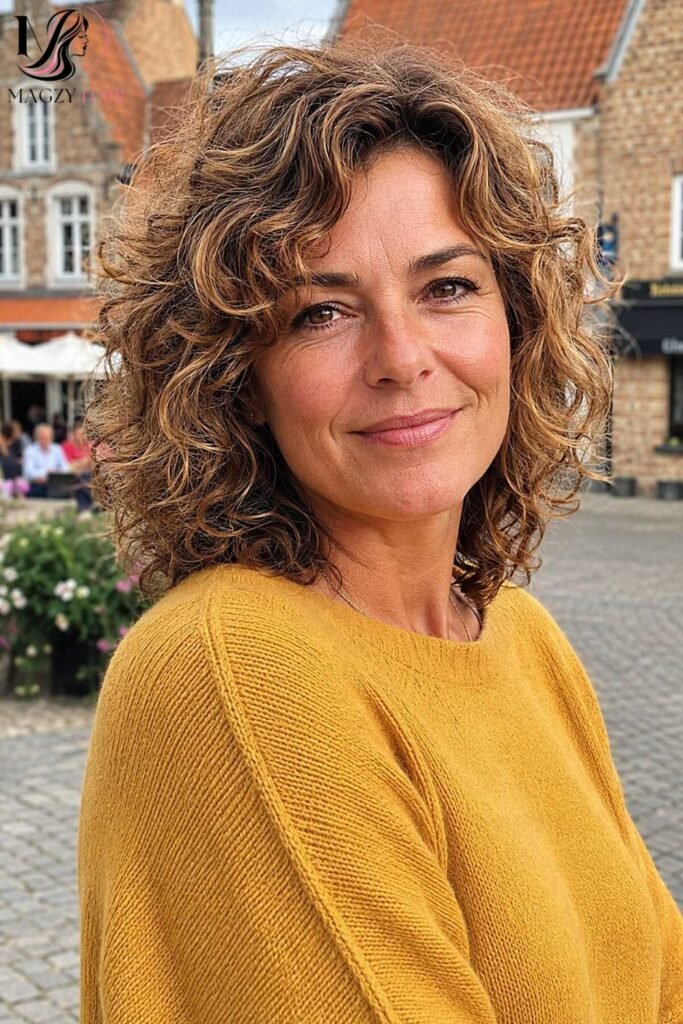
Voluminous curly layers embrace and amplify natural curl volume rather than working to control or minimize it, creating a fuller, rounder shoulder length curly hairstyle with noticeable lift at the crown. This approach works particularly well for those with naturally springy, resilient curl patterns that hold shape well, since the added layering gives the curls room to expand fully rather than being weighed down by uncut length.
This style tends to require more strategic layering than a simple, one length cut, since the goal is deliberately encouraging volume rather than minimizing it. Layers cut shorter around the crown, gradually blending into longer length toward the shoulders, help create this rounded, voluminous silhouette without looking uneven or unintentionally choppy.
A mini scenario: someone with naturally fuller curls who has been told by past stylists to “thin out” their hair to reduce volume might actually achieve a more flattering result by leaning into voluminous layers instead, working with the hair’s natural fullness rather than fighting against it. This shift in approach often produces a far more confident, intentional looking result.
Maintenance for voluminous curly layers benefits from lightweight, non greasy styling products, since heavier creams or oils can weigh down the crown volume this style specifically relies on. A mousse or lightweight gel applied primarily to the roots helps maintain lift throughout the day without disrupting curl definition elsewhere.
Curly Shoulder Length Bob With Side Part
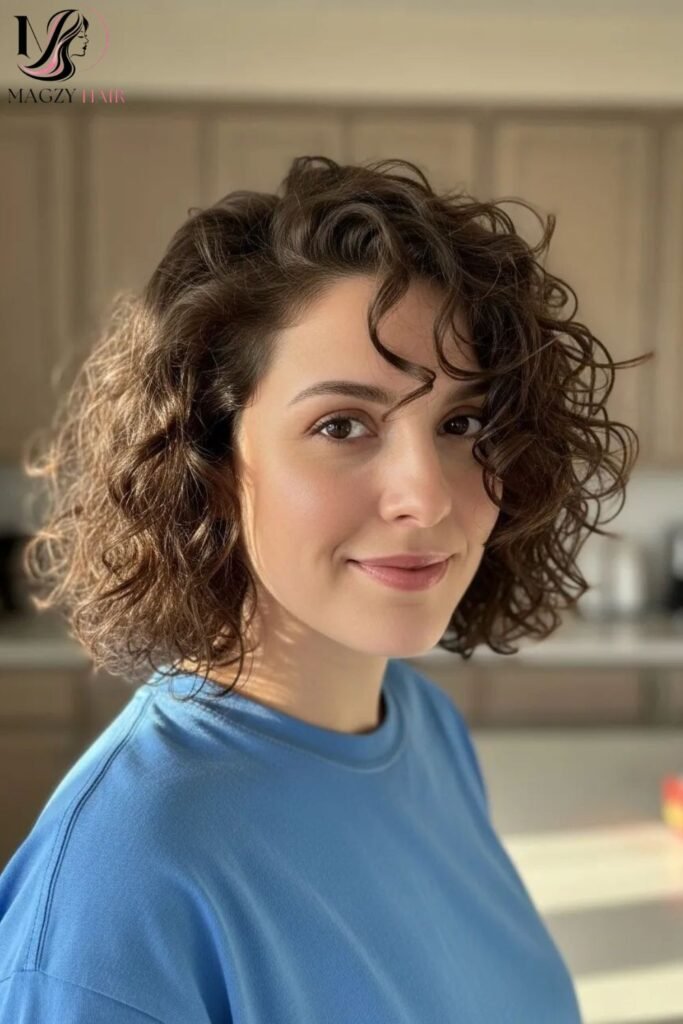
A deep side part adds asymmetry and visual interest to an otherwise classic shoulder length curly hairstyle, creating a slightly different silhouette on each side and softening the overall roundness that a center part on curly hair can sometimes create. This subtle adjustment is a detail many curly hair guides overlook, despite how significantly a part placement change can alter the entire look.
This styling choice works especially well for round or square face shapes, since the deep side part introduces some visual asymmetry that helps balance a fuller or more angular facial structure. Straight across, center parted curly hair, by contrast, can sometimes emphasize width rather than softening it, particularly at this shrinkage prone length.
A helpful example: someone with a naturally round face who has always worn a center part might find that simply shifting to a deep side part, without changing the haircut itself, creates a noticeably more flattering, elongated appearance. This is a low-cost, easy adjustment worth trying before committing to any actual cutting changes.
Maintaining a consistent side part on curly hair does require slightly more intentional styling than a center part, since curls have a tendency to fall back toward their natural growth pattern. Clipping the part in place while diffusing, then releasing the clip once fully dry, helps train the hair to hold the desired side part throughout the day.
Curly Shoulder Length Hair With Balayage or Highlights
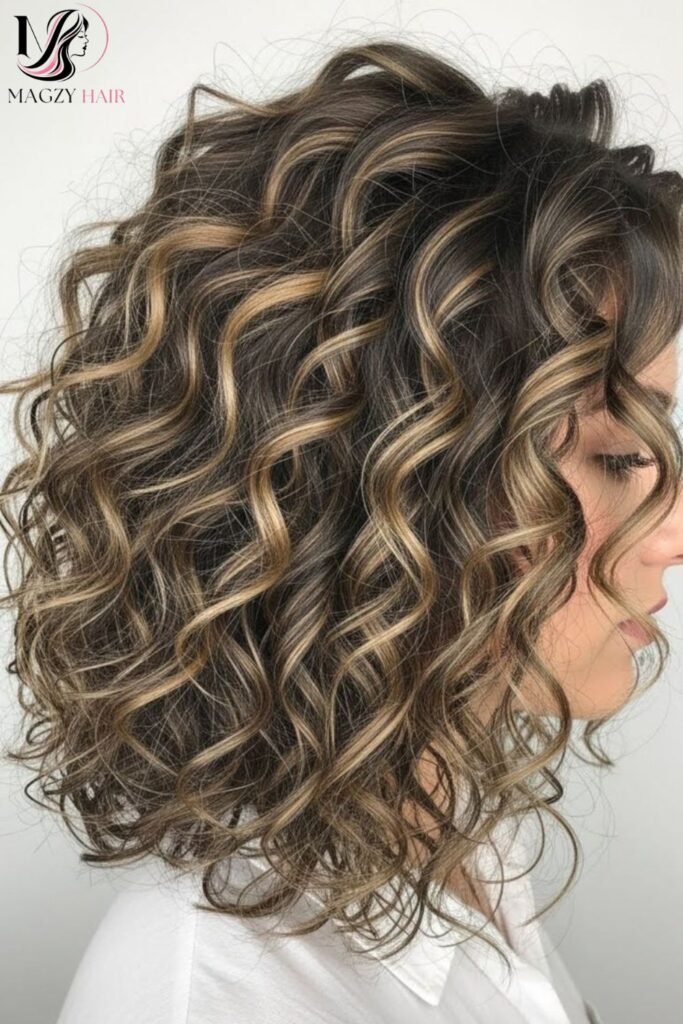
Adding balayage or strategic highlights to shoulder length curly hairstyles introduces genuine dimension that flat, single process color often lacks, especially important on curly hair where light naturally catches and reflects differently off each individual curl. Hand painted color placement tends to work better than traditional foiling for curly hair specifically, since it creates a softer, more blended transition that doesn’t fight against natural curl movement.
Color placement matters significantly more on curly hair than straight hair, since curl pattern affects exactly where highlighted pieces will visually land once the hair springs up and takes its natural shape. A colorist unfamiliar with curly hair might place highlights based on straight, stretched sections, resulting in color that lands unexpectedly once curls fully form and shrink into place.
A practical example: someone with curly hair who receives highlights placed and photographed while hair is blown out straight might feel confused when the color looks different once curls are washed and air dried into their natural pattern. Requesting that highlights be placed and reviewed on dry, curly hair not stretched or blown out helps ensure the final result matches expectations.
Because curly hair is often more porous from its natural texture, colorists frequently recommend additional bond building and moisture treatments alongside any lightening service. This extra care step helps protect curl pattern integrity, preventing the color process from loosening or damaging the curl definition this shoulder length curly hairstyle depends on.
Wash and Go Shoulder Curls
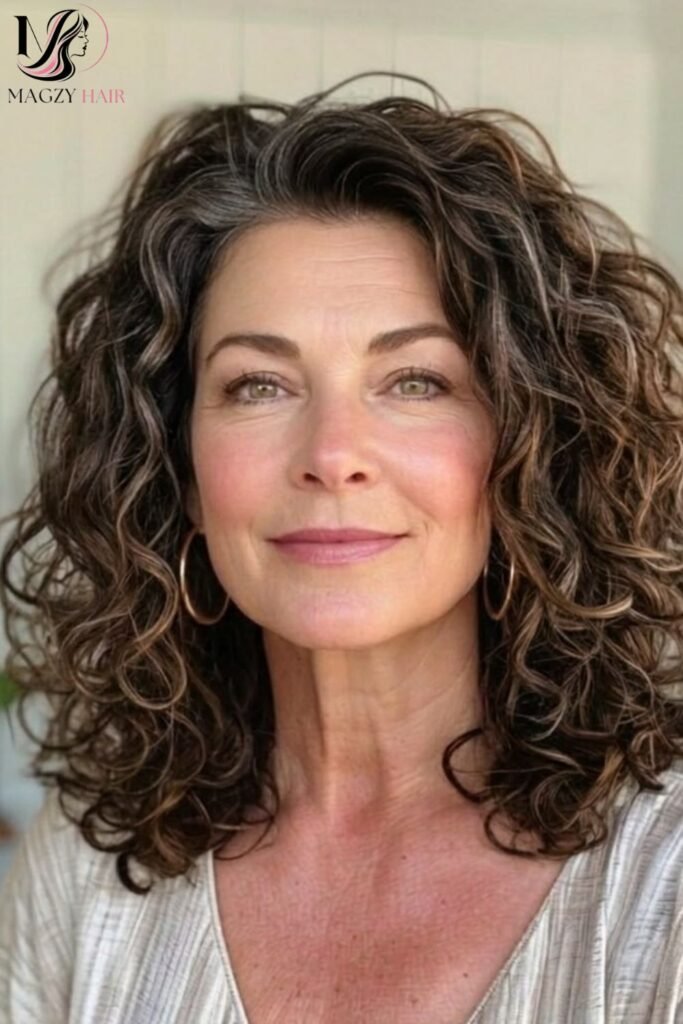
The wash and go remains one of the most popular, lowest effort approaches to shoulder length curly hairstyles, relying entirely on the hair’s natural curl pattern with minimal manipulation beyond washing and product application. This method works particularly well at shoulder length specifically, since there’s enough hair for a full, defined curl pattern to show without appearing too compact or overly tight, something that can happen with wash and go styles on shorter cuts.
Achieving a polished wash and go at this length typically depends on applying curl defining products to soaking wet hair, then either air drying or diffusing without disrupting the curl clumps as they form. Touching or restyling hair too early in the drying process is the most common cause of frizz and disrupted curl definition with this particular styling method.
A helpful example: someone who applies curl cream and gel to damp, rather than fully soaked, hair often notices more frizz and less defined curl clumping than someone who applies the same products to hair that’s still dripping wet. This small adjustment in timing makes a significant difference in how cleanly the wash and go sets at shoulder length specifically.
Overnight preservation also plays an important role in extending a wash and go style. Loosely gathering shoulder length curls into a “pineapple” at the top of the head before bed, using a silk or satin scrunchie, helps prevent flattening and frizz, allowing the style to look nearly as fresh on day two as it did on day one.
Twist Out Shoulder Curly Style
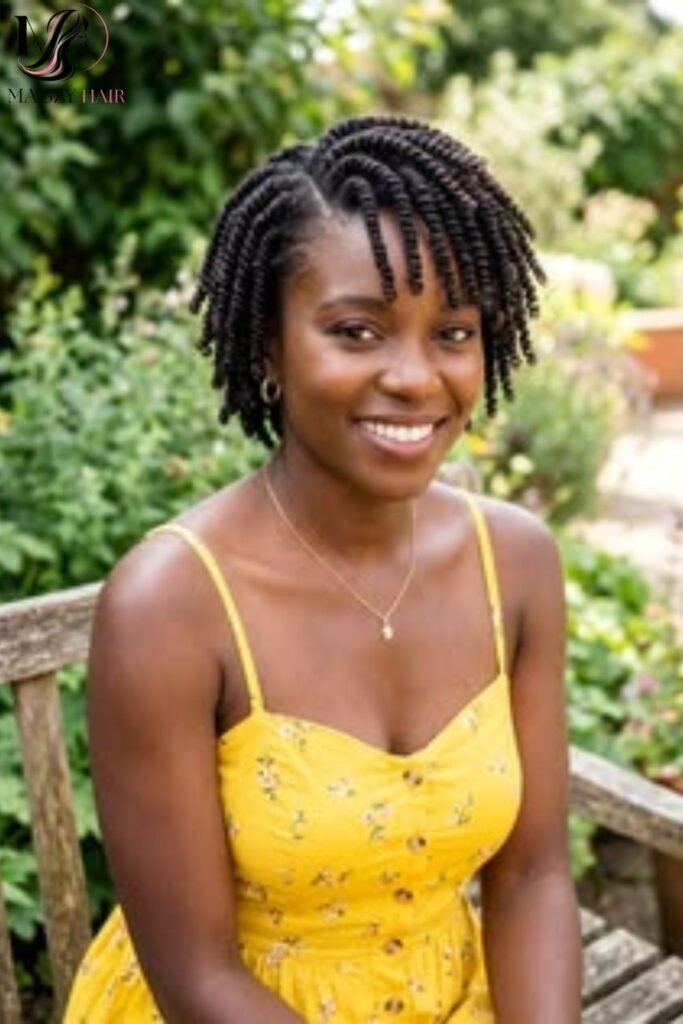
The twist out technique involves twisting damp, product coated sections of hair and allowing them to dry before unraveling, creating a defined, elongated curl pattern that differs noticeably from a natural wash and go. This method works especially well for shoulder length curly hairstyles on tighter curl and coil patterns, where a twist out often provides more definition and slightly more length retention than air drying alone.
Because twist outs rely on manual manipulation rather than purely natural curl clumping, the size of each twisted section directly determines the final curl size once unraveled. Smaller sections create tighter, more voluminous curls, while larger sections produce looser, more elongated waves, giving considerable control over the final shoulder length shape and volume.
A mini scenario: someone who twists very large sections expecting a tight, defined curl pattern is often surprised by a looser, wavier result than anticipated, since section size directly correlates with final curl tightness. Adjusting section size based on desired outcome, rather than convenience or speed, produces far more predictable, satisfying results with this technique.
Twist outs on shoulder length curly hairstyles typically last two to four days with proper nighttime preservation, using a satin bonnet or pineapple technique to protect the style from friction and flattening while sleeping, making it a practical option for those wanting defined curls without daily restyling effort.
Half Up Curly Style
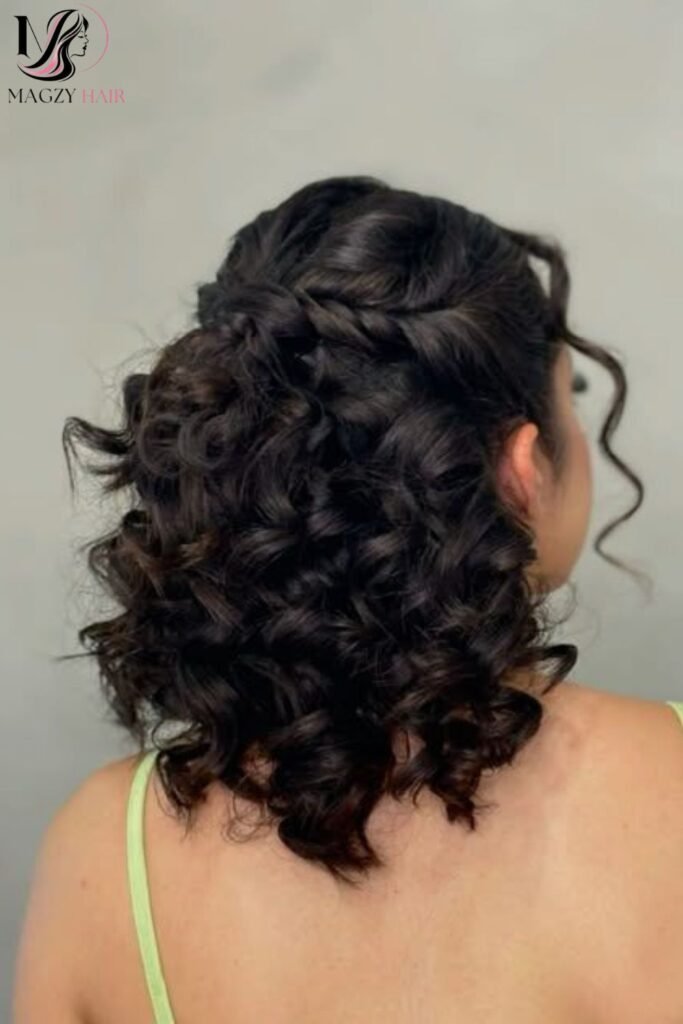
A half up style pulls the top section of shoulder length curls back into a small ponytail or clip, leaving the remaining curls down, offering quick styling versatility that shorter curly cuts often can’t accommodate as easily. This shoulder length curly hairstyle works well for both casual, everyday wear and slightly more polished occasions, depending on how neatly the top section is secured.
Because curly hair has more natural volume and texture than straight hair, a half up style on curls tends to require fewer bobby pins and less precise sectioning to look intentional, since some natural imperfection actually complements the overall curly aesthetic rather than looking messy. This makes half up styling a genuinely low effort option for shoulder length curly hair specifically.
A helpful example: someone transitioning a wash and go from a polished daytime look into an evening style might simply gather the top section up and secure it, rather than restyling the entire head from scratch. This quick adjustment showcases the practical versatility that makes shoulder length curly hairstyles so adaptable for varied daily schedules.
For curls prone to friction and flattening at the crown, a claw clip rather than a tight elastic often works better for half up curly styles, since it secures hair without creating a dent or crease line that a tighter hair tie can leave behind, particularly noticeable on curl patterns with significant natural volume.
Pineapple Updo for Shoulder Length Curls
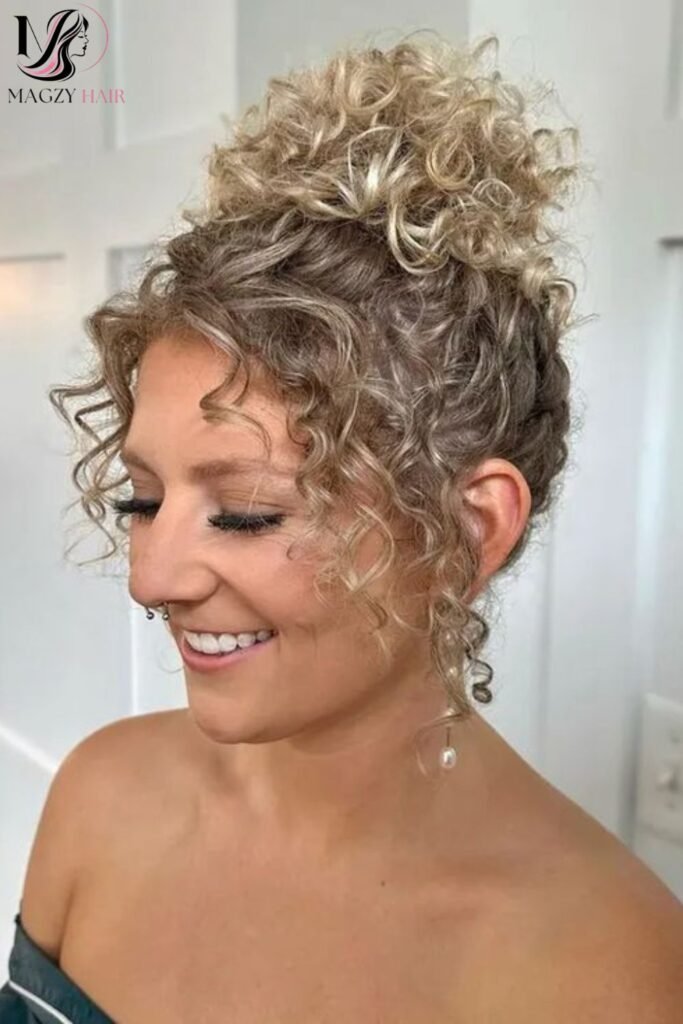
The pineapple updo, gathering curls loosely at the top of the head, has become both a practical nighttime preservation method and a legitimate daytime style in its own right for shoulder length curly hairstyles. Unlike a tight, high ponytail, the pineapple keeps curls loose and slightly elevated, preventing the crushing and flattening that a standard ponytail elastic can cause on curl pattern.
At shoulder length specifically, the pineapple tends to look more polished and intentional than on longer hair, since there’s less excess length hanging loosely below the gathered section. This makes it a genuinely wearable daytime option rather than purely a protective overnight technique, particularly for warmer days or workouts when hair needs to be off the neck.
A practical example: someone using a standard hair tie for a pineapple often notices a visible dent or crease once the style is released, disrupting curl pattern in that section. Switching to a scrunchie or silk based hair tie instead distributes tension more evenly, reducing this common issue and helping curls spring back into shape more cleanly afterward.
This style also requires minimal daily effort while still looking deliberate, which is part of why the pineapple has grown from a purely functional nighttime technique into a legitimately popular standalone style among shoulder length curly hairstyles, especially for busy mornings or humid weather.
Undercut or Shaved Side Curly Style
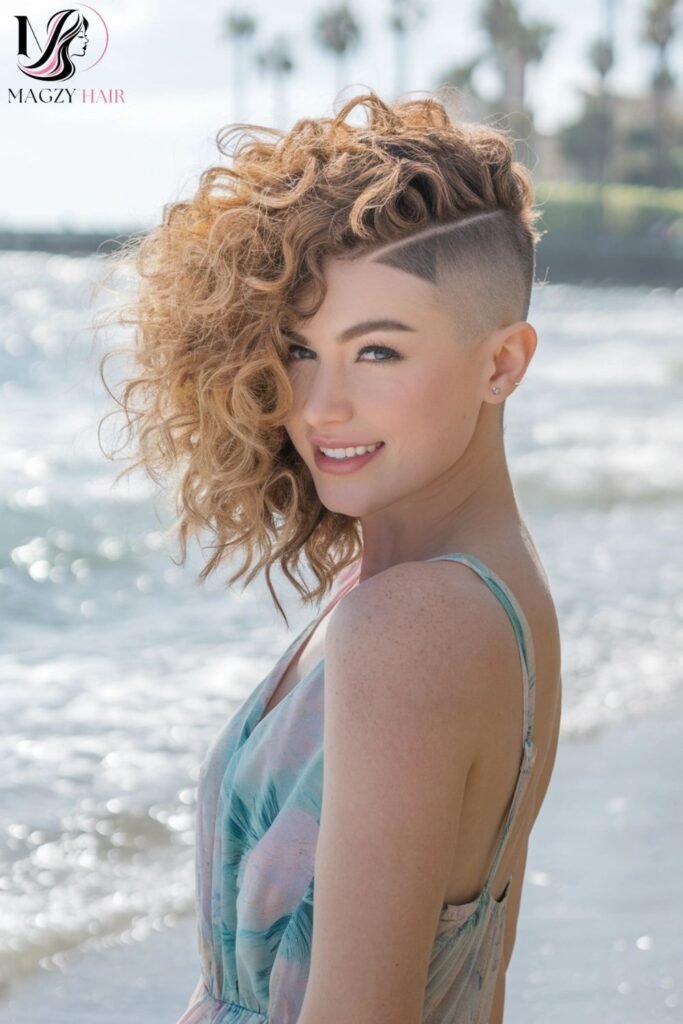
For those wanting a bolder, more graphic look, pairing shoulder length curly hairstyles with an undercut or shaved section creates striking contrast between structured, shorter sections and the natural volume of curls above. This combination has grown in popularity among those wanting a distinctive style that stands apart from more traditional curly cuts.
Because curl pattern naturally camouflages length and shape more than straight hair does, undercuts paired with curly hair need extra consideration during planning, since the shaved section will be more visible when curls are pulled back or styled up, but largely hidden when curls are worn down and loose. Discussing how you plan to wear your hair day to day helps a stylist determine appropriate undercut placement and depth.
A helpful example: someone who requests an undercut primarily for updo styling might feel disappointed if the shaved section barely shows when curls are worn down, not realizing this visibility trade off was part of the design. Clarifying your typical styling habits during the consultation ensures the undercut placement matches how you’ll actually wear your hair most days.
Maintenance for an undercut on shoulder length curly hairstyles generally requires more frequent trims than the curly length above it, since shaved or closely cropped sections grow out and lose their crisp definition faster than looser curls do, making this a higher upkeep choice among the more dramatic style options on this list.
Micro Layered Curly Shoulder Cut
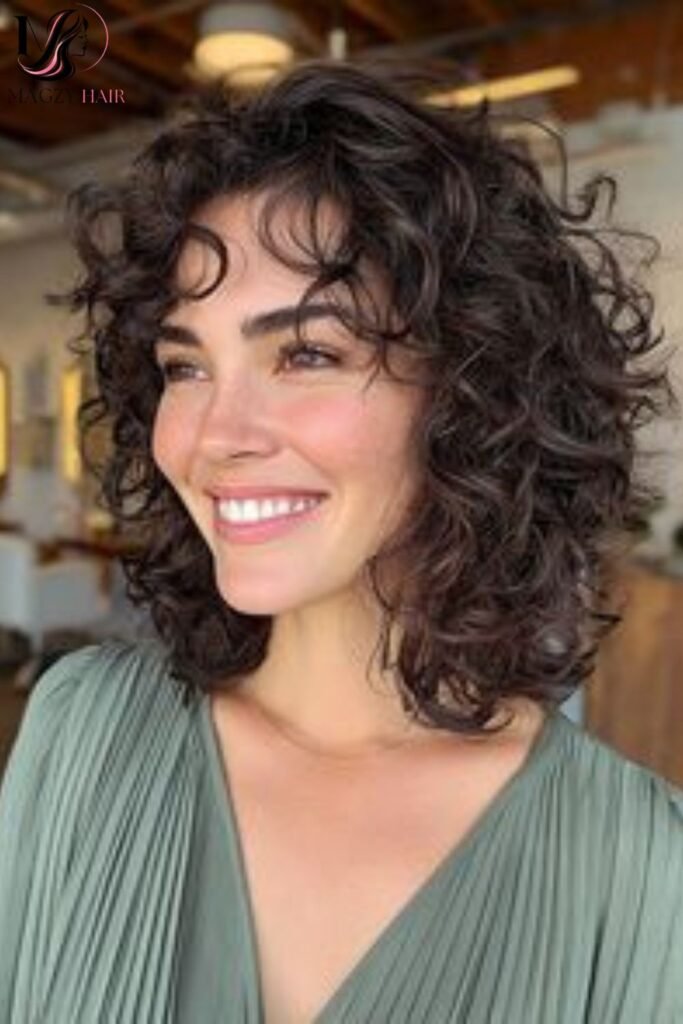
Micro layering uses very fine, closely spaced layers throughout shoulder length curly hair, offering a subtler alternative to a dramatic shag while still addressing bulk and encouraging movement. This technique tends to work particularly well on thick, dense curly hair, where standard layering can sometimes look too choppy or create obvious sections, while micro layers blend far more seamlessly throughout.
Because the layers in this technique are so fine and closely placed, micro layering requires significantly more time and precision during the cutting process than broader, more traditional layering. This makes it a technique best performed by a stylist experienced specifically in curly hair, since uneven micro layers are more noticeable and harder to correct than mistakes made with larger, more forgiving layer sections.
A mini scenario worth considering: someone with very thick, coarse curly hair who has struggled with heavy, unmanageable volume at shoulder length often finds micro layering solves this issue more effectively than standard layering, since the technique removes bulk gradually and evenly rather than in larger, more noticeable chunks. This creates a lighter, more manageable shape without sacrificing overall fullness.
Micro layered shoulder length curly hairstyles tend to require slightly more frequent trims than blunter cuts, generally every 8–10 weeks, since the fine layering can start to look uneven as different sections grow out at slightly different rates, gradually softening the intended blended effect.
Choosing Shoulder Length Curly Styles by Face Shape
Face shape plays a meaningful role in which shoulder length curly hairstyles look most flattering, a detail generic style roundups often skip entirely. Round faces tend to benefit from styles with more length and layering starting below the chin, like the curly lob or micro layered cut, since these avoid adding extra width at the widest part of the face that shorter, fuller curly styles can sometimes create.
Square faces generally look best with softer, rounder layering, similar to voluminous curly layers, rather than sharp, blunt perimeters, since gentle curl movement helps soften a strong, angular jawline. Heart shaped faces often benefit from styles that add fullness around the jaw and chin specifically, like a curly lob or shag with layers ending at that point, balancing a narrower jawline against a fuller forehead.
A practical example: two people requesting the “same” shoulder length curly hairstyle from a reference photo may need genuinely different layer placement and length distribution to achieve an equally flattering result, simply because their face shapes differ. This is exactly why clearly communicating your face shape and specific priorities to a stylist produces far more personalized, satisfying outcomes than a photo alone.
Oval faces tend to have the most flexibility within shoulder length curly hairstyles, generally suiting nearly any layering pattern or styling approach on this list. For every other face shape, however, taking a few extra minutes during consultation to discuss facial structure alongside curl type meaningfully improves the odds of leaving the salon with a shape that genuinely works for your features.
Styling by Curl Type: Adjusting Technique for 2s, 3s, and 4s
Curl type dramatically affects how shoulder length curly hairstyles should be styled day-to-day, yet many general hair guides apply the same advice across all curl patterns. Looser, wavy 2-type curls typically need lighter products and less manipulation to avoid weighing down their natural movement, while tighter 3-type curls generally benefit from richer creams and more deliberate scrunching or raking to encourage clumping and definition.
Coily 4-type hair at shoulder length often requires the most product and the most patience during styling, since this curl pattern tends to shrink the most dramatically and can be more prone to dryness due to its structure making it harder for natural scalp oils to travel down the hair shaft. Layering products a leavein conditioner, followed by a cream, then a gel for hold tends to work better for this pattern than a single lightweight product alone.
A helpful example: someone with looser, 2-type waves who applies a thick, 4-type formulated curl cream often ends up with limp, weighed down results rather than the enhanced texture they wanted. Matching product weight and formulation specifically to curl type, rather than following generic “curly hair” advice, makes a significant difference in how any shoulder length curly hairstyle ultimately looks.
Mixed curl patterns, common on a single head, also deserve individual attention rather than a one product fits all approach. Applying slightly more product to tighter sections, like the nape, while using less on looser crown curls, helps create a more uniform, balanced result across the whole shoulder length curly hairstyle rather than uneven definition from section to section.
Common Mistakes to Avoid With Shoulder Length Curly Hair
One of the most frequent mistakes with shoulder length curly hairstyles is cutting or trimming curls wet and stretched without accounting for shrinkage, leading to a final result that’s noticeably shorter and often more triangular in shape than intended. Seeking a stylist who cuts curly hair dry, or who has specific experience with curl by curl cutting, is the most reliable way to avoid this common and frustrating outcome.
Another frequently repeated error involves brushing dry curls, which disrupts natural curl clumps and creates frizz rather than the defined texture most people want from a shoulder length curly hairstyle. Detangling should generally happen on soaking wet hair with plenty of conditioner, using fingers or a wide tooth comb, rather than a brush used on dry curls at any point in the routine.
Using heavy, oil based products at the roots is another common mistake, particularly for finer or lower density curl patterns, since this can weigh down volume and cause the style to look flat or greasy by midday. Reserving heavier products for the ends specifically, while keeping root application light, helps maintain the volume that makes shoulder length curly hairstyles look full and healthy.
Finally, skipping regular trims because of a fear of “losing length” often backfires on curly hair specifically, since split or damaged ends disrupt curl pattern and can make hair appear frizzier and less defined overall. Regular trims, even small ones every 10–12 weeks, actually help shoulder length curly hairstyles maintain a cleaner, more defined shape over time.
The Future of Shoulder Length Curly Hairstyles
Shoulder length curly hairstyles continue to evolve alongside broader advances in curl specific cutting education and product formulation. As more stylists pursue specialized dry cutting and curl by curl training, the historically common problem of curly clients receiving cuts based on straight hair techniques is gradually becoming less frequent, particularly in larger cities with growing access to curl specialists.
There’s also a noticeable shift toward embracing natural curl volume and shrinkage rather than fighting against it, with more shoulder length curly hairstyles specifically designed to work with, rather than minimize, a person’s natural curl pattern. This reflects a broader cultural movement toward curl acceptance, moving away from decades of styling advice that treated curl texture as something to control or disguise.
Product technology is advancing alongside this trend, with more brands developing curl type specific formulations that address the distinct needs of looser waves versus tighter coils, rather than relying on generic “curly hair” products that historically underserved denser, coilier textures. This increased specificity is helping more people achieve consistent, predictable results with shoulder length curly hairstyles at home.
Looking ahead, digital tools like AI based curl pattern analysis and virtual style previews are beginning to help people visualize how different shoulder length curly hairstyles might actually look on their specific curl type and face shape before committing to a cut. This kind of technology assisted planning could meaningfully reduce the guesswork and disappointment that have historically accompanied curly hair cutting decisions.
Conclusion
Shoulder length curly hairstyles offer real versatility once you understand how curl type, face shape, and cutting technique work together at this specific length. From the layered curly shag to a simple wash and go, there’s an option here suited to nearly every texture and lifestyle. The key is choosing a style and a stylist that respects your natural curl pattern rather than fighting it. Ready to try one of these shoulder length curly hairstyles? Bring this guide to your next appointment and start the conversation with your stylist.
Ayesha Noor is the founder and lead writer behind Magzy Hair. With 4 years of experience researching hairstyles, hair care, and beauty trends, she enjoys helping readers discover styles that suit their unique personality and lifestyle.


