Long Wavy Hairstyles: The Complete Guide to Cuts, Care, and Styling

Long wavy hairstyles sit in a genuinely enviable spot within the hair world, combining the drama of length with the natural movement and texture that straight hair often needs tools to fake. However, achieving long wavy hairstyles that look defined and healthy, rather than flat or frizzy, takes more strategy than simply growing hair out and letting waves do their own thing. Wave pattern, cut, and product routine all need to work together for this specific combination to look its best.
This guide goes beyond a simple gallery of long wavy hairstyles. It explains how wave pattern, density, and porosity should influence cutting and styling decisions, along with details most articles skip entirely like why long wavy hairstyles often need a different layering strategy than long straight hair, and why the same wave pattern can look completely different once significant length is added. Whether you’re growing your waves out or refining a length you already have, this is the deeper, more practical guide to long wavy hairstyles.
Why Long Wavy Hairstyles Need a Different Styling Approach
Long wavy hairstyles require more deliberate planning than either long straight hair or shorter wavy cuts, largely because weight and wave pattern interact differently at greater length. As hair grows longer, its own weight naturally begins to pull waves looser and straighter, particularly toward the crown, which means a wave pattern that looked bouncy and defined at shoulder length can appear noticeably relaxed and less textured once that same hair reaches the middle of the back.
This weight related loosening is one of the most overlooked factors in long wavy hairstyles specifically, since most generic wavy hair advice assumes a shorter length where gravity has less influence. Understanding this dynamic matters because it directly affects cutting decisions long wavy hairstyles often benefit from more aggressive layering than shorter wavy cuts, specifically to counteract the weight that would otherwise flatten wave definition throughout the length.
A helpful example: someone who loved their wave pattern at a shoulder grazing length might feel disappointed after growing their hair out to waist length, noticing the waves look looser and less defined than before, without realizing this is a predictable result of added weight rather than a change in their natural texture. Adding strategic layers when reaching for significant length helps long wavy hairstyles maintain the bounce and definition that weight alone tends to diminish.
Because long wavy hairstyles also carry more overall length exposed to heat, friction, and environmental stress, hair health becomes a more central consideration here than it is for shorter wavy styles. A cut and product routine specifically suited to long wavy hair’s actual behavior, rather than one borrowed from straight or shorter wavy styling advice, produces meaningfully better results.
Latest Posts: https://magzyhair.com/long-shag-hairstyles/
Classic Beachy Long Wavy Hairstyles
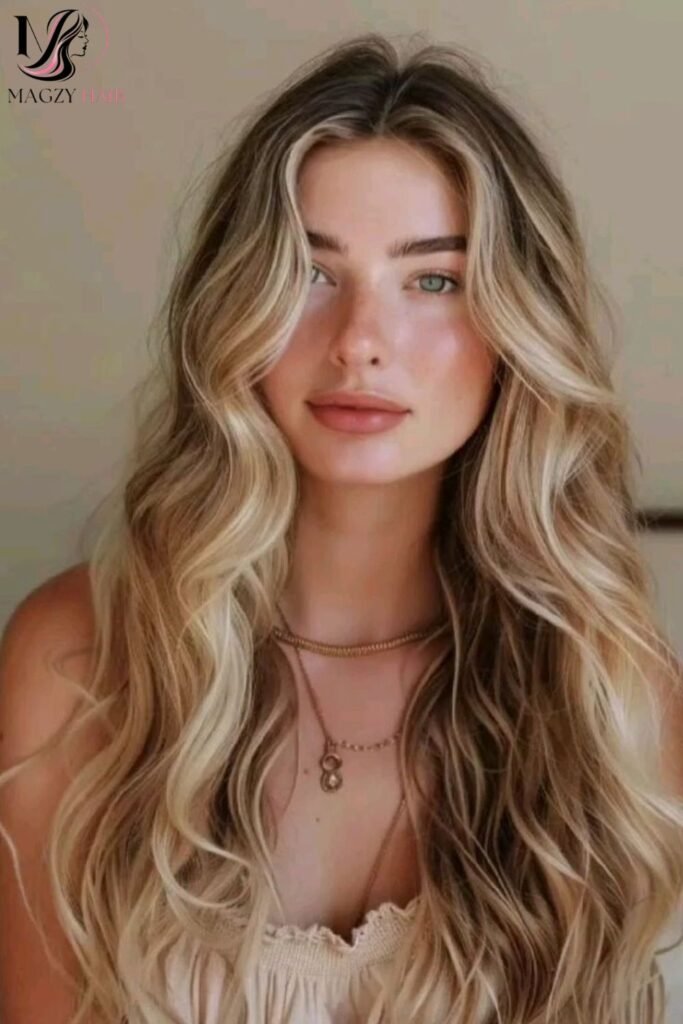
Classic beachy waves remain one of the most requested long wavy hairstyles, combining loose, tousled texture with an effortless, sun kissed quality that works for both casual days and dressed up occasions. This style typically enhances natural wave pattern rather than replacing it, using light styling techniques to add definition without creating the uniform, overly polished curl pattern a curling iron alone tends to produce.
Achieving genuinely beachy long wavy hairstyles usually involves applying a texturizing spray or sea salt product to damp hair, then air drying or diffusing to encourage natural clumping, followed by loosely curling only select pieces with a wand for added definition where needed. This combination approach tends to look more natural than either fully natural drying or fully curled styling on their own.
A helpful example: someone attempting beachy waves by curling every section uniformly with a wand often ends up with a result that looks more like formal curls than the relaxed, effortless texture beachy waves are meant to achieve. Curling only random, alternating sections, then loosely tousling with fingers once cool, creates the irregular, natural looking pattern that defines this specific style among long wavy hairstyles.
This look also tends to hold up well over multiple days with minimal touch up styling, since its inherently undone quality doesn’t rely on crisp definition the way sleeker styles do, making beachy waves a practical, low maintenance choice among long wavy hairstyles for busy schedules.
Long Layered Wavy Cut
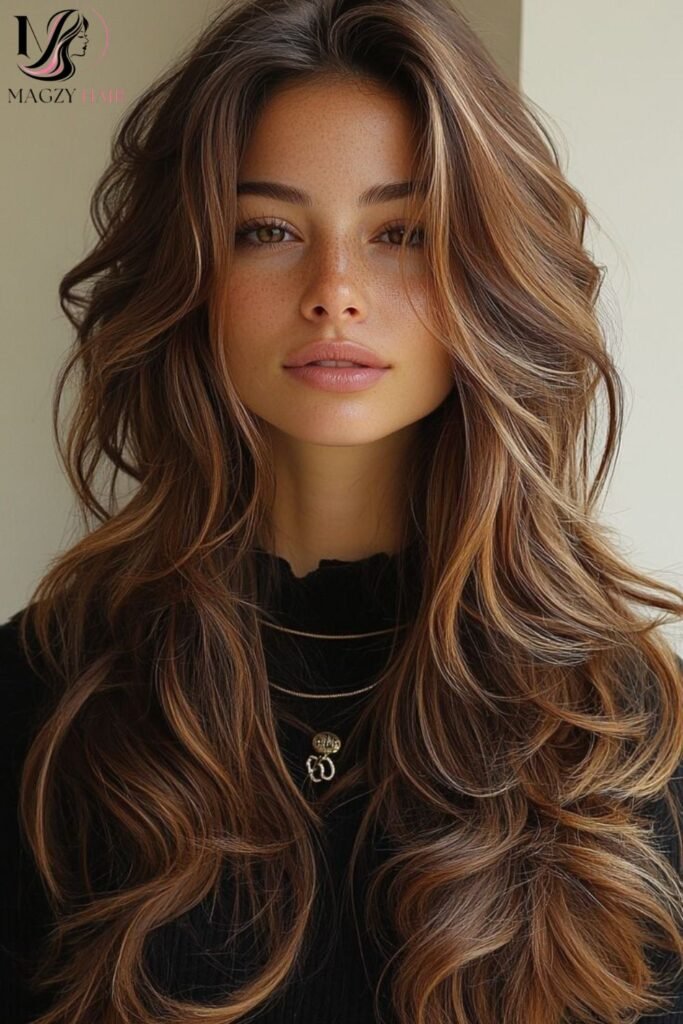
The long layered wavy cut uses strategic internal layering throughout significant length to add movement and prevent the heavy, weighed down appearance that can occur with very long, one length wavy hair. Layers are particularly valuable for long wavy hairstyles specifically, since they directly counteract the weight related loosening that naturally develops as wavy hair grows longer.
Where layers begin makes a meaningful difference in how well this technique serves long wavy hairstyles. Starting layers too close to the crown can create unwanted volume or a triangular shape, while beginning around collarbone level typically allows the layers to blend smoothly into the length below, enhancing wave definition without disrupting the overall long silhouette this style depends on.
A helpful example: someone with dense, long wavy hair who describes their style as looking “heavy” or lacking bounce at the ends often finds this happens because internal weight hasn’t been properly addressed through layering. Adding strategic layers throughout long wavy hairstyles solves this issue without sacrificing overall length, instantly making the waves look more dynamic and defined rather than pulled flat by uncut weight.
Long layered wavy cuts also tend to be more forgiving between salon visits than precise, blunt versions, since the layered shape relies less on an exact, unbroken perimeter line. This makes layering a practical choice for anyone wanting long wavy hairstyles that stay flattering without needing frequent trims to maintain their shape.
Long Wavy Hair With Curtain Bangs
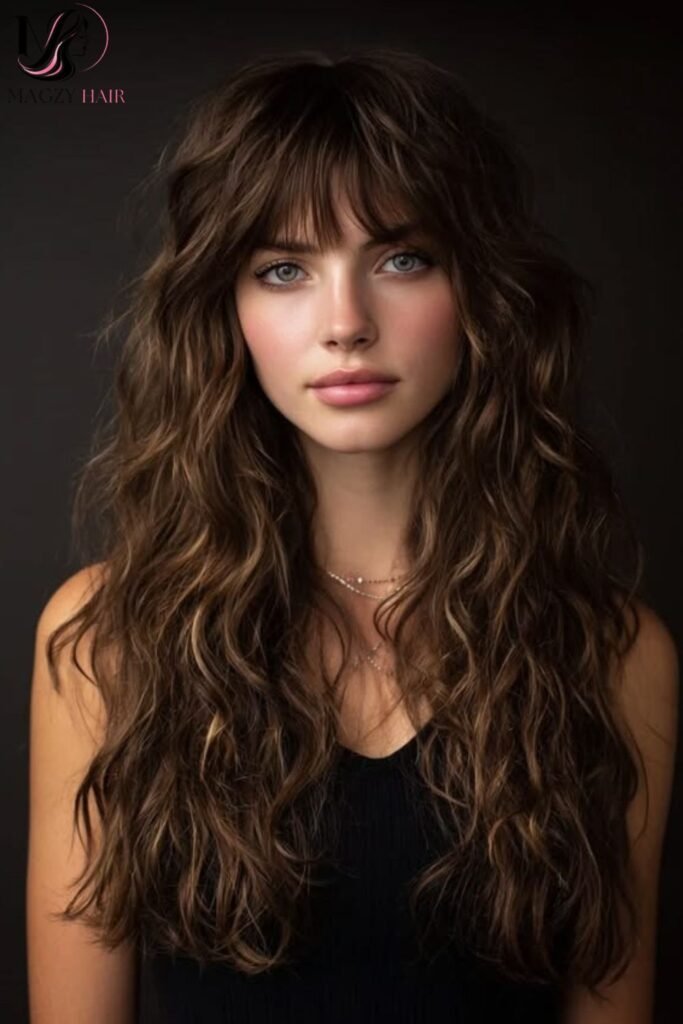
Curtain bangs bring a face framing element to long wavy hairstyles, parting naturally down the middle and blending gradually into the surrounding waves rather than creating a stark, disconnected fringe. This combination has become especially popular because wavy curtain bangs tend to integrate more seamlessly with the rest of the hair than a blunt, straight across fringe would against textured length.
Cutting curtain bangs specifically for long wavy hairstyles requires accounting for how wave pattern affects perceived length, since waves can appear shorter once dry and styled compared to how they looked freshly cut while damp. A stylist experienced with textured hair typically cuts wavy bangs slightly longer than a straight hair reference would suggest, allowing for this natural settling as the wave pattern fully forms.
A helpful example: someone with pronounced waves who requests curtain bangs based on a straight hair reference photo might find the bangs sit shorter and rounder than expected once their natural texture takes hold. Communicating your specific wave pattern to your stylist, rather than relying solely on a photo, helps ensure the bangs settle into the intended shape once your long wavy hairstyle is fully styled and dry.
Styling wavy curtain bangs typically involves a lightweight curl cream applied while damp, then air drying or diffusing alongside the rest of the length, though many people find occasional finger styling throughout the day helps keep the part and framing pieces looking intentional as the day goes on.
Long Wavy Balayage and Highlights
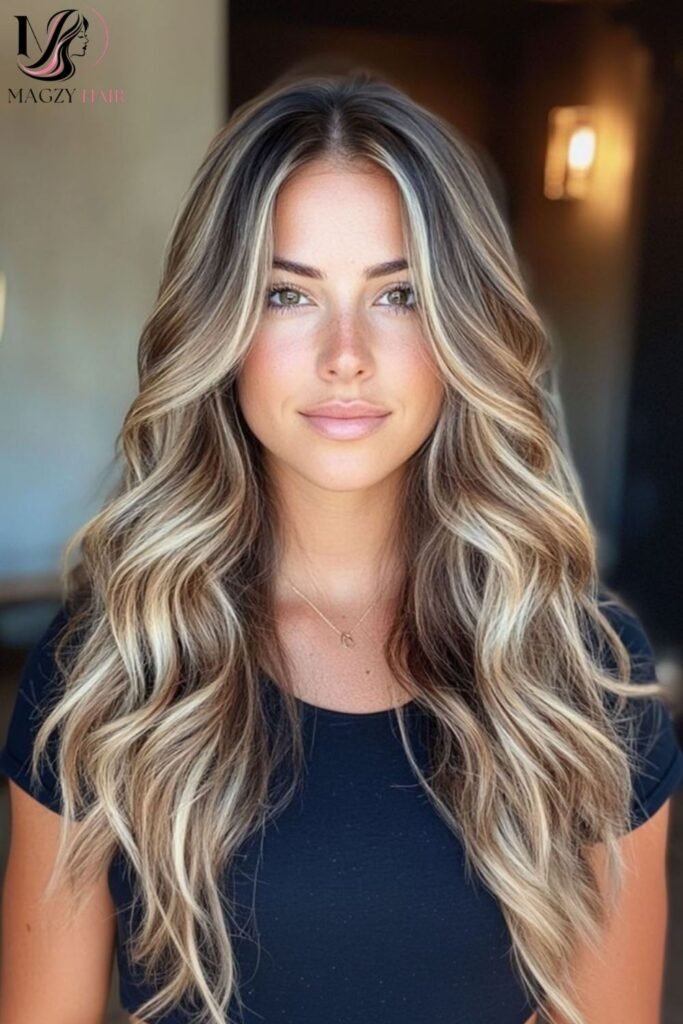
Adding balayage or strategic highlights to long wavy hairstyles introduces genuine dimension that flat, single process color often lacks, especially valuable on wavy hair where light naturally catches and reflects differently off each individual wave. Hand painted color placement tends to work better than traditional foiling for long wavy hairstyles specifically, since it creates a softer, more blended transition that moves naturally with the hair’s texture.
Color placement matters significantly more on wavy hair than straight hair, since wave pattern affects exactly where highlighted pieces will visually land once hair fully dries and settles into its natural shape. A colorist unfamiliar with wavy hair might place highlights based on blown out, straightened sections, resulting in color that lands unexpectedly once the natural wave pattern reforms.
A practical example: someone with long wavy hair who receives highlights placed and reviewed while hair is blown out straight might feel confused when the color looks different once washed and air dried into its natural wave pattern. Requesting that highlight placement be reviewed on dry, wavy hair specifically helps ensure the final result of this long wavy hairstyle matches expectations once fully styled.
Because wavy hair is often more prone to dryness than straight hair, colorists frequently recommend additional bond building and moisture treatments alongside any lightening service for long wavy hairstyles, helping protect wave pattern integrity throughout the coloring process.
Long Wavy Hairstyles Deep Side Part Waves
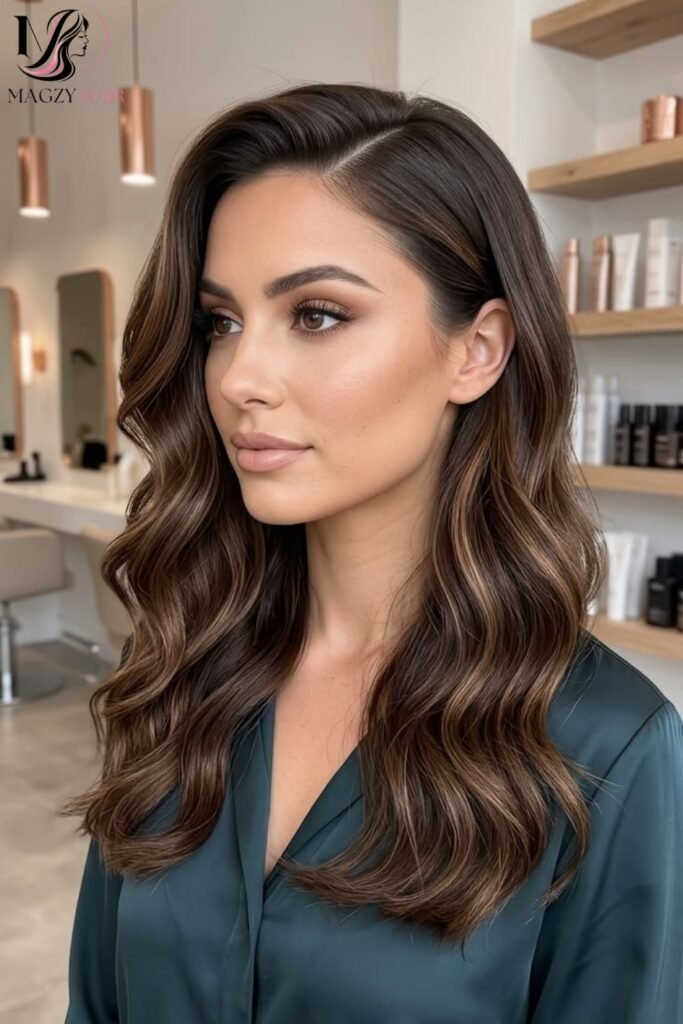
A deep side part adds asymmetry and visual interest to long wavy hairstyles, creating a slightly different silhouette on each side and softening the overall symmetry that a center part can sometimes create on wavy hair. This subtle adjustment is a detail many wavy hair guides overlook, despite how significantly a part placement change can alter the entire look of long wavy hair.
This styling choice works especially well for round or square face shapes, since the deep side part introduces visual asymmetry that helps balance a fuller or more angular facial structure. Center parted long wavy hairstyles, by contrast, can sometimes emphasize width rather than softening it, particularly once waves reach significant length and volume.
A helpful example: someone with a naturally round face who has always worn a center part might find that simply shifting to a deep side part, without changing the cut itself, creates a noticeably more flattering, elongated appearance. This is a low cost, easy adjustment worth trying before committing to any actual cutting changes to your long wavy hairstyle.
Maintaining a consistent deep side part on wavy hair does require slightly more intentional styling than on straight hair, since waves have a tendency to fall back toward their natural growth pattern. Clipping the part in place while diffusing, then releasing the clip once fully dry, helps train long wavy hairstyles to hold the desired part throughout the day.
Wavy Shag for Long Hairstyles
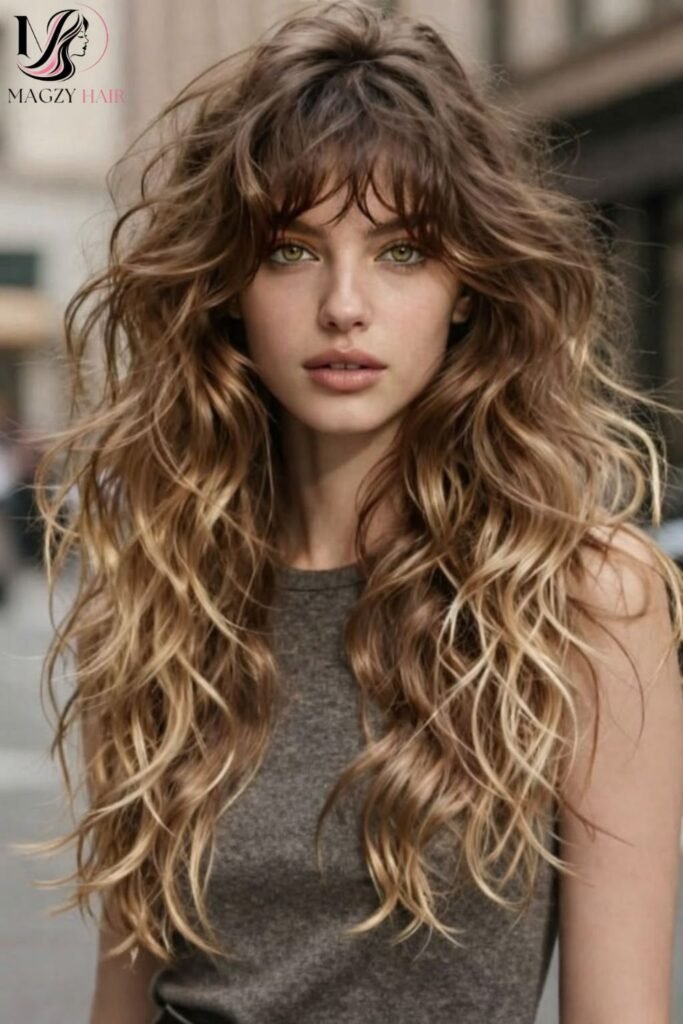
The wavy shag brings choppy, textured layers to long wavy hairstyles, creating movement and reducing bulk while amplifying the hair’s natural texture rather than smoothing it away. This style works particularly well for medium to thick wavy hair, where the internal layering prevents the flat, weighed down look that can occur when long waves are left too heavy at the bottom and untouched at the crown.
What makes this long wavy hairstyle especially effective is where the shortest layers begin. Starting them around cheekbone level rather than too close to the crown allows the shag’s texture to blend naturally into the length below, rather than creating an abrupt, disconnected section that stands apart from the rest of the waves.
A mini scenario worth noting: someone with looser, subtler waves who requests a heavily choppy shag without discussing texture might end up with a result that looks slightly sparse or overly piece-y, since looser wave patterns don’t fill in choppy layers the same way tighter waves do. Communicating your specific wave pattern alongside the shag request helps a stylist adjust layer intensity accordingly for a more balanced, flattering long wavy hairstyle.
This style also tends to require less daily styling effort than sleeker long wavy hairstyles, since the built in layers already provide movement and texture that smoother styles typically require additional tools to achieve.
Half Up Wavy Style For Long Hair
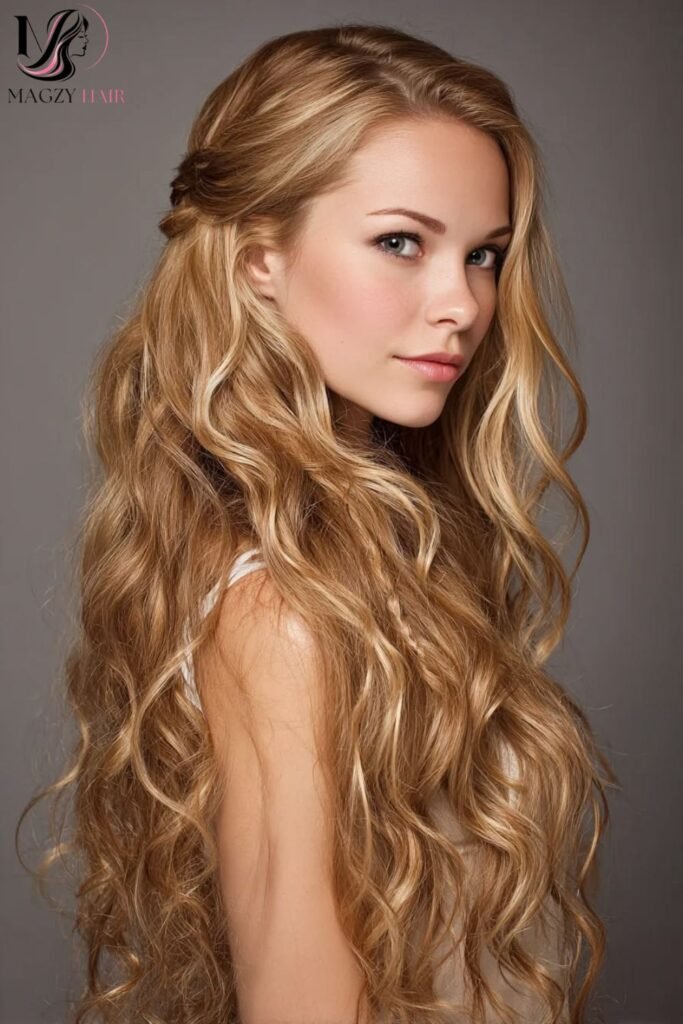
A half up style pulls the top section of long wavy hair back into a small ponytail or clip, leaving the remaining waves down, offering quick versatility that showcases both length and texture at the same time. This approach to long wavy hairstyles works well for both casual, everyday wear and slightly more polished occasions, depending on how neatly the top section is secured.
Because wavy hair has more natural texture and volume than straight hair, a half up style on waves tends to require fewer bobby pins and less precise sectioning to look intentional, since some natural imperfection actually complements the overall wavy aesthetic rather than looking messy. This makes half up styling a genuinely low effort option for long wavy hairstyles specifically.
A helpful example: someone transitioning a wash and go from a polished daytime look into an evening style might simply gather the top section up and secure it, rather than restyling the entire head from scratch. This quick adjustment showcases the practical versatility that makes long wavy hairstyles so adaptable for varied daily schedules and settings.
For waves prone to friction and flattening at the crown, a claw clip rather than a tight elastic often works better for half up styling, since it secures hair without creating a dent or crease line that a tighter hair tie can leave behind, particularly noticeable on long wavy hairstyles with significant natural volume.
Braided Wavy Crown For Long Hair
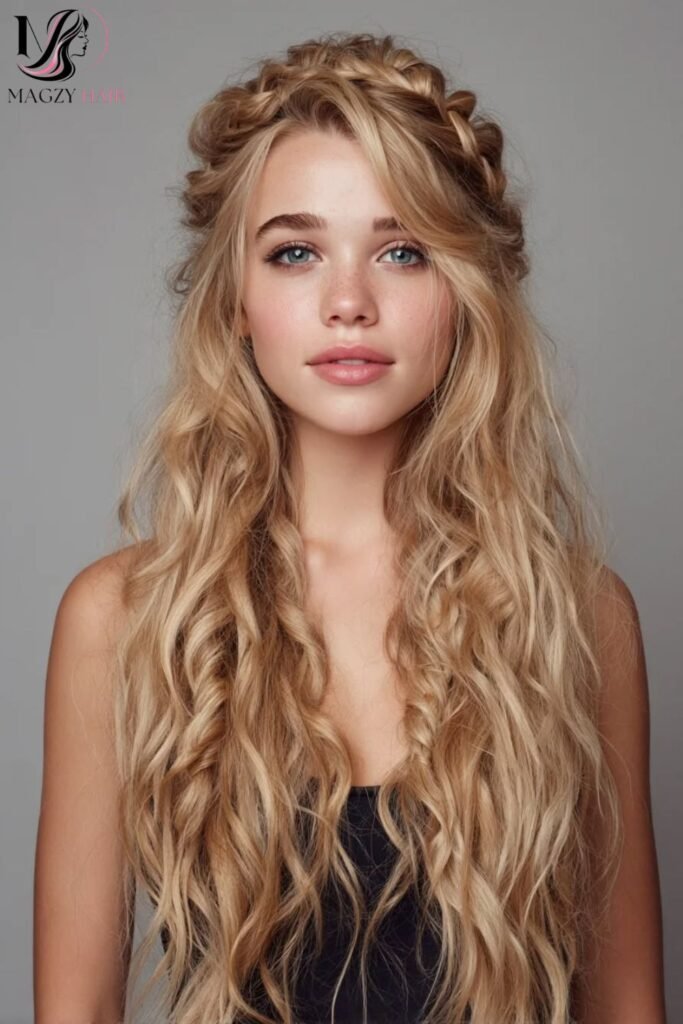
A braided crown weaves a braid across the top of the head, either as a standalone accent or leading into loose waves below, adding a romantic, polished element to long wavy hairstyles without requiring a full updo. This style works particularly well for showcasing significant length, since the braid itself takes up relatively little hair, leaving the majority of the waves visible and flowing.
Braiding wavy hair specifically tends to produce a slightly different texture once released than braiding straight hair, since the existing wave pattern combines with the crimped texture braiding creates, resulting in a more voluminous, dimensional wave once the braid is taken down. This makes the braided crown a genuinely useful technique for both an intentional braided look and as a texturizing method for long wavy hairstyles more broadly.
A helpful example: someone wanting more defined waves without heat styling might braid damp hair in one or two sections overnight, then release the braids in the morning to reveal a crimped, wavy texture that blends naturally with their existing wave pattern. This overnight technique offers a heat free way to enhance texture in long wavy hairstyles while protecting hair health.
Maintenance for a braided crown is relatively minimal, generally requiring only a few bobby pins to secure the braid in place, making it one of the more accessible updo adjacent options among long wavy hairstyles for those without extensive styling experience.
Voluminous Wavy Blowout For Long Hair
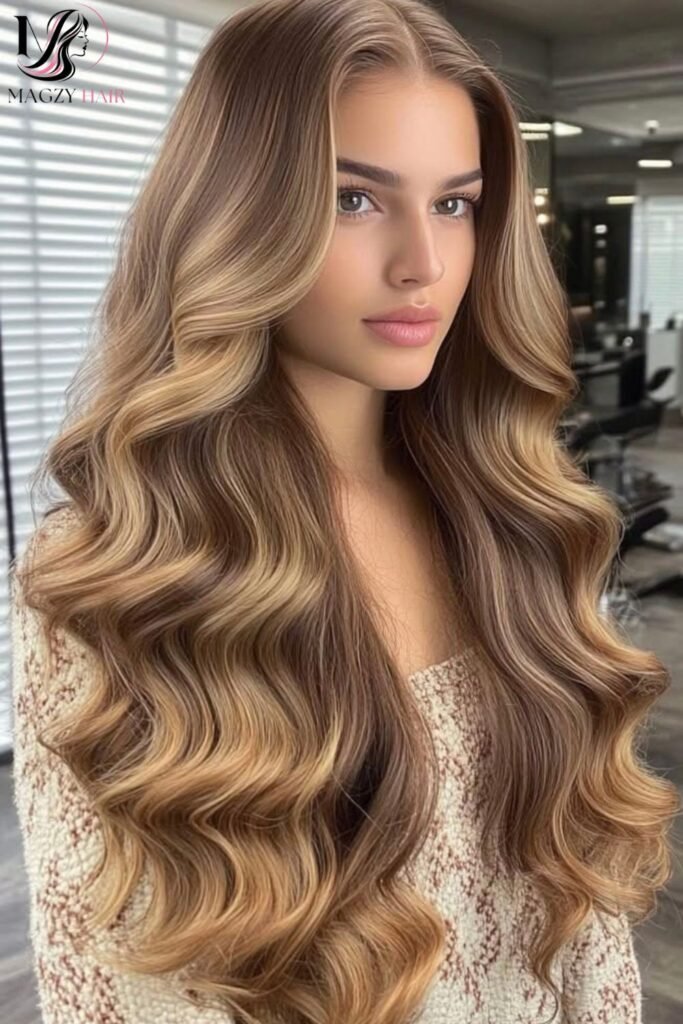
The voluminous wavy blowout uses a round brush and blow dryer to create defined, bouncy waves with significant lift at the crown, offering a more polished, structured alternative to natural air drying for long wavy hairstyles. This technique tends to produce more uniform, consistent wave definition than natural texture alone, making it a popular choice for special occasions or professional settings.
Achieving this specific style depends heavily on sectioning hair carefully and using a large round brush to guide each section around itself while directing heat from root to end, encouraging both volume at the crown and defined shape throughout the length. This technique requires more time and tool skill than air drying methods, but produces a noticeably more polished result for long wavy hairstyles.
A helpful example: someone attempting a voluminous blowout without proper sectioning often ends up with inconsistent wave definition, some sections bouncy and defined, others falling flat. Working in smaller, more manageable sections, rather than attempting large chunks of hair at once, produces far more even, consistent results throughout this particular long wavy hairstyle.
A lightweight volumizing mousse applied to damp roots before blow drying helps maintain lift throughout the day, ensuring this more structured take on long wavy hairstyles holds its shape and bounce well beyond the initial styling session.
Long Wavy Ponytail Hairstyles
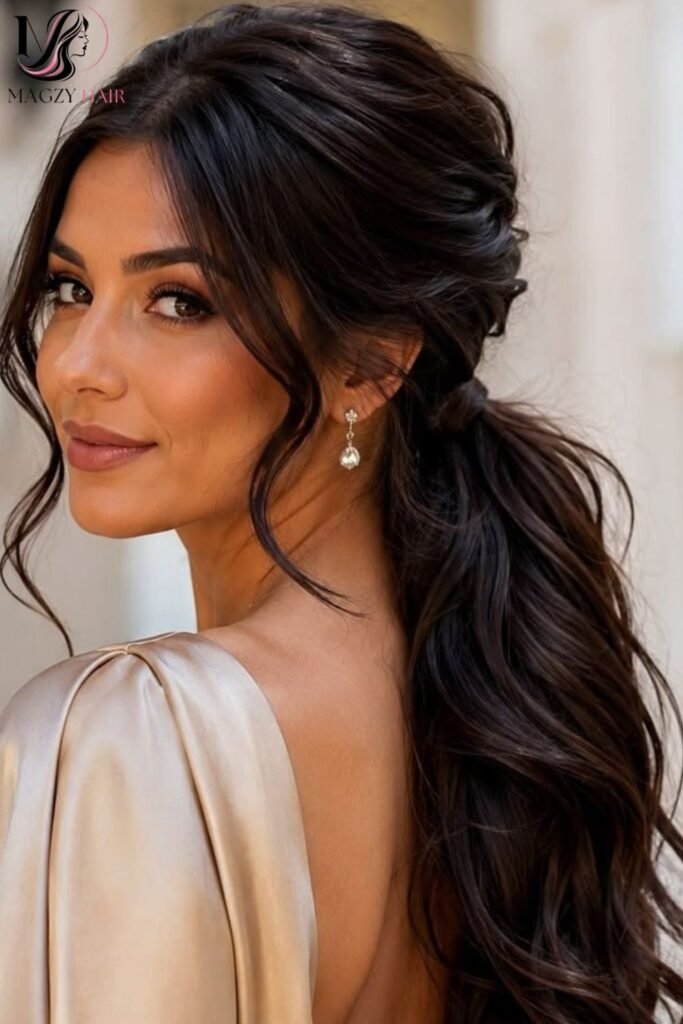
A wavy ponytail combines practicality with visible texture, pulling long wavy hair back while still showcasing the movement and dimension that makes wavy hair distinctive. Unlike a sleek, straight ponytail, this style embraces natural texture throughout the gathered length, creating a more relaxed, effortless finish that works well for both casual days and slightly dressed up occasions.
Placement of the ponytail significantly affects the overall look of this long wavy hairstyle. A high ponytail creates a more youthful, energetic silhouette and tends to add visible lift and bounce to the waves cascading from it, while a lower, looser ponytail offers a more relaxed, romantic quality that pairs particularly well with looser, beachier wave patterns specifically.
A practical example: someone using a standard, tight hair tie for a wavy ponytail often notices a visible crease or dent in the length once the style is released, disrupting the natural wave pattern in that section. Switching to a scrunchie or spiral hair tie instead distributes tension more evenly, helping long wavy hairstyles maintain smoother, less disrupted texture once the ponytail comes down.
Adding a small section of hair wrapped around the elastic, secured with a bobby pin, elevates this style further by concealing the hair tie entirely, giving even a simple wavy ponytail a more polished, finished appearance.
Low Wavy Bun or Chignon For Long Hairs
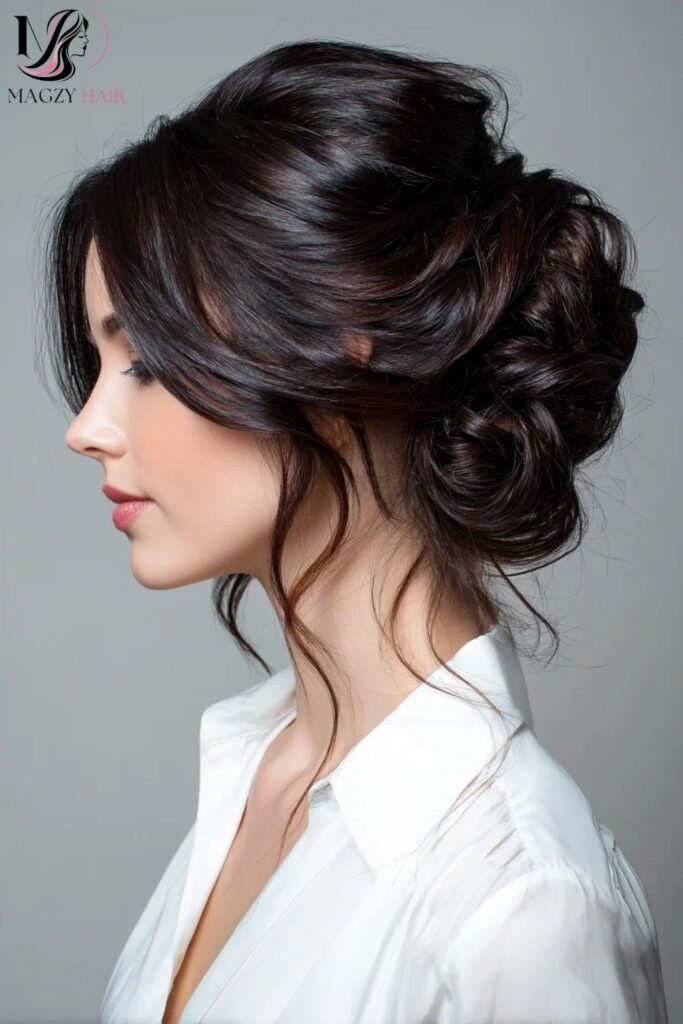
A low, loose bun or chignon offers an elegant updo option for long wavy hairstyles, showcasing the hair’s natural texture even while much of the length is gathered and secured. Unlike a sleek, tightly wound bun, this style intentionally allows some pieces to remain loose and textured, preserving the wavy character that a fully smooth updo would otherwise conceal.
Because wavy hair already carries natural volume and texture, achieving this style typically requires fewer pins and less precise sectioning than the same updo would need on straight hair, since some natural imperfection in the twist or gathered section actually complements the overall aesthetic rather than looking undone or messy.
A helpful example: someone attempting their first low wavy bun might over-smooth the hair before gathering it, inadvertently erasing the texture that made the style appealing in the first place. Leaving some natural wave pattern intact throughout the gathering process, rather than fully smoothing beforehand, helps this long wavy hairstyle retain its intended relaxed, romantic quality.
This style also tends to hold up exceptionally well for long days or events, since the loose, textured nature of the bun is naturally more forgiving of minor shifting throughout the day than a sleek, precisely styled updo would be.
Wet Look Waves For Long Hair
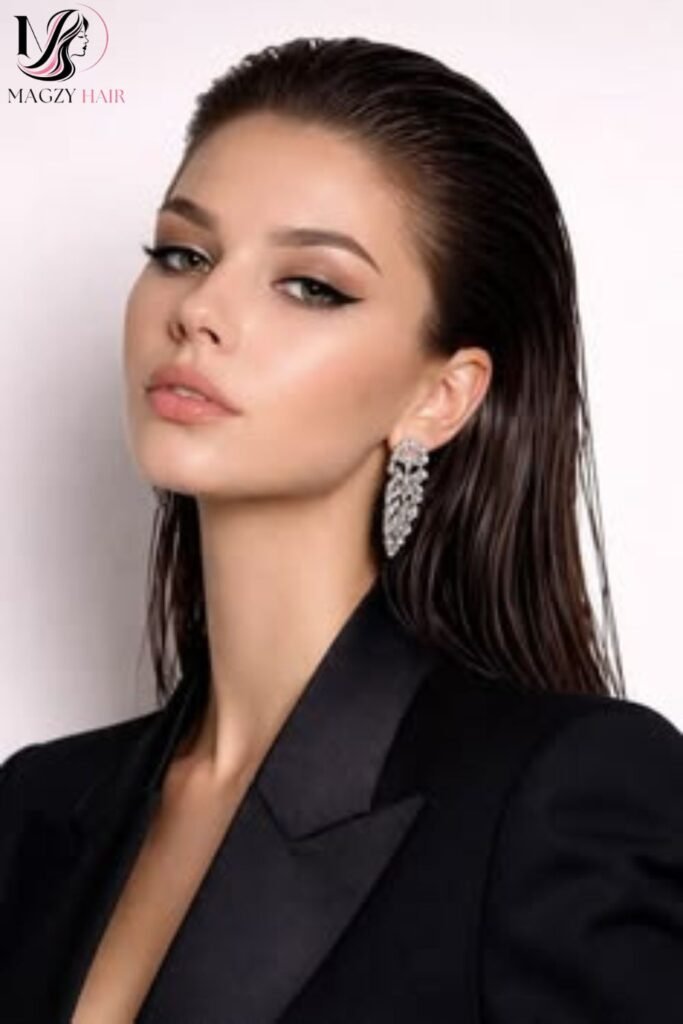
Wet look waves use styling gel or a similar high shine product to create a sleek, glass like finish while still preserving defined wave pattern throughout the length, offering a bold, editorial inspired take among long wavy hairstyles. This style has grown in popularity for its striking, polished appearance that reads as intentional and high fashion rather than simply “wet” in the everyday sense.
Achieving this look well requires applying a strong hold, shine enhancing gel to soaking wet hair, then either air drying fully or diffusing on low heat while scrunching to maintain defined wave clumps. Unlike typical wavy styling, this technique deliberately avoids the fluffy, voluminous quality other long wavy hairstyles aim for, instead prioritizing sleekness and defined shape.
A mini scenario worth considering: someone attempting wet look waves with a lightweight product formulated for natural, fluffy texture often finds the style dries with unwanted frizz rather than the intended sleek finish. Choosing a specifically strong hold, high shine gel, rather than a standard curl cream, is essential for achieving the polished, controlled look this particular long wavy hairstyle depends on.
This style tends to work best for special occasions or shorter wear periods rather than everyday use, since the heavier gel application typically needs to be washed out rather than restyled the next day, making it a striking but more occasion specific choice among long wavy hairstyles.
Face Framing Wavy Layers
Face framing layers add targeted movement around the face specifically, without requiring an entirely new cut or significant length change, making this one of the easier updates among long wavy hairstyles. These layers typically start around the cheekbone or chin and blend into the surrounding length, drawing attention toward the eyes and softening the overall facial appearance.
This technique proves particularly valuable for long wavy hair because it introduces movement precisely where it has the most visual impact, near the face, without requiring the more significant texturizing that an all over layered style might involve. This makes it a good option for those who want a subtle refresh rather than a dramatic change to a long wavy hairstyle they already love.
A helpful example: someone with a long, one wavy style who feels their current cut looks slightly flat or heavy near the face might find that adding just face framing layers, without altering overall length, creates a noticeably softer, more dynamic appearance. This targeted, lower-commitment update often satisfies the desire for change without requiring a complete style overhaul.
Maintenance for face framing layers is relatively minimal, since only the shorter, framing pieces need occasional trimming to maintain their shape, while the rest of the length can grow out more freely, making this a practical, low maintenance addition to nearly any existing long wavy hairstyle.
Choosing Long Wavy Hairstyles by Face Shape
Face shape plays a significant role in which long wavy hairstyles look most flattering, a detail generic style roundups often skip entirely. Round faces tend to benefit from styles with layers starting around the cheekbone and length extending well past the chin, like face framing layers or a long layered wavy cut, since these help elongate the face rather than adding width at its widest point.
Square faces generally look best with softer, rounder layering, similar to a wavy shag, rather than sharp, blunt perimeters, since gentle wave movement helps soften a strong, angular jawline. Heart shaped faces often benefit from styles that add fullness around the jaw and chin specifically, balancing a narrower jawline against a fuller forehead, something a deep side part or curtain bangs can help achieve.
A practical example: two people requesting the “same” long wavy hairstyle from a reference photo may need genuinely different layer placement and length distribution to achieve an equally flattering result, simply because their face shapes differ. This is exactly why clearly communicating your face shape and specific priorities to a stylist produces far more personalized, satisfying outcomes than a photo alone.
Oval faces tend to have the most flexibility among long wavy hairstyles, generally suiting nearly any layering pattern or styling approach discussed in this guide. For every other face shape, taking a few extra minutes during consultation to discuss facial structure alongside wave pattern meaningfully improves the odds of leaving the salon with a shape that genuinely flatters your features.
Styling by Wave Type: 2A, 2B, and 2C Patterns
Wave pattern significantly affects how long wavy hairstyles should be styled day to day, yet many general hair guides apply identical advice across all wave types. Looser 2A waves typically need lightweight products and minimal manipulation to avoid weighing down their subtle natural movement, while more defined 2B waves generally benefit from a slightly richer cream and some scrunching to encourage clumping and hold.
The tightest 2C waves, which border on loose curls, often require the most product and the most deliberate technique among long wavy hairstyles, since this pattern tends to frizz more easily if not properly defined while damp. Applying a leave in conditioner followed by a curl cream, then scrunching thoroughly before air drying or diffusing, tends to work better for this wave type than a single lightweight product alone.
A helpful example: someone with looser 2A waves who applies a thick, 2C formulated cream often ends up with limp, weighed down results rather than the soft, enhanced texture they wanted. Matching product weight specifically to wave type, rather than following generic “wavy hair” advice, makes a significant difference in how any long wavy hairstyle ultimately looks and behaves.
Mixed wave patterns, common across a single head, also deserve individual attention rather than a one product fits all approach. Applying slightly more product to tighter, more defined sections while using less on looser crown waves helps create a more uniform, balanced result across the whole long wavy hairstyle rather than uneven definition from section to section.
Common Mistakes to Avoid With Long Wavy Hairstyles
One of the most frequent mistakes with long wavy hairstyles is skipping regular trims out of fear of losing length, which often backfires since split or damaged ends disrupt wave pattern and can make hair appear frizzier and less defined overall. Regular trims, even small ones every 10–12 weeks, actually help long wavy hairstyles maintain a cleaner, more defined shape over time.
Another common error involves brushing dry waves, which disrupts natural wave clumps and creates frizz rather than the defined texture most people want from long wavy hairstyles. Detangling should generally happen on wet or damp hair with plenty of conditioner, using fingers or a wide tooth comb, rather than a brush used on dry texture at any point in the routine.
Using heavy, oil products at the roots is another common mistake, particularly damaging for long wavy hairstyles since this can weigh down volume and cause the style to look flat or greasy by midday. Reserving heavier products for the ends specifically, while keeping root application light, helps maintain the volume that makes long wavy hairstyles look full and healthy rather than weighed down.
Finally, skipping layering entirely on long wavy hair is a frequently repeated mistake, since uncut weight at significant length tends to pull waves straighter and flatter than intended. Discussing strategic layering specifically for long wavy hairstyles during your consultation, rather than assuming a simple trim will maintain wave definition, produces noticeably better long term results.
The Future of Long Wavy Hairstyles
Long wavy hairstyles continue to evolve alongside broader advances in texture specific cutting education and product formulation. As more stylists pursue specialized training in cutting for texture rather than relying solely on straight hair techniques, the historically common problem of wavy clients receiving cuts that don’t account for their natural pattern is gradually becoming less frequent.
There’s also a noticeable shift toward embracing natural wave pattern rather than smoothing it into submission, with more long wavy hairstyles specifically designed to work with, rather than minimize, a person’s natural texture. This reflects a broader cultural movement toward texture acceptance, moving away from decades of styling advice that treated waves as something to control or disguise through heat styling.
Product technology is advancing alongside this trend as well, with more brands developing wave type specific formulations that address the distinct needs of looser 2A patterns versus more defined 2C waves, rather than relying on generic “wavy hair” products that historically underserved denser or more textured wave patterns specifically.
Looking ahead, digital tools like AI based texture analysis and virtual style previews are beginning to help people visualize how different long wavy hairstyles might actually look on their specific wave pattern and face shape before committing to a cut. This kind of technology assisted planning could meaningfully reduce the guesswork that has historically accompanied cutting and styling decisions for long wavy hair.
Conclusion
Long wavy hairstyles offer real versatility once you understand how wave pattern, layering, and face shape work together at this length. From classic beachy waves to a polished low chignon, there’s an option here suited to nearly every texture and lifestyle. The key is choosing a cut and styling routine that works with your natural wave pattern rather than against it. Ready to try one of these long wavy hairstyles Bring this guide to your next appointment and start the conversation with your stylist.
Ayesha Noor is the founder and lead writer behind Magzy Hair. With 4 years of experience researching hairstyles, hair care, and beauty trends, she enjoys helping readers discover styles that suit their unique personality and lifestyle.


