
Long Curly Hairstyles: The Complete Guide to Cuts, Care, and Styling

Long curly hairstyles carry a reputation for being difficult to manage, but that reputation usually comes from working against the curl pattern rather than with it. When cut, colored, and styled using techniques designed specifically for curls, long curly hair can look full, defined, and remarkably low effort day to day. The difference almost always comes down to technique not the hair itself.
This guide goes beyond a simple photo gallery of curly styles. It explains how curl pattern, porosity, and density all affect which long curly hairstyles will actually work for your specific hair, the cutting techniques stylists rarely explain in detail, and insights competitors consistently miss like why the same curly cut can look completely different depending on whether it was cut wet or dry. Whether you’re growing out your curls or refining a length you already love, this is the deeper, more practical resource.
Why Long Curly Hairstyles Require a Different Approach
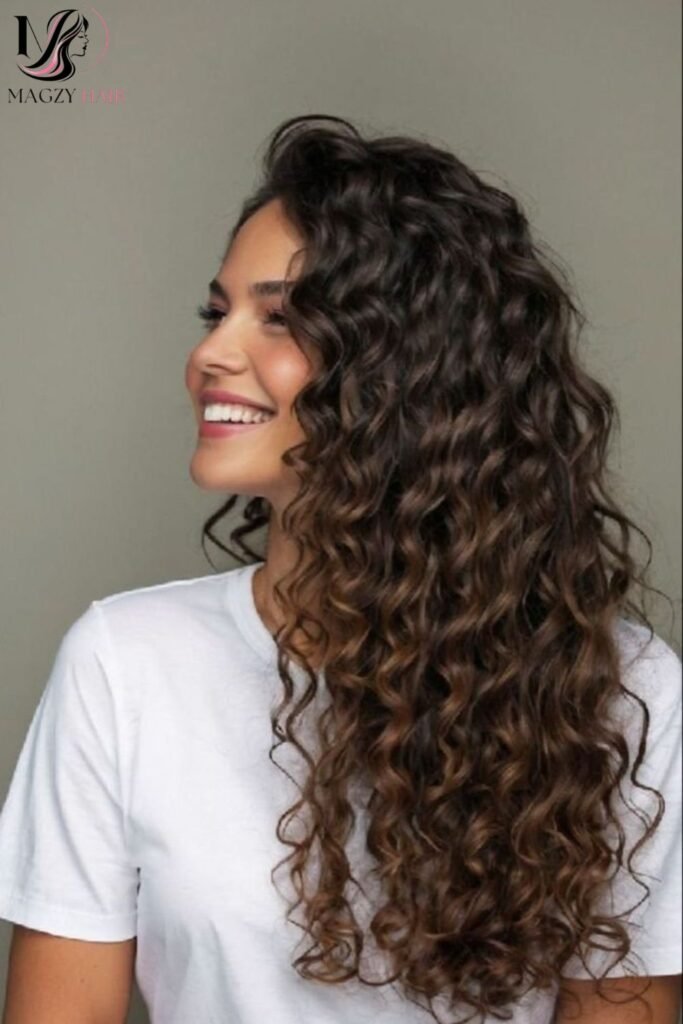
Long curly hairstyles behave fundamentally differently than long straight hair, largely because curl pattern creates uneven weight distribution and variable shrinkage throughout the head. A cutting or styling technique that works beautifully on straight hair can look uneven or shapeless on curls, since curls don’t fall in a single, predictable direction the way straight hair naturally does.
One factor rarely discussed in generic guides is how significantly curl pattern can vary across a single head of hair. It’s common to have looser curls at the crown and tighter curls near the nape, or vice versa, meaning a single cutting or styling approach applied uniformly often produces an inconsistent, patchy looking result. Recognizing and working with these variations, rather than ignoring them, is essential to long curly hairstyles looking cohesive.
A helpful example: someone with naturally longer, looser curls near the front and tighter curls toward the back might find that identical styling products applied throughout create very different results in each section frizzy in one area, well defined in another. Adjusting product amount and technique by section, rather than treating the whole head uniformly, produces a far more even, polished outcome.
Understanding porosity also matters significantly for long curly hairstyles specifically, since longer curly hair often has more porous, drier ends due to age and repeated exposure to brushing, heat, or environmental factors. This means the same product or technique that works well at the roots may need to be adjusted or increased toward the ends to achieve consistent definition throughout the full length.
Discover More: https://magzyhair.com/medium-length-hairstyles/
The Importance of Cutting Curly Hair Dry
One of the most significant insights in long curly hairstyles, and one many salons still overlook, is the importance of cutting curly hair while it’s dry rather than wet. Curls shrink substantially once fully dry, sometimes by 30 to 50 percent depending on curl tightness, meaning a cut made on stretched, wet hair often results in a length and shape that looks completely different once the curls spring back to their natural state.
Dry cutting allows a stylist to see exactly how each curl falls and behaves in its natural, unstretched form before making any cutting decisions. This technique has become increasingly standard among stylists specifically trained in curly hair, since it produces far more predictable, accurate results for long curly hairstyles compared to traditional wet cutting methods designed primarily for straight hair.
A helpful example: someone requesting long curly hairstyles that fall at mid back length while wet might be surprised to find their hair actually lands at bra strap length once fully dry and curled, if the stylist didn’t account for shrinkage during the wet cutting process. Seeking a stylist specifically experienced in dry cutting curly hair helps avoid this common and often disappointing outcome.
Curl by curl cutting, a more detailed dry cutting technique, takes this approach even further by shaping individual curls rather than sectioning hair broadly. While more time consuming and often more expensive, this method tends to produce the most precisely shaped, evenly distributed results for long curly hairstyles, particularly for those with significant curl pattern variation across their head.
Layered Long Curly Hairstyles: Adding Shape and Bounce
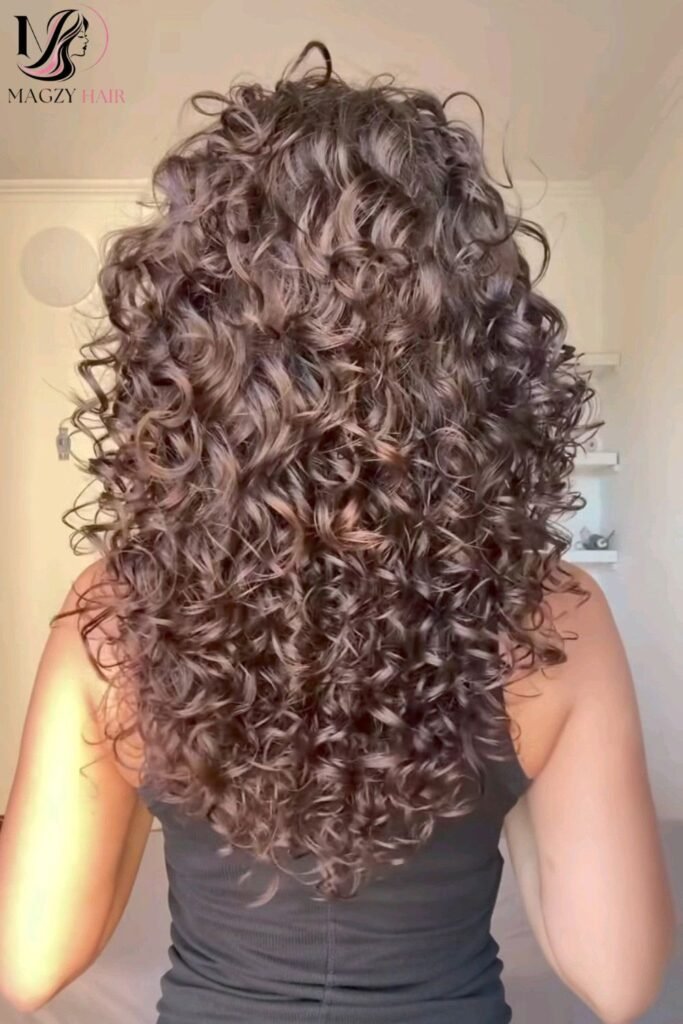
Layered long curly hairstyles use strategic internal cutting to remove weight and add shape, helping curls bounce and move rather than hanging in one heavy, uniform mass. Without proper layering, long curly hair can sometimes fall into a triangular or bottom heavy shape, since the sheer weight of long length can pull curls straighter and flatter than they would naturally sit at a shorter length.
The specific layering technique matters significantly for curly hair, more so than for straight hair. Traditional layering methods designed for straight hair can sometimes create disconnected, awkward sections when applied to curls, since curl clumps behave differently than straight strands when weight is removed. Curl specific layering techniques account for how curls will settle and clump together once fully dry and styled.
A helpful example: someone with naturally coily hair who receives standard, straight hair style layering might find certain sections of their long curly hairstyle looking noticeably shorter or more sparse than others once the curls fully form. A stylist familiar with curl specific layering typically adjusts the technique to account for this shrinkage pattern, creating a more even, cohesive shape throughout.
Long curly hairstyles with well placed layers also tend to require less daily manipulation to look intentional, since the built in shape and movement do much of the styling work naturally. This is a significant advantage for those wanting a low maintenance approach to long curly hair, since the cut itself supports the desired look rather than relying entirely on daily styling effort.
Long Curly Hairstyles With Face Framing Layers
Face framing layers are one of the most popular additions to long curly hairstyles, since they draw attention to the cheekbones and eyes while softening the overall silhouette around the face. Unlike straight hair face framing layers, which typically lie flat and close to the face, curly face framing layers create volume and movement that can dramatically change how the entire style reads visually.
Length placement for face framing layers requires particular care with curly hair, since shrinkage significantly affects how these shorter, framing pieces ultimately sit once fully curled. A layer intended to hit the chin when curled might need to be cut several inches longer while the hair is stretched, to account for the curl pattern’s natural spring back once fully dry and styled.
A helpful example: someone with medium, well defined curls requesting face framing layers might find that layers cut too short shrink up into an unflattering, disconnected shape near the temples once fully dry. Communicating specifically that face framing layers should land at a certain point once curled rather than while stretched helps ensure the stylist accounts for this shrinkage appropriately.
These layers also interact meaningfully with curl pattern variation across the head, since face framing sections often have different curl tightness than the rest of the hair, particularly near the hairline. A skilled curly hair stylist will typically test and adjust face framing layers specifically for this variation, rather than applying a uniform length across the whole framing section.
Long Curly Hairstyles for Different Curl Types
Curl pattern classification, ranging from loose waves to tight coils, significantly affects which long curly hairstyles will work best for a given head of hair. Looser curl patterns tend to carry length more easily, since the weight of long hair doesn’t fight against tighter curl formation as much, making longer lengths generally more achievable and lower maintenance for looser curl types specifically.
Tighter curl and coil patterns often experience more significant shrinkage and can require more deliberate styling techniques to maintain length and definition simultaneously at longer lengths. This doesn’t mean tighter curls can’t achieve long, full styles it simply means the cutting and styling approach needs to be tailored specifically to account for the more dramatic shrinkage this curl type typically experiences.
A helpful example: someone with tight, coily hair wanting long curly hairstyles might need significantly more length cut into their hair while stretched to achieve their desired visual length once fully curled, compared to someone with looser waves aiming for the same visual result. This distinction is a detail many generic curly hair guides overlook, yet it’s essential for setting realistic length and styling expectations.
Mixed curl patterns, where different sections of the head have noticeably different curl types, require the most individualized approach among long curly hairstyles. A stylist experienced with curl pattern variation typically adjusts cutting and product recommendations by section, rather than applying one uniform technique across a head with genuinely varied curl types throughout.
The Curly Girl Method and Long Curly Hairstyles
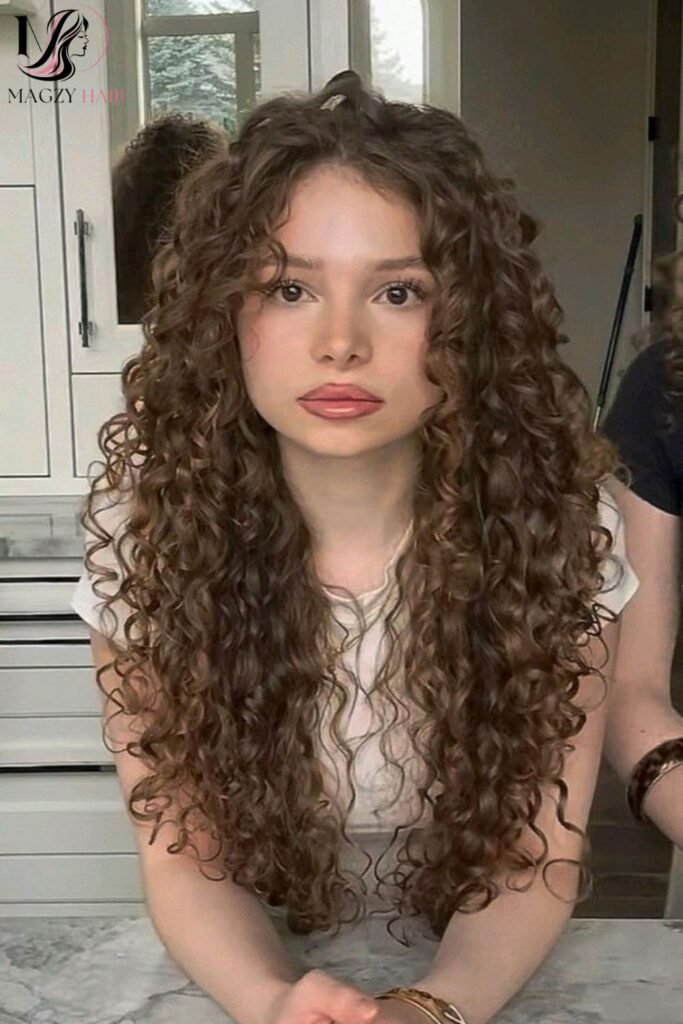
The Curly Girl Method, a popular styling and hair care approach specifically developed for curly and coily hair, has significantly influenced how long curly hairstyles are cared for and styled today. This method generally avoids sulfates, silicones, and heavy alcohols in hair products, instead emphasizing gentle cleansing and moisture rich styling products designed to enhance rather than disrupt natural curl pattern.
For long curly hairstyles specifically, this method often involves co washing, or cleansing with conditioner instead of traditional shampoo, on non wash days to maintain moisture without stripping natural oils that curls particularly need to stay defined and healthy. This approach can be especially beneficial for longer curly hair, since the ends are typically older and more prone to dryness than the roots.
A helpful example: someone transitioning to the Curly Girl Method after years of using sulfate heavy shampoos and heat styling on their long curly hair often experiences an adjustment period, sometimes called a “transition phase,” where hair may initially appear different as product buildup clears and natural curl pattern re emerges more fully without prior chemical or heat interference.
While not every element of the Curly Girl Method works identically for every curl type or hair porosity level, many of its core principles gentle cleansing, moisture-focused styling, and avoiding harsh manipulation remain broadly beneficial for maintaining healthy, well defined long curly hairstyles regardless of the specific curl pattern involved.
Product Routine for Maintaining Long Curly Hairstyles
A consistent, curl specific product routine makes a significant difference in how long curly hairstyles look and feel day to day. Applying a leave in conditioner to soaking wet hair, followed by a curl defining gel or cream applied in sections, helps ensure even product distribution throughout the full length, which becomes increasingly important as hair gets longer and product needs to reach further from the roots.
The “praying hands” or “scrunching” technique, where product is smoothed downward through sections using flat palms before scrunching upward from the ends, tends to work particularly well for long curly hairstyles specifically. This method helps encourage curl clumping without disrupting the natural pattern, which is especially important on longer hair where curls have more length to potentially separate or frizz.
A helpful example: someone using the same small amount of product throughout their entire long curly hairstyle, regardless of length, often finds the ends look under moisturized and frizzy while the roots look appropriately defined. Applying noticeably more product toward the mid lengths and ends, where hair is typically drier and older, helps create more consistent definition throughout the full length of long curly hair specifically.
Weekly deep conditioning treatments are particularly important for long curly hairstyles, since length means more exposure to environmental damage, brushing, and general wear over time. A rich, moisture focused deep conditioner, left on for at least fifteen to twenty minutes before rinsing, helps restore moisture balance and improve curl definition, particularly for the older, more porous ends common in longer curly hair.
Diffusing Techniques for Long Curly Hairstyles
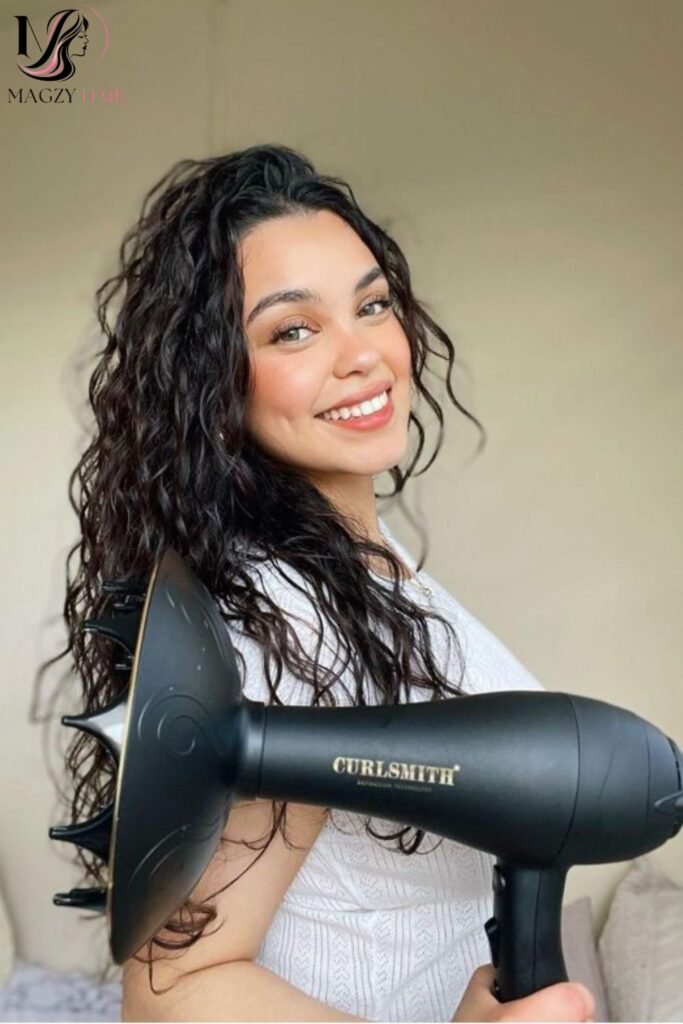
Diffusing, a blow drying technique using a specialized attachment that disperses airflow, is one of the most effective ways to dry long curly hairstyles while preserving and even enhancing natural curl definition. Unlike regular blow drying, which can disrupt curl pattern and cause frizz through direct, concentrated airflow, diffusing gently dries hair while cupping curls in place, supporting rather than fighting the natural pattern.
For long curly hairstyles specifically, diffusing typically takes longer than shorter curly cuts, simply due to the increased volume of hair and length that needs to dry thoroughly. Sectioning hair into smaller portions and diffusing each section individually, rather than attempting to diffuse the entire head at once, tends to produce more even, well defined results throughout the full length.
A helpful example: someone attempting to diffuse their entire long curly hairstyle in one continuous motion without sectioning often finds the underneath layers remain damp long after the top layers appear dry, leading to uneven curl definition and potential frizz in those under-dried sections once fully set. Taking the extra time to section and diffuse methodically produces noticeably more consistent results.
Using a diffuser on a low or medium heat setting, rather than high heat, also helps protect long curly hair from unnecessary damage during the drying process. Since longer curly hair already tends to be more porous and prone to dryness at the ends, minimizing unnecessary heat exposure during diffusing helps preserve both curl health and definition over the long term.
Long Curly Hairstyles for Special Occasions
While long curly hairstyles often shine in their everyday, natural state, this length and texture offers considerable versatility for special occasions as well. A half up style, gathering the top section into a clip or small ponytail while leaving curls to cascade down, creates an elegant, polished look that still celebrates natural curl texture rather than requiring it to be straightened or heavily altered.
Curly updos, including textured buns or curly ponytails with face framing pieces left loose, work particularly well for formal events, offering a sophisticated option that doesn’t require sacrificing natural curl pattern for the sake of formality. A curl specific stylist can create these updos while still preserving definition in any remaining loose sections, maintaining the natural character of long curly hairstyles even within a more elevated style.
A helpful example: for a formal event, defining curls slightly more precisely than usual using a bit more gel and taking extra time with the diffusing process combined with a glossy, shine enhancing serum can elevate an everyday long curly hairstyle into something noticeably more polished, without requiring heat styling or altering the hair’s natural texture at all.
Accessorizing also offers meaningful options for long curly hairstyles at special events, including decorative combs, pins woven directly into curl clumps, or delicate headbands that work with the hair’s natural volume rather than flattening it. These additions provide a formal touch while still honoring and showcasing the natural texture that makes long curly hairstyles distinctive.
Protective Styles for Long Curly Hairstyles
Protective styling plays an especially important role in maintaining the health of long curly hairstyles, since length means more overall exposure to friction, manipulation, and environmental damage over time. Loose braids, twists, or pineapple updos where hair is gathered loosely at the crown before bed help protect curls from friction against pillowcases while sleeping, reducing frizz and breakage.
Satin or silk pillowcases and hair bonnets offer additional protection specifically beneficial for long curly hairstyles, since the smoother surface reduces friction compared to standard cotton pillowcases, which can rough up the hair cuticle and increase frizz overnight. This small, consistent habit can make a meaningful difference in how defined and healthy long curly hair looks from one day to the next.
A helpful example: someone who sleeps with their long curly hairstyle completely loose and unprotected often wakes up with significantly more frizz and flattened curl definition at the roots compared to someone using a loose pineapple updo and silk pillowcase, even when both started with identical curl definition the night before. This simple nighttime routine adjustment meaningfully extends the life of a good curl day.
Protective styles like braids or twists can also be worn for extended periods as a deliberate style choice, particularly during periods of increased heat, humidity, or physical activity, offering both a practical styling option and a genuine break from daily manipulation that can help long curly hair maintain better overall health over time.
Color Techniques That Enhance Long Curly Hairstyles
Color placement interacts with curl pattern in genuinely unique ways compared to straight hair, making color decisions for long curly hairstyles worth approaching thoughtfully. Because curls create more light catching surface area than straight hair, dimensional color techniques like balayage or highlights often appear even more multidimensional and vibrant on long curly hair than the identical formula would on straight hair.
For those embracing natural gray within curly hair, subtle lowlights can help blend the transition while adding dimension throughout the curl pattern, working particularly well with long curly hairstyles since the added length provides more visual space for the blended color to show meaningful depth and movement throughout.
A helpful example: long curly hair colored with flat, single process color often looks noticeably less dimensional than identical curls finished with strategic highlighting, since the curl pattern itself already creates natural shadow and light variation that dimensional color placement can enhance and work with, rather than flattening into one uniform, less textured tone.
Colorists experienced specifically with curly hair also tend to apply color slightly differently than they would for straight hair, often accounting for how curl clumps will bend and catch light once fully dry and defined. This curl specific application approach helps ensure color placement enhances rather than works against the natural movement and shape of long curly hairstyles.
Growing Out Long Curly Hairstyles Without Losing Shape
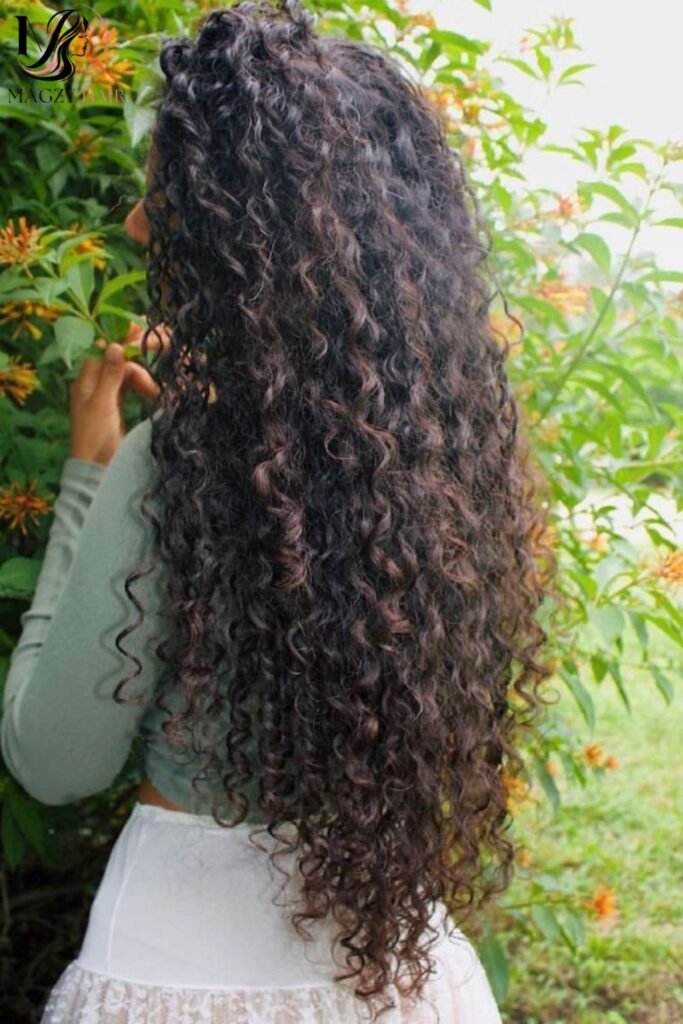
Growing long curly hairstyles from a shorter length requires patience and strategic maintenance to avoid an undefined, shapeless growing out phase. Regular trims, even while actively growing hair longer, help remove split or damaged ends without significantly impacting overall length, since curly hair’s shrinkage means small trims often have less visual impact on perceived length than they would on straight hair.
A common frustration during the growing out process involves an awkward “triangle” phase, where hair appears wider than it is long due to uneven growth rates and shrinkage across different sections. Strategic, curl specific layering during this transitional period can help manage this shape issue, creating a more intentional, styled appearance even before reaching full desired length.
A helpful example: someone growing out a shorter curly cut toward long curly hairstyles might feel discouraged by the shape during the shoulder length transitional phase specifically, since this length often experiences the most pronounced shrinkage related shape challenges. Working closely with a curl specialized stylist during this specific phase, rather than avoiding trims altogether, typically produces a better looking result throughout the entire growing out journey.
Patience with realistic timeline expectations also matters significantly during this process. Curly hair, like all hair, generally grows about half an inch per month, meaning reaching significantly longer lengths from a shorter starting point can take a year or more, depending on the specific length goal and individual hair growth rate.
Common Mistakes to Avoid With Long Curly Hairstyles
One of the most frequent mistakes is brushing dry curly hair, which breaks up natural curl clumps and creates significant frizz rather than the defined texture long curly hairstyles are meant to showcase. Detangling should happen only on wet, conditioner coated hair using fingers or a wide tooth comb, never on dry curls with a standard brush, regardless of how tempting a quick brush through might seem.
Another common error involves choosing a stylist without specific curly hair training or experience, since techniques designed for straight hair frequently translate poorly to curly textures. This mismatch often results in uneven layering, unpredictable length after drying, or an overall shape that doesn’t account for how curls will settle once fully dry, undermining an otherwise reasonable cutting request.
Over washing with sulfate heavy shampoos is a frequently repeated mistake for long curly hairstyles specifically, since these harsher formulas strip natural oils that curls particularly need to stay moisturized and well defined. Switching to sulfate free formulas and reducing wash frequency, supplementing with co washing between full shampoo sessions, typically produces noticeably better curl definition and reduced frizz over time.
Finally, skipping regular deep conditioning and trims is a mistake with particularly visible consequences for long curly hairstyles, since length means more accumulated damage and dryness at the ends over time. Neglecting these maintenance steps often results in curls that look increasingly frizzy, dull, or poorly defined, even when the underlying cut and color remain fundamentally sound.
Long Curly Hairstyles Across Different Hair Densities
Hair density, referring to how many individual strands grow per square inch of scalp, significantly affects how long curly hairstyles should be approached, independent of curl pattern itself. Higher density curly hair generally supports longer lengths more easily, since there’s simply more hair overall to distribute weight and maintain fullness throughout the length without appearing sparse.
Lower density curly hair, meanwhile, often benefits from more conservative layering and length management to avoid appearing thin or sparse at longer lengths. Contrary to a common assumption, heavy layering isn’t always the solution for lower density curly hair, since excessive thinning can sometimes emphasize sparseness rather than disguising it, similar to considerations for fine, straight hair at longer lengths.
A helpful example: someone with lower density, looser curls who requests heavy layering throughout their long curly hairstyle might find certain sections appear noticeably thinner than others, particularly toward the ends. A more conservative approach, keeping more length and weight at the perimeter while adding only subtle internal layering, often produces a fuller, more balanced looking result for this specific density and curl combination.
Communicating hair density clearly to your stylist, alongside curl pattern information, helps ensure long curly hairstyles are tailored appropriately to both factors simultaneously, rather than addressing curl pattern alone without considering how density independently affects the most flattering cutting and styling approach for your specific hair.
The Future of Long Curly Hairstyles
Long curly hairstyles continue to benefit from a broader industry shift toward specialized curly hair education and training, with more stylists pursuing dedicated curl-cutting certifications rather than relying solely on techniques originally developed for straight hair. This growing specialization is making well executed long curly hairstyles increasingly accessible across a wider range of salons and geographic areas.
Product innovation is also shaping the future of this hairstyle category, with ongoing advances in lightweight, moisture rich formulas designed specifically to address the unique needs of longer curly hair, including its typically drier, more porous ends. These improvements are helping reduce the frizz and definition challenges that have historically made long curly hairstyles feel more difficult to maintain than they need to be.
There’s also growing representation and visibility of long curly hairstyles across mainstream media and styling inspiration platforms, moving away from a historical bias toward straightened or loosely waved textures in “polished” or professional contexts. This increased visibility is helping normalize long, fully textured curly hair as a legitimate, flattering choice across a wider range of settings and occasions.
Looking ahead, technology may increasingly support curly hair care as well, with AI-based curl pattern analysis tools already helping some individuals better understand their specific curl type, porosity, and density, leading to more personalized product and styling recommendations. This kind of individualized guidance could meaningfully reduce the trial and error historically associated with finding the right routine for long curly hairstyles.
Conclusion
Long curly hairstyles can look full, defined, and effortlessly beautiful once cut, colored, and styled using techniques that genuinely work with curl pattern rather than against it. From dry cutting and curl specific layering to the right product routine and protective styling habits, small adjustments make a significant difference. If you’ve been struggling with your curls, use these ideas as a starting point and consider seeking out a stylist who specializes in curly hair.
Ayesha Noor is the founder and lead writer behind Magzy Hair. With 4 years of experience researching hairstyles, hair care, and beauty trends, she enjoys helping readers discover styles that suit their unique personality and lifestyle.


