
Bob Hairstyles for Fine Hair: The Complete Guide to Cuts, Volume, and Care

Bob hairstyles for fine hair solve a very specific styling challenge: how do you create the appearance of fullness and density when there’s simply less hair to work with length alone doesn’t determine how full a bob looks cutting technique, layer placement, and even color all play a bigger role for fine hair than they do for thicker textures. The good news is that fine hair actually tends to hold a bob’s precise shape exceptionally well, once the cut is planned with density in mind.
This guide goes beyond a simple gallery of bob hairstyles for fine hair. It explains why fine hair specifically needs different layering and cutting decisions than thicker hair, along with details most articles skip entirely like why a completely blunt perimeter often works better for fine hair than heavy layering, and why certain color techniques can visually add density without a single extra strand. Whether you’re considering a bob for the first time or adjusting one you already wear, this is the deeper, more practical guide.
Why Bob Hairstyles for Fine Hair Need a Different Approach
Bob hairstyles for fine hair require different planning than the same general cut applied to thicker hair, largely because fine strands carry less natural body and are more prone to looking flat or limp at longer lengths. Choosing a shorter overall length is often the single most effective way to create the appearance of density, since less weight pulling the hair down means more visible lift and movement throughout the day.
This distinction matters because it directly contradicts a common assumption that heavy layering automatically adds volume to fine hair. In practice, aggressive layering can sometimes do the opposite, removing weight from the ends and making already fine hair look sparser and more see through rather than fuller. Bob hairstyles for fine hair typically benefit from more conservative, strategic layering rather than dramatic thinning throughout.
A helpful example: someone with fine hair who requests heavy, choppy layers throughout a bob, expecting more volume, often finds the ends look thin and wispy instead. Choosing a blunter perimeter with only subtle, targeted layering at the crown typically produces a fuller, more polished result than heavy texturizing would achieve on this specific hair type.
Because fine hair also tends to show product buildup and grease more quickly than thicker hair, bob hairstyles for fine hair generally benefit from a lightweight product routine specifically suited to this texture, rather than one designed for thicker, more resilient strands.
Latest Post: https://magzyhair.com/short-layered-haircuts-for-older-women/
Classic Blunt Bob For Fine Hair
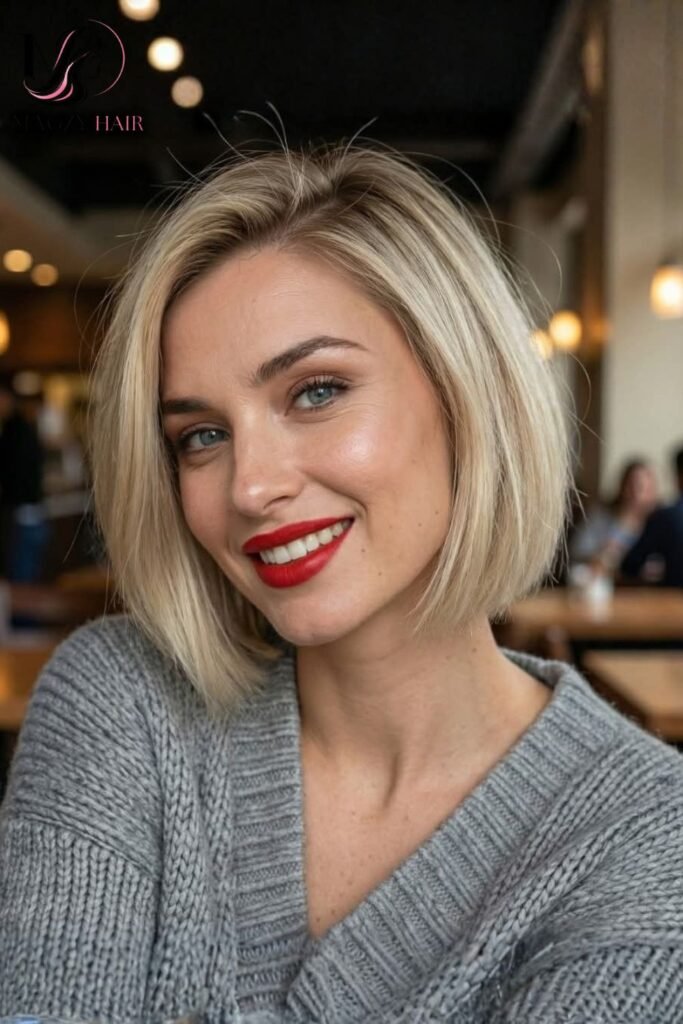
The classic blunt bob remains one of the most effective bob hairstyles for fine hair, since its solid, unbroken perimeter creates the visual illusion of thickness that heavier layering can actually undermine. Maintaining more weight at the ends, rather than removing it through layers, gives fine hair a fuller, denser looking line than the same length would achieve with dramatic texturizing.
This effect works because uncut, blunt ends reflect light more uniformly than layered, texturized ends do, creating a smoother, more solid looking edge that reads as thicker hair to the eye. This is a detail many generic style guides overlook when discussing bob hairstyles for fine hair, often defaulting to layering advice that actually works against this particular hair type.
A helpful example: someone with fine hair who switches from a heavily layered style to a completely blunt bob often notices their hair appears visibly fuller almost immediately, simply due to this change in how light interacts with the solid perimeter. This makes the classic blunt bob a genuinely strategic choice among bob hairstyles for fine hair rather than just a stylistic preference.
Maintenance for this style requires fairly regular trims, generally every 6–8 weeks, since even small amounts of growth can soften the crisp line that gives fine hair its fuller appearance in this particular cut.
Textured Lob for Fine Hair
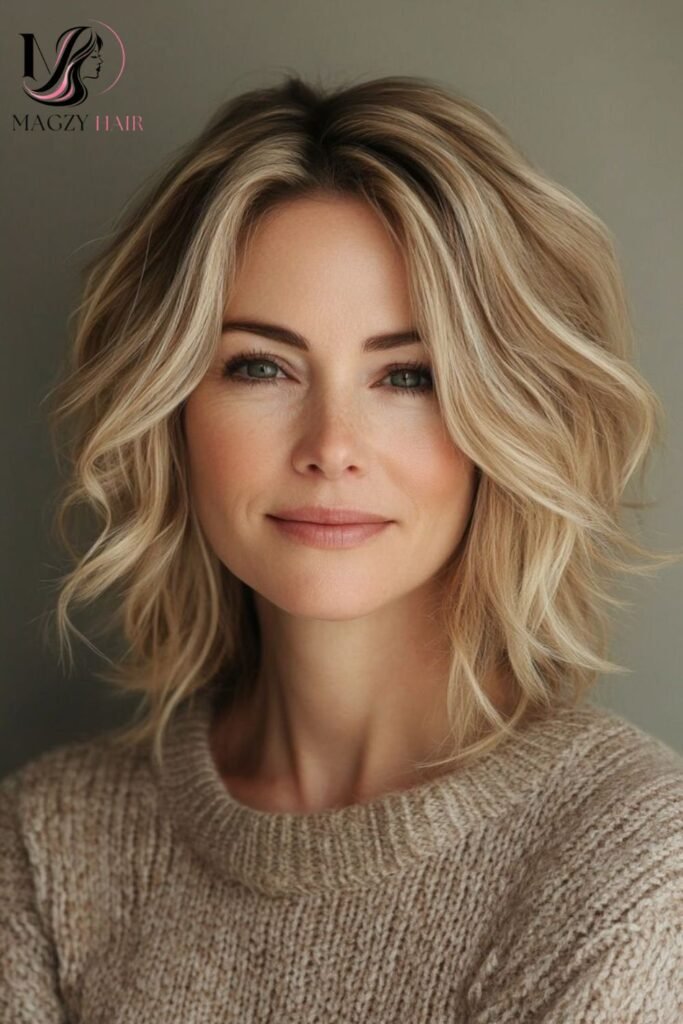
The textured lob extends bob hairstyles for fine hair to a slightly longer, shoulder grazing length, offering more styling versatility while still using strategic cutting techniques to maintain the appearance of fullness. Light texturizing, applied only at the very ends rather than throughout larger sections, adds subtle movement without sacrificing the density a blunter cut provides.
This particular length works well for fine hair specifically because it retains enough weight to avoid looking sparse, while still offering more versatility for updos and half up styles than a shorter, chin length bob would allow. Balancing length with careful, minimal texturizing is the key detail that makes this style successful for finer strands.
A mini scenario worth noting: someone with fine hair who requests a textured lob using the same heavy point cutting technique typically applied to thicker hair might end up with ends that look stringy rather than softly textured. Requesting lighter, more conservative texturizing specifically calibrated for fine hair helps avoid this common and disappointing outcome.
This style also tends to photograph particularly well, since the subtle movement from light texturizing catches light in a way that enhances the appearance of fullness rather than flattening it, making the textured lob a genuinely practical choice among bob hairstyles for fine hair.
Layered Bob With Root Focused Volume
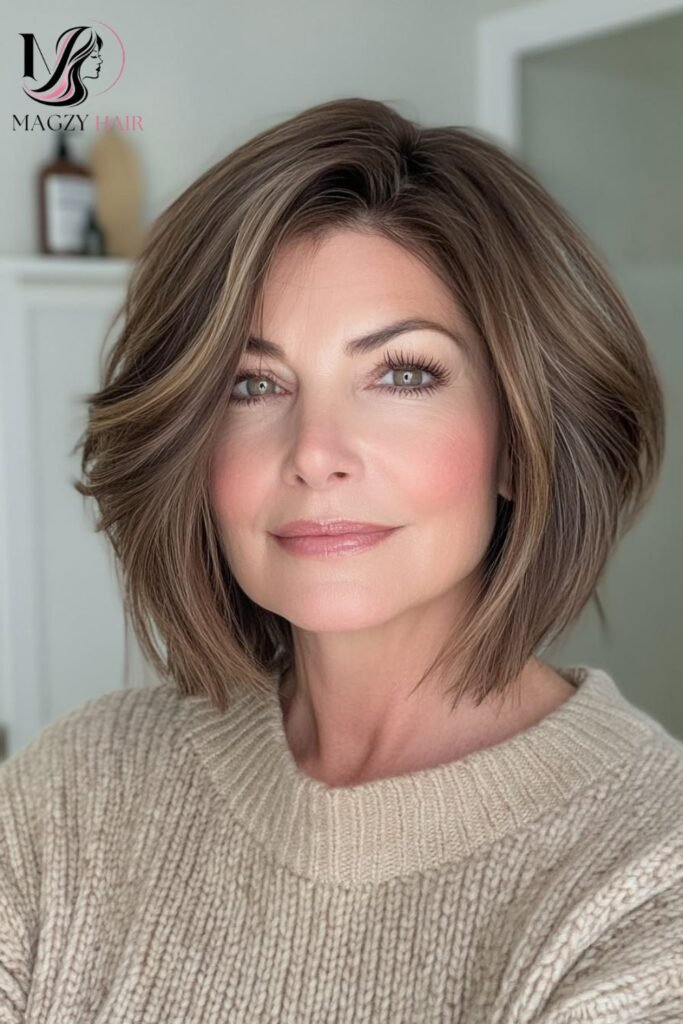
Among bob hairstyles for fine hair, this approach concentrates layering specifically at the crown and roots, rather than throughout the entire length, building lift precisely where fine hair often needs it most. This technique differs meaningfully from all over layering, which tends to reduce density rather than enhance it on finer strands.
Short, strategically placed layers near the crown create structural volume that holds up better throughout the day than volume achieved purely through blow drying technique on an unlayered cut. This makes root focused layering one of the more effective long term solutions among bob hairstyles for fine hair specifically dealing with flatness at the roots.
A helpful example: someone whose fine hair looks full immediately after a blowout but flattens within a few hours might find that root focused layering addresses this issue more permanently, since the cut itself builds in lift rather than relying entirely on styling technique to create volume each morning. This distinction matters significantly for anyone specifically seeking lower maintenance bob hairstyles for fine hair.
Styling this cut typically involves blow drying with a round brush focused specifically at the roots, paired with a lightweight volumizing mousse, to maximize the structural lift the layering was designed to create.
Micro Highlights or Balayage for Added Dimension
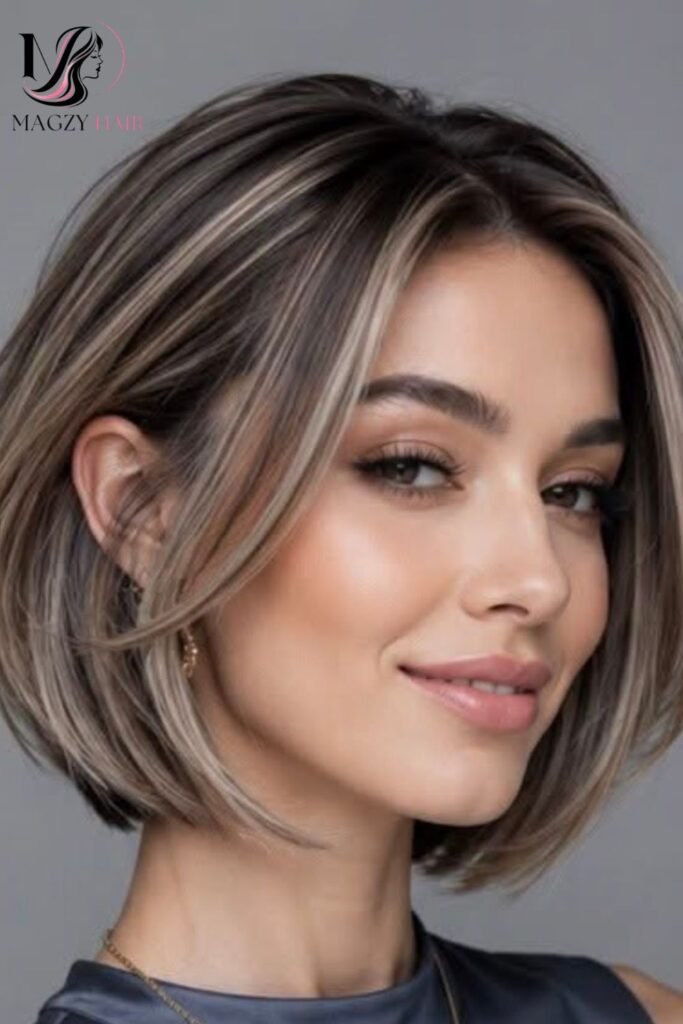
Adding micro highlights or subtle balayage to bob hairstyles for fine hair introduces genuine dimension that flat, single process color often lacks, and this dimension does more than add visual interest it can create the illusion of increased density. Multiple tonal variations throughout the hair trick the eye into perceiving more depth and thickness than a single, flat color allows.
This technique proves particularly valuable for fine hair specifically because thin, single process color tends to look flatter and thinner than the same length in a multi tonal shade. Strategic highlight placement, especially around the crown and part line where density often matters most visually, can meaningfully change how full a bob appears without any change to the actual cut.
A helpful example: someone with fine, single process colored hair who adds subtle micro highlights often finds their existing bob suddenly looks fuller and more dimensional, even though the cut itself hasn’t changed at all. This is one of the more overlooked, cost effective strategies among bob hairstyles for fine hair for those not ready for a new haircut but wanting a fuller looking result.
Maintenance for micro highlights generally involves touch ups every 8–12 weeks, and choosing a colorist experienced specifically in fine hair helps ensure the lightening process doesn’t compromise hair health further, since fine hair can be more prone to damage from color processing.
Stacked Bob for Structural Fullness
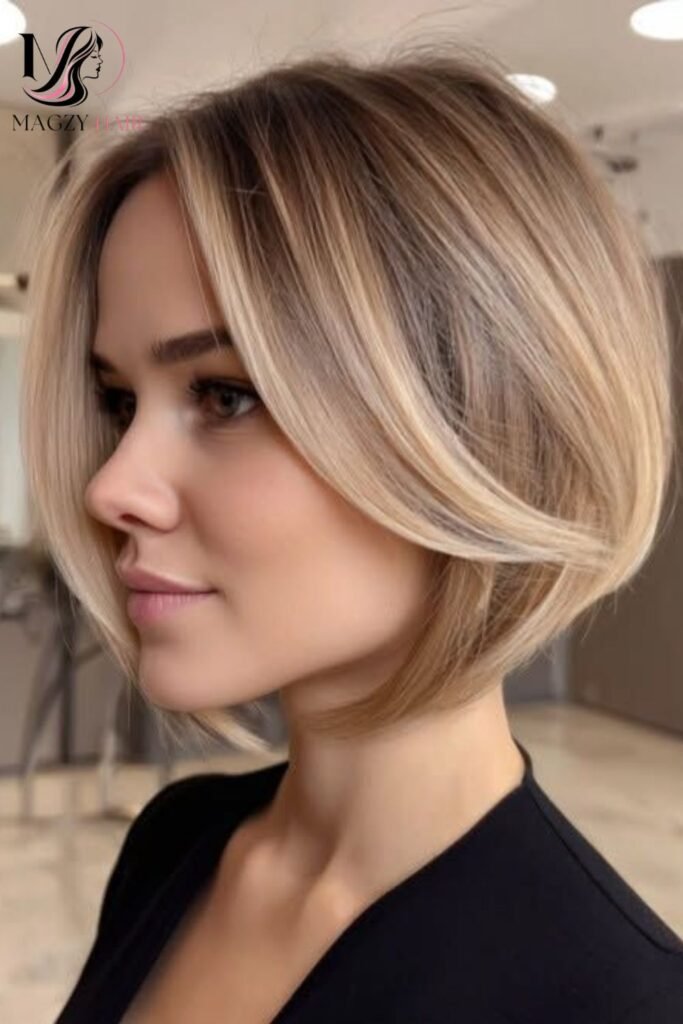
The stacked bob features graduated layers concentrated at the back of the head, building noticeable structural volume at the nape that tapers into a longer front section. Among bob hairstyles for fine hair, this particular style proves especially effective, since the stacking technique creates volume through the cut itself rather than relying entirely on styling products.
This technique relies on precise graduated cutting, where each layer at the back is cut slightly shorter than the one above it, building volume through overlapping sections rather than uniform length. This structural volume tends to hold up significantly better throughout the day than volume created purely through blow drying alone on a non stacked cut.
A helpful example: someone with fine hair specifically concerned about flatness at the crown and nape might find that a stacked bob addresses this more effectively than layering alone, since the graduated cutting technique builds in physical structure rather than relying on how the hair is styled each morning. This makes it a particularly smart choice among bob hairstyles for fine hair managing persistent volume concerns.
Maintenance for the stacked bob requires attention to the precise graduation at the back, generally needing trims every 6–8 weeks to prevent the deliberate stacking effect from softening and losing its structured shape as hair grows out.
Bob With Wispy, Face Framing Bangs
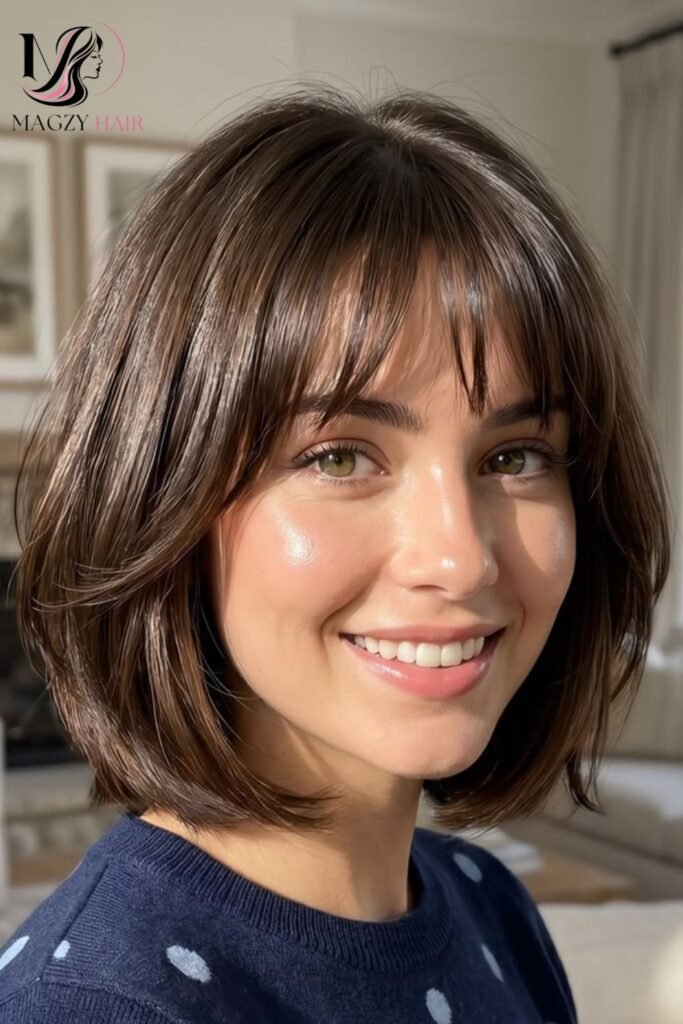
Adding soft, wispy bangs to bob hairstyles for fine hair introduces a face framing element without adding the visual heaviness a thick, blunt fringe might create on already fine strands. This softer approach tends to blend more naturally into the rest of the cut, avoiding a stark contrast between a dense fringe and thinner looking length below.
This particular combination works especially well because wispy bangs can be customized in fullness to match your specific hair density, rather than following a one size fits all bang formula designed for thicker hair. Side swept, longer wispy bangs also offer versatility, allowing them to be styled back on days when a fuller fringe look isn’t wanted.
A helpful example: someone with fine hair who requests thick, blunt bangs modeled after a reference photo shot on thicker hair might find their own fringe looks noticeably sparser than the photo suggested. Discussing your specific hair density with your stylist and opting for a wispier interpretation typically produces more flattering, proportionate results among bob hairstyles for fine hair.
Maintenance for wispy bangs paired with a bob typically requires trims every 3–4 weeks, since bangs on fine hair can start to feel thin and less defined more quickly than bangs on thicker hair as they grow.
A-Line Bob for Visual Density
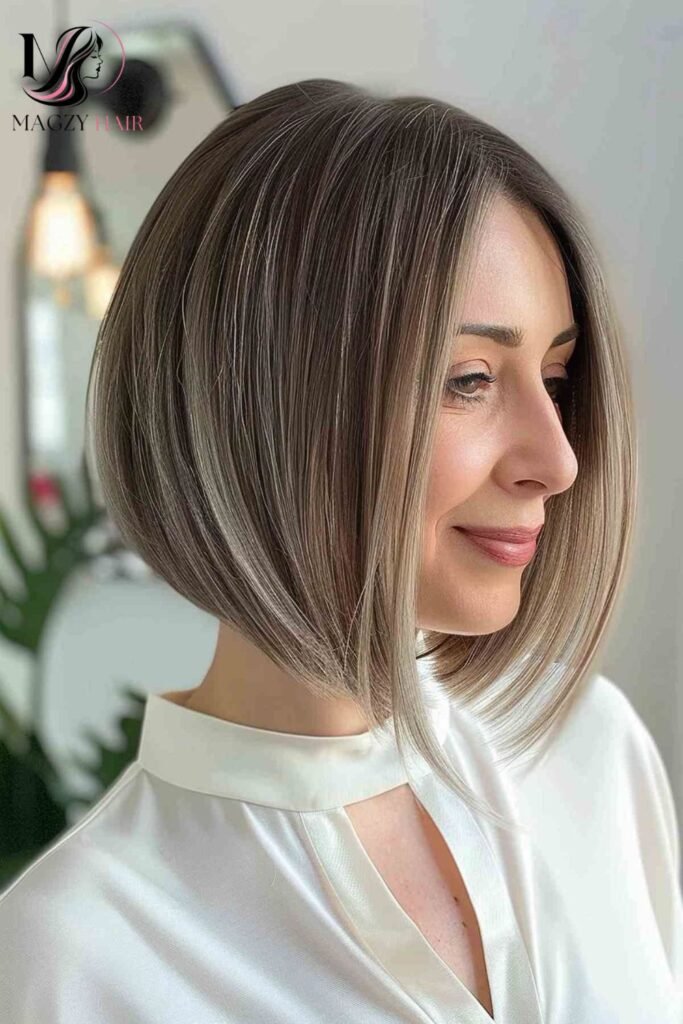
The A-line bob features length that’s shorter in the back and gradually longer toward the front, creating a distinctive angled silhouette among bob hairstyles for fine hair that offers a genuine structural advantage for this hair type. The shorter back section requires less overall density to look intentionally full, since less hair is needed to fill a shorter perimeter convincingly.
This shape also concentrates more visible length and weight toward the front, precisely where framing and fullness around the face tend to matter most visually. This makes the A-line bob a particularly strategic choice among bob hairstyles for fine hair, using its inherent structure to work with, rather than against, lower hair density.
A helpful example: someone with fine hair who has struggled with an even, one length bob looking thin throughout might find that an A-line shape distributes the available hair more effectively, concentrating visual fullness where it counts most rather than spreading thinness evenly across the whole cut. This is a detail many general style guides overlook when discussing bob hairstyles for fine hair specifically.
Maintenance for the A-line bob requires fairly regular trims, generally every 6–8 weeks, to preserve its precise angled shape, since even small amounts of growth can soften the deliberate line that defines this particular style.
Bob With Soft, Loose Waves
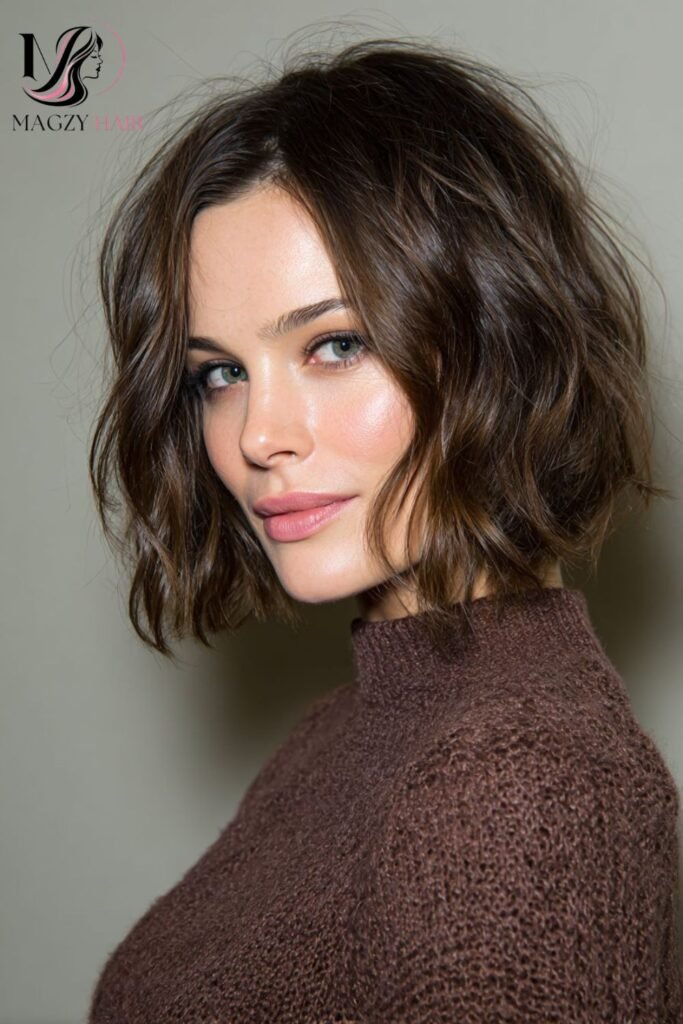
Adding soft, loose waves to bob hairstyles for fine hair introduces texture and movement that can make hair appear fuller than it would styled completely straight and sleek. Waves create additional surface area and light catching dimension, both of which contribute to the visual impression of increased density.
Achieving this look well typically involves using a curling wand on alternating sections, then gently brushing through with fingers once cool, rather than a full head of uniform curls, which can sometimes look overly done on a shorter length. This looser, more textured approach tends to enhance the appearance of fullness more naturally than tightly defined curls.
A helpful example: someone with fine, straight hair who switches from sleek, straight styling to soft waves for their bob often notices their hair appears visibly thicker, simply from the added texture and movement waves introduce. This makes soft waving a genuinely useful, low cost styling technique among bob hairstyles for fine hair for those not ready to change their actual cut.
A lightweight texturizing spray applied before waving helps the style hold longer without weighing down fine hair, an important consideration since heavier products can quickly undo the volume this styling approach is meant to create.
Bob With a Volumizing Root Perm
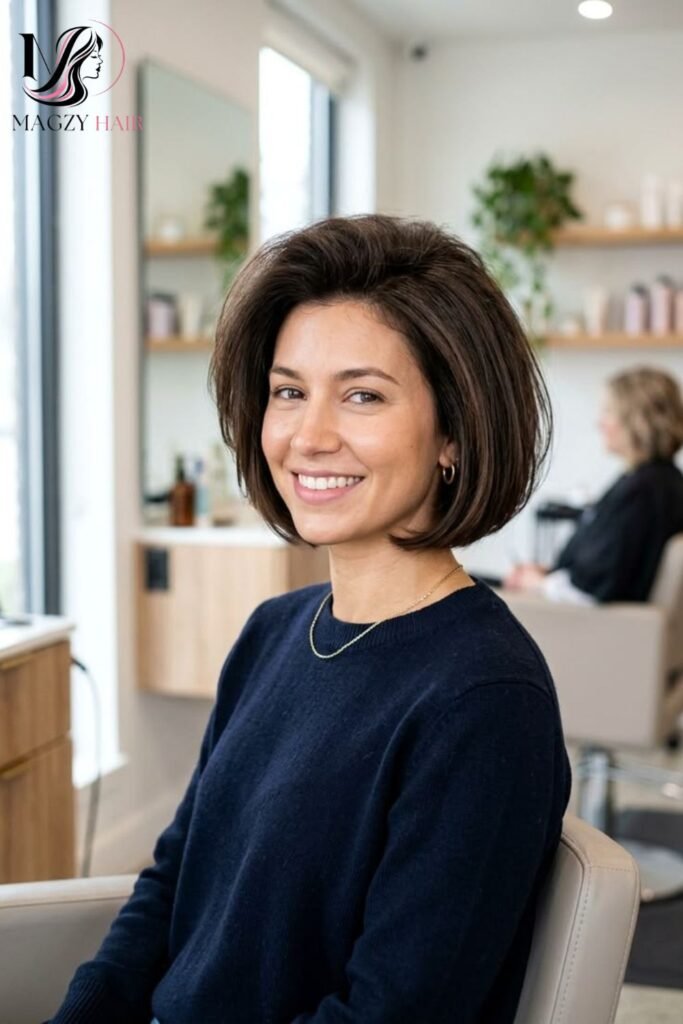
For fine hair that struggles to hold volume regardless of cutting technique, a volumizing root perm offers a more permanent styling solution among bob hairstyles for fine hair, adding texture and lift specifically at the roots without processing or altering the rest of the length. This targeted approach addresses flatness at its source rather than relying entirely on daily styling effort.
This technique typically involves applying a gentle perming solution only to small sections at the roots, creating subtle bend and texture that lifts hair away from the scalp. Unlike a full perm, this root focused version leaves the rest of the hair’s natural texture and shine largely unaffected, making it a more subtle, targeted solution.
A practical example: someone with fine, stubbornly flat hair who has tried every styling product without lasting success might find a root perm solves the issue more reliably than any daily styling routine, since the treatment itself builds in the volume rather than requiring it to be recreated each morning. This makes it a worthwhile option to discuss among bob hairstyles for fine hair for those with persistent volume concerns.
Because this treatment involves chemical processing, even in a targeted, root only application, consulting with a stylist experienced specifically in volumizing perms for fine hair helps ensure the treatment is calibrated appropriately to avoid unnecessary damage to already delicate strands.
Choosing Bob Hairstyles for Fine Hair by Face Shape
Face shape plays a significant role in which bob hairstyles for fine hair look most flattering, a detail often overlooked in generic style roundups. Round faces tend to benefit from an A-line bob or styles with slightly more length at the front, since these help elongate the face rather than adding width at its widest point, something a very short, uniformly blunt bob can sometimes do.
Square faces generally look best with soft, wispy bangs or gentle waves rather than a perfectly straight, sharply blunt perimeter, since some softness helps balance a strong, angular jawline. Heart shaped faces often benefit from bob hairstyles for fine hair that add visual fullness around the jaw specifically, balancing a narrower jawline against a fuller forehead.
A helpful example: two women requesting the “same” bob from a reference photo may need genuinely different length and layering placement to achieve an equally flattering result, simply because their face shapes and hair densities differ. This is why clearly communicating both your face shape and your specific hair density to your stylist leads to a far more personalized, satisfying outcome than a reference photo alone can provide.
Oval faces tend to have the most flexibility among bob hairstyles for fine hair, generally suiting nearly any length or styling approach discussed in this guide. For other face shapes, taking a few extra minutes during consultation to discuss both facial structure and hair density meaningfully improves the odds of a genuinely flattering result.
Common Mistakes to Avoid With Bob Hairstyles for Fine Hair
One of the most frequent mistakes is requesting heavy, dramatic layering throughout, assuming this will automatically add volume to fine hair. In practice, this approach often removes too much weight from the ends, making already fine hair look sparser rather than fuller, working directly against what most people actually want from bob hairstyles for fine hair.
Another common error involves using heavy, smoothing, or overly moisturizing products designed for thicker hair, which can weigh fine hair down and eliminate any volume the cut was designed to provide. Lightweight, volumizing products formulated specifically for fine hair tend to serve bob hairstyles for fine hair far better than richer formulas meant for coarser textures.
Skipping regular trims is another frequently repeated mistake, since fine hair shows split ends and thinning more visibly than thicker hair, and a growing out bob can quickly start to look stringy rather than intentionally styled. Regular trims, generally every 6–8 weeks, help maintain the density enhancing shape this category of cuts depends on.
Finally, over washing fine hair, or using overly rich conditioners applied too close to the roots, can flatten volume almost immediately after styling. Applying conditioner primarily to the mid lengths and ends, while keeping roots relatively product free, helps preserve the lift that bob hairstyles for fine hair are specifically designed to create.
The Future of Bob Hairstyles for Fine Hair
Bob hairstyles for fine hair continue to evolve alongside broader advances in density specific cutting education and product formulation. As more stylists pursue specialized training in cutting for hair density rather than applying identical techniques across all hair types, the historically common mistake of over layering fine hair is becoming less frequent.
There’s also a growing emphasis on color techniques specifically designed to enhance the appearance of density, with more colorists discussing micro highlighting and strategic dimension as legitimate volumizing tools rather than purely aesthetic choices. This reflects a broader industry recognition that color and cut decisions work together for bob hairstyles for fine hair in ways that go beyond either element alone.
Product technology is advancing alongside this trend as well, with more brands developing genuinely lightweight, buildable volumizing formulas specifically for fine hair, addressing a category that historically had fewer specialized options compared to products for coarser or thicker textures.
Looking ahead, personalized digital consultation tools, including AI based density and volume simulation technology, are beginning to help people visualize how different bob hairstyles might specifically suit their hair density before committing to a cut. This kind of technology assisted planning could meaningfully reduce the trial and error historically associated with finding truly flattering bob hairstyles for fine hair.
Conclusion
Bob hairstyles for fine hair prove that thin strands can still achieve a genuinely full, polished look with the right cutting and styling strategy. From a classic blunt bob to a volumizing root perm, there’s an option here suited to nearly every face shape and lifestyle. The key is choosing techniques that add density rather than remove it. Ready to update your look Bring this guide to your next appointment and start exploring bob hairstyles for fine hair that truly work for you.
Ayesha Noor is the founder and lead writer behind Magzy Hair. With 4 years of experience researching hairstyles, hair care, and beauty trends, she enjoys helping readers discover styles that suit their unique personality and lifestyle.


