
Low Maintenance Haircuts for Thick Hair: The Complete Guide to Effortless Styling

Low maintenance haircuts for thick hair require a genuinely different strategy than simply choosing a shorter length and hoping for the best. Thick hair’s natural density means the wrong cut can actually create more daily styling work, not less, since improperly managed volume and weight often demand extensive blow drying and product just to look presentable. The right cutting technique, by contrast, does most of the work before you ever pick up a styling tool.
This guide goes beyond a simple photo gallery. It explains which specific cutting and thinning techniques genuinely reduce daily styling time for thick hair, how texture and curl pattern should influence which low maintenance approach actually works for you, and details most articles skip entirely like why some cuts marketed as “low maintenance” are anything but for genuinely thick, dense hair specifically. Whether you’re tired of lengthy morning routines or want a cut that finally works with your hair rather than against it, this is the deeper, more practical guide.
Why Low Maintenance Haircuts for Thick Hair Require Specific Planning
Low maintenance haircuts for thick hair depend heavily on cutting technique rather than length alone, since improperly managed density can turn even a short haircut into a considerable daily styling project. Thick hair that isn’t properly thinned tends to require extensive blow drying and smoothing simply to look controlled, defeating the entire purpose of choosing a genuinely low maintenance style.
This means the specific thinning and layering approach used matters considerably more for thick hair than for finer textures when the actual goal is minimizing daily effort. A cut that photographs beautifully immediately after a salon blowout can become a genuine daily struggle if the underlying weight distribution wasn’t addressed with low maintenance styling specifically in mind.
A helpful example: someone with thick, dense hair who chooses a cut based purely on appearance in a reference photo, without discussing how much daily styling that specific look actually requires, might find their new haircut demands considerably more morning effort than their previous style, even at a shorter length. Communicating your actual daily time constraints during your consultation helps ensure genuine alignment between the chosen cut and realistic styling capacity.
Understanding this distinction from the outset helps set appropriate expectations, since low maintenance haircuts for thick hair genuinely exist and work well, but they require different planning than simply picking a popular style and assuming it will automatically translate to less daily effort.
Featured Post: https://magzyhair.com/short-hairstyles-for-women-over-70/
Layered Bob for Air Dry Friendly Movement

A layered bob remains one of the most consistently successful low maintenance haircuts for thick hair, since strategic internal layering removes weight throughout the cut, allowing hair to air dry into a reasonably controlled shape without requiring extensive blow drying or heat styling to look presentable.
This particular style benefits from layering specifically designed with air drying in mind, meaning a stylist genuinely focused on low maintenance results will typically ask how you plan to dry your hair day to day, adjusting the cutting technique accordingly rather than assuming a standard blowout finish as the default expectation.
A helpful example: someone with thick, wavy hair who receives a layered bob specifically cut for air drying might find their natural texture settles into an attractive, controlled shape with minimal product and no heat styling required, while the same length cut without this specific consideration might require daily blow drying to avoid looking frizzy or shapeless.
Maintenance for a layered bob among low maintenance haircuts for thick hair generally requires trims every 8–10 weeks, a genuinely manageable schedule that aligns well with the style’s overall low effort philosophy.
Textured Lob for Effortless, Undone Styling

A textured lob, or long bob, offers genuine versatility among low maintenance haircuts for thick hair, using heavy point cutting or razor work to create movement that looks intentionally undone rather than requiring precise, daily styling to achieve its finished appearance. This particular texturizing approach tends to work especially well on thick hair specifically.
This style benefits from an inherently forgiving quality, since the deliberately textured, piece-y finish disguises minor styling imperfections considerably better than a sleeker, more polished cut would. Small amounts of frizz or slightly uneven drying blend naturally into the style’s already-textured aesthetic rather than standing out as obvious styling problems.
A helpful example: someone with thick, coarse hair who previously required a lengthy flat ironing session each morning might find a textured lob considerably more forgiving, since the built in texture works with rather than against thick hair’s natural tendency toward some frizz, reducing the daily pressure to achieve perfectly smooth results.
Finishing a textured lob typically involves a lightweight texturizing spray applied to damp or dry hair, a considerably faster daily step than the extensive smoothing routine sleeker cuts on thick hair often demand.
Curly Bob for Working With Natural Texture

For those with naturally curly, thick hair specifically, a curly bob cut using curl specific dry cutting techniques offers one of the most genuinely low maintenance haircuts for thick hair available, since this approach works with natural texture rather than requiring it to be smoothed or straightened daily.
This style depends heavily on proper thinning distributed throughout the cut’s full depth, not just the surface layers, since thick curly hair’s underlying density needs genuine attention to prevent the style from looking bulky despite the curl pattern’s inherent movement and texture.
A helpful example: someone with thick, curly hair who transitions from regularly straightening their hair to embracing a properly cut curly bob often finds their daily routine considerably simplified, since a quick application of curl cream followed by air drying replaces what may have previously been an extensive blow drying and flat ironing process.
Maintenance for a curly bob among low maintenance haircuts for thick hair typically requires trims every 8–10 weeks, with curl specific, dry cutting technique helping the style hold its shape reasonably well between salon visits despite thick hair’s substantial density.
Blunt Bob With Minimal Layering for Straight, Thick Hair

For those with thick, straight hair specifically, a blunt bob with only minimal, strategic layering can genuinely qualify among low maintenance haircuts for thick hair, provided the thinning is handled with precision throughout the cut’s interior sections rather than relying on surface level texturizing alone.
This style works because thick, straight hair often has enough natural weight and smoothness to fall into a reasonably controlled shape without extensive daily styling, provided the underlying bulk has been properly managed through skilled internal thinning during the cutting process itself.
A helpful example: someone with thick, straight hair who receives a blunt bob without adequate internal thinning might find the style requires daily flat ironing to look sleek and controlled, while the same length cut with proper, thorough internal thinning often air dries into a genuinely presentable shape with minimal additional effort.
Styling this particular cut for low maintenance results typically involves a lightweight smoothing serum applied to damp hair before air drying, avoiding the extensive blow drying and flat ironing routine an improperly thinned blunt bob on thick hair would otherwise demand.
Shoulder Length Layers for Versatile, Minimal Styling
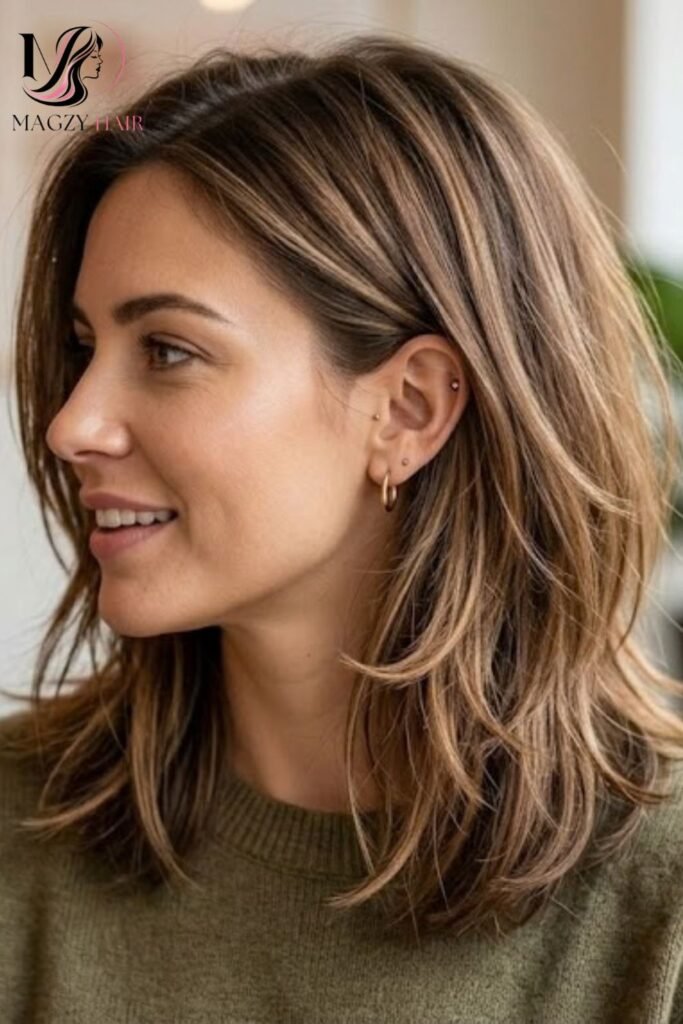
Shoulder length layered cuts offer a genuinely practical option among low maintenance haircuts for thick hair, striking a balance between enough length for occasional updo versatility and short enough to avoid the excess weight that can make thick hair feel increasingly heavy and time consuming to manage at greater lengths.
This length benefits considerably from thoughtful, evenly distributed layering throughout, since thick hair at shoulder length without proper thinning can sometimes look bottom heavy or difficult to style without extensive daily effort, undermining the low maintenance goal this length is otherwise well suited to support.
A helpful example: someone with thick, medium textured hair who transitions from long, unlayered hair to a properly layered shoulder length cut often finds their daily styling time reduced considerably, since the shorter length combined with strategic thinning means hair naturally falls into a reasonably controlled shape without extensive blow drying.
Maintenance for shoulder length layers among low maintenance haircuts for thick hair generally allows for trims every 8–10 weeks, since moderate growth doesn’t dramatically disrupt the overall low effort styling routine this length and cutting approach supports.
Pixie Cut for Maximum Daily Time Savings

A well executed pixie cut represents one of the most genuinely time saving options among low maintenance haircuts for thick hair, since the dramatically shorter length paired with thorough, appropriate thinning can reduce daily styling time to just a few minutes, a significant change for anyone previously managing thick hair at considerably greater length.
This style requires particularly thorough internal thinning specifically for thick hair, since inadequate weight removal at this short length can result in a bulky, difficult to manage shape that actually demands more daily effort than a properly executed longer cut would, undermining the entire purpose of choosing this length.
A helpful example: someone with thick, dense hair who commits to a properly thinned pixie cut often finds their morning routine reduced from twenty or more minutes of blow drying and styling down to just a few minutes of applying a small amount of texturizing product and air drying, a genuinely dramatic time savings worth the more frequent trim schedule this length requires.
Maintenance for a pixie among low maintenance haircuts for thick hair does require more frequent trims than longer options, generally every 4–6 weeks, a worthwhile trade off for many given the substantial daily time savings this length provides.
Product Routine That Actually Supports Low Maintenance Goals
Product selection genuinely affects whether low maintenance haircuts for thick hair actually deliver on their time saving promise, since choosing the wrong formulas can undermine even a well executed, appropriately thinned cut. Lightweight leave in conditioners and smoothing creams, rather than heavier styling products, tend to support genuinely efficient daily routines for thick hair specifically.
A single, multi purpose product applied to damp hair before air drying, rather than a lengthy, multi step product routine, aligns considerably better with the actual goal of low maintenance styling, since even excellent product choices lose their time saving value if the application process itself becomes lengthy and involved.
A helpful example: someone using a five step product routine each morning, even with genuinely effective individual products, isn’t actually achieving low maintenance results in practice, regardless of how well their haircut itself was executed. Simplifying to one or two key products, applied efficiently right after showering, better serves the actual goal of reduced daily styling time.
Dry shampoo also plays a valuable role specifically for low maintenance haircuts for thick hair, helping extend time between washes and reducing the frequency of full styling sessions required throughout a typical week.
Choosing a Cut Based on Your Actual Texture and Curl Pattern
Genuinely low maintenance haircuts for thick hair depend considerably on matching the cutting approach to your specific texture and curl pattern, rather than choosing a style purely because it looked low maintenance on someone with different hair characteristics. Thick, straight hair and thick, curly hair require genuinely different cutting philosophies to achieve comparable time savings.
This means bringing detailed information about your actual hair texture, not just its density, to your consultation significantly improves the odds of receiving a cut that genuinely delivers low maintenance results specifically for your hair, rather than a generic approach that happens to work better for a different texture entirely.
A helpful example: someone with thick, curly hair who requests a cut styled and photographed on straight hair might receive a technically well executed haircut that nonetheless requires considerably more daily effort than expected, simply because the cutting approach wasn’t genuinely suited to curly texture’s specific styling needs and behavior.
Discussing your typical daily styling routine and realistic time constraints, alongside your specific texture, helps your stylist recommend low maintenance haircuts for thick hair that authentically match both your hair’s characteristics and your actual lifestyle needs.
Common Mistakes That Undermine Low Maintenance Goals
One frequent mistake involves choosing a haircut based purely on how it looks in salon photos, without asking specifically how much daily styling effort was involved in achieving that particular finished look, often resulting in a cut requiring considerably more daily time than the “low maintenance” label initially suggested.
Insufficient thinning is another common issue specific to thick hair pursuing low maintenance results, since inadequate weight removal, even within an otherwise reasonable haircut choice, often necessitates daily blow drying and styling that a more thoroughly thinned version of the same cut wouldn’t require to the same degree.
Using too many products, even when individually well chosen, undermines the practical time saving goal low maintenance haircuts for thick hair are meant to achieve, since an elaborate, multi step routine defeats the purpose regardless of how effective each individual product might be in isolation.
Finally, skipping regular trims can gradually undermine even a well executed low maintenance cut, since thick hair growing out of its carefully thinned shape can become increasingly time consuming to style as the weeks between appointments stretch beyond the recommended schedule.
Face Shape Considerations for Low Maintenance Cuts on Thick Hair
Face shape remains worth considering even when the primary goal is genuinely low maintenance haircuts for thick hair, since choosing a flattering shape alongside practical, time saving cutting technique ensures the final result serves both goals simultaneously rather than sacrificing one consideration for the other entirely.
For round faces specifically, low maintenance layered cuts with some height built into the crown tend to elongate the face while still requiring minimal daily styling, since this crown volume typically results from cutting technique itself rather than daily styling effort, aligning well with the low maintenance goal.
A helpful example: someone with a round face and thick hair might specifically request layered thinning concentrated with some height at the crown, achieving a flattering, face elongating effect that still air dries into a reasonably polished shape without requiring the daily root lifting blow drying a flatter crowned cut might otherwise demand.
Discussing both face shape and low maintenance priorities together during your consultation, rather than treating them as separate or competing considerations, helps ensure your stylist can genuinely address both goals within the same thoughtfully planned haircut.
The Future of Low Maintenance Haircuts for Thick Hair
Low maintenance haircuts for thick hair continue to benefit from a broader industry shift toward genuinely lifestyle based consultations, with more stylists specifically asking about realistic daily styling time and routines before recommending a cut, rather than defaulting to trend based suggestions that don’t account for practical, real world time constraints.
Product innovation is also shaping the future of this category, with ongoing advances in lightweight, multi purpose formulas designed specifically to simplify daily routines for thick hair without requiring the extensive, multi step product applications previously considered necessary for managing this density and texture.
There’s also growing recognition within the hairstyling industry that “low maintenance” needs to be defined specifically for each individual hair type and texture, rather than applying a generic, one size fits all understanding of what qualifies as genuinely time-saving across dramatically different hair characteristics.
Looking ahead, personalized digital consultation tools, including AI based styling time estimation technology, are beginning to help clients preview realistic daily maintenance requirements for different cuts before committing, reducing the trial and error historically associated with finding genuinely low maintenance haircuts for thick hair specifically.
Conclusion
Low maintenance haircuts for thick hair genuinely exist and work well, but they depend on thoughtful, thorough thinning technique matched specifically to your texture rather than simply choosing a popular style and hoping for reduced daily effort. From layered bobs to curly specific cuts and pixies, there’s a version suited to nearly every thick hair texture and lifestyle. If you’ve been struggling with a lengthy morning routine, use these ideas as a starting point for your next conversation with a trusted stylist.
Ayesha Noor is the founder and lead writer behind Magzy Hair. With 4 years of experience researching hairstyles, hair care, and beauty trends, she enjoys helping readers discover styles that suit their unique personality and lifestyle.


