Hairstyles With Bangs for Older Women: The Complete Guide to Face Framing Cuts

Hairstyles with bangs for older women offer something genuinely valuable beyond just a style refresh: a face framing element that can soften features, draw attention to the eyes, and update an overall look without requiring a dramatic length change. But bangs at this stage of life work best when they’re cut with real consideration for how hair texture, density, and face structure have naturally evolved over time.
This guide goes beyond a basic photo roundup. It explains which bang styles genuinely work well with the hair changes many women experience over 50, 60, and beyond, how to avoid the styling pitfalls that can make bangs look aged rather than flattering, and details most articles skip like why certain bang textures specifically help disguise thinning at the hairline, and how forehead skin texture should factor into the decision. Whether you’re considering bangs for the first time at this stage or refining a fringe you already wear, this is the deeper, more practical guide.
Why Hairstyles With Bangs for Older Women Deserve Special Consideration
Hairstyles with bangs for older women benefit from a different approach than bangs chosen at a younger age, largely because hair texture, density, and even skin texture around the forehead genuinely change over time. A bang style that looked effortless and low maintenance in someone’s thirties may need real adjustment to continue looking flattering and current decades later.
This isn’t about avoiding bangs altogether quite the opposite. Well chosen bangs can be one of the most effective, immediately impactful updates available at this stage of life, since they draw attention toward the eyes and soften the overall face shape in a way few other styling choices achieve as efficiently. The key is choosing the right bang style and texture for where hair actually is now.
A helpful example: a woman whose hair has become somewhat finer over the years might find that a heavy, blunt fringe she wore comfortably in her thirties now looks noticeably thin or patchy in the same style, not because bangs stopped suiting her, but because the specific bang style needs updating to match her current hair density. Recognizing this distinction is the first step toward choosing hairstyles with bangs for older women that genuinely flatter rather than date the overall look.
Beyond texture considerations, this is also simply a good moment to reassess whether an existing bang style, if one is already worn, still reflects current preferences and lifestyle rather than continuing out of habit alone.
Pick One: https://magzyhair.com/cute-mom-haircuts/
Soft, Wispy Bangs: The Most Forgiving Option
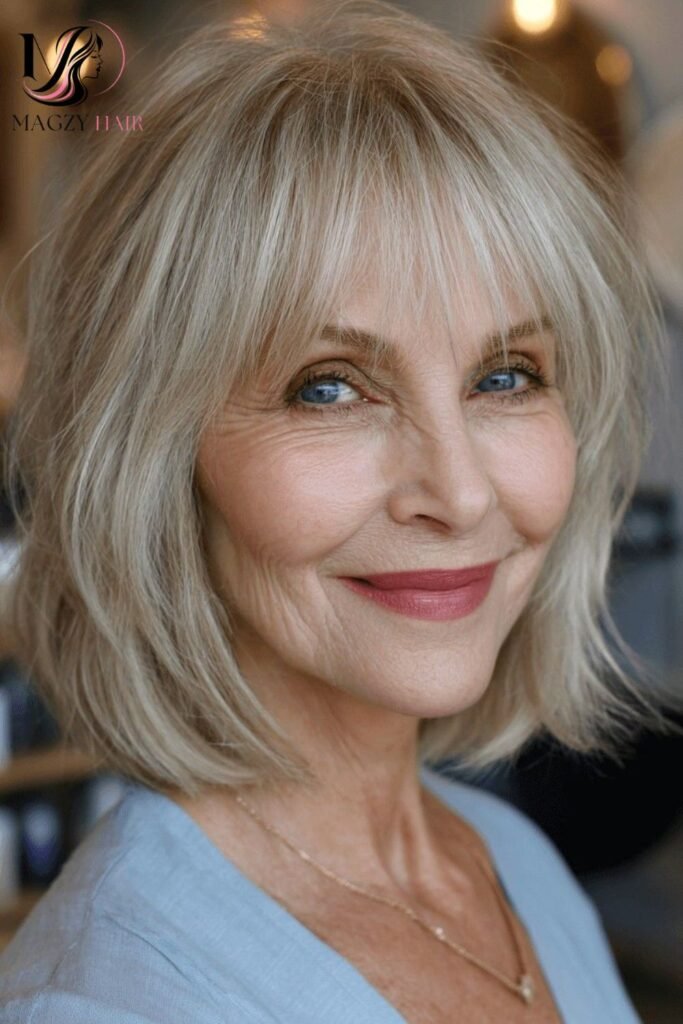
Soft, wispy bangs represent one of the most consistently recommended hairstyles with bangs for older women, offering face framing benefit without the heavier, more severe look a full, blunt fringe can sometimes create. This texturized approach uses point cutting or razor techniques to create thin, feathered pieces rather than one solid, dense line across the forehead.
This style tends to work particularly well for hair that’s become finer over time, since the airy, piece-y texture doesn’t rely on maximum density to look intentional the way a thick, blunt fringe does. Rather than emphasizing any reduction in hair density, wispy bangs actually tend to disguise it, since the deliberately textured, slightly separated pieces already look intentionally light rather than sparse.
A helpful example: a woman with naturally finer hair who has always avoided bangs, worried they would look thin, often finds soft, wispy bangs solve this exact concern, since the style is specifically designed around lighter density rather than fighting against it. This is a detail many generic bang guides overlook, yet it’s frequently the deciding factor in whether bangs work successfully at this stage.
Maintenance for wispy bangs is comparatively forgiving, generally requiring trims every 4–5 weeks, since the airy, texturized shape tolerates some growth without looking obviously overdue the way a precise, blunt line typically does.
Side Swept Bangs: Versatile and Universally Flattering
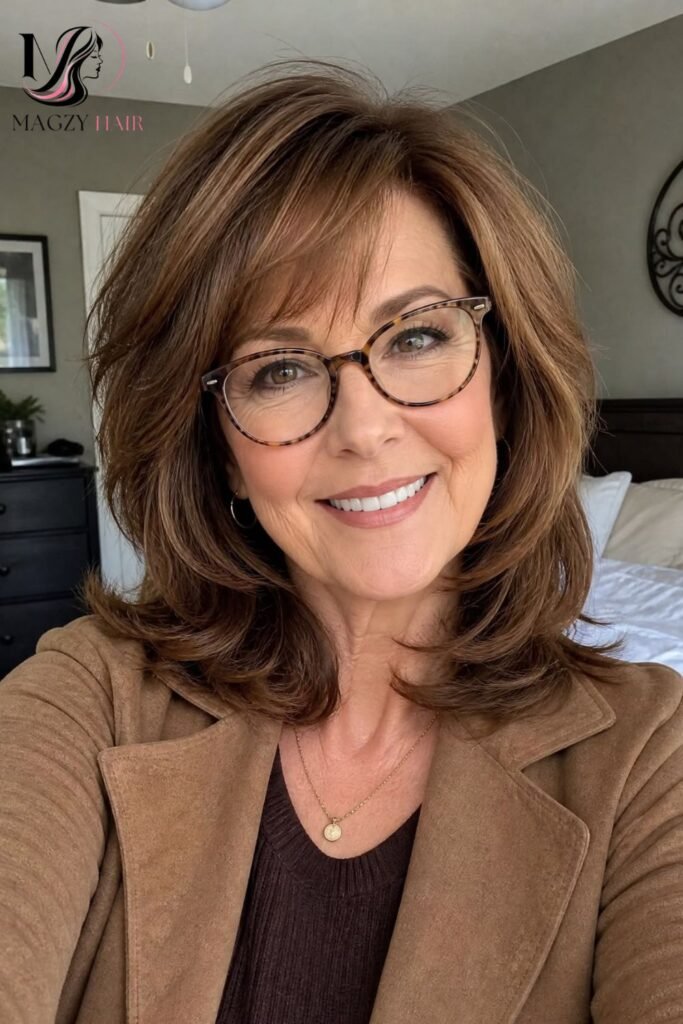
Side swept bangs remain one of the most universally recommended hairstyles with bangs for older women, offering a soft, diagonal line that works well across nearly every face shape while requiring less daily precision than straight across styles. This angled shape naturally breaks up facial proportions in a flattering way, whether softening a stronger jawline or balancing a fuller forehead.
This bang style also offers genuine day to day flexibility, since side swept fringe can be styled fuller and more defined for a polished look, or brushed back and blended into the rest of the hair on lower effort days. This adaptability makes side swept bangs a particularly practical choice for anyone whose available styling time and energy varies day to day.
A helpful example: a woman considering bangs for the first time later in life often finds side swept styling the easiest, lowest commitment entry point, since the style can be grown out gradually or blended back if she ultimately decides bangs aren’t for her, unlike a fully committed, straight across blunt fringe that offers less flexibility during the growing out process.
Side swept bangs also tend to grow out more gracefully than blunt styles, blending naturally into face framing layers as they lengthen, a practical benefit worth considering for anyone hesitant about committing to frequent trim schedules.
Curtain Bangs: A Low Maintenance, Flattering Choice
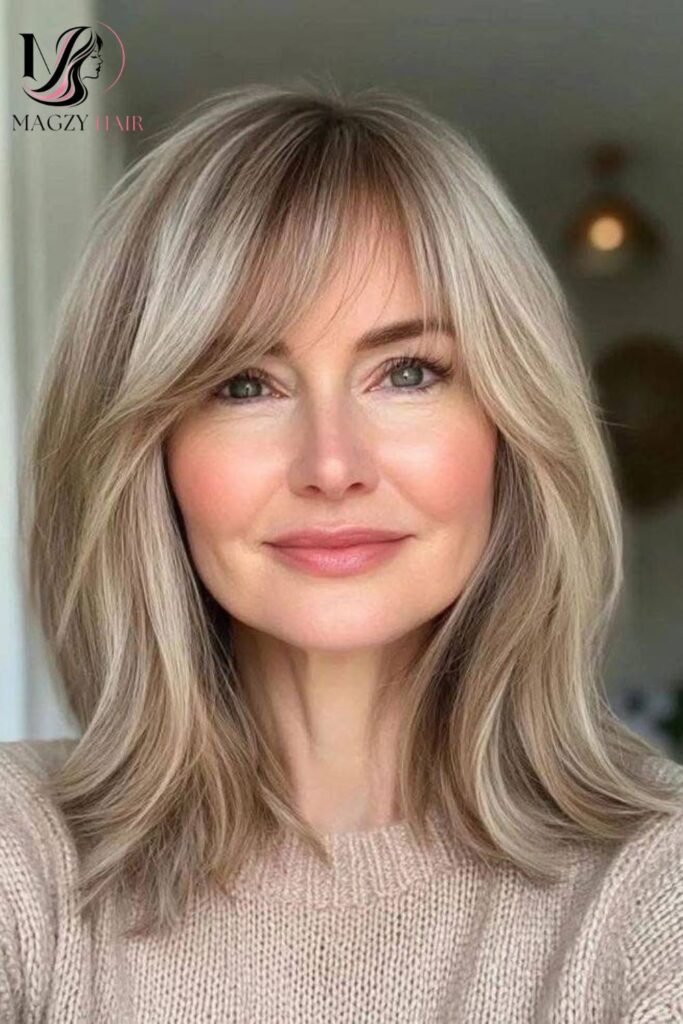
Curtain bangs have become one of the most popular hairstyles with bangs for older women, largely due to how naturally they blend into the rest of a haircut rather than creating a stark, separate element. Parted down the middle and swept to either side, this style opens up the face and softens features without the more committed, precise look a full fringe requires.
This bang style works particularly well for hair that’s changed texture over time, since curtain bangs don’t rely on a perfectly even, dense line the way blunt bangs do. The gradual, blended shape tends to look intentional even as hair grows between salon visits, making it a genuinely lower maintenance option among hairstyles with bangs for older women specifically.
A helpful example: a woman with thinning hair specifically at the temples might find curtain bangs particularly effective, since the style’s natural part and soft framing can help visually fill in and disguise this common area of concern, drawing attention toward the center of the face rather than the temples themselves.
Styling curtain bangs typically requires only a quick round brush blowout or air drying with a small amount of texturizing cream, making this one of the more time efficient options within hairstyles with bangs for older women, with trims generally needed only every 6–8 weeks.
Blunt Bangs: A Bold Choice That Requires Careful Execution
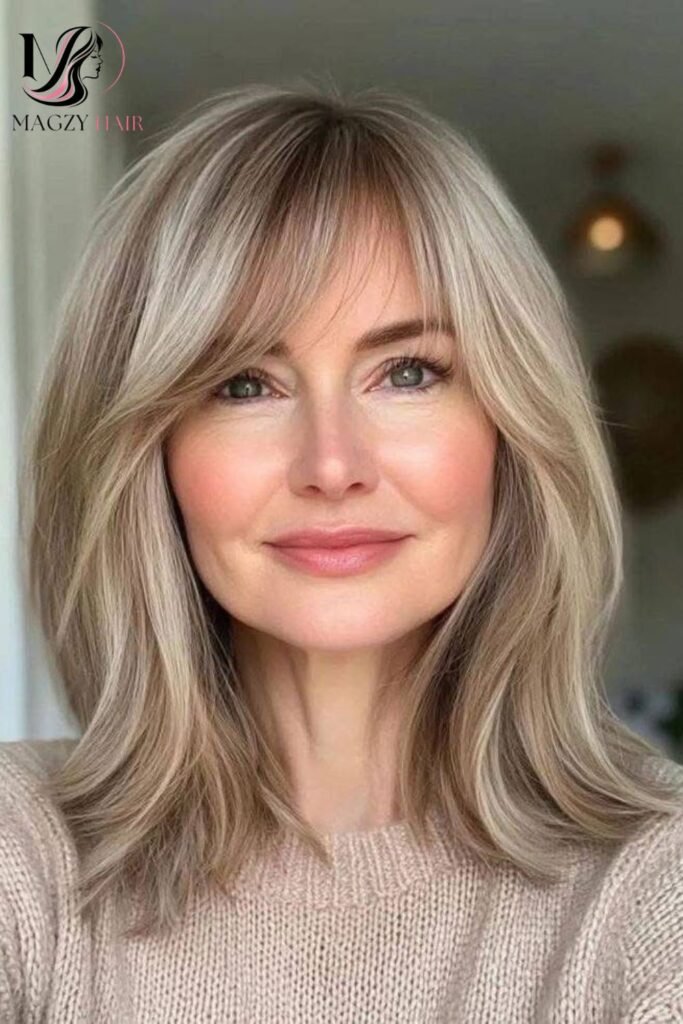
Blunt, straight across bangs remain an option within hairstyles with bangs for older women, though this style requires more careful execution and consideration than softer alternatives. A precise, even line can look striking and youthful when properly proportioned to face shape and hair density, but it also shows any thinning or unevenness more readily than textured styles.
This style tends to work best on those with fuller hair density and relatively smooth forehead skin texture, since the blunt line draws direct, concentrated attention to this specific area. For those with finer hair or more visible forehead lines, a slightly softer, less severe version sometimes called a “soft blunt” fringe often achieves a similar bold effect with more flattering results.
A helpful example: a woman with thick, healthy hair density who wants a genuinely bold, statement making bang style might find blunt bangs work beautifully, while someone with finer hair pursuing the identical style might find the same cut looks thin or patchy by comparison. This distinction is worth discussing honestly and directly with your stylist before committing to this particular option.
Maintenance for blunt bangs is more frequent than softer styles, generally requiring trims every 3–4 weeks to maintain the sharp, precise line this particular style depends on for its intended visual impact.
Hairstyles With Bangs for Older Women With Fine or Thinning Hair
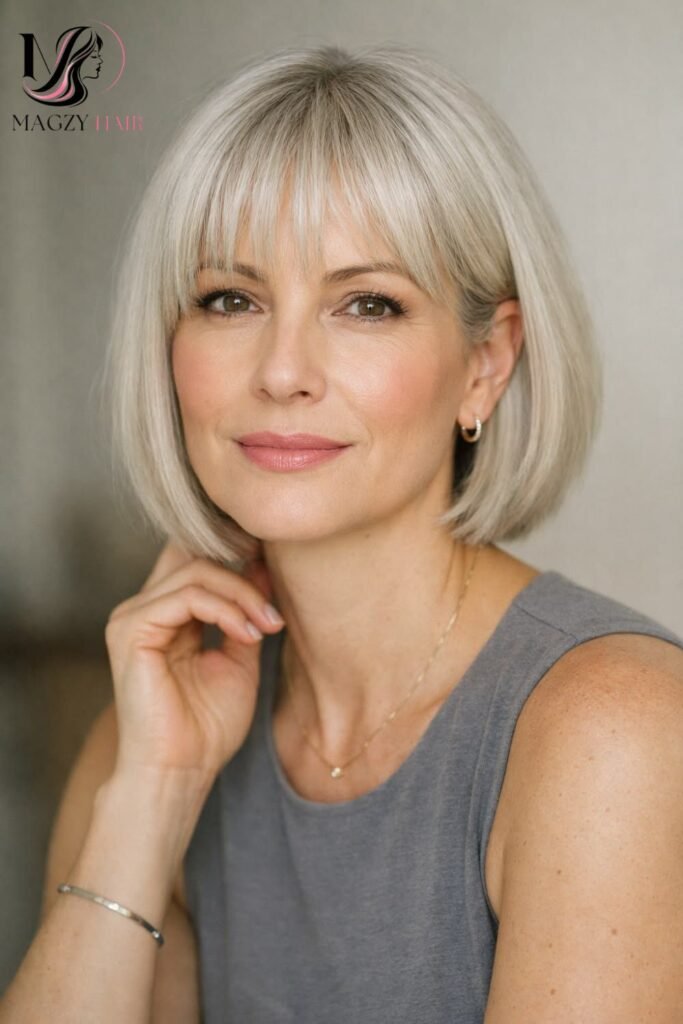
Fine or thinning hair, a common experience for many women as they age, requires particularly thoughtful bang selection to avoid emphasizing rather than disguising this natural change. Heavily texturized, wispy bangs, while trendy, can sometimes look sparse rather than intentionally airy on very fine hair, making a slightly fuller, less thinned bang style a better choice in many cases.
Keeping more weight and density in the bang area, rather than heavily thinning this specific section, tends to create a fuller, more polished appearance for finer hair textures. The goal is a bang style that reads as deliberately soft rather than accidentally sparse, a distinction that comes down largely to how much thinning is applied during cutting.
A helpful example: a woman with visibly thinning hair who requests heavily texturized bangs, expecting this to look effortlessly chic, might instead find the fringe looks patchy and insubstantial. Opting for a fuller, only lightly texturized curtain or side swept bang style typically creates a more polished, intentional look better suited to finer hair specifically.
Root lifting styling techniques also matter significantly here, since flat, limp bangs can look dated regardless of how well they were cut. A quick pass with a small round brush at the root during blow drying helps maintain lift throughout the day.
Hairstyles With Bangs for Older Women With Thick or Coarse Hair
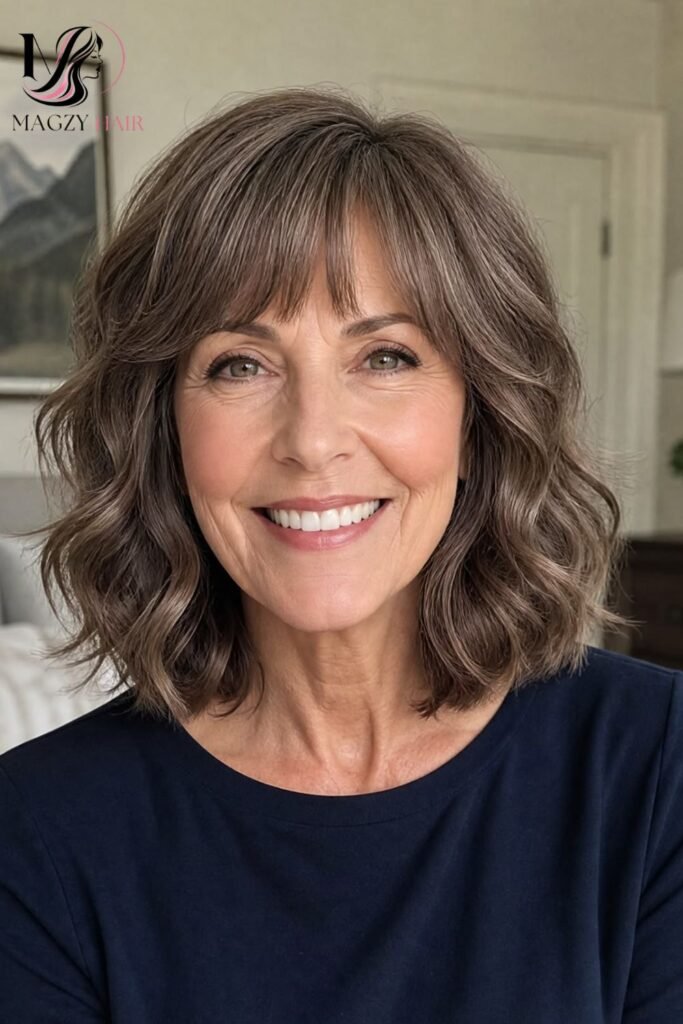
Thick or coarse hair, which some women maintain well into later decades, requires a different approach within hairstyles with bangs for older women, since the priority typically shifts toward managing volume and weight rather than creating additional fullness. Bangs on thick or coarse hair generally need more aggressive thinning to avoid looking heavy or difficult to style.
Gray and white hair specifically often has a coarser texture that’s more resistant to lying flat, meaning bangs on this hair type and color benefit from precise, deliberate thinning to control shape effectively. Slide cutting techniques, which remove weight gradually along the length, work particularly well for managing this texture within a bang style specifically.
A practical example: a woman with thick, coarse gray hair who receives minimal thinning within her bangs might find the fringe looks bulky or difficult to style, even with an otherwise well executed haircut surrounding it. Increasing thinning specifically within the bang section, while maintaining more length elsewhere, typically resolves this issue while still achieving the intended face framing effect.
Styling thick or coarse bangs generally benefits from lightweight anti frizz serums applied sparingly, along with a cool air finish after blow drying to help set the shape without adding unwanted volume or frizz to this particular section.
Hairstyles With Bangs for Round Faces
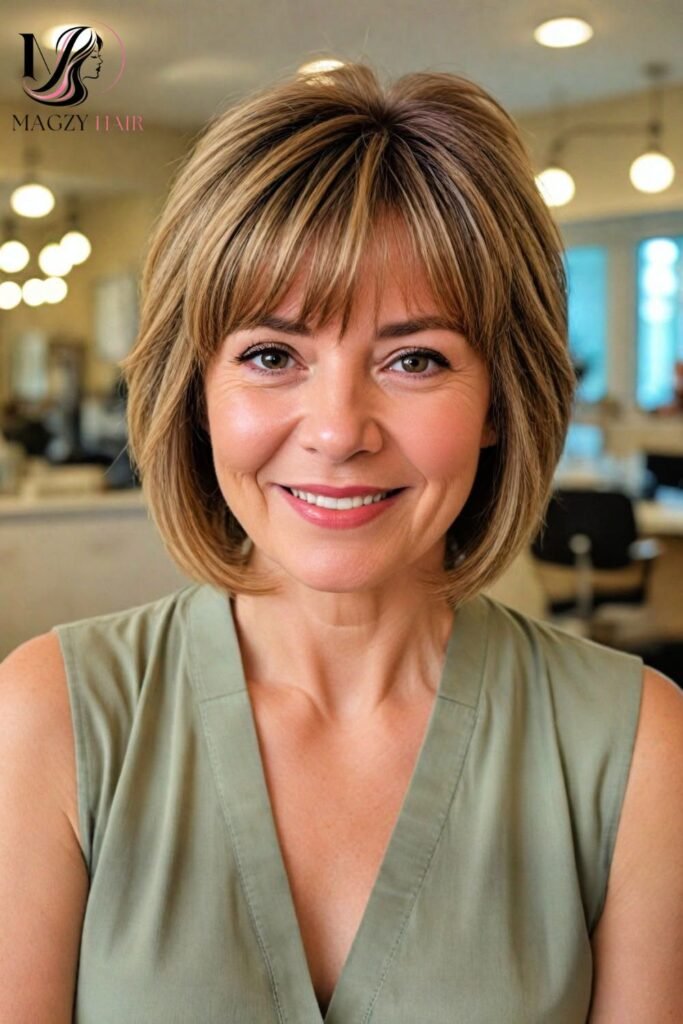
For round faces specifically, certain bang styles work considerably better than others among hairstyles with bangs for older women. Side swept or curtain bangs that add some diagonal movement tend to elongate the face, while a full, blunt, straight across fringe can sometimes emphasize width rather than balancing it, particularly at this precise forehead level placement.
Longer, side swept fringe that grazes the cheekbone diagonally creates a slimming, elongating effect particularly well suited to round faces, since the diagonal line helps visually break up the face’s natural roundness. This tends to be a more flattering choice than very short, straight across bangs, which can create a horizontal line that inadvertently draws attention to a round face’s width.
A helpful mini scenario: a woman with a round face who requests short, blunt bangs might find the style emphasizes fullness in her face more than intended, since the straight line sits directly at the face’s widest point for many round shaped faces. Adjusting to longer, side swept bangs typically achieves a more balanced, flattering result while still delivering meaningful face framing benefit.
Consulting with a stylist about specific round face priorities, rather than requesting a bang style based on a photo alone, leads to considerably more personalized, flattering recommendations tailored to individual facial proportions.
Hairstyles With Bangs for Square Faces
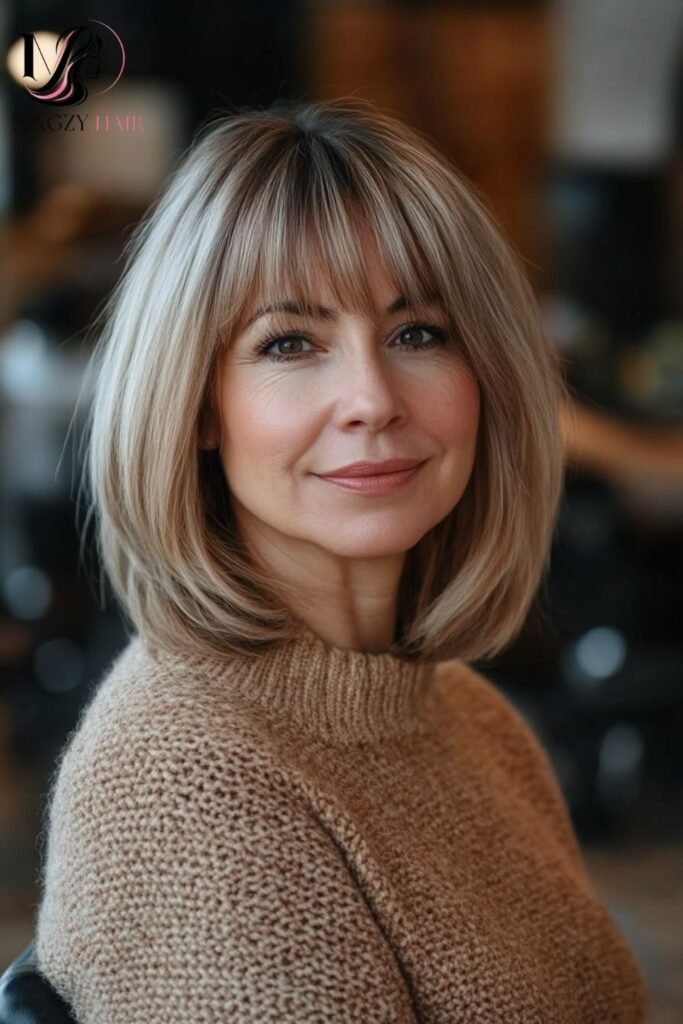
Square faces, characterized by a stronger, more defined jawline, generally benefit from softer, textured bang styles rather than sharp, blunt fringe among hairstyles with bangs for older women. Wispy or side swept bangs help soften the jaw’s natural angularity, creating a more balanced overall look without requiring any change to the underlying bone structure itself.
Blunt bangs, while striking, can sometimes emphasize angularity for square faces specifically, particularly when the straight line sits in direct visual contrast against strong jaw angles below. If a bolder, more blunt bang style is still preferred despite a square face shape, softening the ends slightly with light texturizing helps balance the overall geometry rather than doubling down on sharp lines throughout.
A practical example: a woman with a strong jawline who wants the graphic look of blunt bangs but wants to avoid emphasizing her jaw further might choose blunt bangs with softly texturized, rather than perfectly blunt, ends. This small adjustment maintains much of the bold visual impact while softening the overall effect just enough to balance rather than compete with a square jawline.
Longer, side swept fringe that falls diagonally across the face also works particularly well for square faces specifically, since the diagonal line breaks up strong, straight angles more effectively than symmetrical, straight across styling.
Styling Tips for Keeping Bangs Looking Fresh
Even a well cut fringe requires the right daily habits to look consistently polished within hairstyles with bangs for older women. Washing bangs slightly more frequently than the rest of the hair, or at minimum rinsing and lightly restyling them between full washes, helps prevent oil buildup that tends to occur faster in this area due to its proximity to the forehead.
A small, one inch round brush proves particularly useful for blow drying bangs into their intended shape, whether that’s a soft, side swept sweep or a fuller, more defined style. Using a brush significantly larger or smaller than the bang’s actual width often makes it considerably harder to achieve the precise shape and direction the original haircut intended.
A helpful example: someone struggling with bangs that won’t hold their shape despite proper brushing often benefits from a quick blast of cool air at the end of blow drying, which helps set the style more effectively than heat alone. This simple, often overlooked technique can meaningfully extend how long bangs hold their shape throughout the day.
Dry shampoo applied specifically at the bang’s roots, even on days when the rest of the hair doesn’t need it, helps extend the fresh, just styled look between washes, a particularly useful, targeted technique for maintaining polish within this smaller, more visible section.
Color Techniques That Complement Hairstyles With Bangs for Older Women
Color placement plays a meaningful role in how hairstyles with bangs for older women read visually, since strategic color near the face can enhance the bangs’ natural face framing effect. Soft, dimensional highlights placed specifically within and around the bangs can draw additional attention toward the eyes, amplifying the benefit bangs are specifically meant to provide.
For those embracing natural gray, subtle lowlights or toning treatments help ensure the color transition looks intentional both within the bangs and throughout the rest of the hair, rather than creating an obvious contrast between the two areas. This cohesive approach tends to look considerably more polished than treating bang color and overall hair color as entirely separate decisions.
A helpful example: solid, single process color throughout hairstyles with bangs for older women can sometimes make the bangs look visually disconnected from the rest of the cut, particularly if the bangs are styled to fall differently than the surrounding hair. Strategic, dimensional coloring that flows naturally from the bangs into the rest of the length helps create a more seamless, cohesive overall appearance.
Warmer color tones placed near the face specifically, such as soft copper or golden highlights within the bang area, can also help brighten the complexion and counteract any duller cast hair color sometimes develops with age.
Common Mistakes to Avoid With Hairstyles With Bangs for Older Women
One frequent mistake is choosing a bang style based purely on a trend photo without considering current hair density, texture, and forehead skin texture, all factors that genuinely change over time. A bang style that looks stunning on someone with thick, youthful hair density may require meaningful adjustment to work equally well on finer, more mature hair.
Skipping regular trims is a mistake with particularly noticeable consequences for bangs specifically, since fringe grows out and loses its intended shape faster than nearly any other part of a haircut. Waiting too long between bang specific touch ups often results in a style that falls into the eyes or loses the clean line that made it look polished and intentional to begin with.
Using heavy, thinning techniques on already fine hair remains a commonly repeated error, since excessive texturizing can create sparse, patchy looking bangs rather than the intended soft, airy effect. Clearly communicating hair density concerns directly to your stylist helps avoid this frequently made mistake among hairstyles with bangs for older women specifically.
Finally, using the wrong products can undermine an otherwise well executed bang style. Heavy oils or thick creams meant for longer hair lengths can weigh down bangs specifically, making them look flat or greasy considerably faster than the rest of the hair, making lightweight, bang specific products a worthwhile investment.
The Future of Hairstyles With Bangs for Older Women
Hairstyles with bangs for older women continue to evolve alongside a broader industry shift toward more personalized, texture specific cutting rather than standardized bang styles applied uniformly across different ages and hair types. As more stylists specialize in cutting for changing, mature hair textures, bang recommendations are becoming increasingly tailored to individual density and facial structure.
There’s also growing recognition within the hairstyling industry that bangs deserve genuine consideration as a flattering, viable option at every life stage, rather than being treated as something primarily suited to younger clients. This shift is leading more salons to offer consultations specifically focused on how bangs interact with age related hair and skin changes.
Low maintenance bang styles that still deliver meaningful face framing impact are also likely to continue growing in popularity, reflecting broader lifestyle trends favoring efficient routines without sacrificing a polished, intentional appearance. Curtain and side swept bangs, already more forgiving between trims than blunt styles, are likely to remain especially popular as this preference continues shaping requests.
Looking ahead, increased representation of older women wearing a full range of bang styles in mainstream hairstyling content is likely to continue expanding how this styling choice is understood and requested at every age, helping ensure future guides reflect a genuinely inspiring, accurate range of options.
Conclusion
Hairstyles with bangs for older women offer a genuinely effective way to refresh a look and soften features, provided the specific bang style is chosen with real consideration for current hair texture and density. From soft, wispy fringe to curtain and side swept styles, there’s a flattering option suited to nearly every face shape and hair type. If you’ve been considering bangs, use these ideas as a starting point for your next conversation with a trusted stylist.
Ayesha Noor is the founder and lead writer behind Magzy Hair. With 4 years of experience researching hairstyles, hair care, and beauty trends, she enjoys helping readers discover styles that suit their unique personality and lifestyle.


