
Gray Hairstyles for Older Women: The Complete Guide to Cuts, Color, and Care

Gray hairstyles for older women have moved far beyond the outdated idea that going gray means giving up on style. Modern cuts, textures, and toning techniques mean gray hair can look just as intentional, dimensional, and flattering as any colored style, provided it’s approached with the right cut and care rather than simply left to grow out untouched. The biggest shift in recent years isn’t the color itself, but how thoughtfully stylists now treat gray as its own distinct hair type with its own needs.
This guide goes beyond a simple list of gray hairstyles for older women. It explains how gray hair’s unique texture, coarseness, and growth pattern should influence cutting decisions, along with details most articles skip like why gray strands often need different styling products than pigmented hair, and why a haircut that looked flattering with color can suddenly look unbalanced once hair is fully gray. Whether you’re newly embracing gray or refining a style you’ve worn for years, this is the deeper, more practical resource for gray hairstyles.
Why Gray Hair Needs a Different Styling Approach
Gray hairstyles for older women require different planning than styles for pigmented hair, largely because gray strands are structurally different. Gray hair typically has less internal pigment and often a coarser, wirier texture than the same hair once had color, which affects how it holds curl, catches light, and responds to styling products. A cut that worked beautifully on colored hair doesn’t always translate the same way once that hair has gone fully gray.
Gray hair also tends to grow in with more texture variation than people expect, with some strands appearing straighter or coarser than the surrounding hair. This uneven texture can make certain haircuts, particularly very blunt, one length styles, look slightly less polished than they would on uniformly textured hair, which is why many stylists recommend at least some layering or texturizing specifically for gray hair.
A helpful example: someone who wore the same sleek, blunt bob for years with colored hair might find that exact cut looks noticeably different once gray, appearing slightly frizzier or less smooth due to the coarser texture gray strands often develop. Adjusting the cut with soft layers or requesting a texturizing treatment can restore that same polished look on the new gray texture.
Because gray hair can also be more prone to dryness and a yellowish or brassy cast from environmental factors, styling gray hair well typically involves a combined approach: a cut suited to the hair’s actual texture, plus a product and toning routine designed specifically for gray rather than a routine carried over from pigmented hair days.
Learn More: https://magzyhair.com/shoulder-length-curly-hairstyles/
Gray Hairstyles for Older Women: Silver Pixie Cut
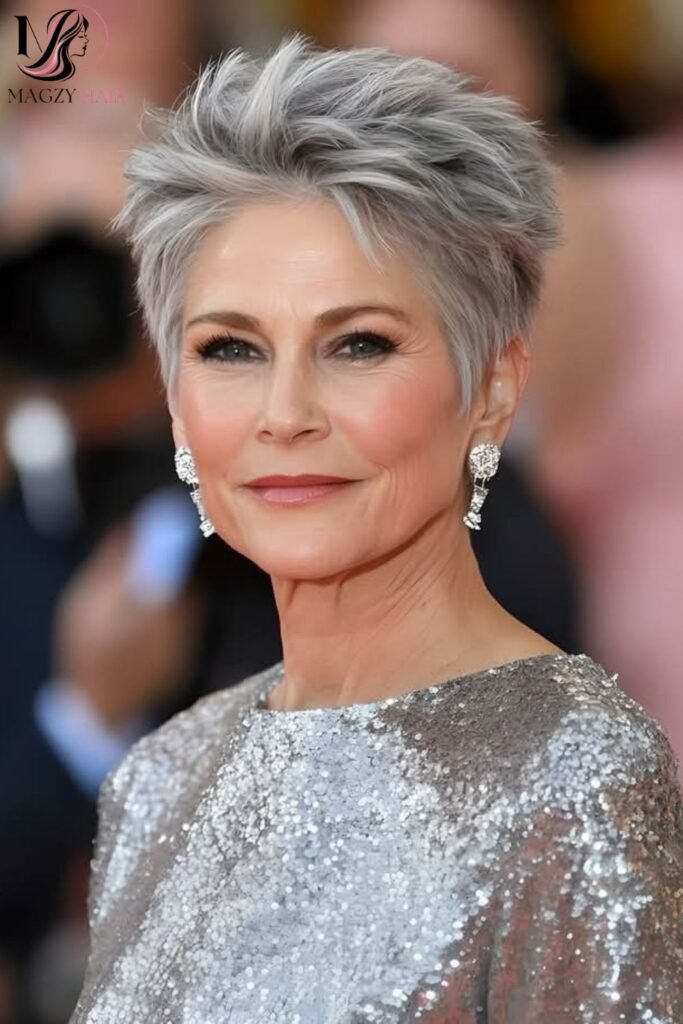
The silver pixie cut pairs short, cropped length with gray hair’s natural brightness, creating a striking, low maintenance style that lets the color itself become the statement. This gray hairstyle for older women works particularly well for those with finer hair, since shorter length naturally reduces the appearance of thinning while still allowing for texture and movement on top.
What makes a pixie especially suited to gray hair is how the color highlights the cut’s precision. Because gray hair reflects light differently than pigmented hair, clean, well defined pixie shapes tend to look even more polished and intentional on gray strands, whereas the same haircut on darker hair might rely more heavily on color contrast for visual interest.
A practical example: someone transitioning to gray who has been growing out color for months often finds that cutting into a pixie immediately eliminates the awkward two toned growing out phase, revealing the full gray color right away rather than waiting through a lengthy transition. This makes the pixie one of the fastest, most decisive routes to fully embracing gray hair.
Maintenance for a silver pixie typically involves trims every 4–6 weeks to maintain its precise shape, along with a purple or silver toning shampoo used once or twice weekly to prevent the yellowing that gray hair can develop from minerals in water, certain hair products, or everyday environmental exposure.
Gray Hairstyles for Older Women: Classic Gray Bob
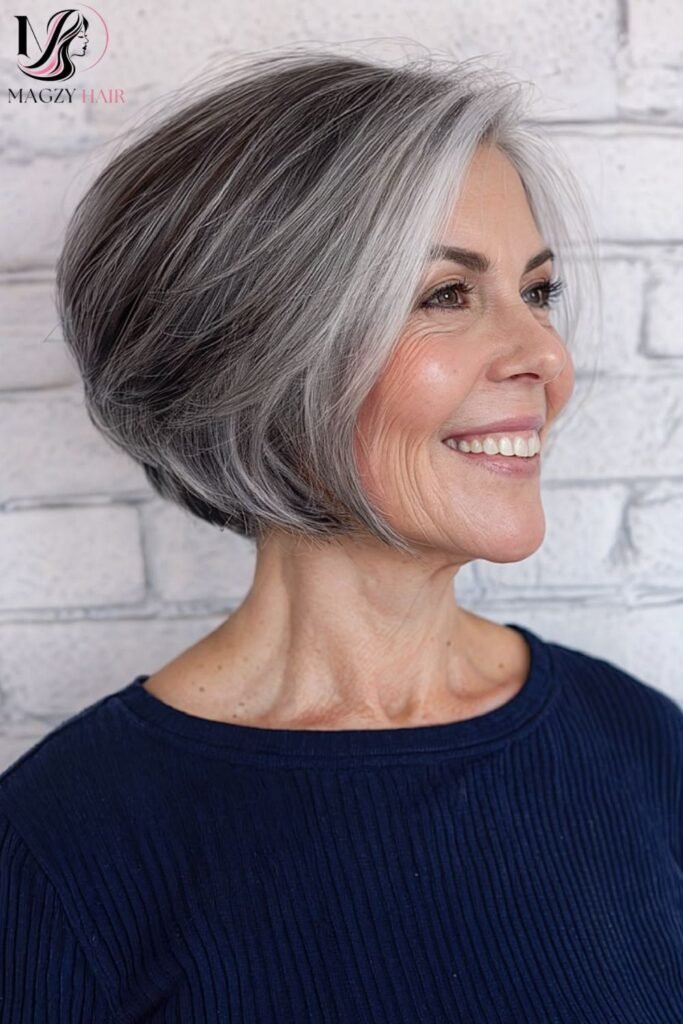
The classic gray bob remains one of the most requested gray hairstyles for older women, offering a polished, versatile length that works for both professional and casual settings. This style typically falls between the chin and shoulders, and its clean lines pair particularly well with gray hair’s tendency to catch and reflect light in a way that emphasizes a crisp, well defined perimeter.
Because gray hair often has a coarser texture than it did with color, an entirely blunt bob can sometimes feel stiffer or less movement friendly than the same cut on pigmented hair. Many stylists recommend adding subtle internal layering or slightly graduated ends specifically for gray hair, preserving the classic bob silhouette while allowing a bit more natural movement and softness.
A helpful example: someone with naturally coarse, gray hair who requests a completely one length bob without any texturizing might find the style feels heavier and less flexible than anticipated, especially through humid weather. Requesting even minimal point cutting at the ends helps the same silhouette move more naturally without losing the classic bob’s recognizable shape.
The gray bob also tends to require less frequent color maintenance than styles designed around color transition, since it works well on fully gray hair without needing ongoing toning adjustments beyond standard purple shampoo use, making it a practical, lower effort choice among gray hairstyles for older women.
Gray Hairstyles for Older Women: Long Layered Gray Hair
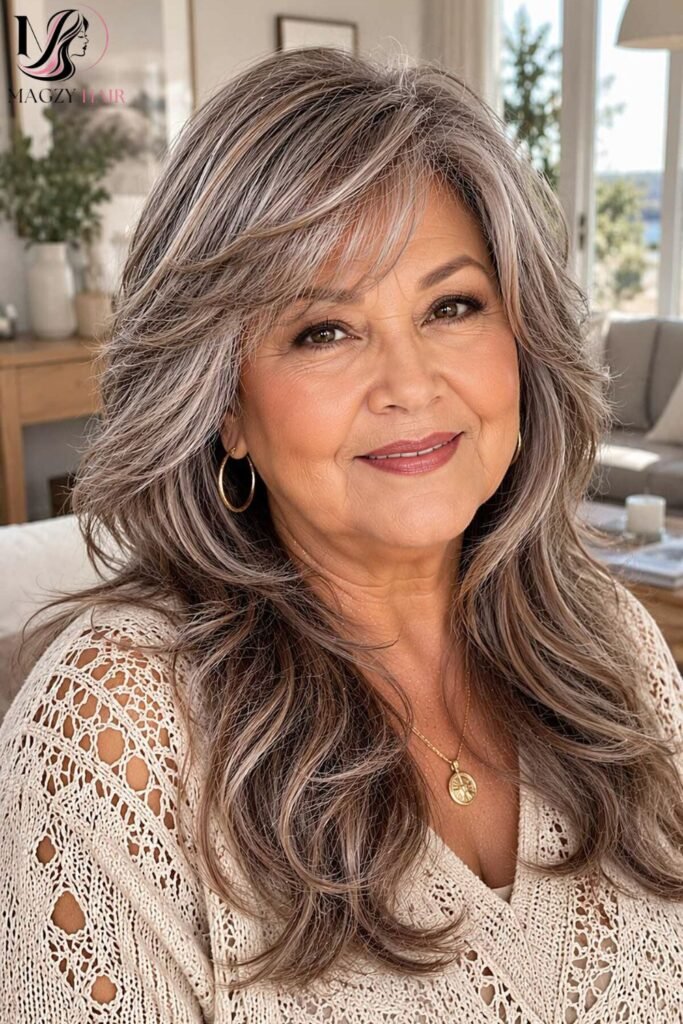
Long layered gray hair proves that going gray doesn’t require cutting hair shorter, offering a graceful, flowing style for those who prefer to keep more length. Strategic layering throughout longer gray hair helps prevent the flat, heavy look that can sometimes occur when coarser gray texture is left in one uncut length, adding movement and softness instead.
This style works especially well for gray hair with some natural wave or texture, since longer layers allow that texture to show through more visibly than a blunt, one length cut would. The added movement from layering also helps soften the face, an effect particularly valued by those who find that fully gray hair can sometimes read as more severe in a very structured, unlayered style.
A mini scenario worth noting: someone with long gray hair who has kept the same one length style for years might notice their hair looking increasingly flat or heavy over time as gray coarseness increases with age and continued growth. Adding face framing layers, without cutting overall length significantly, often revives the style’s softness and movement considerably.
Maintenance for long layered gray hair benefits significantly from regular deep conditioning, since gray strands are frequently more porous and prone to dryness than pigmented hair, and longer length means more overall surface area exposed to heat styling, weather, and everyday friction that can accelerate dryness and frizz.
Gray Hairstyles for Older Women: Gray Shag With Bangs
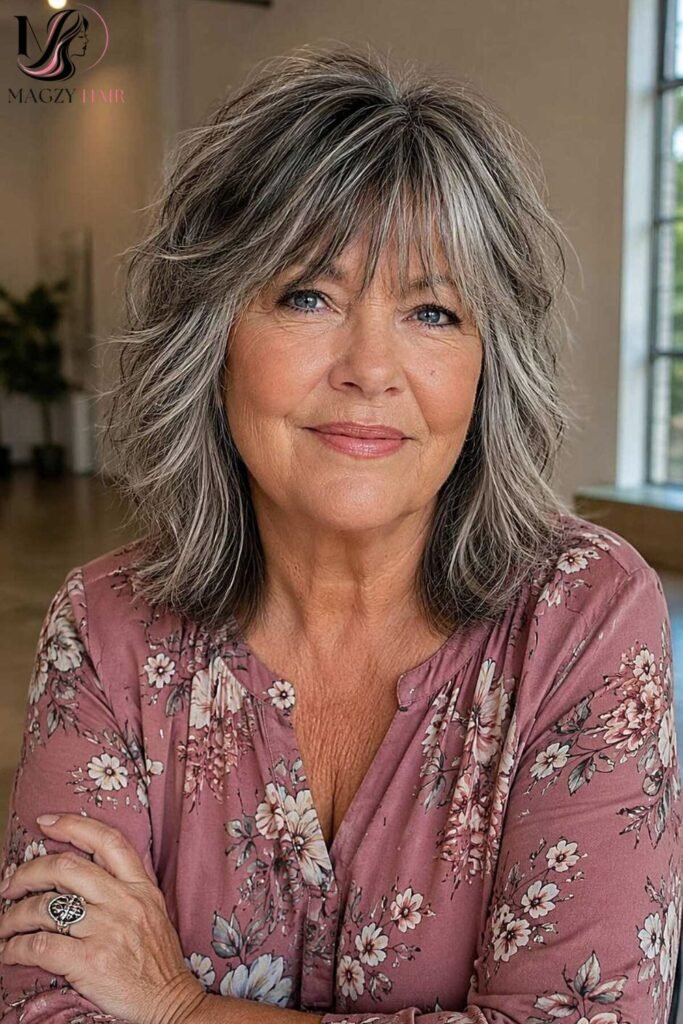
The gray shag brings choppy, textured layers and often a soft, wispy fringe to gray hairstyles for older women, creating a modern, youthful energy that works well at nearly any length. This style leans into gray hair’s natural texture rather than fighting it, using layering to enhance movement and volume instead of aiming for a sleek, controlled finish.
Bangs paired with gray hair require some specific consideration, since fringe sits directly against the forehead and skin tone, an area where contrast against gray hair becomes particularly noticeable. Soft, wispy, side-swept bangs tend to blend more naturally into a gray shag than a heavy, blunt fringe, which can sometimes create harsher contrast against the face.
A helpful example: someone considering bangs for the first time with fully gray hair might worry that a fringe will look severe or aging, a common but often unfounded concern. Opting for softer, longer, face framing bangs rather than a short, blunt style typically achieves a fresh, flattering update without the stark contrast some people fear.
This shag style also tends to be relatively forgiving between salon visits, since its inherently choppy, textured nature disguises regrowth and slight shape changes better than more precise, structured cuts, making it a practical choice among gray hairstyles for older women who prefer longer stretches between appointments.
Gray Hairstyles for Older Women: Textured Gray Lob
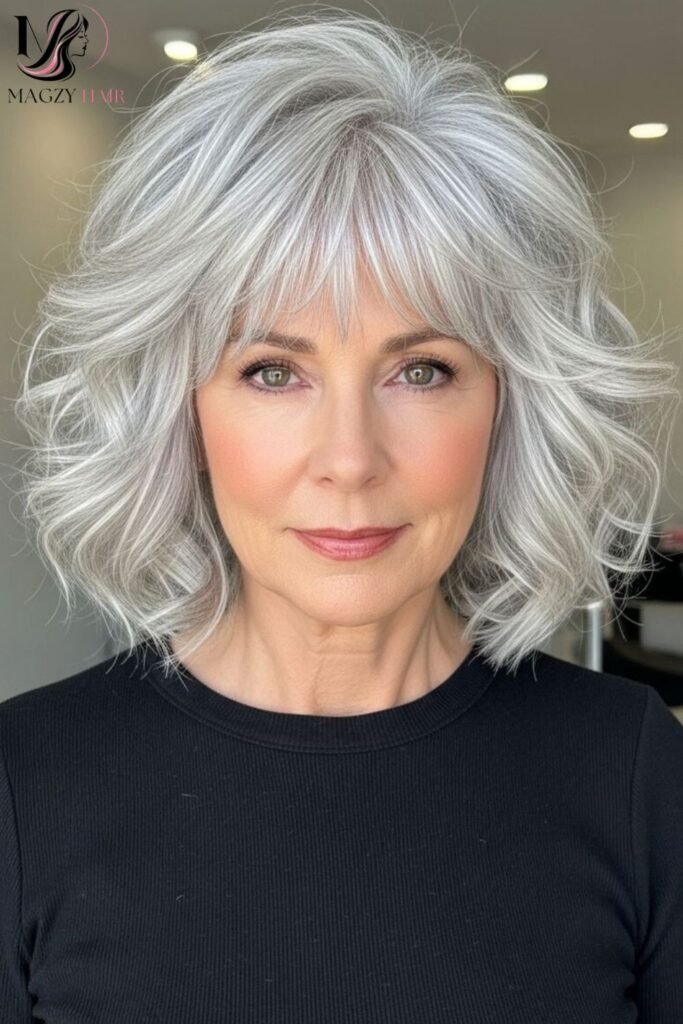
The textured gray lob combines a long bob length with deliberate texturizing throughout, creating movement and softness that plays to gray hair’s natural coarseness rather than working against it. This shoulder grazing length offers a versatile middle ground between a shorter, lower maintenance pixie and the added care longer hair typically requires.
Texturizing techniques like point cutting or slide cutting remove weight gradually throughout the ends, which is particularly valuable for gray hair since these methods soften the sometimes wiry quality gray strands can develop, without requiring heavy, obvious layering that could compromise the lob’s overall silhouette and shape.
A practical example: someone with a fairly thick head of gray hair who requests a completely blunt lob might find the ends look chunky or blocky, especially as gray coarseness adds visual weight to the perimeter. Requesting texturizing specifically at the ends, rather than a fully blunt finish, creates a softer, more polished result better suited to gray hair’s natural qualities.
This style also pairs well with minimal daily styling, since texturized ends already provide movement that a fully blunt cut would otherwise require styling tools to achieve, making the textured gray lob a practical, time saving choice among gray hairstyles for older women with busy schedules.
Gray Hairstyles for Older Women: Salt and Pepper Curly Crop
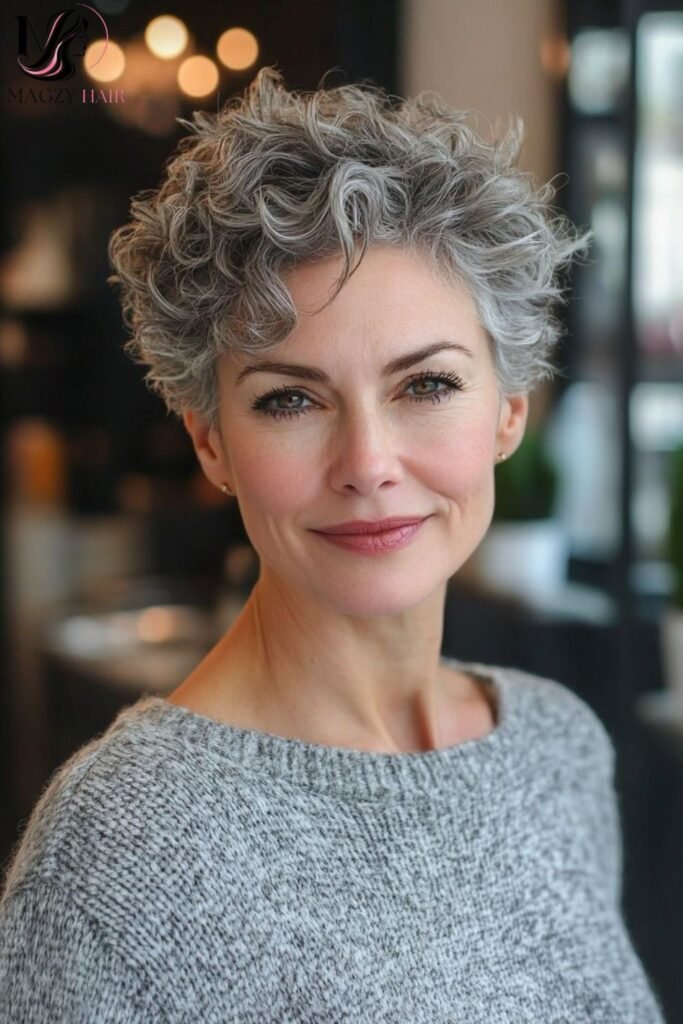
The salt and pepper curly crop celebrates natural curl pattern alongside gray hair’s distinctive salt and pepper mix, creating a short, low maintenance style that lets both texture and color take center stage. This look works particularly well for those with naturally curly or coily hair who are transitioning to gray, since a shorter length reduces the visual weight that can sometimes overwhelm curl definition as hair coarsens with age.
Cutting curly gray hair well requires the same curl specific, often dry cutting approach recommended for curly hair at any color, since shrinkage and curl pattern still behave the same way regardless of pigment. A stylist unfamiliar with curly cutting techniques may misjudge length on gray curls just as easily as on any other curl color, making specialized experience valuable here specifically.
A helpful example: someone with naturally curly, salt and pepper hair who has always straightened it might discover, upon embracing their natural texture at a shorter length, that the mixed gray and pigmented strands actually create beautiful, dimensional curl definition that a single, flat color never displayed as clearly. This unexpected discovery is one of the more meaningful reasons people cite for finally embracing this specific gray hairstyle.
Maintenance for this style typically follows standard curly hair care principles minimal brushing on dry hair, wide tooth detangling on wet hair, and lightweight curl creams with the added consideration that gray curls often benefit from extra moisture, since gray strands tend toward dryness more than pigmented curls of the same type.
Gray Hairstyles for Older Women: Soft Gray Waves
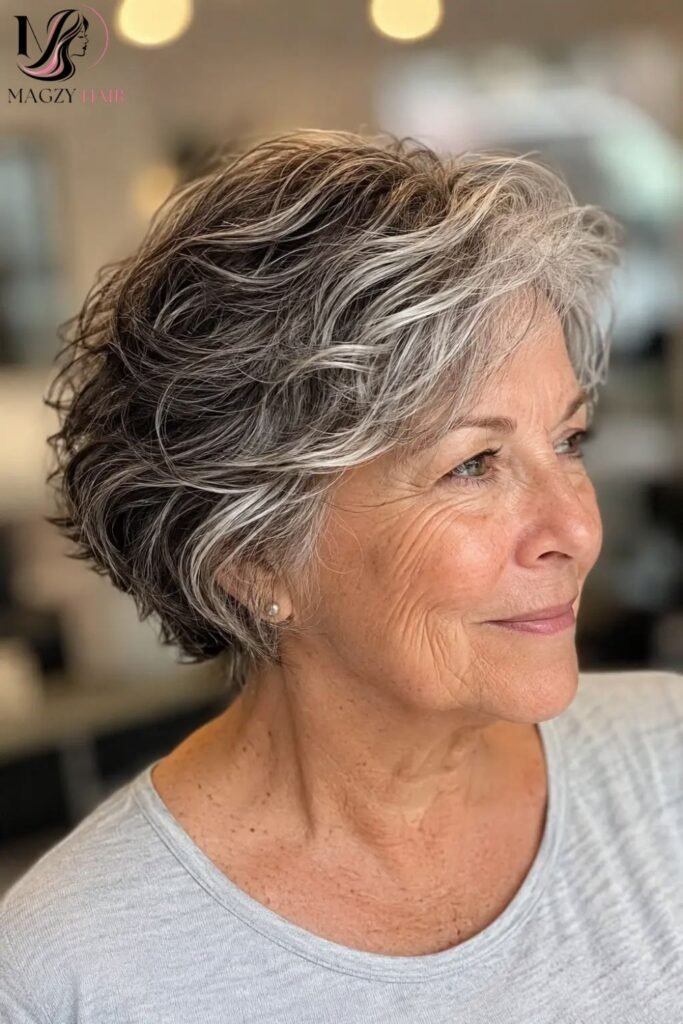
Soft gray waves bring gentle, romantic movement to gray hairstyles for older women, using loose curling techniques or natural wave pattern to create texture that feels elegant rather than overly structured. This style tends to work at nearly any length, from a shoulder grazing lob to longer, flowing hair, making it one of the more universally adaptable options on this list.
Achieving soft waves on gray hair specifically often requires slightly different heat settings than pigmented hair, since gray strands can be more heat-sensitive due to their typically drier, more porous structure. Using a slightly lower heat setting combined with a heat protectant helps prevent the increased dryness and potential damage gray hair is more prone to compared to pigmented strands.
A mini scenario: someone who continues using the same high heat setting on their curling iron after transitioning to gray hair might notice increased frizz and dryness compared to when they had colored hair, without realizing gray hair’s structural differences are the underlying cause. Simply lowering the heat setting and adding a protectant spray often resolves this issue significantly.
This style also photographs particularly well in natural light, since gray hair’s reflective quality combined with soft wave movement creates a luminous, dimensional effect that flatter, straighter styles sometimes lack, making soft gray waves a popular choice for special occasions among gray hairstyles for older women.
Gray Hairstyles For Older Women: Gray Hair With Face Framing Layers
Face framing layers add targeted movement around the face specifically, without requiring an entirely new cut or significant length change, making this one of the easier updates among gray hairstyles for older women. These layers typically start around the cheekbone or chin and blend into the surrounding length, drawing attention toward the eyes and softening the overall facial appearance.
This technique proves particularly valuable for gray hair because it introduces movement precisely where it has the most visual impact, near the face, without requiring the more significant texturizing that an all over layered style might involve. This makes it a good option for those who want a subtle refresh rather than a dramatic change to a style they already love.
A helpful example: someone with a long, one length gray style who feels their current cut looks slightly flat or aging might find that adding just face framing layers, without altering overall length, creates a noticeably softer, more youthful appearance. This targeted, lower commitment update often satisfies the desire for change without requiring a complete style overhaul.
Maintenance for face framing layers is relatively minimal, since only the shorter, framing pieces need occasional trimming to maintain their shape, while the rest of the length can grow out more freely, making this a practical, low maintenance addition to nearly any existing gray hairstyle.
Gray Hairstyles for Older Women: Chin Length Gray Bob With Undercut
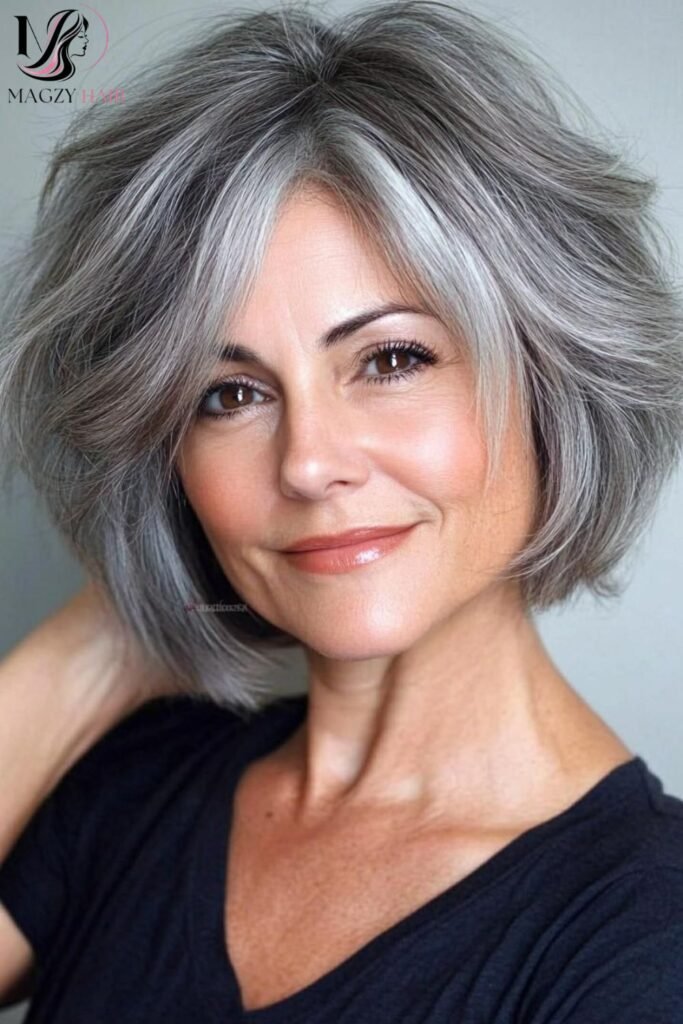
Pairing a chin length gray bob with a subtle undercut brings an edgier, more contemporary element to gray hairstyles for older women, challenging the assumption that gray hair must always read as conservative or purely classic. The undercut, typically placed at the nape, creates unexpected texture and dimension that only shows when hair is worn up or the bob is tucked behind the ear.
This combination works particularly well for those with thicker, coarser gray hair, since the undercut removes some bulk at the nape, reducing overall weight and heat retention while still preserving the polished, structured look of the bob itself when hair is worn down. This makes it a practical option for anyone finding thick gray hair increasingly heavy or hot to manage.
A practical example: someone hesitant about a full undercut but drawn to its edgier aesthetic might request a smaller, more subtle version placed low at the nape, keeping the dramatic element mostly hidden during everyday wear while still available as a styling option when hair is pulled back or worn in an updo. This flexibility makes the style accessible even for more conservative personal or professional settings.
Maintenance for this style requires attention to two different growth rates, since the undercut section grows out and needs trimming more frequently than the surrounding bob length, generally every 4–6 weeks to maintain the crisp, intentional contrast this gray hairstyle depends on.
Gray Hairstyles For Older Women: Gray Hair Updo and Chignon Styles
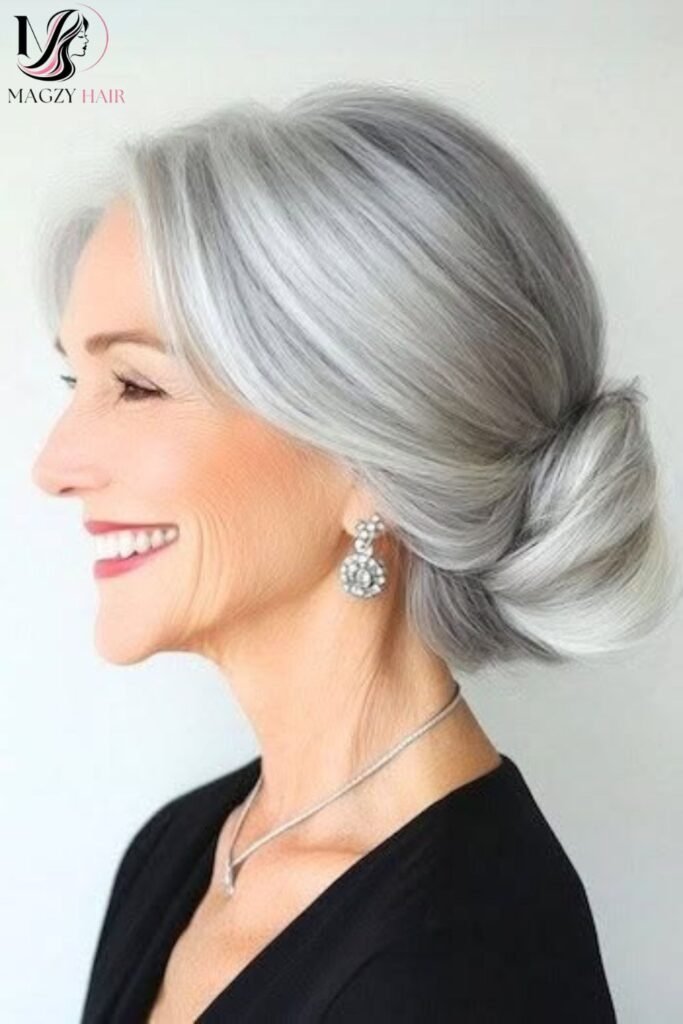
Gray hair updos, particularly a classic low chignon, offer an elegant option for special occasions among gray hairstyles for older women, showcasing gray hair’s natural shine and dimension in a polished, sophisticated silhouette. Pulling hair back and away from the face allows gray hair’s reflective quality to catch light beautifully, often creating a more striking effect than the same updo would on pigmented hair.
Because gray hair can sometimes have a coarser or more resistant texture, achieving a smooth updo may require slightly different techniques than pigmented hair, such as using a smoothing serum before styling or setting the style with a light-hold spray rather than a stiffer, heavier product that could look unnaturally shiny or greasy against gray strands specifically.
A helpful example: someone attempting their first formal gray hair updo might find that products formulated for taming frizz on colored hair don’t work quite the same way on gray hair’s different texture, sometimes leaving strands looking dull rather than smooth. Switching to a product specifically designed for gray or silver hair, often formulated with added shine boosters, typically produces a more polished, luminous result.
This category of gray hairstyles for older women also benefits from professional styling for significant events, since achieving a truly smooth, polished updo on coarser gray texture often requires techniques and tools that go beyond typical at home styling routines.
Gray Hairstyles for Older Women: Blended Gray Transition Grombre
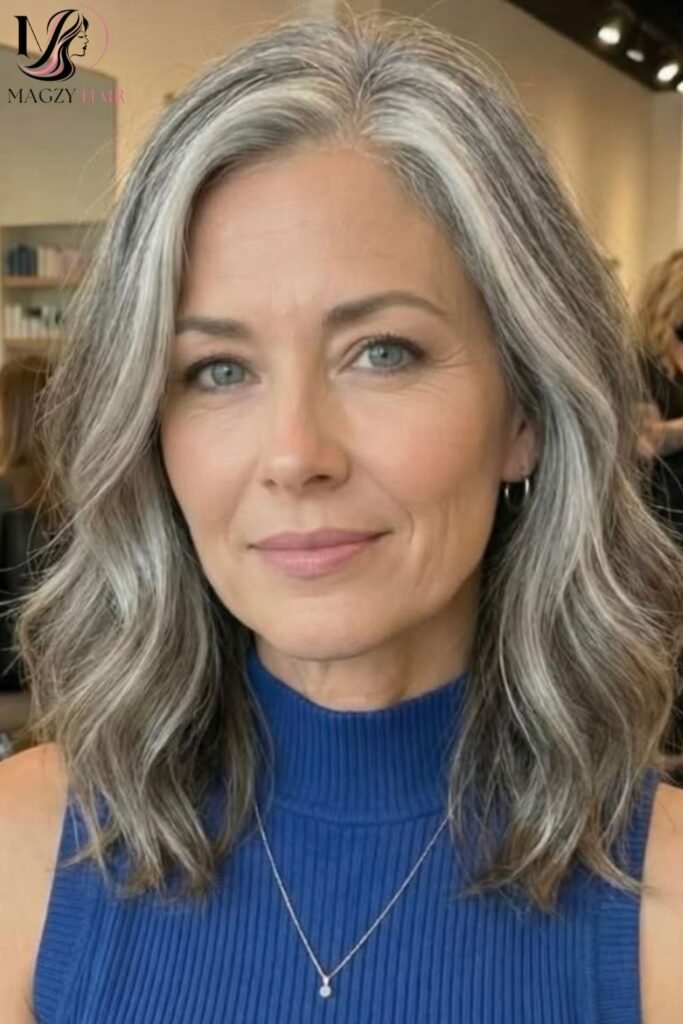
For those not yet fully gray, the blended gray transition, sometimes called grombre, softens the line between existing pigmented hair and new gray growth, avoiding the stark, obvious regrowth line that can occur during a natural transition. This technique has become one of the most popular gray hairstyles for older women specifically because it makes the transition period itself look intentional rather than simply “grown out.”
Achieving a smooth grombre typically involves a colorist adding lowlights or highlights that bridge the gap between existing pigmented color and incoming gray, gradually blending the two rather than leaving an abrupt demarcation line. This process usually takes multiple sessions spaced several weeks apart, allowing the blend to shift gradually as more natural gray grows in over time.
A practical example: someone several months into growing out gray hair without any color assistance often experiences a period of visible, sometimes frustrating regrowth lines that can feel discouraging. Starting a grombre transition process at the beginning, rather than attempting to grow out gray completely unassisted, helps the entire transition period look considerably more polished and less like an obvious work in progress.
Once the transition is complete and hair is fully gray, the blending highlights typically get phased out, though many people choose to keep some subtle dimension permanently, since the added tonal variation from a former grombre process often gives fully gray hair extra depth compared to a completely flat, single tone gray.
Gray Hairstyles For Older Women: Wash and Go Natural Gray Curls
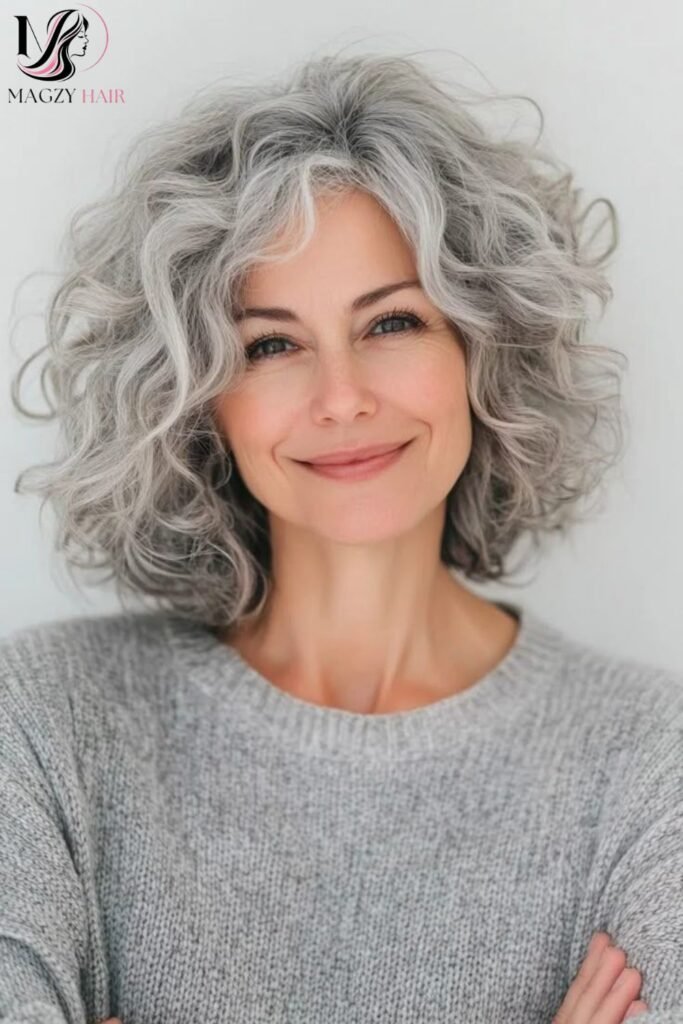
For those with naturally curly or wavy gray hair, the wash and go embraces texture with minimal manipulation, relying on the hair’s natural pattern rather than heat styling or elaborate techniques. This approach has become an increasingly popular choice among gray hairstyles for older women who want a genuinely low effort daily routine that still looks polished and defined.
Achieving a clean wash and go on gray curls typically requires applying curl defining products to soaking wet hair, then air drying or diffusing without disturbing the curl clumps as they form, similar to the technique recommended for curly hair of any color. However, because gray hair tends toward more dryness, an extra layer of leave in conditioner beneath the styling product often makes a noticeable difference in final curl definition and overall hair health.
A mini scenario worth noting: someone with naturally wavy gray hair who has spent years blow drying it straight might be surprised, upon finally trying a wash and go, at how much natural texture and volume was being suppressed by regular heat styling. Embracing this natural pattern often reveals a fuller, more dynamic style than the straightened version ever provided.
This style also tends to reduce overall heat and styling damage, an especially valuable benefit for gray hair specifically, since gray strands are already more prone to dryness and breakage than pigmented hair, making a lower manipulation styling routine a genuinely practical long term choice.
Gray Hairstyles For Older Women: Choosing Gray Hairstyles by Face Shape
Face shape plays a significant role in which gray hairstyles for older women look most flattering, a detail often overlooked in generic style roundups. Round faces tend to benefit from styles with more height at the crown and length extending past the chin, like a textured lob or long layered style, since these help elongate the face rather than adding width at its widest point.
Square faces generally look best with softer, rounded layering rather than sharp, blunt lines, since gentle waves or textured ends help soften a strong, angular jawline. Heart shaped faces often benefit from styles that add fullness around the jaw and chin specifically, like a chin length bob or shag with layers ending at that point, balancing a narrower jawline against a fuller forehead.
A helpful example: two women requesting the “same” gray pixie cut from a reference photo may need genuinely different layering and length placement around the face to achieve an equally flattering result, simply because their face shapes differ significantly. This is why clearly discussing your specific face shape and priorities with a stylist leads to a far more personalized, satisfying outcome than a photo alone can provide.
Oval faces tend to have the most flexibility among gray hairstyles for older women, generally suiting nearly any length or layering pattern discussed in this guide. For other face shapes, taking a few extra minutes during consultation to discuss facial structure alongside hair texture meaningfully improves the odds of leaving the salon with a shape that genuinely flatters your features.
Common Mistakes to Avoid With Gray Hair
One of the most frequent mistakes with gray hairstyles for older women involves skipping a dedicated toning routine, allowing gray hair to develop a yellow or brassy cast from minerals in water, certain styling products, or everyday environmental exposure. A purple or silver-toning shampoo used once or twice weekly typically prevents this issue, keeping gray hair looking bright and clean rather than dull.
Another common error involves continuing the exact same haircut and product routine used before hair went gray, without accounting for gray hair’s typically coarser, drier texture. Products and cuts that worked well on pigmented hair don’t always translate directly, and adjusting both to suit gray hair’s specific needs usually produces a noticeably better result than assuming nothing needs to change.
Using excessive heat without adequate protection is another frequently repeated mistake, particularly damaging for gray hair given its increased tendency toward dryness and porosity compared to pigmented strands. Lowering heat styling tool temperatures and consistently using a heat protectant helps prevent the brittleness and breakage gray hair is especially prone to developing over time.
Finally, avoiding regular trims out of a desire to “save length” often backfires on gray hair specifically, since split or damaged ends can make already coarser gray texture look even frizzier and less polished. Regular trims, even small ones every 8–10 weeks, help gray hairstyles for older women maintain a cleaner, more defined shape over time.
The Future of Gray Hairstyles for Older Women
Gray hairstyles for older women continue to evolve alongside a broader cultural shift toward embracing natural gray rather than concealing it. As more public figures and everyday women choose to stop coloring their hair, stylists are increasingly developing specialized cutting and toning techniques specifically suited to gray hair’s unique texture, rather than treating it as an afterthought within broader hair color services.
Product formulation is advancing alongside this trend as well, with more brands developing gray specific shampoos, conditioners, and styling products that address the particular dryness, coarseness, and yellowing tendencies gray hair often experiences. This growing specificity is helping more women achieve consistent, polished results at home rather than relying solely on salon visits to keep gray hair looking its best.
There’s also a noticeable shift in how gray hairstyles are being styled and photographed, with more contemporary, editorial style looks replacing outdated assumptions that gray hair must default to short, conservative cuts. Longer layers, curly textures, and even bold, undercut paired styles are increasingly represented, reflecting a broader recognition that gray hair can support the same range of styling creativity as any other hair color.
Looking ahead, personalized digital consultation tools, including AI based color and cut simulation technology, are beginning to help women visualize how different gray hairstyles might look on their specific hair texture and face shape before committing to a cut or transition process. This kind of technology assisted planning could meaningfully reduce the uncertainty many women feel when first considering a shift to gray.
Conclusion
Gray hairstyles for older women prove that this hair color can be just as versatile, dimensional, and flattering as any other. From a sleek silver pixie to soft, natural gray curls, there’s a style here suited to nearly every texture, face shape, and lifestyle. The key is choosing a cut and care routine that respects gray hair’s unique needs. Ready to update your look Bring this guide to your next appointment and start exploring gray hairstyles that truly fit you.
Ayesha Noor is the founder and lead writer behind Magzy Hair. With 4 years of experience researching hairstyles, hair care, and beauty trends, she enjoys helping readers discover styles that suit their unique personality and lifestyle.


