Blunt Bob Haircuts: The Complete Guide to Cuts, Color, and Styling

Blunt bob haircuts have earned a permanent place among the most requested salon styles, and it’s easy to see why. There’s something undeniably polished about a clean, precise perimeter it reads as intentional and put together in a way few other cuts can match. However, achieving a truly sharp blunt bob takes more precision than people often expect, since even small inconsistencies in the cutting line become immediately visible on this style specifically.
This guide goes beyond a simple gallery of blunt bob haircuts. It explains how hair texture, density, and face shape all affect the final result, along with details most articles skip entirely like why the exact same blunt bob request can look completely different depending on whether hair is fine or thick, and why this particular cut actually demands more precision than layered alternatives. Whether you’re considering this style for the first time or refining a blunt bob you already wear, this is the deeper, more practical guide.
Why Blunt Bob Haircuts Require Extra Precision
Blunt bob haircuts require more technical accuracy than layered styles, since the entire visual impact of this cut depends on a single, unbroken perimeter line rather than blended, forgiving layers. Any unevenness in the cutting angle becomes immediately obvious on a blunt bob, whereas the same small inconsistency would likely go unnoticed on a more heavily layered style.
This precision requirement matters significantly because it directly affects which stylists can execute blunt bob haircuts well. A stylist experienced specifically in precision cutting, rather than one who primarily works with softer, layered techniques, tends to produce a noticeably cleaner, more polished result. This distinction is worth discussing during a consultation rather than assuming any stylist can achieve the same crisp outcome.
A helpful example: someone requesting a blunt bob from a stylist unfamiliar with precision cutting techniques might end up with a perimeter that looks subtly uneven once fully dry and styled, even if it appeared straight while the hair was wet and being cut. Seeking a stylist who specifically discusses their precision cutting experience helps avoid this frustrating, all too common outcome.
Because blunt bob haircuts rely so heavily on maintaining this exact line, regular trims become especially important, generally every 4–6 weeks, since even minor growth can noticeably soften the sharp, defined perimeter that makes this style so distinctive.
Read Next: https://magzyhair.com/short-hairstyles-with-bangs/
Classic Chin Length Blunt Bob
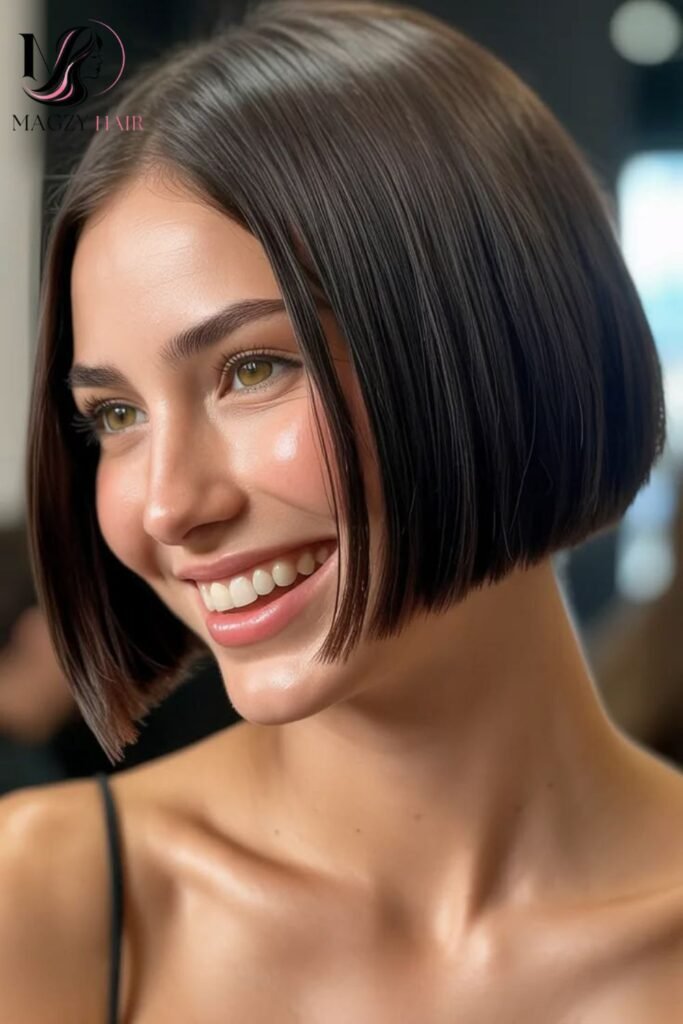
The classic chin length blunt bob remains the most iconic version among blunt bob haircuts, pairing a clean, straight perimeter with length that typically hits right at or just below the jawline. This length specifically tends to draw attention to and complement the jaw, creating a polished, structured silhouette that works well across a wide range of professional and casual settings.
Achieving this look well depends heavily on cutting hair while it’s completely dry, or at minimum double checking the line once dry, since hair can shift slightly as it dries and loses the weight of water. Stylists specifically trained in precision cutting typically build in this final dry check as a standard part of the process for blunt bob haircuts at this length.
A helpful example: someone with naturally textured or wavy hair who receives a blunt bob cut only while wet might notice the perimeter looks less crisp once the hair dries and the natural texture reasserts itself. Requesting a final dry trim specifically addresses this issue, ensuring the finished result matches the sharp, clean line blunt bob haircuts are known for.
This particular length also tends to require the most frequent maintenance among the styles in this guide, since its precise, unbroken line shows growth and softening more quickly than any variation involving layers or texture.
Blunt Bob With Full, Straight Bangs
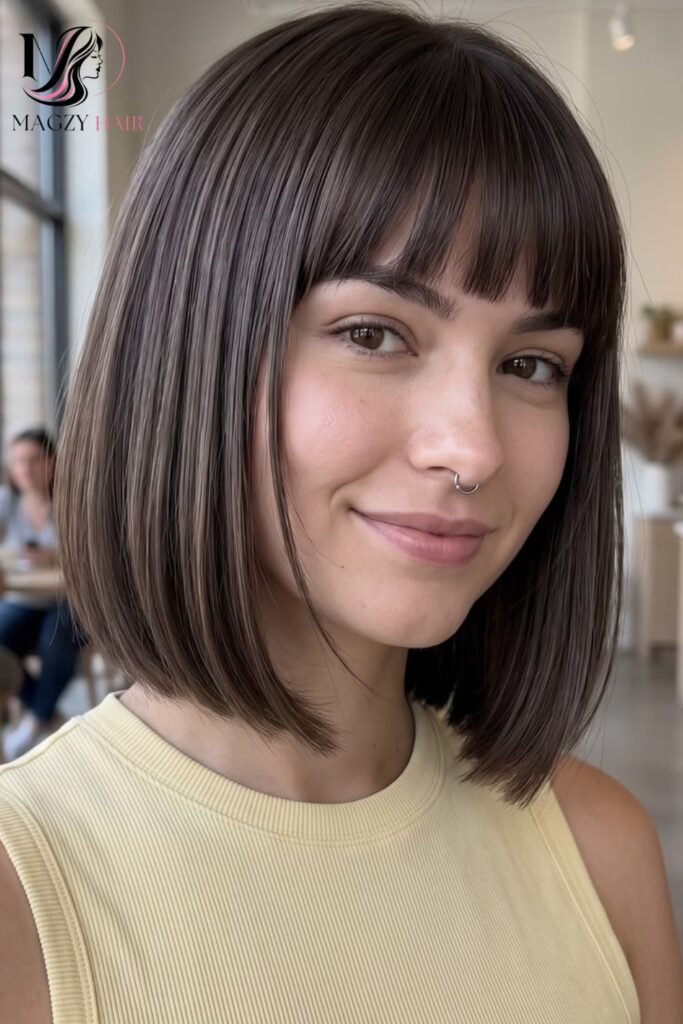
Pairing a blunt bob with equally blunt, straight across bangs creates one of the boldest, most graphic looks among blunt bob haircuts, combining two precisely cut elements into a single, cohesive, high impact style. This combination requires exceptional consistency between the bangs and the bob’s overall perimeter, since any mismatch in precision between the two sections becomes particularly noticeable.
Cutting blunt bangs to pair with this style typically involves sectioning the fringe carefully and cutting it slightly longer than the intended final length, allowing for a final, precise trim once the bangs are fully dry and styled into place. This two-step approach helps prevent bangs from ending up too short, a mistake that’s especially difficult to correct on this specific pairing of blunt bob haircuts.
A practical example: someone who receives blunt bangs cut in a single pass while hair is wet might find the bangs sit noticeably shorter than expected once dry, particularly if their hair has any natural shrinkage or texture. Requesting the two step cutting and drying process specifically helps avoid this commonly repeated mistake among blunt bob haircuts with full bangs.
Maintenance for this combination is particularly demanding, often requiring bang trims every 2–3 weeks between full haircut appointments, since bangs grow out and lose their crisp line considerably faster than the rest of the bob.
Long Blunt Bob (Blunt Lob)
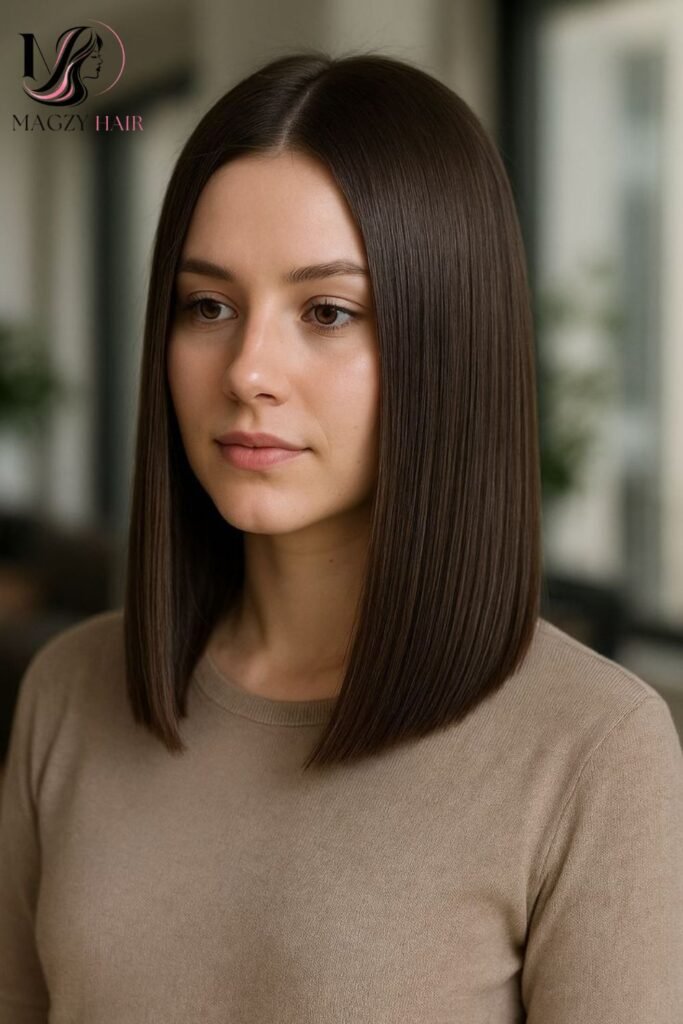
The long blunt bob, often called a blunt lob, extends the classic blunt perimeter to a shoulder grazing length, offering one of the more versatile options among blunt bob haircuts for those wanting the sharp, precise silhouette without cutting quite as short. This length tends to work particularly well for those transitioning from longer hair who aren’t ready for a dramatic length change.
Because this style covers more length than a traditional blunt bob, maintaining a perfectly straight line across the additional length requires even more precision, since small inconsistencies have more visual space to become apparent. Stylists typically section this cut carefully, working methodically around the head rather than cutting large sections at once, to preserve accuracy across the greater length.
A helpful example: someone transitioning from long hair to a blunt lob might initially feel hesitant about losing significant length, only to find that the sharp, polished perimeter actually makes the shorter length feel more elevated and intentional than their previous, longer but less precisely maintained style. This is a common and genuinely welcome discovery among people trying blunt bob haircuts at this particular length for the first time.
This length also tends to be somewhat more forgiving between trims than a shorter blunt bob, simply because there’s more overall length available to absorb minor growth before the perimeter starts looking noticeably softened.
Blunt Bob With Subtle Undercut
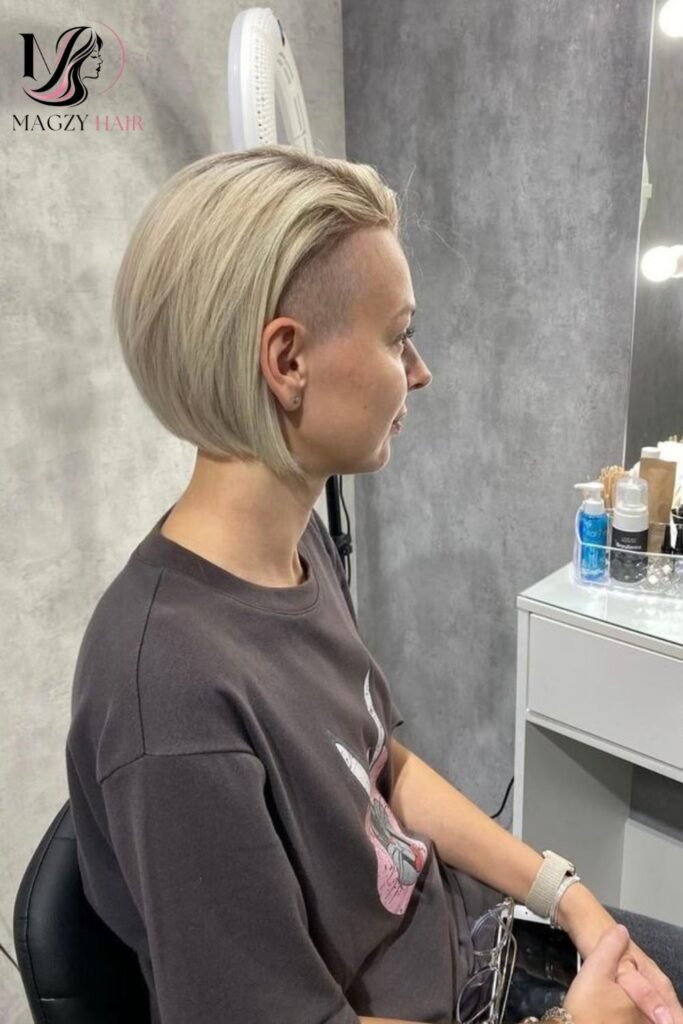
Pairing blunt bob haircuts with a subtle undercut adds unexpected texture and dimension that remains mostly hidden during everyday wear, only revealing itself when hair is tucked behind the ear or pulled back. The undercut, typically placed at the nape, creates a hidden layer of interest that complements the bold visual statement of the blunt perimeter above it.
This combination works particularly well for those with thicker hair, since the undercut removes bulk at the nape, reducing overall weight while still preserving the sharp, defined silhouette of the bob when hair is worn down. This makes it a practical solution for anyone finding thick hair difficult to manage within a fully blunt cut.
A helpful example: someone hesitant about a dramatic undercut but drawn to its edgier aesthetic might request a smaller, more subtle version placed low at the nape, keeping it mostly hidden during everyday wear while still available as a styling option when hair is pulled back. This flexibility makes the style accessible even in more conservative professional settings while still incorporating a genuinely distinctive element into blunt bob haircuts.
Maintenance for this style requires attention to two different growth rates, since the undercut section grows out and needs trimming more frequently than the surrounding blunt length, generally every 4–6 weeks to maintain the crisp contrast this particular style depends on.
Blunt Bob With Balayage or Highlights
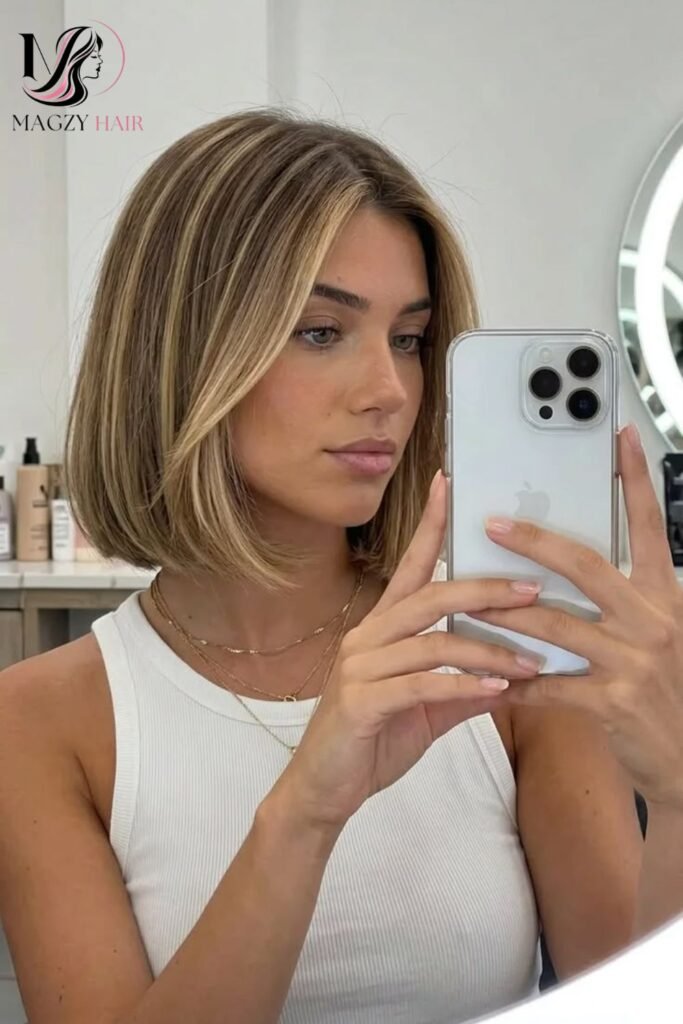
Adding balayage or highlights to blunt bob haircuts introduces genuine dimension that flat, single process color often lacks, particularly valuable on a style where the clean, precise line already provides strong visual structure. Soft, face framing highlights specifically tend to draw attention toward the eyes, complementing the polished geometry of the cut itself.
Color placement matters considerably on this style because the sharp, blunt perimeter creates a very smooth, uninterrupted surface for color to display clearly, meaning even subtle color variation reads with more visual clarity than it would on a more textured, layered cut. This makes precise, well-planned color placement especially rewarding on blunt bob haircuts specifically.
A practical example: someone who receives the same highlight pattern applied to both a layered cut and a blunt bob often notices the color reads more clearly and dramatically on the blunt version, simply because there’s no competing texture disrupting how the eye follows the color placement. Discussing this effect with your colorist can help you decide how bold or subtle to go with color on this particular style.
Maintenance for color on blunt bob haircuts generally follows standard highlighting schedules, though root touch ups may become more visually noticeable given how clearly this style’s clean lines display any regrowth or tonal shift.
Blunt Bob for Straight Hair
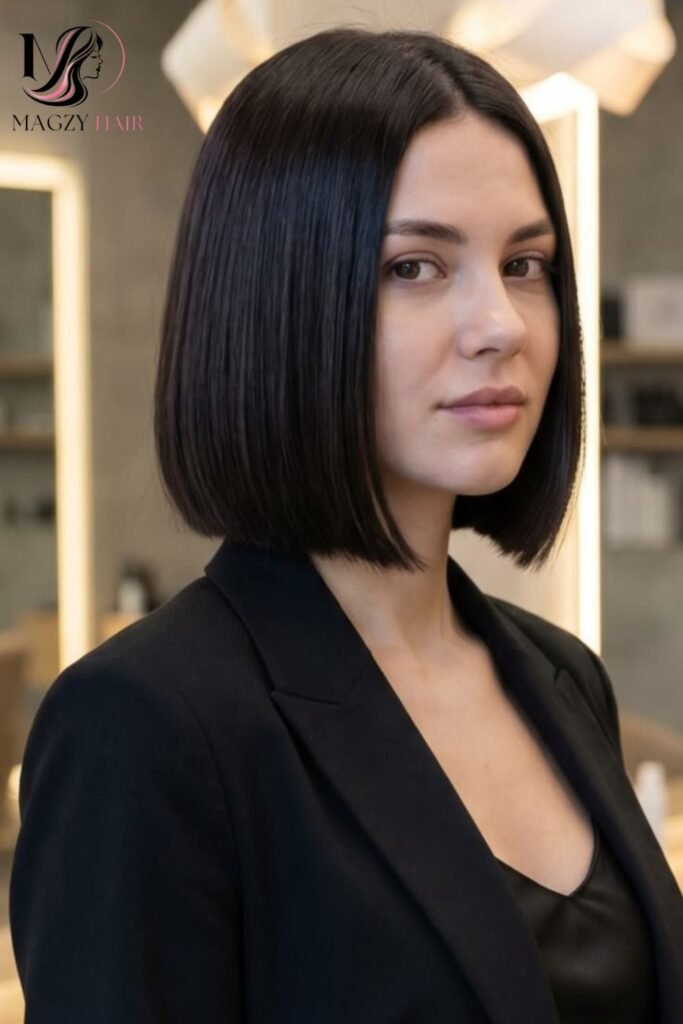
Straight hair showcases blunt bob haircuts with particular clarity, since there’s no natural wave or curl pattern disrupting the crisp, geometric line this style depends on. This makes straight hair, in many ways, the most naturally suited texture for achieving the sharpest, most polished version of a blunt bob without requiring extensive daily styling effort.
This pairing does still require some attention to smoothness and shine specifically, since any dryness or unevenness in texture becomes particularly visible against straight hair’s naturally reflective surface. Regular use of glossing treatments and a lightweight, shine enhancing serum helps maintain the polished, healthy appearance that makes blunt bob haircuts on straight hair look so striking.
A helpful example: someone with naturally straight hair who skips regular trims might notice their blunt bob’s perimeter softening more visibly than someone with textured hair would, simply because straight hair displays the growing out process with less natural camouflage. This makes consistent maintenance especially important for anyone specifically pursuing this pairing.
Styling straight blunt bob haircuts typically benefits from a flat iron pass focused on smoothing and shine rather than altering the hair’s natural texture, paired with a lightweight oil applied to the ends to enhance the glossy, polished appearance this combination is capable of achieving.
Blunt Bob for Wavy Hair
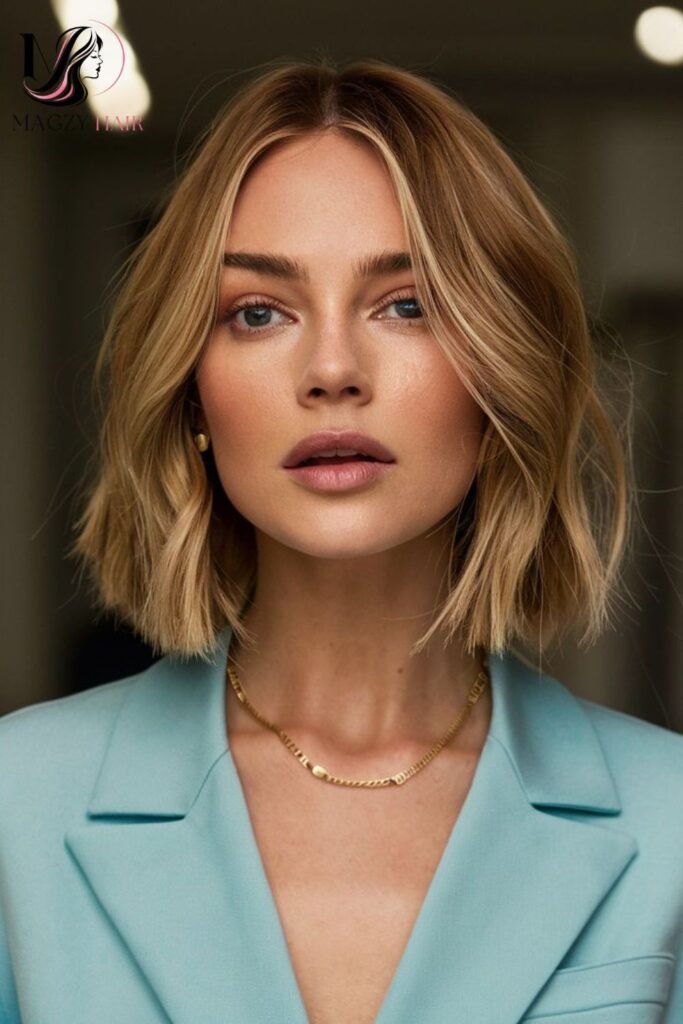
Blunt bob haircuts on wavy hair create a genuinely different visual effect than the same cut on straight hair, since natural wave pattern softens the line’s sharpness while adding movement and texture the straight hair version doesn’t have. This combination offers a slightly more relaxed, effortless take on an otherwise structured, precise style.
Cutting a blunt bob for wavy hair requires some specific adjustment, since wave pattern can make hair appear shorter once dry compared to how it looked freshly cut while wet or stretched. A stylist experienced with textured hair typically accounts for this shrinkage, cutting slightly longer than a straight hair blunt bob would require to compensate for the natural settling that occurs once waves fully form.
A mini scenario worth noting: someone with pronounced waves who requests a blunt bob cut using straight hair proportions might find the perimeter looks noticeably shorter and less even than intended once their natural texture takes hold. Communicating your specific wave pattern to your stylist helps ensure the final result of this particular style among blunt bob haircuts settles into the intended shape.
Styling a wavy blunt bob typically involves scrunching in a lightweight curl cream and air drying or diffusing, allowing the natural texture to soften the geometry just enough to create a more relaxed, everyday wearable version of this precise cut.
Asymmetrical Blunt Bob
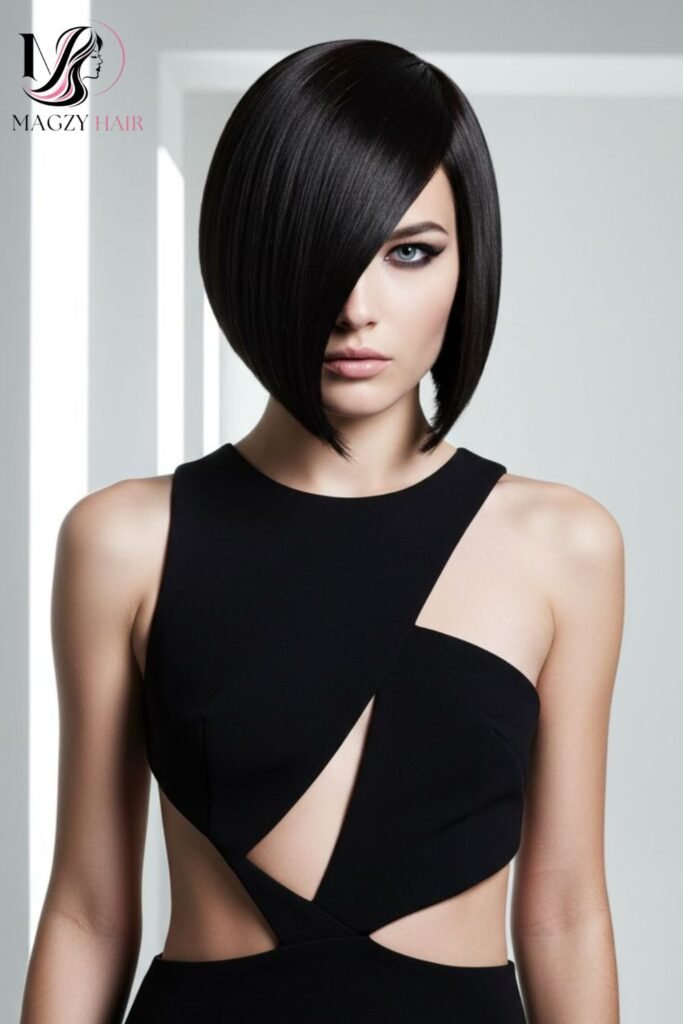
The asymmetrical blunt bob features one side cut noticeably shorter than the other, while maintaining the same sharp, precise cutting technique that defines every version of this style. This creates one of the more dramatic, editorial leaning options among blunt bob haircuts, offering a bold statement for those wanting their haircut to stand apart from more traditional, symmetrical alternatives.
Achieving this look well requires exceptional precision on both sides independently, since each length needs its own perfectly straight perimeter rather than one continuous line across the whole head. A stylist experienced specifically in asymmetrical precision cutting tends to produce far more balanced, intentional looking results than an asymmetry created as more of an afterthought.
A helpful example: someone requesting an asymmetrical blunt bob without clearly specifying the desired degree of length difference between the two sides might end up with either too subtle an effect to notice or an overly dramatic result that feels harder to style day-to-day than anticipated. Bringing a clear reference photo and discussing the specific asymmetry helps ensure the final choppy rather, blunt bob hairstyle matches your actual vision.
Because this style involves maintaining two separate precise lines rather than one, maintenance trims are particularly important, since uneven growth patterns can shift the balance between the shorter and longer sides more noticeably than on a standard, symmetrical cut.
Blunt Bob With a Deep Side Part
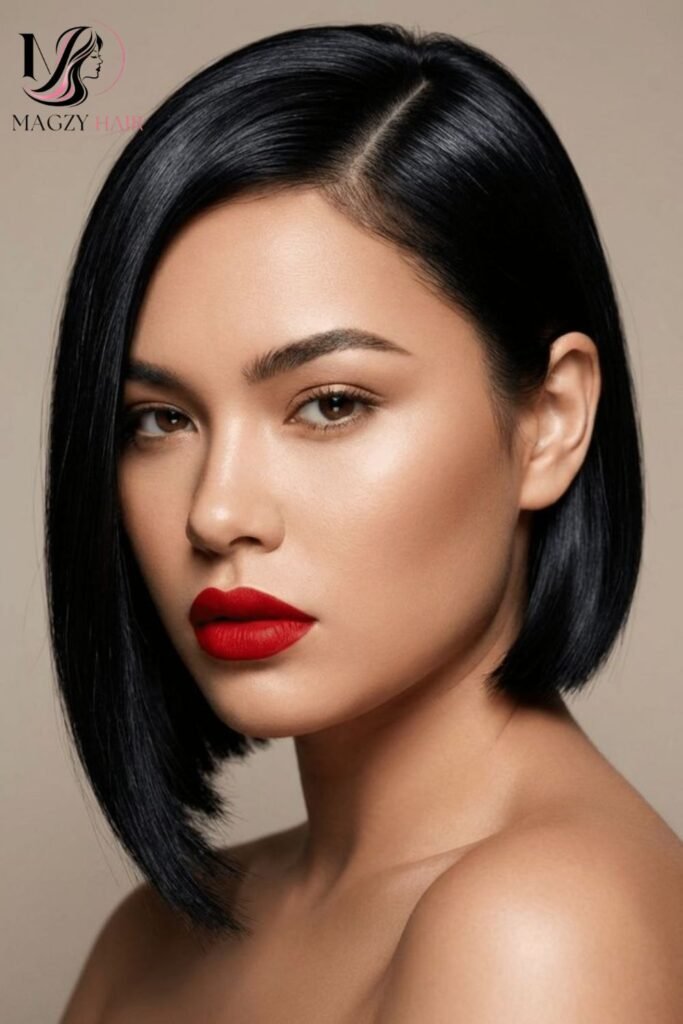
A deep side part adds asymmetry and visual interest to blunt bob haircuts, creating a slightly different silhouette on each side and softening the overall symmetry a center part can sometimes create against this style’s already structured shape. This subtle styling adjustment is a detail many guides overlook, despite how significantly a part placement change can alter the entire look of a blunt bob.
This choice works especially well for round or square face shapes, since the deep side part introduces visual asymmetry that helps balance a fuller or more angular facial structure. Center parted blunt bob haircuts, by contrast, can sometimes emphasize width rather than softening it, particularly given how much visual weight this style’s clean perimeter already carries.
A helpful example: someone with a naturally round face who has always worn a center part might find that simply shifting to a deep side part, without changing the haircut itself, creates a noticeably more flattering, elongated appearance. This is a low-cost, easy adjustment worth trying before committing to any actual cutting changes to your blunt bob.
Maintaining a consistent deep side part on this style does require slightly more intentional daily styling than a center part, since hair has a tendency to fall back toward its natural growth pattern, though clipping the part in place while blow drying helps train the style to hold throughout the day.
Choosing Blunt Bob Haircuts by Face Shape
Face shape plays a significant role in which blunt bob haircuts look most flattering, a detail generic style roundups often skip entirely. Round faces tend to benefit from a longer blunt lob rather than a very short, chin length version, since additional length helps elongate the face rather than adding width at its widest point, something a very short, blunt cut can sometimes do.
Square faces generally look best paired with a deep side part or subtle wave, rather than a perfectly straight, center parted version, since some asymmetry helps soften a strong, angular jawline that a fully symmetrical blunt cut might otherwise emphasize. Heart shaped faces often benefit from blunt bob haircuts that hit right at or slightly below the jawline, adding visual weight precisely where a narrower jawline needs balancing against a fuller forehead.
A helpful example: two people requesting the “same” blunt bob from a reference photo may need genuinely different length and part placement to achieve an equally flattering result, simply because their face shapes differ significantly. This is why clearly communicating your face shape and specific priorities to your stylist leads to a far more personalized, satisfying outcome than a reference photo alone can provide.
Oval faces tend to have the most flexibility among blunt bob haircuts, generally suiting nearly any length or styling approach discussed in this guide. For other face shapes, taking a few extra minutes during consultation to discuss facial structure meaningfully improves the odds of a genuinely flattering result.
Blunt Bob Haircuts for Thick vs. Fine Hair
Hair density significantly affects how blunt bob haircuts should be approached, yet many general guides apply identical cutting advice regardless of thickness. Thick hair generally supports a fully blunt perimeter beautifully, since there’s ample density to create a substantial, solid looking line without appearing sparse or uneven at the ends.
Fine hair, by contrast, requires a slightly different approach to achieve the same polished effect. While a blunt line can still work beautifully on fine hair, some stylists recommend keeping the cut very slightly less severe, or adding minimal internal thinning higher up in the cut, to prevent the ends from looking overly thin or wispy against the sharp, unbroken line this style depends on.
A helpful example: someone with very thick, coarse hair who receives a fully blunt cut without any internal thinning might find the perimeter looks unusually heavy or blocky, while the same fully blunt approach on fine hair typically produces a clean, appropriately weighted result. Discussing your specific hair density during the consultation helps your stylist calibrate blunt bob haircuts appropriately for your particular hair type.
Styling recommendations also differ by density: thick hair styled into this cut generally benefits from lightweight, frizz controlling products, while fine hair typically needs root lifting techniques and volumizing mousse to prevent the style from looking flat by midday.
Common Mistakes to Avoid With Blunt Bob Haircuts
One of the most frequent mistakes with blunt bob haircuts is choosing a stylist without specific experience in precision cutting, leading to a perimeter that looks subtly uneven once fully dry and styled. Reviewing a stylist’s portfolio specifically for blunt, precision cut styles, rather than assuming any experienced stylist can execute this look well, helps avoid this common and frustrating outcome.
Another common error involves skipping regular trims, since blunt bob haircuts rely on a precise, unbroken line to look intentional, and even small amounts of growth soften that line more visibly than they would on a layered style. Regular trims, generally every 4–6 weeks, help maintain the sharp, defined shape this cut depends on.
Using heavy, smoothing products inconsistently is another frequently repeated mistake, since uneven product application can create visible shine or texture differences across an otherwise perfectly smooth, blunt perimeter. Applying products evenly, section by section, helps blunt bob haircuts maintain their polished, cohesive appearance throughout the day.
Finally, cutting this style entirely while wet without a final dry check is a mistake worth avoiding, since hair can shift slightly as it dries, sometimes revealing minor inconsistencies that weren’t visible while wet. Requesting a dry finish and check specifically helps ensure the truest, most accurate version of blunt bob haircuts.
The Future of Blunt Bob Haircuts
Blunt bob haircuts continue to evolve alongside broader advances in precision cutting tools and technique specific stylist training. As more salons invest in specialized education around exact, geometric cutting methods, the historically common problem of subtly uneven blunt bobs is becoming less frequent, particularly among stylists who pursue continued education specifically in precision techniques.
There’s also a noticeable shift toward more personalized customization within this style category, with more stylists discussing subtle variations like slight graduation or barely there layering as legitimate options within blunt bob haircuts, rather than treating the style as a single, rigid, one size fits all silhouette.
Product technology is advancing alongside this trend as well, with more brands developing precision styling tools and heat protectant formulas specifically suited to the frequent flat ironing many people use to maintain the sleek, smooth finish blunt bob haircuts are known for, helping reduce cumulative heat damage over time.
Looking ahead, digital tools like AI based style previews are beginning to help people visualize how different lengths and part placements within blunt bob haircuts might specifically suit their face shape and hair density before committing to a cut. This kind of technology assisted planning could meaningfully reduce the uncertainty many people feel when considering this precise, high impact style.
Conclusion
Blunt bob haircuts offer a genuinely polished, versatile look once you understand how precision, hair density, and face shape work together. From the classic chin length version to a bold asymmetrical take, there’s an option here suited to nearly every texture and personal style. The key is choosing a skilled stylist who specializes in precision cutting. Ready to try one of these blunt bob haircuts Bring this guide to your next appointment and start the conversation with your stylist.
Ayesha Noor is the founder and lead writer behind Magzy Hair. With 4 years of experience researching hairstyles, hair care, and beauty trends, she enjoys helping readers discover styles that suit their unique personality and lifestyle.


