
Pixie Hairstyles With Bangs: The Complete Guide to Cuts, Texture, and Styling

Pixie hairstyles with bangs combine two of the most face flattering elements in short hair: the low maintenance ease of a cropped cut and the softening, face framing effect only bangs can provide. However, getting this pairing right requires more coordination than choosing each element separately, since bangs and the surrounding pixie length need to be cut in relation to each other, not as two independent decisions made in isolation.
This guide goes beyond a simple gallery of pixie hairstyles with bangs. It explains how bang style should influence the rest of the pixie’s cutting technique and vice versa, along with details most articles skip entirely like why bangs paired with a heavily textured pixie can end up looking disconnected from the rest of the cut, and why the same bang length can require completely different maintenance depending on the pixie’s overall shape. Whether you’re adding bangs to a pixie you already love or planning both elements from scratch, this is the deeper, more practical guide.
Why Pixie Hairstyles With Bangs Need Coordinated Cutting
Pixie hairstyles with bangs require more coordinated planning than either element on its own, largely because bangs and the surrounding short length interact directly with each other rather than existing as separate, independent parts of a haircut. Bangs cut without consideration for how the rest of the pixie falls can end up looking stranded or disconnected, sitting awkwardly apart from the rest of the style rather than blending naturally into it.
This coordination matters because it directly affects how a stylist should approach the order of cutting and the specific technique used at the transition point between the bangs and the crown. Many experienced stylists cut the surrounding pixie length first, then blend the bangs into that established shape, rather than cutting bangs as an isolated first step disconnected from the rest of the plan.
A helpful example: someone who requests bangs added to an already cut pixie, without discussing how the two elements should blend, might end up with a fringe that reads as a completely separate section rather than a cohesive part of the overall style. Bringing a clear reference photo and specifically asking how the bangs will connect to the rest of your pixie helps avoid this disconnected, patchwork appearance.
Because pixie hairstyles with bangs involve two elements that grow out at different rates, this combination typically requires more frequent trims than a bang free pixie, with the bangs specifically needing attention every 2–3 weeks even between full haircut appointments.
Keep Reading: https://magzyhair.com/brunette-hair-colors-for-fall/
Pixie With Curtain Bangs
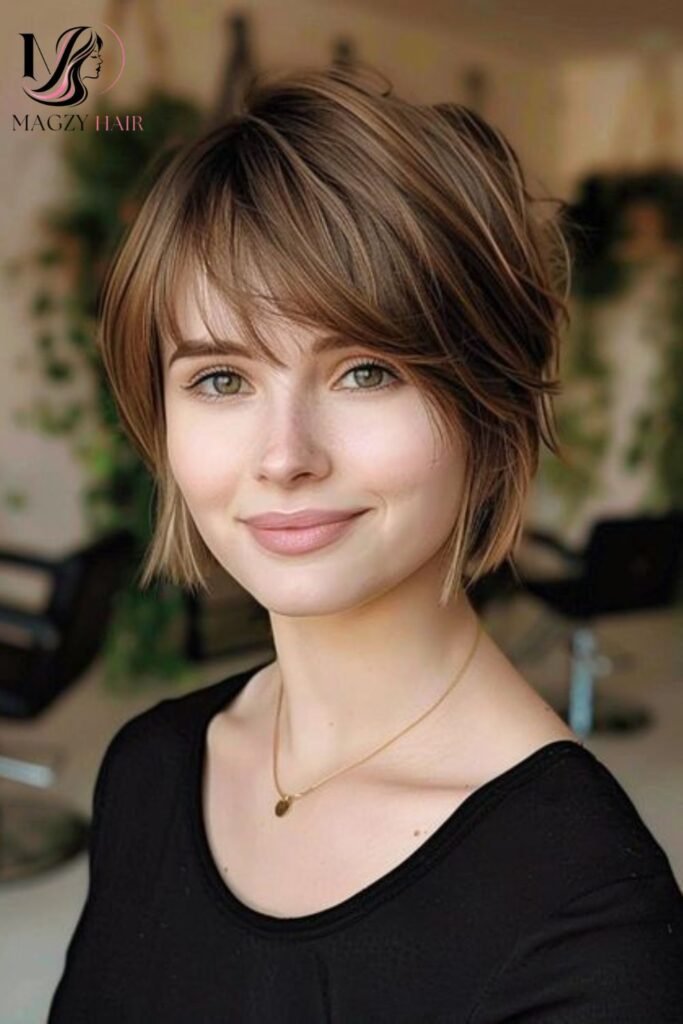
Curtain bangs remain one of the most popular pairings among pixie hairstyles with bangs, parting naturally down the middle and sweeping gently to either side rather than falling in a stark, disconnected fringe. This combination has become especially popular because curtain bangs integrate seamlessly with the shorter length surrounding them, offering face framing softness without requiring a dramatic style change.
This particular pairing works especially well because curtain bangs are, by design, meant to blend into the surrounding hair rather than stand apart from it, making them naturally compatible with a pixie’s overall soft, textured shape. The gradual, swept back movement echoes the same lightweight quality most pixie cuts already have.
A helpful example: someone with a pixie considering bangs for the first time often finds curtain bangs the easier, lower commitment starting point, since they can be tucked back or swept aside on days when a fuller fringe look isn’t wanted. This flexibility makes curtain bangs one of the more practical pixie hairstyles with bangs for testing a new look before committing further.
Styling curtain bangs on a pixie typically involves a lightweight cream applied while damp, then blow drying with a small round brush to encourage the soft, swept back shape that defines this particular combination.
Pixie With Full Blunt Bangs
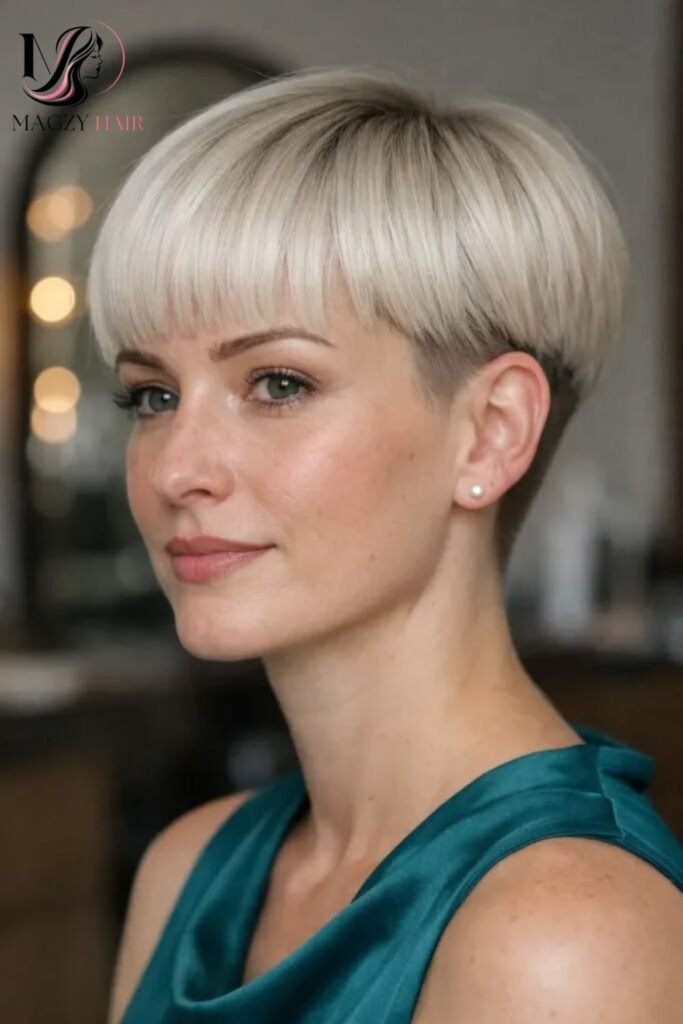
Pairing a pixie with full, blunt, straight across bangs creates one of the boldest, most graphic looks among pixie hairstyles with bangs, combining a precise, structured fringe with the airy movement of the rest of the cut. This contrast between a sharp line and softer texture throughout the crown creates genuine visual interest and a distinctly editorial quality.
Achieving this combination well requires careful attention to where the bangs end and the rest of the pixie begins, since an abrupt, disconnected transition between the two can make the style look like two separate haircuts rather than one intentional design. Many stylists soften the very edges where the bangs meet the surrounding hair, even while keeping the bangs themselves precisely blunt.
A practical example: someone who receives full, blunt bangs paired with a heavily textured pixie might find the combination looks disjointed if the transition point isn’t handled carefully, since the sharp fringe can read as disconnected from the softer, choppier texture surrounding it. Discussing this specific transition with your stylist helps ensure this bold combination reads as cohesive rather than mismatched.
Maintenance for full, blunt bangs paired with a pixie is particularly demanding, generally requiring trims every 2 weeks, since this precise, structured fringe loses its sharp line considerably faster than the rest of the shorter cut.
Pixie With Side Swept Bangs
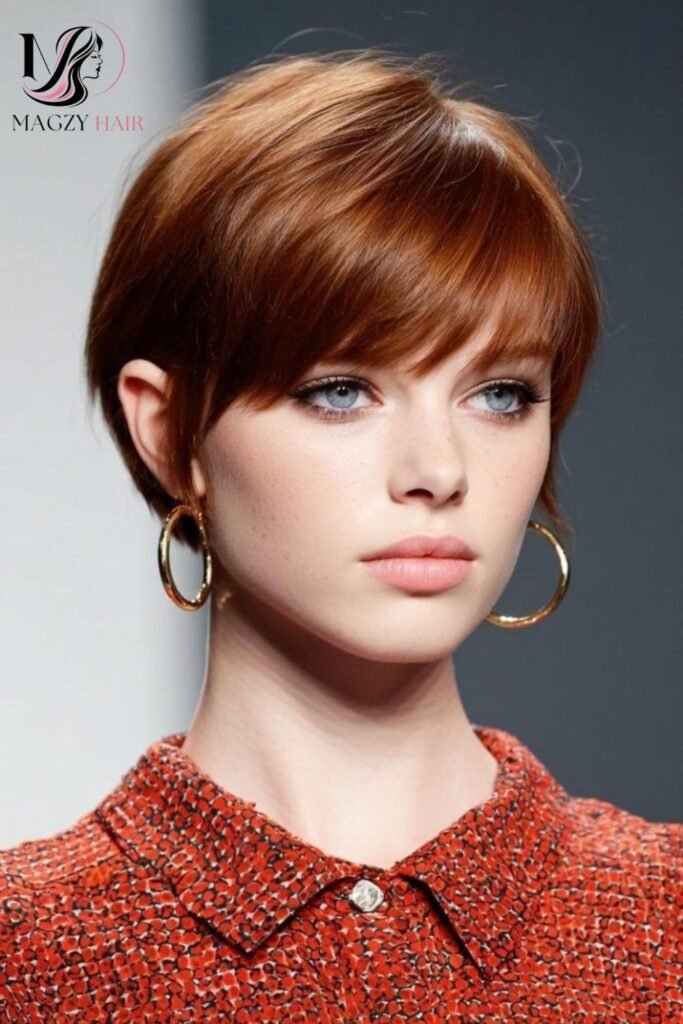
Side swept bangs offer one of the more versatile options among pixie hairstyles with bangs, sweeping diagonally across the forehead rather than falling straight down or parting in the middle. This diagonal shape tends to blend particularly well with a pixie’s overall shape, since the swept angle naturally echoes the same directional movement often already present throughout the crown.
This particular style works well across a wide range of face shapes specifically because the degree of sweep can be adjusted to suit individual features. A more dramatic, deeper sweep creates a bolder, more noticeable statement, while a subtler, shallower angle offers a softer, more understated update to an existing pixie.
A helpful example: someone with a rounder face shape might find that more dramatic side swept bangs, angled steeply across the forehead, help create a more elongating effect than straighter, less angled bangs would provide. This face shape consideration is a detail many general guides overlook when discussing pixie hairstyles with bangs specifically.
Styling side swept bangs on a pixie typically involves directing hair with a small round brush while blow drying, encouraging the bangs to fall in their intended diagonal direction rather than straight down, a technique that becomes easier with practice and the right amount of lightweight styling product.
Pixie With Wispy Textured Bangs
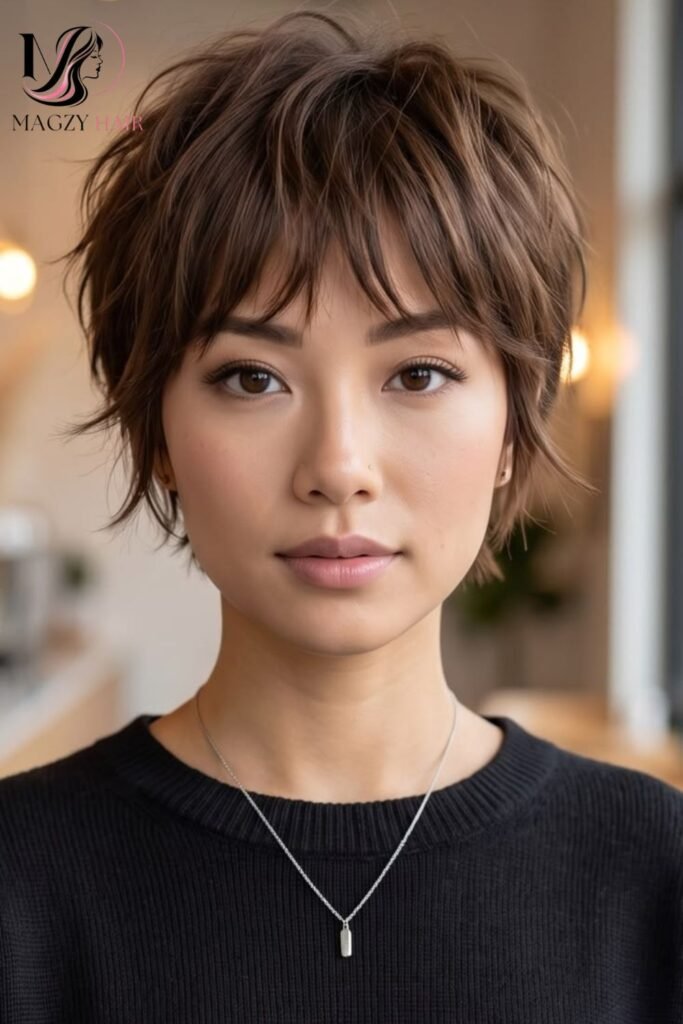
Wispy bangs bring a soft, textured quality to pixie hairstyles with bangs, using thinner, more piece-y sections rather than a dense, full fringe. This approach tends to blend especially naturally with a pixie’s overall texture, since the wispy quality mirrors the same movement and separation already present throughout the rest of the cut.
This particular bang style works well for those wanting the face framing benefit of bangs without the heavier visual weight a fuller fringe can add, particularly for anyone with an already textured, piece-y pixie throughout the crown. The lighter density helps the bangs feel like a natural extension of the existing style rather than a separate, competing element.
A helpful example: someone with fine hair who adds full, dense bangs to their pixie might find the fringe looks disproportionately heavy compared to the rest of their finer, more textured crop. Opting for wispier, thinner bangs instead typically creates better proportion and balance among pixie hairstyles with bangs specifically suited to finer hair types.
Maintenance for wispy bangs tends to be slightly more forgiving than fuller, blunt versions, since their inherently textured, less structured shape doesn’t rely on an exact, precise line to look intentional as they grow out between trims.
Pixie With Micro Fringe
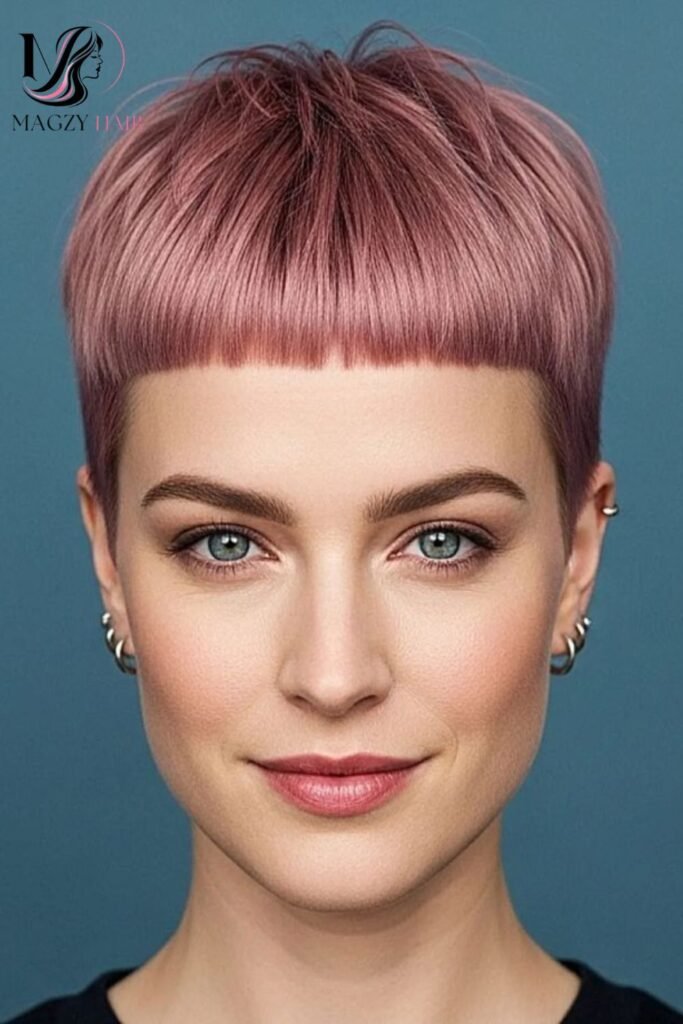
The micro fringe pairs dramatically short, above the eyebrow bangs with a pixie, creating one of the boldest, most striking combinations among pixie hairstyles with bangs. This look has grown in popularity for those wanting a genuinely distinctive, editorial inspired style that stands apart from more traditional bang lengths, especially when combined with an already short overall cut.
Achieving this look well requires real commitment, since a micro fringe is considerably more difficult to grow out gracefully than a longer bang style, typically passing through several awkward stages before it can blend back into the rest of the pixie if you decide to change your mind. This is a detail worth discussing honestly with your stylist before committing to this particular style.
A mini scenario worth considering: someone drawn to the dramatic visual impact of a micro fringe but uncertain about long-term commitment might benefit from trying a slightly longer, more moderate short bang first, gradually working shorter over time rather than jumping directly to the most extreme length. This more cautious approach helps avoid regret with one of the boldest pixie hairstyles with bangs on this list.
Styling a micro fringe on a pixie typically involves minimal product, since the short length naturally sits close to the forehead, though a small amount of texturizing paste can help define individual pieces for a more deliberate, piece-y finish.
Textured Pixie With Choppy Bangs
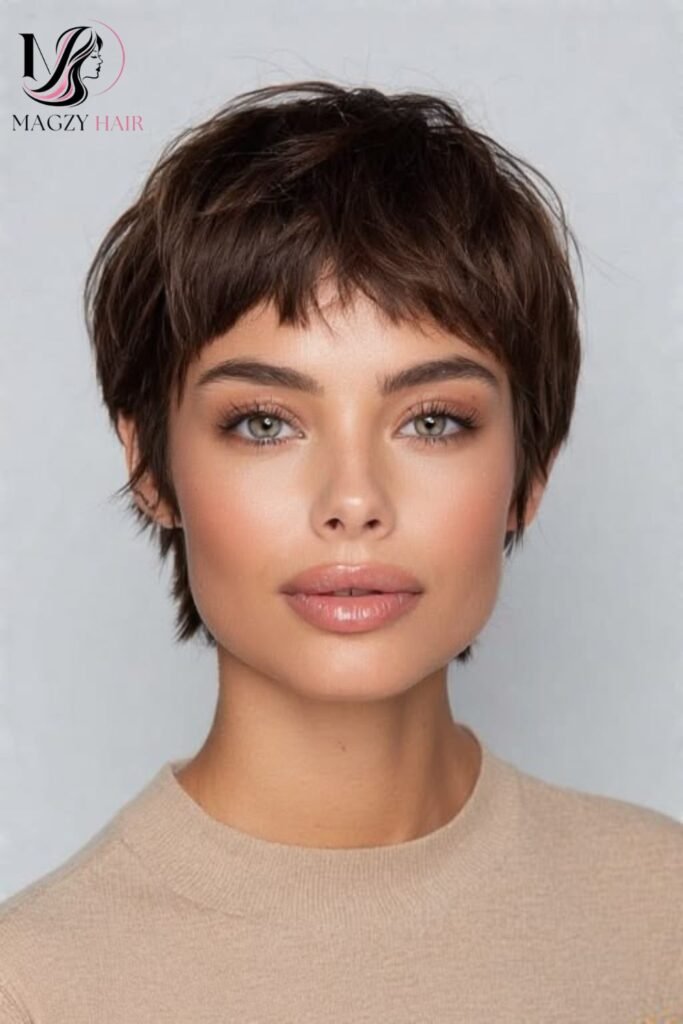
Pairing a textured, piece-y pixie with equally choppy bangs creates a cohesive, modern look among pixie hairstyles with bangs, where both elements share the same deliberately undone, dimensional quality. This combination avoids the mismatch that can occur when a smooth, precise fringe is paired with a more textured, choppy crop.
Achieving this cohesive result requires texturizing both the bangs and the rest of the pixie using similar techniques and intensity, ensuring the entire style reads as one unified, intentional look rather than two mismatched sections. Point cutting or razor work applied consistently throughout both areas helps create this seamless blend.
A practical example: someone who adds choppy bangs to an otherwise smooth, unlayered pixie might find the contrast between the textured fringe and the sleeker crown looks unbalanced rather than cohesive. Texturizing the rest of the pixie to match the bangs’ choppiness typically resolves this issue, creating a unified look throughout this particular pairing among pixie hairstyles with bangs.
Maintenance for this combination requires attention to both areas simultaneously, generally every 3–4 weeks, since maintaining the specific choppy texture, rather than just length, becomes part of the ongoing upkeep for this particular style.
Pixie With Undercut and Bangs
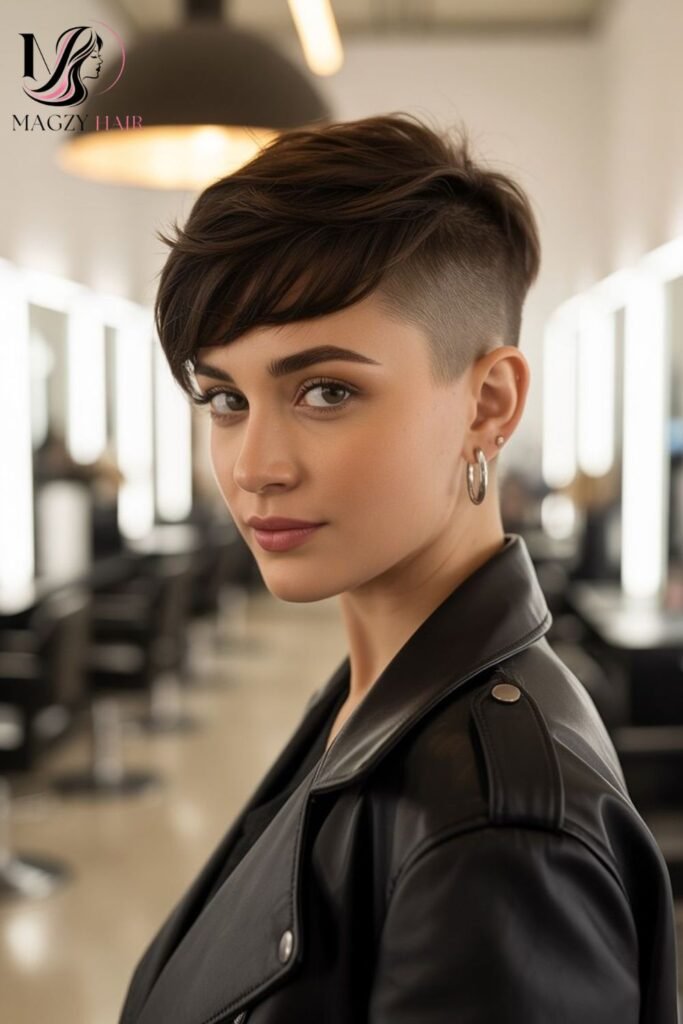
Pairing a pixie with a subtle undercut and bangs adds unexpected texture and dimension among pixie hairstyles with bangs, with the undercut typically placed at the nape or sides, remaining mostly hidden during everyday wear while reducing overall bulk. This combination works particularly well for those with thicker hair who want the softness of bangs without the heaviness thick hair can sometimes bring to a pixie.
This technique creates a layered contrast: the bangs soften and frame the face at the front, while the undercut adds an edgier, more unexpected element at the sides or back. The combination offers genuine styling versatility, since the visible portion can be styled differently depending on whether the undercut is meant to show or stay concealed.
A helpful example: someone hesitant about a dramatic undercut but drawn to its edgier aesthetic might request a smaller, more subtle version placed low at the nape, keeping it mostly hidden during everyday wear while the bangs remain the primary face framing feature. This flexibility makes the style accessible even in more conservative professional settings while still incorporating a genuinely distinctive element among pixie hairstyles with bangs.
Maintenance for this style requires attention to three different growth areas, the undercut, the crown, and the bangs, generally needing trims every 3–4 weeks to maintain the crisp contrast this particular combination depends on.
Curly Pixie With Bangs
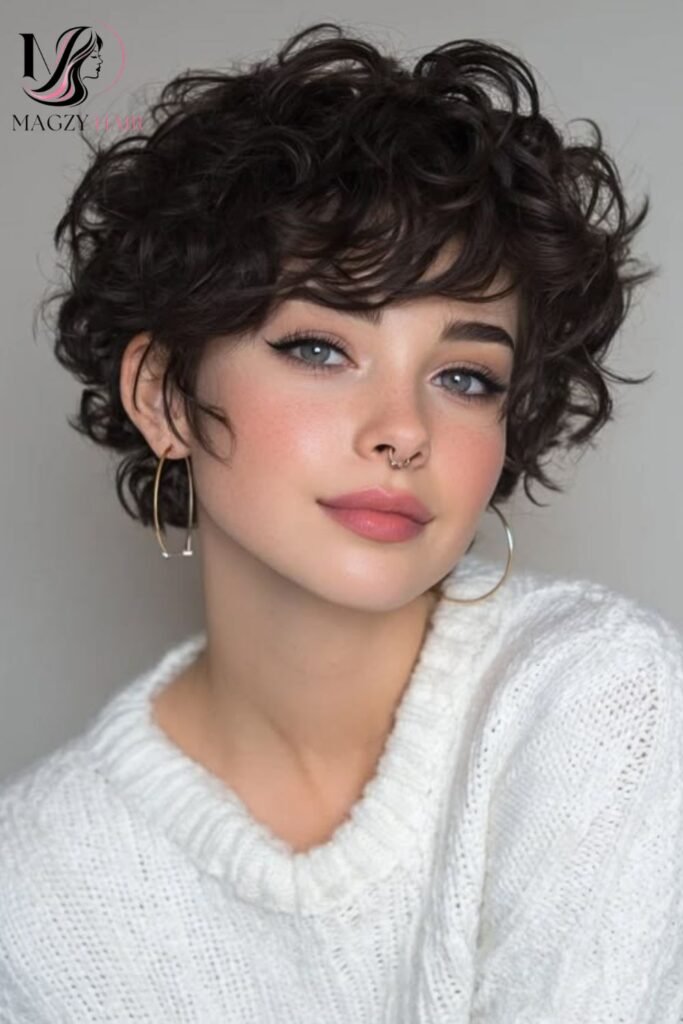
Curly hair requires a distinct cutting approach among pixie hairstyles with bangs, since curl pattern shrinks significantly once cut, sometimes by 30 to 50 percent depending on curl tightness. A stylist unfamiliar with curly specific cutting techniques might cut bangs to an intended length while wet, only for them to spring up noticeably shorter once fully dry.
Dry cutting, where a stylist trims hair while it’s already dry and in its natural curl pattern, has become an increasingly recommended technique specifically for curly bangs paired with a pixie. This method allows the stylist to see exactly how each curl falls before making cutting decisions, resulting in far more predictable, accurately shaped results than wet cutting typically achieves.
A helpful example: someone with tight, coily curls requesting bangs modeled after a straight hair reference photo needs the bangs cut noticeably longer while stretched, accounting for significant shrinkage once the curl pattern springs back. Seeking a stylist specifically trained in curly hair cutting is essential to achieving this particular combination among pixie hairstyles with bangs successfully.
Styling curly bangs on a pixie typically involves minimal heat and maximum moisture, using curl defining creams applied to soaking wet hair, then air drying or diffusing to preserve the natural curl pattern the cut was designed to work with.
Wavy Pixie With Bangs
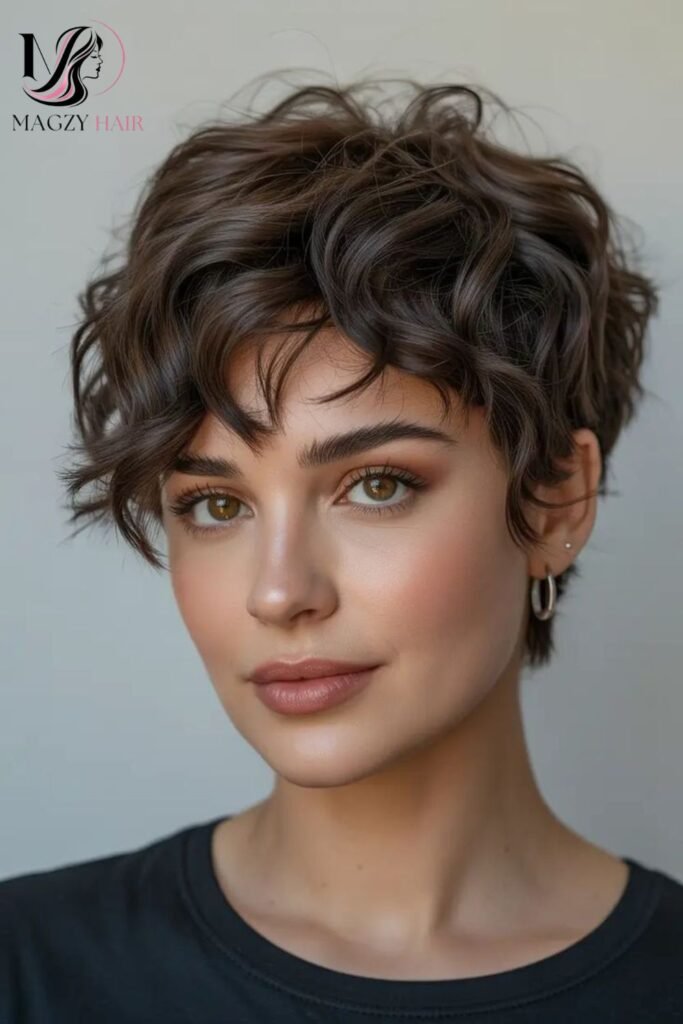
Pixie hairstyles with bangs take on a distinctly different character when paired with natural wave pattern, since texture itself adds movement that straight hair typically needs styling tools to achieve. This combination tends to work particularly well with softer bang styles, like curtain or wispy bangs, since these blend more naturally with wavy texture than a sharp, blunt fringe would.
Cutting bangs for wavy hair specifically requires accounting for how wave pattern affects perceived length, since waves can appear shorter once dry and styled compared to how they looked freshly cut while damp. A stylist experienced with textured hair typically cuts wavy bangs slightly longer than a straight hair reference would suggest, allowing for this natural settling once the wave pattern fully forms.
A helpful example: someone with pronounced waves who requests bangs based on a straight hair reference photo might find the bangs sit shorter and rounder than expected once their natural texture takes hold. Communicating your specific wave pattern helps ensure the bangs settle into the intended shape among pixie hairstyles with bangs suited to wavy texture specifically.
Styling wavy bangs on a pixie typically involves a lightweight curl cream applied while damp, then air drying or diffusing alongside the rest of the crop, allowing the natural texture to blend the bangs into the overall wave pattern.
Asymmetrical Pixie With Bangs
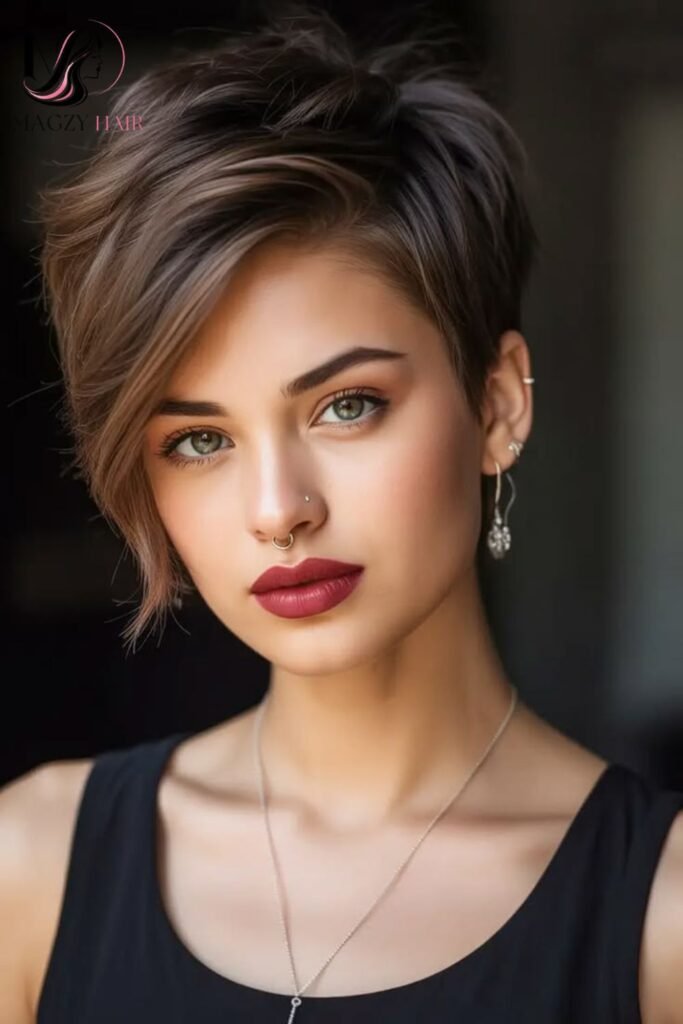
The asymmetrical pixie features uneven length, typically shorter on one side and longer toward the other, paired with bangs that echo or contrast this asymmetry, creating one of the more dramatic, editorial leaning combinations among pixie hairstyles with bangs. This bold structural choice offers a genuine statement for those wanting their haircut to stand apart from more traditional, symmetrical pixies.
Achieving this look well requires careful planning around how the asymmetry and the bangs will interact once styled, since combining two distinct design elements, structural asymmetry and a coordinating fringe, demands more precision than either would require on its own. A stylist experienced specifically in both techniques together tends to produce noticeably better results than combining the two as an afterthought.
A mini scenario worth noting: someone requesting an asymmetrical pixie with bangs without clearly specifying how the two elements should relate might end up with a fringe that feels disconnected from the asymmetrical shape rather than complementing it. Bringing a clear reference photo and discussing how the bangs should echo or contrast the asymmetry helps ensure the final result matches your actual vision.
Because this style involves more structural complexity than a standard pixie, maintenance trims are particularly important to preserve the intended balance between the asymmetrical length and the bangs.
Pixie With Balayage and Bangs
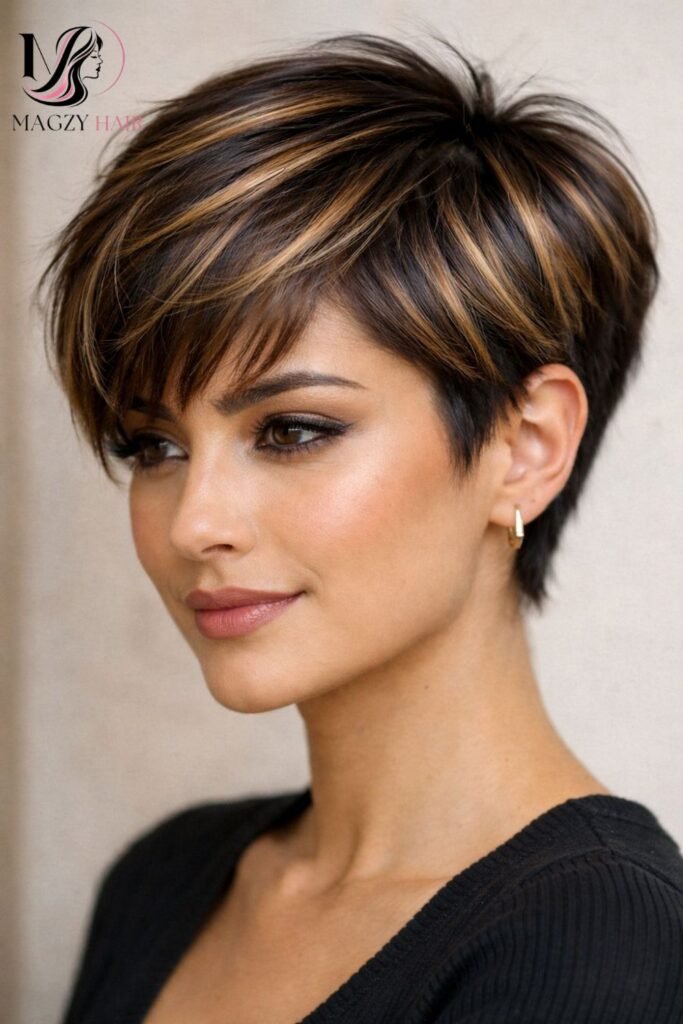
Adding balayage to pixie hairstyles with bangs introduces genuine dimension that flat, single process color often lacks, particularly effective at highlighting both the movement throughout the crop and the face framing effect of the bangs themselves. Strategic color placement around the bangs specifically can brighten the face in a way flat color simply doesn’t achieve to the same degree.
Color placement near bangs requires some specific consideration, since this area sits closest to the face and skin tone, making even subtle color variation particularly noticeable. Colorists typically place softer, more blended color directly at the bangs, reserving bolder, more dramatic placement for the crown, creating a cohesive gradient rather than an abrupt shift in tone near the forehead.
A helpful example: someone who receives dramatic, high contrast highlights placed too close to their bangs might find the color draws attention in an unflattering way, emphasizing the forehead rather than complementing the overall style. Discussing bang specific color placement with your colorist helps avoid this issue among pixie hairstyles with bangs involving significant highlighting.
Because bangs are trimmed more frequently than the rest of a pixie, color near this area may also need more frequent touch ups to prevent a visible mismatch between the more recently colored bangs and the rest of the gradually fading crop.
Slicked Back Pixie With Bangs
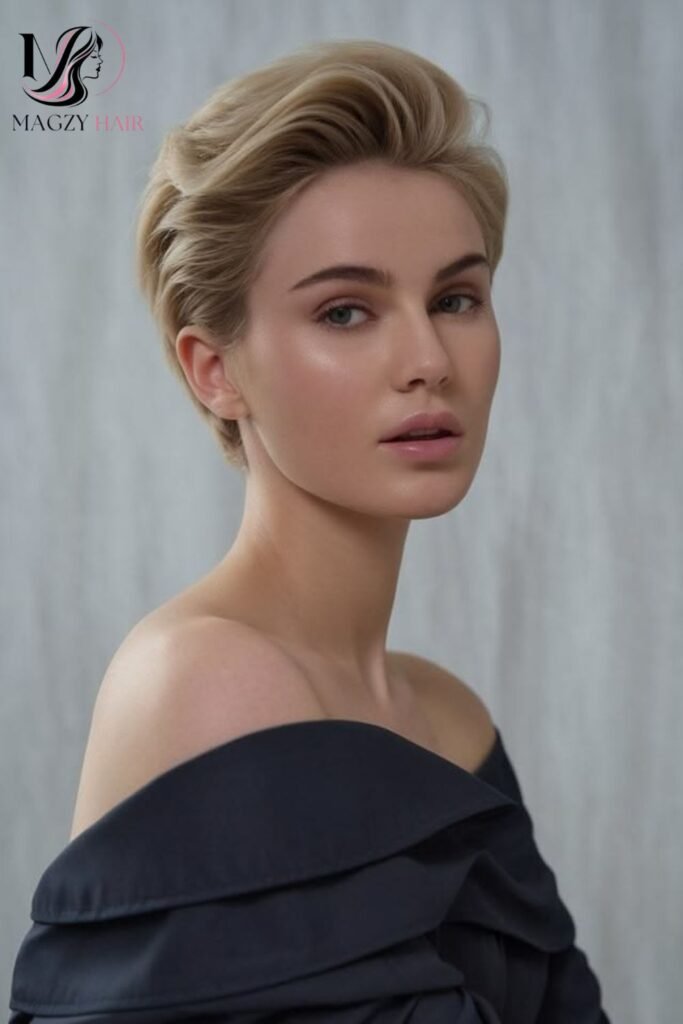
A slicked back pixie with bangs offers a polished, dramatic alternative among pixie hairstyles with bangs, using a strong hold styling product to sweep the bangs and crown back together into a smooth, controlled finish rather than embracing texture or volume. This particular look tends to work especially well for formal occasions or professional settings where a more structured, editorial silhouette feels appropriate.
Achieving this style well requires product specifically formulated for strong hold and shine, applied while damp and combed straight back before the hair fully dries, allowing the bangs to blend seamlessly into the rest of the slicked shape rather than sitting apart from it as a separate, forward falling section.
A helpful example: someone attempting a slicked back pixie with bangs using a lightweight, matte product designed for textured styles often finds the bangs don’t hold the smooth, controlled shape throughout the day, since that product type simply isn’t formulated for this level of hold. Switching to a proper pomade or strong-hold gel specifically resolves this common styling mismatch among pixie hairstyles with bangs.
This style also tends to photograph particularly well for formal events, given its clean, structured silhouette, making it a popular choice for weddings and other occasions calling for a more elevated take on pixie hairstyles with bangs.
Pixie With Bangs for Thick Hair
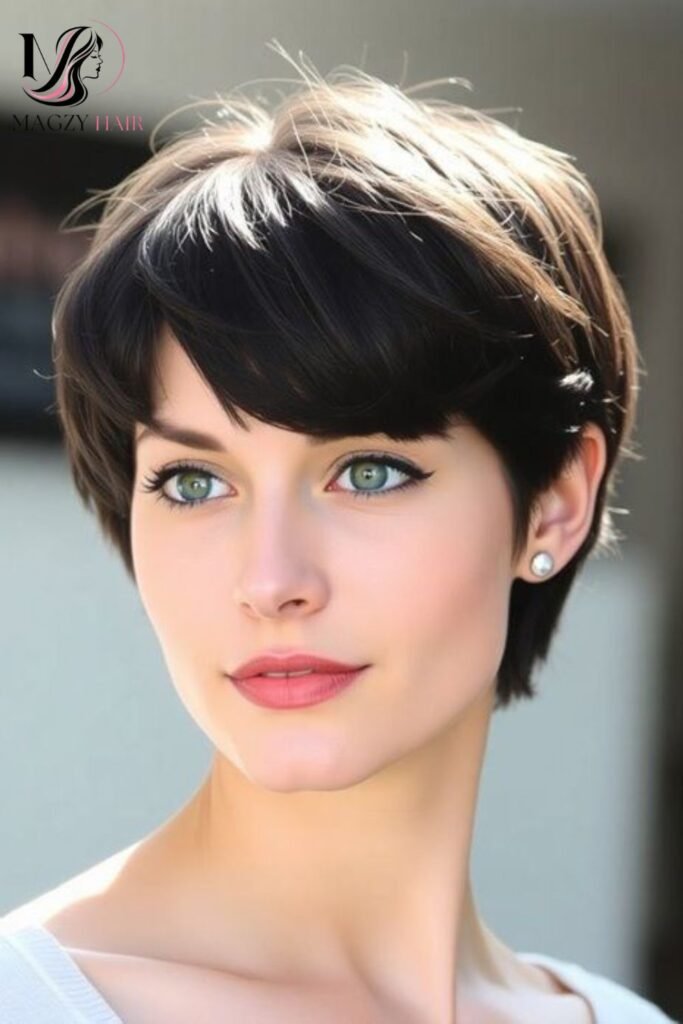
Thick hair generally supports pixie hairstyles with bangs particularly well, since there’s ample density to work with when cutting both the crown and the bangs without either element looking sparse. However, thick hair does require more strategic thinning specifically at the bangs, since a full fringe on very dense hair can sometimes feel heavy or difficult to style without some internal thinning.
Slide cutting or point cutting techniques applied specifically to thick bangs help remove some of this weight gradually, preventing the fringe from looking like a solid, blocky mass rather than movement friendly, styleable hair. This same thinning consideration often extends to where the bangs meet the rest of the pixie, ensuring a smooth, gradual transition rather than an abrupt shift in density.
A helpful example: someone with very thick, dense hair who receives bangs without any internal thinning might find the fringe feels heavy and difficult to style, requiring more daily effort to manage than thinner bangs would. Discussing hair density specifically with your stylist helps calibrate pixie hairstyles with bangs appropriately for thicker textures.
Styling thick bangs on a pixie generally benefits from lightweight, frizz controlling products applied sparingly, since heavier products can compound the natural weight already present in denser hair types.
Choosing Pixie Hairstyles With Bangs by Face Shape
Face shape plays a significant role in which pixie hairstyles with bangs look most flattering, a detail generic style roundups often skip entirely. Round faces tend to benefit from side swept or curtain bangs paired with more height at the crown, since these help elongate the face rather than adding width across its widest point.
Square faces generally look best with wispy or curtain bangs rather than sharp, blunt lines, since softer texture helps balance a strong, angular jawline rather than emphasizing it further with an equally sharp fringe. Heart shaped faces often benefit from side swept bangs that add asymmetrical softness, balancing a narrower jawline against a fuller forehead.
A helpful example: two people requesting the “same” pixie with bangs from a reference photo may need genuinely different bang style and crown shaping to achieve an equally flattering result, simply because their face shapes differ significantly. This is why clearly communicating your face shape and specific priorities to your stylist leads to a far more personalized, satisfying outcome than a reference photo alone can provide.
Oval faces tend to have the most flexibility among pixie hairstyles with bangs, generally suiting nearly any bang style or crown shaping discussed in this guide. For other face shapes, taking a few extra minutes during consultation meaningfully improves the odds of a genuinely flattering result.
Common Mistakes to Avoid With Pixie Hairstyles With Bangs
One of the most frequent mistakes is cutting bangs without coordinating them with the surrounding crown shape, resulting in a fringe that looks disconnected rather than blended into the overall pixie. Discussing exactly how the bangs should transition into the rest of the cut helps avoid this common, frustrating outcome.
Another common error involves choosing a bang style based purely on a reference photo without accounting for your own hair texture, since the same bang cut can behave completely differently on straight, wavy, or curly hair. Communicating your natural texture honestly with your stylist helps ensure the final result among pixie hairstyles with bangs matches your actual expectations.
Skipping regular bang trims is another frequently repeated mistake, since bangs grow out and lose their intended shape considerably faster than the rest of a pixie. Regular trims, generally every 2–3 weeks, help maintain the face framing effect this combination depends on, even between full haircut appointments.
Finally, using heavy, greasy products near the bangs specifically is a mistake worth avoiding, since this area sits closest to the forehead and shows oil buildup more visibly than the rest of the hair. Lightweight, targeted products applied sparingly near the bangs help keep pixie hairstyles with bangs looking fresh throughout the day.
The Future of Pixie Hairstyles With Bangs
Pixie hairstyles with bangs continue to evolve alongside broader advances in coordinated cutting techniques that treat bangs and the surrounding crop as one unified design rather than separate elements. As more stylists pursue specialized training in this integrated approach, the historically common problem of disconnected, poorly blended bangs is becoming less frequent.
There’s also a growing emphasis on customizable bang styles tailored to individual face shape, hair texture, and lifestyle, with more stylists discussing options like wispy, adjustable curtain bangs as flexible alternatives to a single, fixed fringe style. This reflects broader recognition that pixie hairstyles with bangs benefit from genuinely personalized planning.
Product technology is advancing alongside this trend as well, with more brands developing formulations specifically suited to maintaining bangs between washes, addressing oil buildup and styling needs unique to this particular area of the hair.
Looking ahead, personalized digital consultation tools, including AI based style previews, are beginning to help people visualize how different bang styles might specifically blend with their existing or planned pixie shape before committing to a cut. This kind of technology assisted planning could meaningfully reduce the uncertainty many people feel when adding bangs to a short crop.
Conclusion
Pixie hairstyles with bangs offer endless ways to frame the face while keeping styling effortless, provided the bangs and crown are cut in coordination with each other. From soft curtain bangs to a dramatic micro fringe, there’s an option here suited to nearly every face shape and hair texture. The key is choosing a stylist who treats both elements as one cohesive design. Ready to try one of these pixie hairstyles with bangs Bring this guide to your next appointment and start the conversation with your stylist.
Ayesha Noor is the founder and lead writer behind Magzy Hair. With 4 years of experience researching hairstyles, hair care, and beauty trends, she enjoys helping readers discover styles that suit their unique personality and lifestyle.


