
Short Hairstyles for Thick Hair: The Complete Guide to Cuts, Styling, and Management

Short hairstyles for thick hair require a genuinely different cutting approach than the same lengths applied to finer textures. The priority isn’t creating volume it’s managing the volume that’s already there, removing weight strategically so hair moves and shapes properly rather than sitting as one dense, heavy mass. Done well, thick hair at a shorter length can look sleek, voluminous, and remarkably easy to maintain. Done poorly, it can look bulky and difficult to control regardless of how much time goes into styling it.
This guide goes beyond a simple photo gallery. It explains the specific thinning and layering techniques that make short hairstyles for thick hair genuinely work, how texture and curl pattern should influence the exact approach, and details most articles skip entirely like why the same short cut can behave completely differently depending on how weight is removed from the interior versus the surface layers. Whether you’re considering going shorter for the first time or want more from the cut you already have, this is the deeper, more practical guide.
Why Short Hairstyles for Thick Hair Need a Different Cutting Approach
Short hairstyles for thick hair require considerably more strategic thinning than the same lengths applied to fine or medium density hair, since the fundamental challenge shifts from creating volume to managing an abundance of it. Without proper thinning, thick hair at a shorter length often ends up looking triangular, bulky, or helmet-like rather than sleek and controlled, regardless of how skillfully the overall shape is cut.
This means the cutting technique itself matters considerably more than length alone when planning short hairstyles for thick hair. A stylist who simply shortens thick hair without removing internal weight often produces a cut that looks fine immediately after the appointment but becomes increasingly difficult to style as the hair settles into its natural density over the following days.
A helpful example: someone with very thick, dense hair who requests a short bob without discussing thinning techniques specifically might find the cut looks noticeably wider and bulkier than intended once styled at home, since surface level layering alone often isn’t enough to address the hair’s full underlying density. Explicitly discussing internal thinning during the consultation helps avoid this common and frustrating outcome.
Understanding this distinction before your appointment helps you communicate more effectively with your stylist. Rather than simply requesting “a bob” or “a pixie,” specifying that you have thick hair needing genuine weight removal signals that you understand your hair type and want a cut tailored specifically to it.
Click It: https://magzyhair.com/long-hairstyles-for-women-over-40/
Layered Bob for Thick Hair: Movement Without Bulk
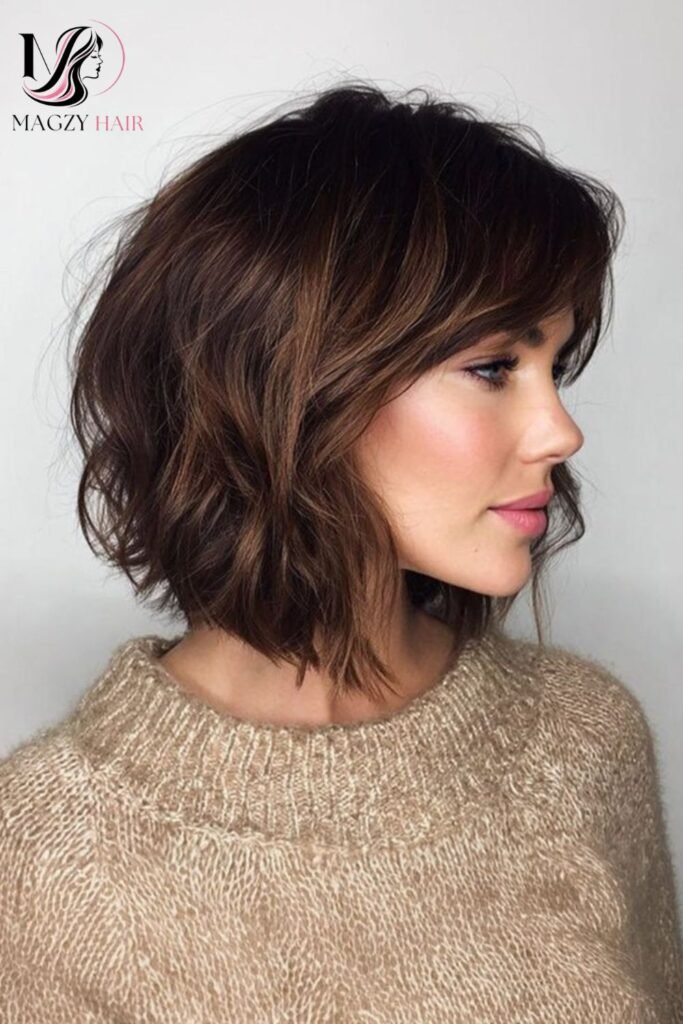
A layered bob remains one of the most consistently recommended short hairstyles for thick hair, since strategic internal layering removes weight throughout the interior sections rather than only at the surface, allowing the cut to move naturally instead of sitting as one dense mass. This approach creates genuine shape and movement that a completely blunt bob simply can’t achieve on thick hair.
The specific layering technique matters considerably here. Slide cutting and point cutting, which remove weight gradually and precisely, tend to work better on thick hair than heavy, uniform layering, since these techniques allow a stylist to sculpt the cut’s shape without creating harsh, blunt sections that can look chunky on denser hair.
A helpful example: someone with thick, coarse hair who receives a bob with only surface level layering might find the cut still looks bulky and triangular despite the layering effort, since the underlying weight beneath the surface remains largely untouched. A stylist who thins throughout the cut’s full depth, not just the visible top layers, typically produces a considerably more controlled, flattering result.
Styling a layered bob for thick hair generally requires less volumizing product and more focus on smoothing and frizz control, since natural density already provides more than sufficient fullness without additional help from products designed to add volume.
Textured Pixie Cuts: Short Hairstyles For Thick Hair
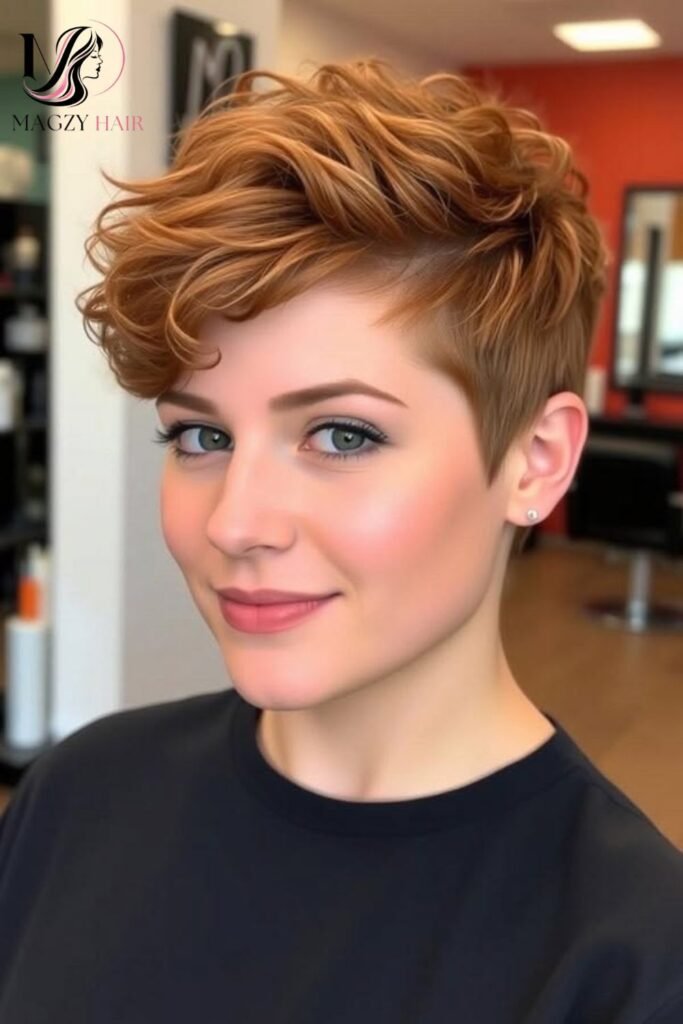
A textured pixie offers one of the boldest options among short hairstyles for thick hair, and this hair type tends to support the style particularly well, since there’s ample density to sustain meaningful texturizing without the risk of looking sparse. Careful, thorough thinning throughout helps manage thick hair’s natural volume, creating movement and shape rather than one dense mass concentrated at the crown.
This combination requires skilled execution, however, since improperly thinned thick hair can sometimes still look bulky even within an otherwise well shaped pixie, particularly if the internal thinning isn’t distributed thoughtfully throughout the cut’s various sections. Heavy point cutting and slide cutting techniques help remove appropriate weight while still preserving the pixie’s characteristic shape.
A helpful example: someone with very thick, dense hair who receives a pixie without adequate internal thinning might find their hair still looks heavy or helmet like at the crown despite the dramatically shorter overall length, since the sheer volume of hair can sometimes overwhelm standard cutting techniques applied at this length. Communicating hair density clearly to your stylist helps ensure appropriate thinning throughout.
Styling a textured pixie for thick hair generally requires less volumizing product and more focus on definition and control, allowing the cutting technique itself to be the primary source of the style’s shape and movement rather than relying heavily on daily styling to compensate.
Short Shag for Thick, Textured Movement
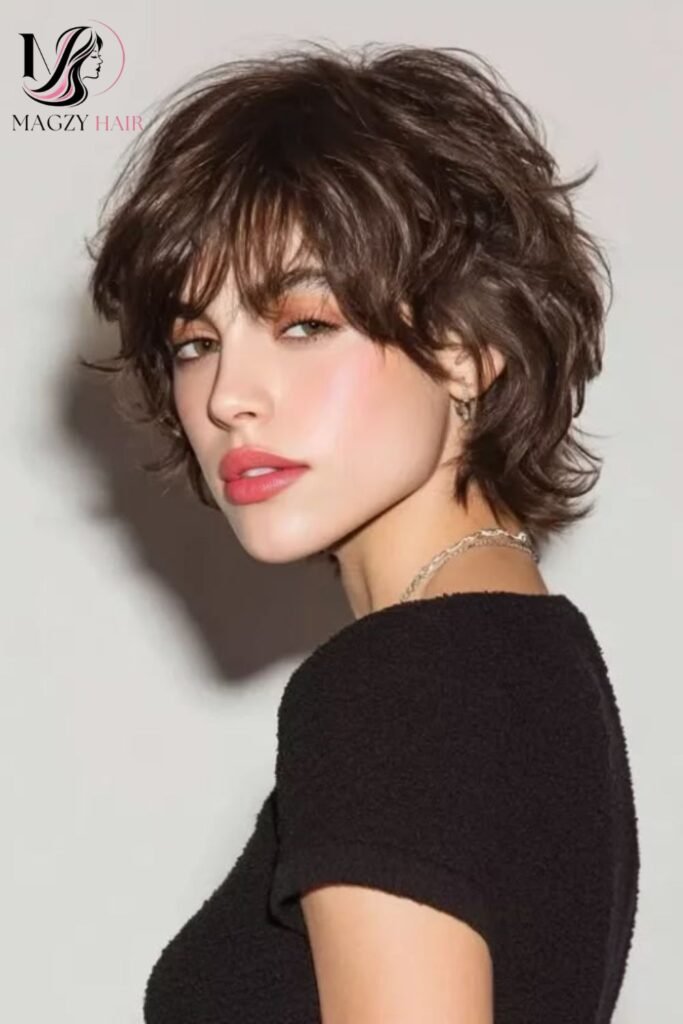
The short shag pairs particularly well with thick hair among short hairstyles for thick hair, since this cut’s heavily texturized, choppy layering is specifically designed to break up and manage significant volume rather than fighting against it. The shag’s inherent structure actually benefits from having ample hair density to work with, creating dramatic, dynamic texture that thinner hair sometimes struggles to replicate as effectively.
This particular style tends to disguise the very issue that sometimes concerns those with thick hair, since the shag’s intentionally undone, choppy character means excess volume reads as deliberate texture rather than unwanted bulk. This distinction matters significantly when discussing this cut specifically for thick hair with your stylist.
A helpful example: someone with thick, wavy hair who has struggled with bulkier, more structured short cuts often finds a shag considerably more forgiving, since the style’s design already anticipates and works with significant volume rather than requiring it to be minimized entirely. The natural density actually enhances the shag’s signature dramatic, textured movement.
Finishing a short shag on thick hair typically involves a lightweight texturizing paste applied sparingly, since thick hair rarely needs the volumizing boost this product category is often marketed toward, making product selection worth adjusting specifically for this hair density.
Short Hairstyles for Thick Hair, Curly Hair
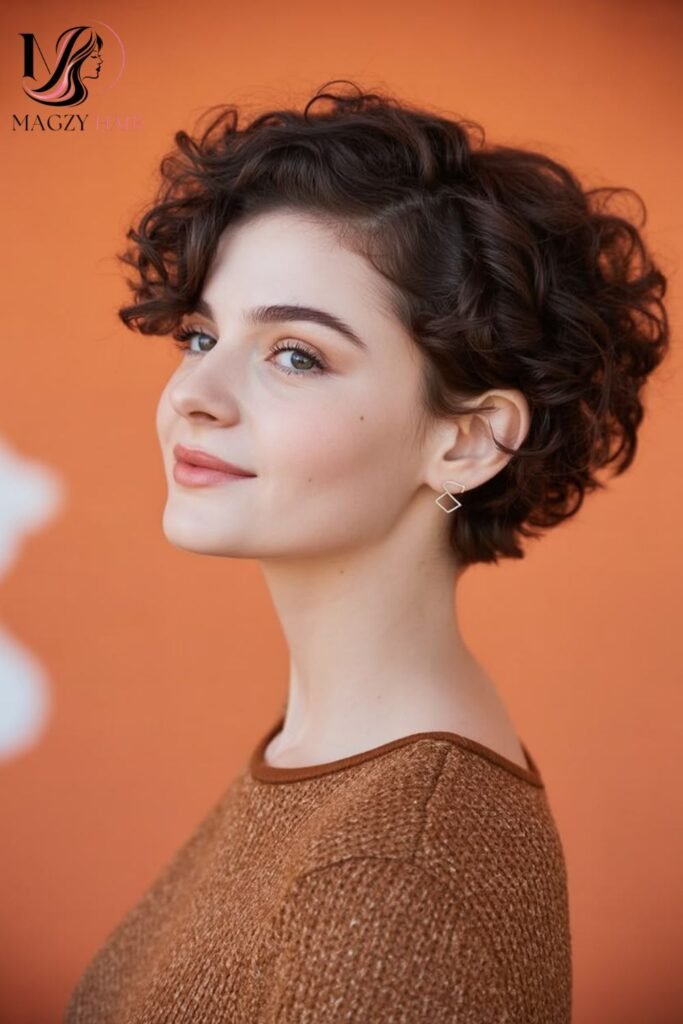
Curly hair adds an important layer of consideration to short hairstyles for thick hair, since curl pattern significantly affects how much visual volume the hair will display once fully dry, independent of the hair’s actual density. Dry cutting, where a stylist shapes hair in its natural, unstretched curl pattern, tends to produce far more accurate, predictable results than cutting curly hair wet and stretched for shorter lengths specifically.
This consideration matters considerably for thick, curly hair particularly, since combining significant density with tight curl pattern can create dramatic volume that surprises clients unprepared for how much the hair will expand once fully dry compared to how it appeared during the cutting process itself.
A helpful example: someone with thick, tightly coiled curls who requests a short pixie might find their hair looks considerably larger and more voluminous once fully dry than it appeared while being cut wet and stretched. Seeking a stylist specifically experienced with both thick hair thinning techniques and curly specific cutting helps set realistic expectations and achieve a result that accounts for both factors simultaneously.
Styling short hairstyles for thick, curly hair typically benefits from lightweight, curl defining products applied to wet hair, followed by diffusing or air drying, allowing the natural curl pattern and the cut’s thinning technique to work together rather than compounding each other’s volume unexpectedly.
Short Hairstyles for Thick Hair, Straight Hair
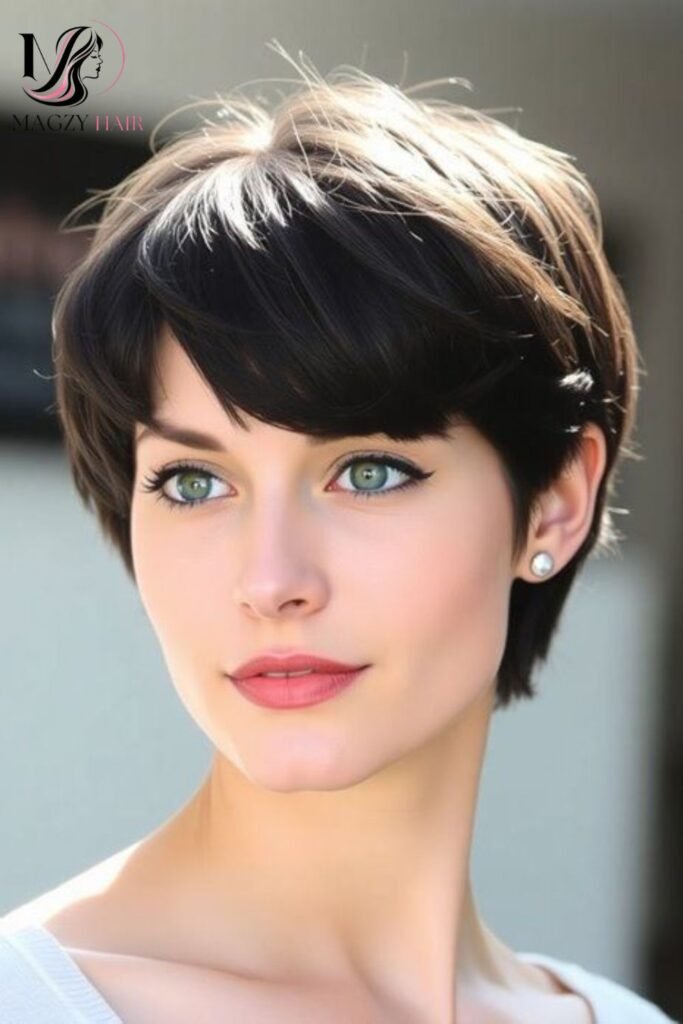
Thick, straight hair presents a somewhat different challenge within short hairstyles for thick hair, since there’s no natural curl pattern to help break up density visually, meaning cutting technique alone must accomplish all the necessary volume management. This makes precise, thorough thinning particularly essential for straight, thick hair specifically.
This hair type also tends to show any unevenness in thinning more readily than curly or wavy thick hair, since there’s no natural texture to help disguise minor inconsistencies in how weight was removed throughout the cut. A stylist working with thick, straight hair typically needs to be especially meticulous about even, thorough thinning distribution.
A helpful example: someone with thick, straight hair who receives uneven thinning, heavier in some sections than others, might notice the inconsistency considerably more obviously than someone with textured hair would, since straight hair’s smooth surface reveals any unevenness in the underlying cut more directly. This makes finding a stylist specifically skilled with thick, straight hair particularly valuable.
Styling thick, straight short hairstyles generally benefits from a flat iron pass focused on smoothing and controlling any remaining bulk, paired with a lightweight anti frizz serum to manage this hair type’s tendency toward frizz despite its overall smoothness.
Short Bob With Bangs for Thick Hair
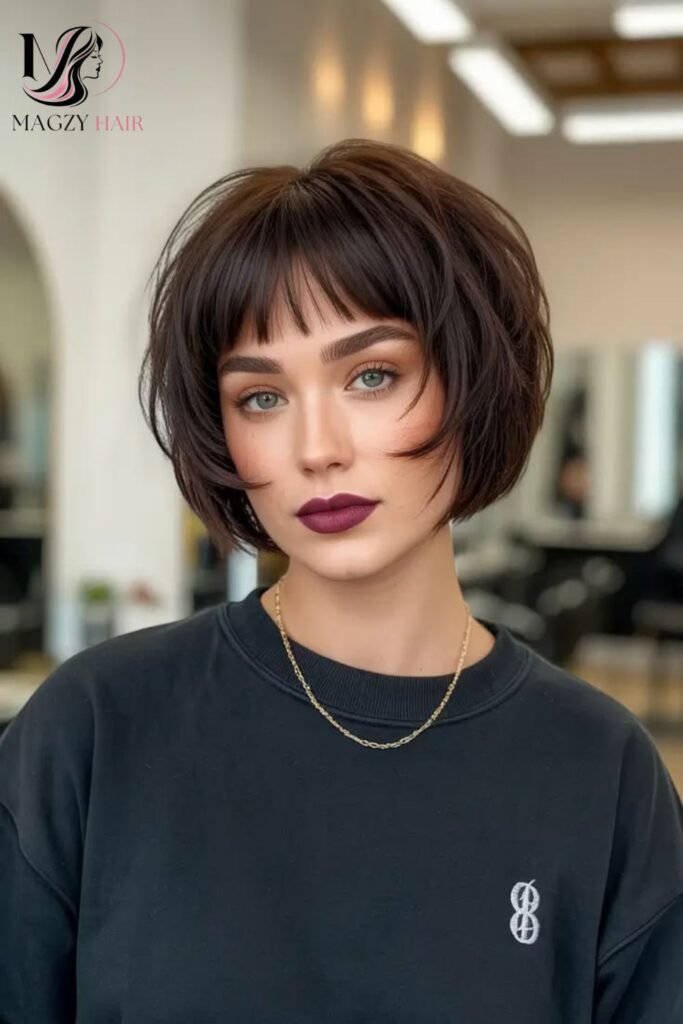
Adding bangs to a short bob introduces an additional consideration within short hairstyles for thick hair, since bangs on this hair type generally need more aggressive thinning than they would on fine or medium density hair to avoid looking heavy or blocky against the forehead. This detail is worth discussing specifically and separately from the thinning approach used throughout the rest of the cut.
Curtain bangs tend to work particularly well for thick hair specifically, since the natural part and swept back styling helps distribute the bang’s density across a wider area rather than concentrating it in one dense, straight across section. This makes curtain bangs generally more forgiving and lower-maintenance for thick hair than a fully blunt fringe.
A helpful example: someone with thick hair who requests blunt, straight across bangs without discussing appropriate thinning might find the fringe looks considerably heavier and more difficult to style than the rest of the cut, creating an imbalanced overall silhouette. Ensuring the bangs receive thinning proportional to their density helps create a more cohesive, well balanced result.
Styling thick bangs generally requires less volumizing product and more focus on control, often benefiting from a cool air finish after blow drying to help set the shape without adding unwanted additional volume to this already dense section.
Short Hairstyles for Thick Hair by Face Shape
Face shape continues to matter significantly when choosing among short hairstyles for thick hair, though the added density means certain considerations become even more important than they might be for finer hair textures. For round faces, cuts with height at the crown paired with appropriate thinning at the sides tend to elongate the face without adding further width from unmanaged volume.
Square faces generally benefit from short hairstyles for thick hair featuring soft, textured layers rather than sharp, blunt lines, since thick hair cut with harsh, geometric precision can sometimes emphasize a strong jawline more than intended. Rounded, well thinned layers help soften angular features considerably more effectively.
A helpful example: a woman with a round face and thick hair who receives a very short, uniformly rounded pixie without adequate crown height and side thinning might find the combination of her face shape and unmanaged hair density creates more width than intended. Addressing both factors together, rather than treating face shape and hair density as separate considerations, produces considerably more flattering results.
Oval faces generally have the most flexibility among short hairstyles for thick hair, though even oval faces benefit from proper thinning to ensure the hair’s natural density doesn’t overwhelm an otherwise well suited cut.
Color Techniques That Enhance Short Hairstyles for Thick Hair
Color placement plays a meaningful role in how short hairstyles for thick hair read visually, since strategic color can help create the appearance of movement and reduced bulk that cutting technique alone sometimes can’t fully achieve. Soft, dimensional highlights placed throughout the layers can enhance a cut’s texture and break up thick hair’s naturally solid, dense appearance.
Deeper, dimensional lowlights placed strategically beneath the surface layers can also help create the illusion of reduced density in certain sections, adding visual depth that flat, single process color doesn’t provide. This technique works particularly well on thick hair specifically, since the density means there’s considerable surface area for dimensional color to show through the cut’s movement.
A helpful example: short hairstyles for thick hair styled with flat, single process color often look noticeably more solid and heavy than the identical cut finished with strategic highlighting or lowlighting, since the color simply reveals and enhances the movement already built into the thinning and layering technique.
For those with predominantly gray, thick hair, purple or silver toning treatments help maintain bright, clear color while the underlying cutting technique manages the hair’s natural density and texture simultaneously.
Product Routine for Managing Thick Hair at Shorter Lengths
Product selection genuinely differs for short hairstyles for thick hair compared to finer textures, since this hair type rarely benefits from volumizing formulas that most short haircut guides commonly recommend. Instead, lightweight smoothing serums and anti frizz creams tend to serve thick hair considerably better, helping control and define the cut’s shape without adding unnecessary additional bulk.
A leave in conditioner or lightweight styling cream applied to damp hair before blow drying helps manage frizz and flyaways specifically common to thick hair textures, while avoiding heavier products that can weigh down the cut in some areas while doing little to control others, creating an uneven overall finish.
A helpful example: someone with thick hair who continues using volumizing mousse formulated for fine hair, simply because it’s a familiar product from before their shorter cut, might find their short hairstyle looks considerably bulkier than necessary. Switching to products specifically formulated for thick or coarse hair textures typically produces noticeably better, more controlled results.
Weekly deep conditioning also remains valuable for short hairstyles for thick hair, since this texture, particularly when coarse or curly, can be prone to dryness despite its density, a detail worth maintaining regardless of the shorter overall length.
Styling Tips for Short Hairstyles on Thick Hair
Effective styling for short hairstyles for thick hair generally focuses on control and definition rather than adding volume, a distinct departure from styling advice commonly given for finer hair textures. Blow drying with a paddle brush, rather than a round brush, tends to work better for smoothing and controlling thick hair’s natural volume during the drying process.
A cool air finish after blow drying helps set the style and control frizz more effectively than finishing on hot air alone, a technique particularly valuable for thick hair specifically, since this texture tends to hold heat styled shapes less predictably than finer hair without this additional setting step.
A helpful example: someone with thick hair who blow dries using techniques designed to maximize volume, borrowed from advice intended for fine hair, often ends up with a considerably bulkier result than intended. Adjusting technique specifically toward smoothing and control, rather than volume building, typically produces better, more manageable results for this particular hair density.
Applying a lightweight smoothing serum to slightly damp hair before blow drying, rather than to fully dry hair afterward, also tends to produce a smoother, more controlled finish for short hairstyles for thick hair specifically.
Common Mistakes to Avoid With Short Hairstyles for Thick Hair
One of the most frequent mistakes is choosing a stylist without discussing thick hair’s specific thinning needs, resulting in a cut that looks fine immediately after the appointment but becomes increasingly bulky and difficult to style as the hair settles over the following days. Explicitly discussing hair density and requesting appropriate internal thinning helps avoid this common issue.
Another common error involves using volumizing products designed for fine hair, since thick hair rarely needs this kind of additional support and often ends up looking considerably bulkier as a result. Choosing smoothing, control focused products specifically formulated for thick or coarse textures tends to produce noticeably better results for short hairstyles for thick hair.
Skipping regular trims is a mistake with particularly visible consequences for this hair type, since thick hair can grow out of a precisely thinned shape more noticeably than finer hair, gradually looking bulkier again as new growth adds back density the original cut carefully removed. Trims every 6–8 weeks help maintain the intended shape.
Finally, assuming all short hairstyles work identically regardless of hair density is a mistake worth avoiding broadly, since a style that looks effortlessly voluminous on fine hair might look considerably different, and require entirely different thinning technique, when applied to genuinely thick hair.
Maintaining Short Hairstyles for Thick Hair Between Salon Visits
Maintaining the intended shape of short hairstyles for thick hair between salon visits requires somewhat more attention than finer hair typically demands, since thick hair’s faster growing appearance of added bulk means the cut’s precise thinning can become less effective more quickly than it might with lower density hair.
Regular use of the lightweight, control focused products discussed throughout this guide helps extend how polished the cut looks between appointments, while occasional at home trimming of obviously overgrown sections, done carefully and minimally, can help maintain shape without requiring more frequent professional visits than necessary.
A helpful example: someone with thick hair who notices their short cut beginning to look bulkier around the six week mark, before their next scheduled appointment, might benefit from a quick, professional “shape up” trim rather than waiting the full interval, since thick hair’s growth pattern can visibly affect the cut’s silhouette somewhat faster than finer textures typically require.
Building a consistent trim schedule specifically suited to how quickly your particular thick hair affects the cut’s shape, rather than following a generic recommendation, helps ensure short hairstyles for thick hair continue looking intentional throughout the full period between salon visits.
The Future of Short Hairstyles for Thick Hair
Short hairstyles for thick hair continue to benefit from a broader industry shift toward texture specific cutting education, with more stylists pursuing specialized training in thinning and cutting techniques genuinely suited to denser hair types rather than applying generic approaches originally developed with finer hair in mind.
Product innovation is also shaping the future of this category, with ongoing advances in lightweight, control focused formulas designed specifically to manage thick hair’s density without weighing it down or requiring the heavier, more traditional products this texture was historically pushed toward using.
There’s also growing recognition within the industry that thick hair deserves dedicated styling consideration rather than being treated as simply requiring “more” of whatever technique works for finer hair, a shift leading to more nuanced, texture specific consultations and recommendations for short hairstyles for thick hair specifically.
Looking ahead, personalized digital consultation tools, including AI based hair simulation technology that accounts for density alongside length and shape, are beginning to help clients with thick hair preview how different short cuts might genuinely behave on their specific texture before committing, reducing the trial and error historically associated with finding the right approach for this hair type.
Conclusion
Short hairstyles for thick hair can look genuinely sleek, voluminous, and easy to manage when the cutting technique specifically addresses this hair type’s density rather than treating it the same as finer textures. From layered bobs and textured pixies to shags and curly specific cuts, there’s a version suited to nearly every thick hair texture. If you’ve been considering going shorter, use these ideas as a starting point for your next conversation with a trusted stylist.
Ayesha Noor is the founder and lead writer behind Magzy Hair. With 4 years of experience researching hairstyles, hair care, and beauty trends, she enjoys helping readers discover styles that suit their unique personality and lifestyle.


