
Gray Hairstyles for Women Over 50: The Complete Guide to Cuts, Care, and Styling

Gray hairstyles for women over 50 deserve genuine styling attention rather than generic advice borrowed from cuts designed for pigmented hair. Gray and white hair behaves differently often coarser, sometimes drier, and reflecting light in a distinctive way that either enhances or undermines a haircut depending on how thoughtfully the cut and color are approached together. Done well, gray hair can look genuinely striking, dimensional, and intentional rather than simply “hair that hasn’t been colored.”
This guide goes beyond a basic photo roundup. It explains how gray hair’s specific texture should influence cutting technique, how to maintain brightness and prevent yellowing, and details most articles skip entirely like why certain haircuts specifically showcase gray hair’s natural shine while others make it look flat or dull. Whether you’re fully transitioned to gray or considering the change, this is the deeper, more practical guide to gray hairstyles for women over 50.
Why Gray Hairstyles for Women Over 50 Need Specific Consideration
Gray hairstyles for women over 50 benefit from a distinctly different approach than cuts designed around pigmented hair, largely because gray and white strands have genuinely different physical properties. Gray hair often has a coarser texture and a different growth pattern than the same person’s hair carried before graying, meaning cutting techniques that worked well previously may need real adjustment to continue producing flattering results.
This isn’t a limitation it’s simply a different starting point that, when understood properly, allows for genuinely striking results. Gray hair has a distinctive way of catching and reflecting light, often appearing almost metallic or luminous when properly cut and cared for, a quality that pigmented hair simply doesn’t replicate in the same way.
A helpful example: a woman transitioning into gray hair might find that her previous haircut, chosen for her hair’s earlier color and texture, no longer produces quite the same movement or shine it once did. Rather than assuming something has gone wrong, recognizing that gray hair genuinely behaves differently helps guide a more informed conversation with a stylist about adjusting the cut specifically for this new texture and color.
Beyond texture, this is also simply a good moment to reassess styling choices with fresh eyes, since many women find embracing gray coincides naturally with wanting a genuinely updated look rather than continuing with a style chosen for an entirely different hair color.
Read Next: https://magzyhair.com/dark-blonde-hair-color-ideas/
Layered Bob for Gray Hair: Movement and Shine
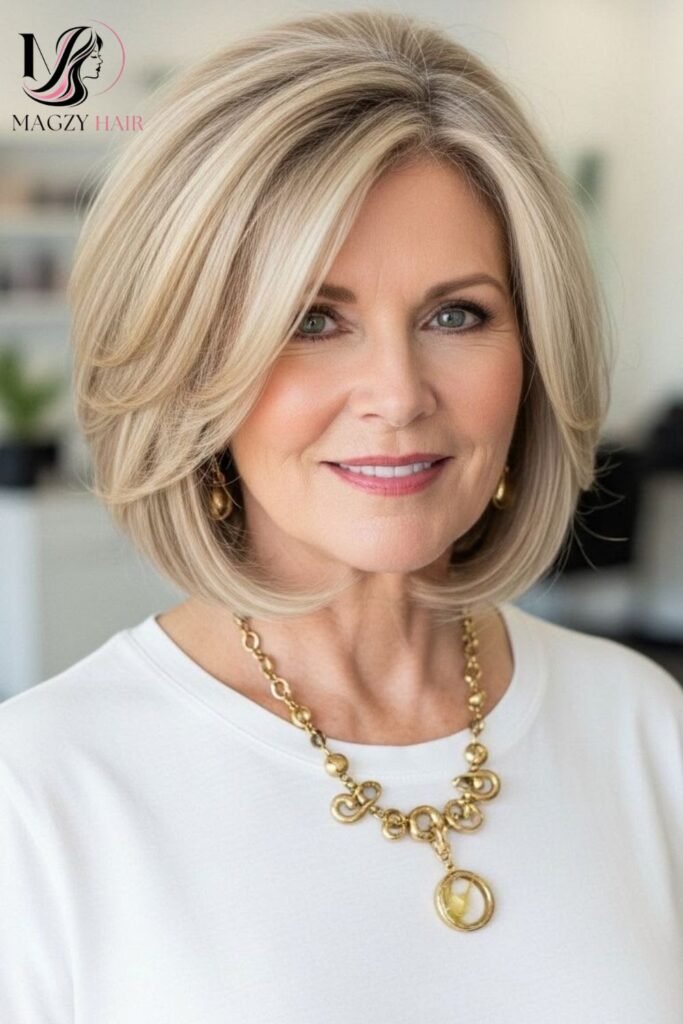
A layered bob remains one of the most consistently flattering gray hairstyles for women over 50, since strategic layering helps showcase gray hair’s natural shine and dimension considerably more effectively than a completely blunt, unlayered cut. The movement created by layering allows light to catch the hair from multiple angles, enhancing the distinctive luminosity gray hair often has.
This style also benefits from addressing gray hair’s frequently coarser texture directly, since appropriate thinning helps manage any added density or resistance to lying flat that can accompany this color transition. A stylist familiar with gray hair specifically tends to adjust layering technique accordingly, rather than applying identical methods used for pigmented hair.
A helpful example: a woman with fully gray, somewhat coarse hair who receives a bob without adjusted layering for her hair’s current texture might find the cut looks considerably flatter or less dynamic than the same style would on finer, pigmented hair. A stylist who specifically accounts for gray hair’s texture when layering typically produces noticeably better movement and shine.
Layered bobs among gray hairstyles for women over 50 also tend to require less daily styling time than longer alternatives, a genuinely practical benefit alongside the style’s ability to showcase gray hair’s natural characteristics effectively.
Pixie Cuts That Showcase Gray Hair’s Natural Shine
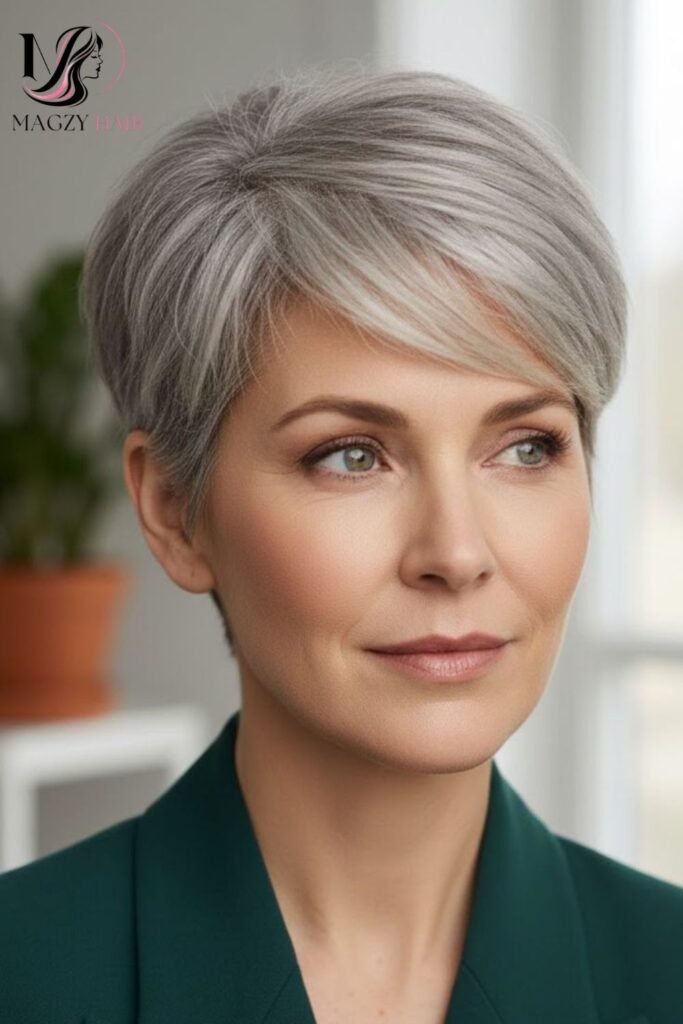
Pixie cuts represent one of the most striking options among gray hairstyles for women over 50, since this shorter length concentrates gray hair’s distinctive shine and texture into a considerably more visible, dramatic silhouette than longer styles typically achieve. Many women find fully gray or white pixies read as considerably more editorial and intentional than the same color worn at greater length.
This cut requires precise, thoughtful texturizing specifically suited to gray hair’s texture, which can range from finer than the person’s previous hair to noticeably coarser, depending on individual genetics. A well executed pixie relies on strategic layering around the crown, adjusted for whichever texture change has actually occurred, to create volume and movement.
A helpful example: a woman with predominantly gray or white hair who has always assumed a pixie would look severe or aging might find the opposite genuinely true once properly executed, since this length showcases gray hair’s shine particularly well, often reading as strikingly modern and confident rather than the outdated association some people mistakenly hold about short gray hair.
Maintenance for a pixie among gray hairstyles for women over 50 generally requires trims every 4–6 weeks, a schedule worth weighing against the style’s undeniable visual impact and the genuine daily styling time it saves.
Shoulder Length Cuts for Versatile Gray Styling
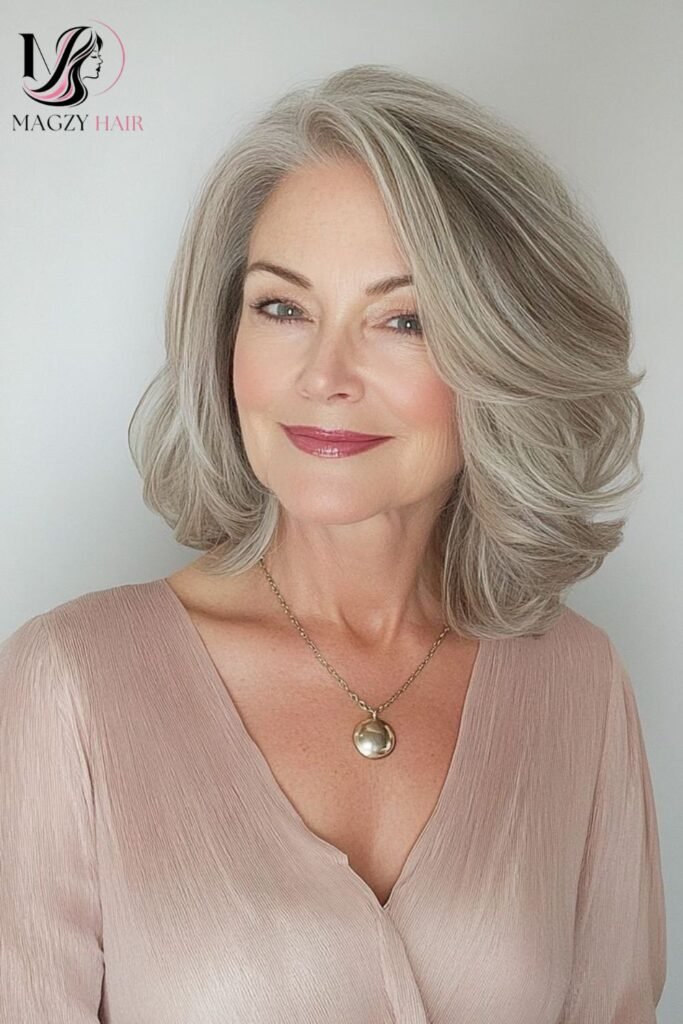
Shoulder length gray hairstyles for women over 50 offer a genuinely practical middle ground, providing enough length for versatile daily styling while remaining manageable enough to avoid the excess weight that can make gray hair’s often coarser texture feel increasingly difficult to control at greater lengths. This length also allows layering to create meaningful movement without relying entirely on maximum length for visual interest.
This length tends to be particularly forgiving for gray hair specifically, since there’s enough length for layers to showcase the color’s natural shine and dimension without the style depending solely on length to look intentional. Strategic layering at this length can effectively address any texture changes while still offering considerable versatility.
A helpful example: a woman noticing her gray hair has become somewhat drier or more resistant to smooth styling might find shoulder length hair, cut with appropriate layering, considerably more manageable day to day than either a much shorter cut, which can sometimes emphasize dryness at the ends, or much longer hair, which demands more extensive daily care and detangling.
Shoulder length gray hairstyles for women over 50 also tend to age gracefully between salon visits, since moderate regrowth doesn’t disrupt the overall shape as dramatically as more precisely calibrated shorter cuts might.
Curly and Textured Gray Hairstyles
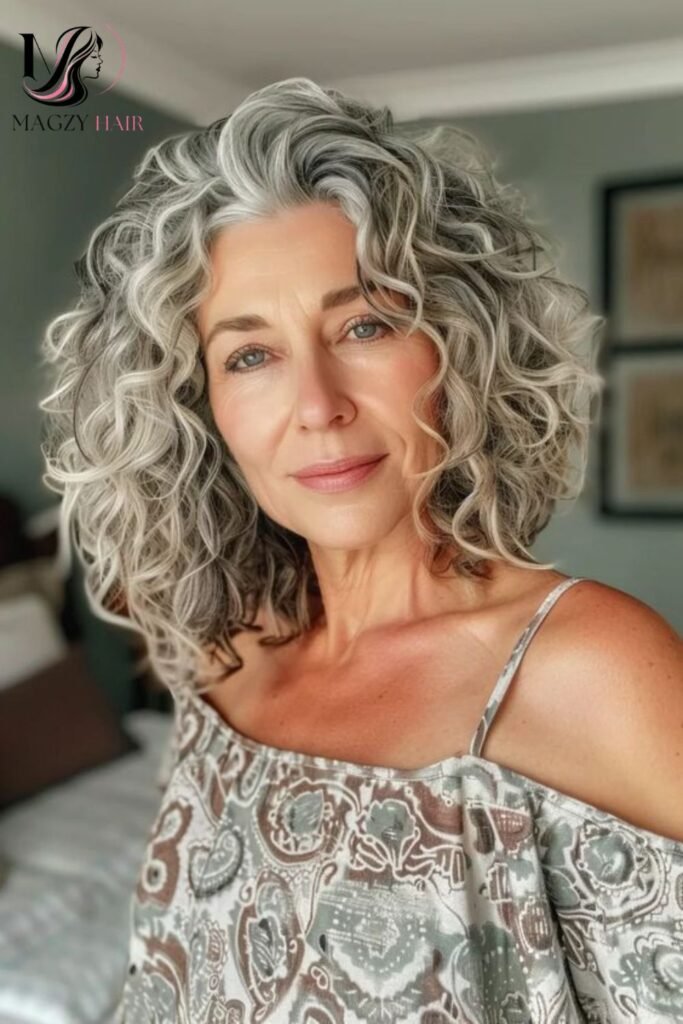
Curly and textured gray hairstyles for women over 50 benefit significantly from cutting techniques specifically designed around natural curl pattern, particularly since gray hair’s texture can shift alongside color, sometimes becoming coarser or drier than the same curls were previously. Dry cutting, where a stylist shapes hair in its natural, unstretched curl pattern, tends to produce more accurate, flattering results for this hair type specifically.
This is also a valuable time to reassess whether an existing curly hair care routine still fits current needs, since gray curls often require different moisture levels and product formulations than the same hair needed when it carried more pigment. Working with a stylist specifically experienced in both curly and gray hair helps ensure both the cut and care routine reflect where the hair actually is now.
A helpful example: a woman whose curls have become increasingly gray over recent years might find her previous curly haircut, designed for her hair’s earlier texture and moisture needs, no longer produces quite the same shape and definition it once did. Reassessing the cut and product routine specifically for her current gray, textured hair often produces noticeably better, more defined results.
Moisture becomes especially important for curly and textured gray hairstyles for women over 50 specifically, since gray hair in particular tends toward greater dryness, making regular deep conditioning genuinely essential rather than optional.
Gray Hairstyles for Women Over 50 With Bangs
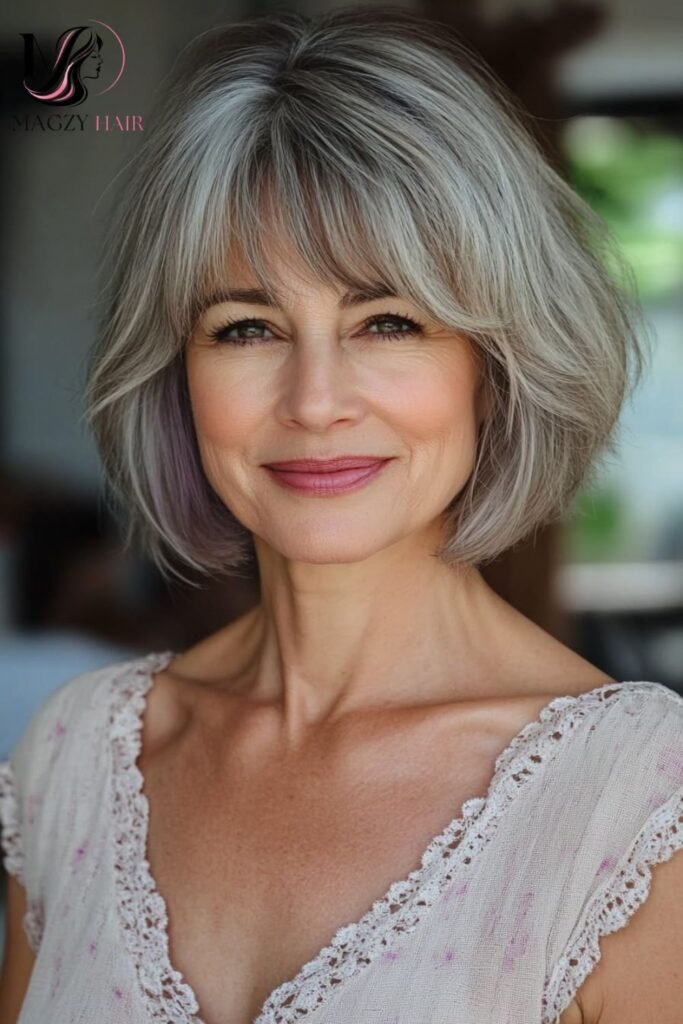
Adding bangs to gray hairstyles for women over 50 introduces a face framing element that pairs particularly well with the shine and texture gray hair often has, since bangs draw immediate attention toward the eyes while showcasing the hair’s distinctive color right at the forehead. Curtain bangs specifically tend to blend well with most gray hairstyles, integrating naturally into the surrounding cut.
Gray hair’s texture requires some consideration when planning bangs specifically, since coarser gray strands can sometimes be more resistant to lying flat than the same person’s hair was previously. A stylist familiar with gray hair typically adjusts cutting and thinning technique for the bangs specifically, accounting for this texture change.
A helpful example: a woman with coarse, gray bangs who finds them harder to style flat than her hair used to be might benefit from a slightly different cutting approach, such as more aggressive thinning specifically within the bang section, to help the fringe lie more smoothly despite the coarser underlying texture.
Maintenance for bangs within gray hairstyles for women over 50 typically requires more frequent trims than the rest of the cut, generally every 3–4 weeks, since fringe grows out and loses its intended shape considerably faster than longer sections.
Maintaining Bright, Clear Gray Tones
One of the most important aspects of gray hairstyles for women over 50 involves maintaining the color’s clarity and brightness, since gray and white hair is genuinely prone to developing a yellow or dull cast over time due to environmental exposure, product buildup, and mineral deposits from water. Purple or silver-toning shampoo becomes an essential part of the maintenance routine specifically for this reason.
Using a toning shampoo once or twice weekly helps neutralize unwanted warmth before it becomes visually obvious, though overuse can sometimes create an unintentional lavender or overly cool cast, meaning frequency should be adjusted based on individual results rather than assuming more is always better.
A helpful example: a woman with fully gray hair who skips toning treatments for several months might notice her hair gradually developing a dingy, yellowish tint, particularly if she lives in an area with hard water or uses heat styling frequently. Reintroducing regular toning shampoo typically restores the bright, clear gray tone relatively quickly once the routine resumes consistently.
A monthly clarifying or chelating shampoo also helps remove mineral buildup specifically, addressing a cause of dulling that standard toning shampoo alone doesn’t fully resolve for gray hairstyles for women over 50.
Gray Hairstyles for Women Over 50 for Round Faces
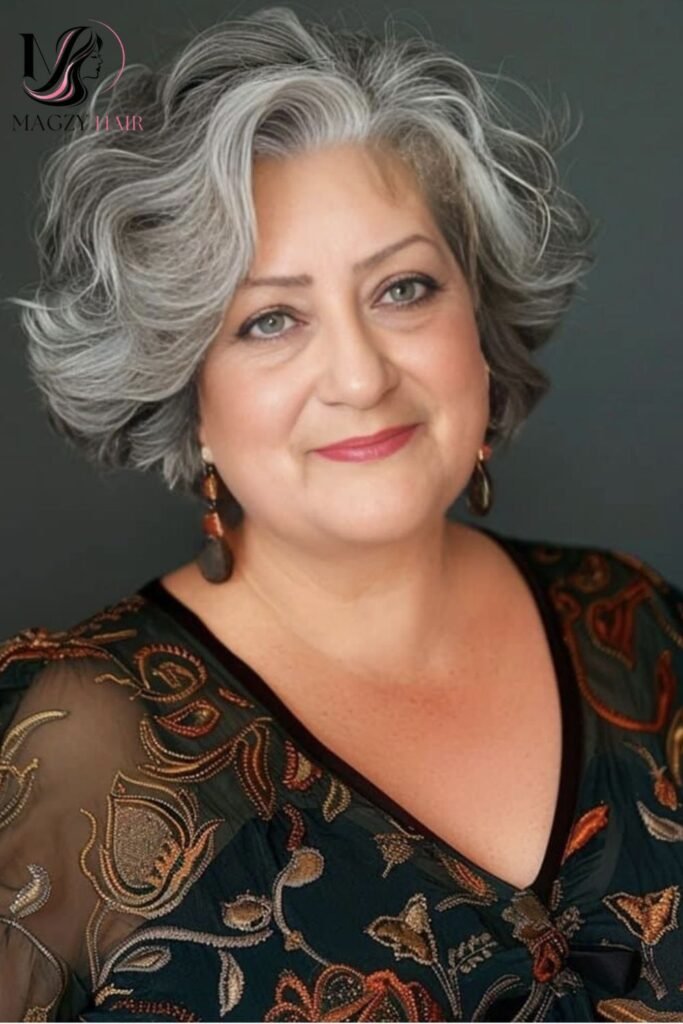
For round faces specifically, certain gray hairstyles for women over 50 work considerably better than others. Cuts with added height at the crown paired with longer, more angled front pieces tend to elongate the face, while very short, uniformly rounded cuts can sometimes emphasize width rather than balancing it.
Side swept bangs or face framing layers that graze diagonally rather than straight across also work particularly well for round faces within gray hairstyles for women over 50, since the diagonal line helps break up facial roundness more effectively than symmetrical, straight-across styling.
A helpful example: a woman with a round face and fully gray hair who requests a very short, evenly rounded pixie without additional crown height might find the cut emphasizes fullness in her face more than intended. Adjusting to include more height and side swept front pieces typically achieves a more balanced, elongating result while still showcasing gray hair’s natural shine effectively.
Consulting with a stylist about specific round-face priorities, rather than requesting a style based on a photo alone, leads to considerably more personalized recommendations tailored to individual facial proportions alongside gray hair’s specific texture considerations.
Gray Hairstyles for Women Over 50 for Square Faces
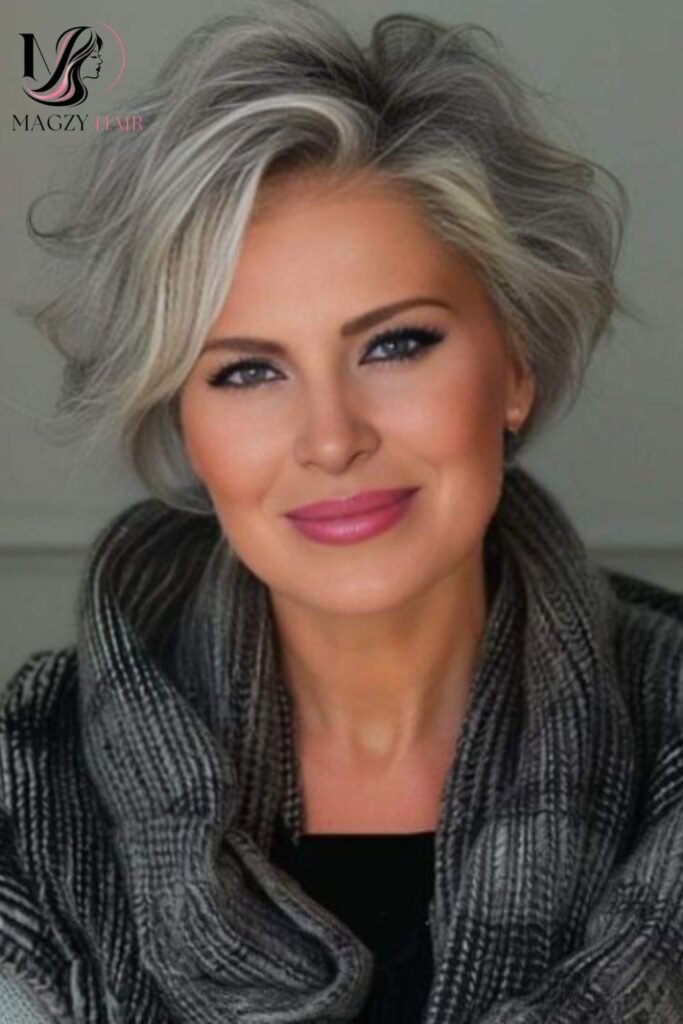
Square faces, characterized by a stronger, more defined jawline, generally benefit from gray hairstyles for women over 50 featuring soft, rounded layers rather than sharp, geometric lines, since gentle waves or rounded ends help soften a strong jaw regardless of hair color or texture considerations.
Longer, side swept layers that fall diagonally across the face also work particularly well for square faces within this category, since the diagonal line helps break up strong, straight angles more effectively than symmetrical, straight across styling, a technique that remains reliable for this face shape at any hair color.
A helpful example: a woman with a strong jawline who previously wore a very sharp, blunt cut might find that transitioning to softer, more textured layers specifically as her hair grays not only continues to flatter her square face shape but also works better with gray hair’s often coarser, more voluminous natural texture than maintaining an identically sharp style would.
Textured, piece-y layers throughout gray hairstyles for women over 50 with square faces also help create visual softness through movement, working particularly well when combined with gray hair’s natural shine and dimension for a genuinely flattering overall effect.
Color Techniques That Complement Natural Gray
While many gray hairstyles for women over 50 involve fully embracing natural color without additional coloring, some women prefer adding subtle dimension through lowlights or highlights that complement rather than cover their gray. This approach can add depth and movement while still allowing the natural gray to remain the dominant, defining feature of the overall look.
Gray blending, sometimes called “grombre,” uses strategic lowlights and highlights to create a smoother, more gradual transition for those still growing out previous color into full gray, avoiding the stark demarcation line that can otherwise occur between gray roots and remaining colored length.
A helpful example: a woman still in the process of transitioning to full gray might work with a colorist to add soft, complementary lowlights throughout her hair, rather than either fully covering the gray or abruptly stopping all coloring at once. This blended approach tends to create a considerably more polished, intentional looking transition than either extreme.
For those already fully gray, subtle, translucent glosses in silver or platinum tones can enhance shine and clarity without adding actual pigment, a technique worth discussing with a colorist specifically experienced in gray hair.
Common Mistakes to Avoid With Gray Hairstyles
One frequent mistake is continuing with a cutting technique and product routine chosen for previous, pigmented hair without adjusting for gray hair’s genuinely different texture and needs. Gray hair often requires different thinning approaches and considerably more moisture-focused products than the same hair needed before graying began.
Neglecting toning treatments is another common issue, since skipping purple or silver shampoo for extended periods often allows unwanted yellow or dull tones to develop gradually, undermining the bright, clear appearance that makes gray hairstyles for women over 50 look genuinely intentional rather than simply undyed.
Choosing a haircut based purely on a trend photo without considering gray hair’s specific texture and how it interacts with light differently than pigmented hair is another frequently repeated mistake. A cut that looks stunning on someone with fine, pigmented hair might require real adjustment to work equally well on coarser, gray hair.
Finally, using heavy, matte styling products can work directly against gray hair’s natural shine, one of its most distinctive and flattering qualities. Choosing lightweight, shine enhancing formulas specifically helps gray hairstyles for women over 50 showcase this natural luminosity rather than dulling it unintentionally.
Styling Products Specifically Suited to Gray Hair
Gray hair genuinely benefits from a somewhat different product routine than pigmented hair, largely due to its frequently coarser texture and greater tendency toward dryness. Moisture rich leave in conditioners and lightweight oils tend to serve gray hair particularly well, addressing dryness without weighing down the hair’s natural shine and movement.
Silver or purple toned styling products, beyond just toning shampoo, have also become increasingly available specifically for gray hair, including toning mousses and styling creams that help maintain brightness while providing hold and definition throughout daily styling.
A helpful example: a woman using the same styling cream she relied on for her previously pigmented hair might find it doesn’t address gray hair’s specific dryness and coarseness as effectively, resulting in a less polished, less shiny finish than she’s hoping for. Switching to products specifically formulated for gray or silver hair typically produces noticeably better results.
UV protectant sprays are also worth considering specifically for gray hairstyles for women over 50, since gray hair can be more susceptible to sun related discoloration and dulling than pigmented hair, making sun protection a genuinely relevant consideration for maintaining color clarity.
The Future of Gray Hairstyles for Women Over 50
Gray hairstyles for women over 50 continue to benefit from a broader cultural shift toward embracing natural gray as a deliberate, stylish choice rather than something to hide or apologize for. This shift has led to considerably more salons offering dedicated consultations and specialized services specifically for the gray hair transition and ongoing maintenance.
Product innovation is also shaping the future of this category, with more brands developing formulas specifically addressing gray hair’s unique texture, dryness tendencies, and toning needs, moving well beyond the historically limited “purple shampoo” options that once represented most of the specialized gray hair care available.
There’s also growing recognition within the hairstyling industry that gray hair deserves genuine cutting expertise rather than being treated identically to pigmented hair, leading more stylists to pursue specialized training specifically in cutting and styling techniques suited to gray hair’s distinctive properties.
Looking ahead, increased representation of women confidently wearing a full range of gray hairstyles in mainstream media and marketing is likely to continue expanding how this choice is understood and celebrated, helping ensure future style guides reflect a genuinely inspiring, accurate range of options for gray hairstyles for women over 50.
Conclusion
Gray hairstyles for women over 50 can look genuinely striking and intentional when the cut, color maintenance, and product routine all specifically account for gray hair’s distinctive texture and shine. From layered bobs and pixies to curly specific cuts and bright toning maintenance, there’s a flattering approach suited to nearly every gray hair texture. If you’ve been considering embracing your gray, use these ideas as a starting point for your next conversation with a trusted stylist.
Ayesha Noor is the founder and lead writer behind Magzy Hair. With 4 years of experience researching hairstyles, hair care, and beauty trends, she enjoys helping readers discover styles that suit their unique personality and lifestyle.


