
Short Layered Haircuts for Thick Hair: The Complete Guide to Cut, Texture, and Maintenance

Short layered haircuts for thick hair remain one of the most consistently requested styling services precisely because layering already solves thick hair’s most common frustration excess bulk before any specific length or shape decision is even made. Unlike thin hair, which often needs volume added, thick hair typically needs weight removed strategically, which explains why layering has stayed a reliable technique across years of shifting short hair trends.
This guide goes beyond a simple gallery of short layered haircuts for thick hair. It explains how hair density, natural texture, and even head shape should influence layer placement and cutting technique, along with details most articles skip entirely like why certain layering patterns that work beautifully on medium thickness hair can look choppy or uneven on very thick strands, and why thick hair needs different thinning consideration than fine or medium hair. Whether you’re cutting thick hair short for the first time or refining a style you already maintain, this is the deeper, more practical guide.
Why Short Layered Haircuts for Thick Hair Need Density Specific Planning
Short layered haircuts for thick hair require more density specific planning than the same cut applied to fine or medium hair, largely because thick hair carries considerably more weight per strand and per section, meaning layers need to be placed more strategically to actually reduce bulk rather than simply rearranging it. A layering pattern that looks perfectly light on medium density hair can still appear heavy and triangular on very thick hair without adjustment.
This distinction matters because it directly affects which specific cutting techniques genuinely remove weight versus which ones just redistribute it across the head. Point cutting and slide cutting tend to soften thick hair’s natural density more effectively than blunt layering alone, while heavily blunt cut layers can sometimes leave thick hair looking bottom heavy despite the layering itself.
A helpful example: someone with very thick hair who requests a layering pattern designed for medium density hair might find the cut still looks bulky at the ends, since the technique didn’t account for the sheer volume of hair present. Adjusting the cutting method specifically for thick density, rather than assuming the same layering approach works across all hair types, produces a considerably more polished, manageable result.
Because thick hair also holds shape differently at the crown versus the perimeter, short layered haircuts for thick hair often benefit from more concentrated layering near the top of the head, where weight tends to accumulate most noticeably.
Continue Reading: https://magzyhair.com/dark-brown-balayage-hair-color-ideas/
Classic Textured Bob with Internal Layers
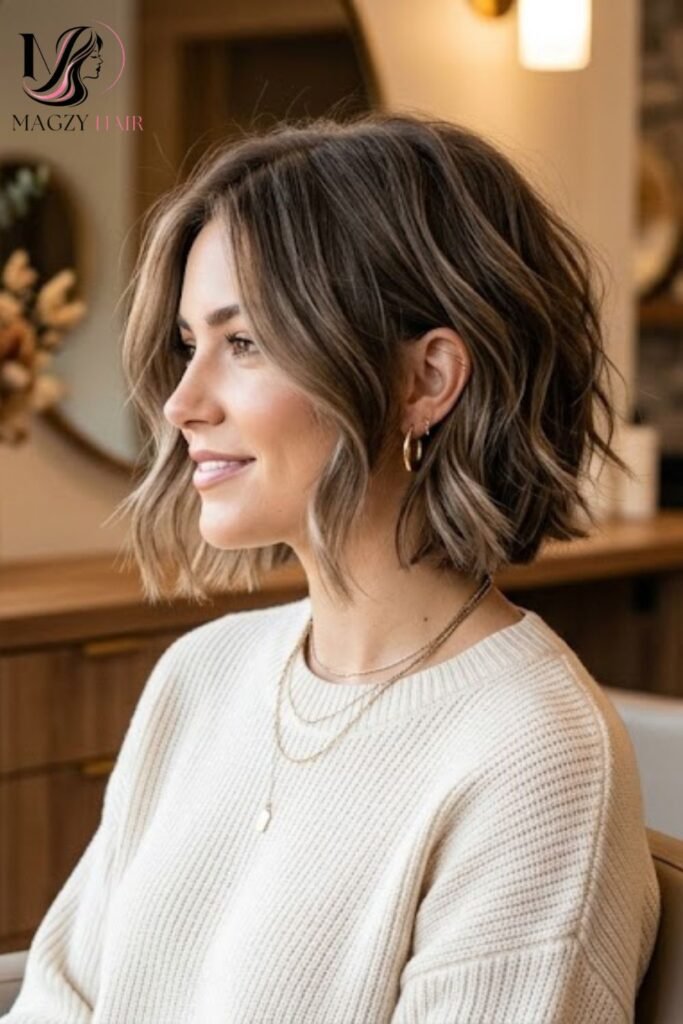
A textured bob with layering built into the internal structure, rather than only at the visible ends, remains one of the most timeless short layered haircuts for thick hair, offering a clean overall silhouette while still removing bulk from underneath. This particular combination has remained relevant for years because the internal layering keeps the outer shape polished without sacrificing thick hair’s need for weight removal.
Choosing the right internal layering depth matters considerably here, since layers cut too close to the surface can create unwanted separation or flyaways, while layers built deeper within the internal structure blend more seamlessly while still noticeably lightening the overall density. Stylists typically recommend starting the internal layers slightly below the crown for the most natural-looking result.
A helpful example: someone with thick hair who wants a bob but worries about it looking too heavy or triangular often finds that internal layering, rather than visible external layers, solves this concern while maintaining the bob’s clean, classic line. This nuance is a detail many general haircut guides overlook when discussing short layered haircuts for thick hair specifically.
A lightweight styling cream applied to damp hair tends to elevate this combination further, since it helps define the internal layers without weighing down thick hair’s natural body.
Short Shag with Heavy Layering Throughout
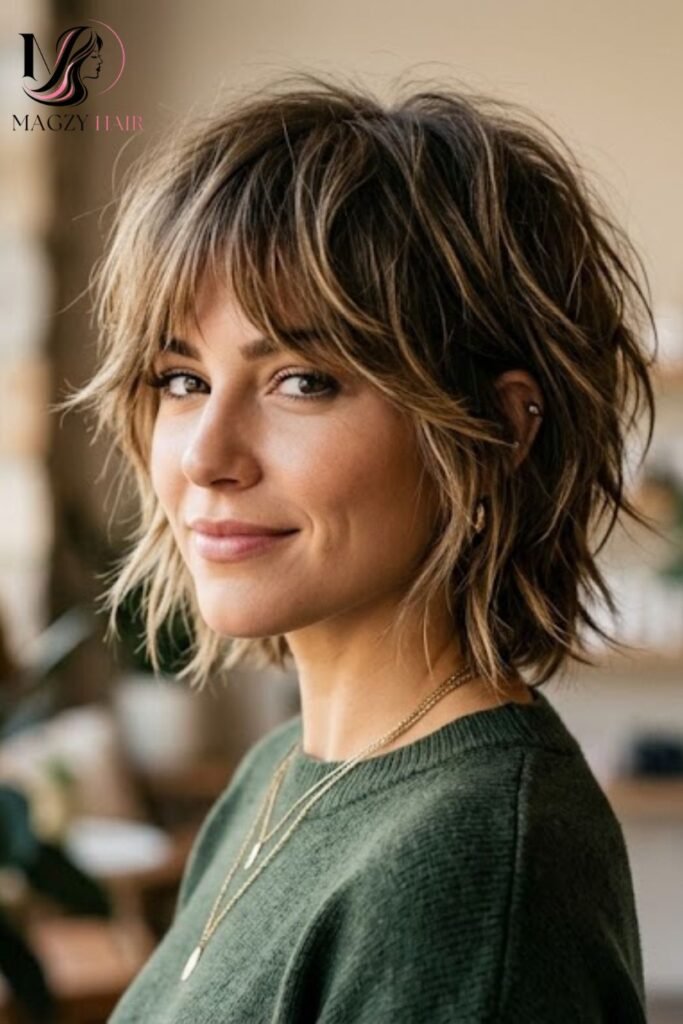
The shag haircut, built almost entirely around choppy, heavy layering from root to end, creates one of the most effective short layered haircuts for thick hair specifically because the technique was originally developed to manage exactly this kind of density and volume. This particular style relies on layers cut at varying lengths throughout the head rather than a single, uniform layering pattern.
This particular approach tends to work especially well on hair with natural waves or texture, since the choppy layers enhance movement and separation that texture already provides, creating a lived in, effortless quality. Straight, thick hair can still carry a shag beautifully, though it typically requires more regular texturizing to maintain the same tousled effect.
A helpful example: someone with thick, straight hair who wants a shag’s signature movement often finds that adding a light texturizing spray or dry shampoo before styling helps mimic the piece y separation that naturally textured hair achieves more easily. This makes it one of the more adaptable short layered haircuts for thick hair, since it works across different natural texture types with slight styling adjustments.
Because shag layering is intentionally heavy, this cut typically requires touch ups every six to eight weeks to maintain its characteristic choppy shape as thick hair grows out.
Pixie Cut with Long, Textured Layers on Top
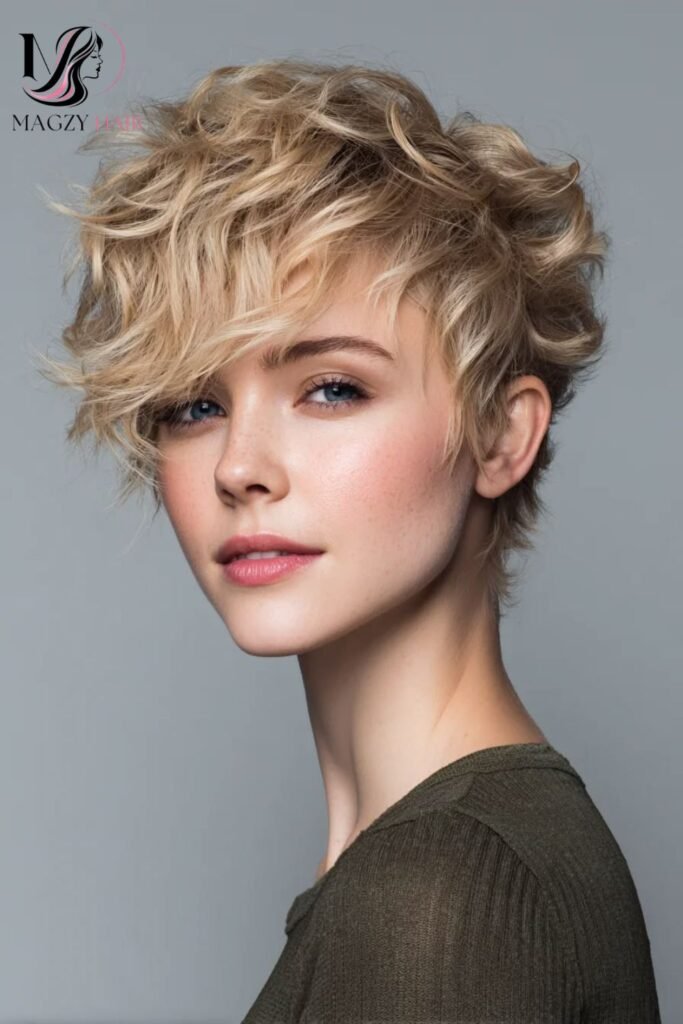
Pairing a very short pixie base with noticeably longer, textured layers concentrated at the crown creates a genuinely striking version of short layered haircuts for thick hair, offering dramatic contrast between the closely cropped sides and the more voluminous top section. This particular technique allows thick hair’s natural volume to be showcased rather than fought against.
This particular technique tends to work especially well for people wanting a bold, low maintenance style, since the short sides require minimal daily styling while the longer top layers offer flexibility to change the look with different styling products or techniques. It also tends to suit a wide range of face shapes, since stylists can adjust exactly how much length remains on top.
A helpful example: someone with thick hair who loves the pixie silhouette but worries about the top looking flat or overly cropped often finds that requesting longer layers specifically at the crown solves this concern, since thick hair naturally provides enough density to support noticeable height and texture on top. This is a popular, practical choice among short layered haircuts for thick hair for those wanting a bold change.
Using a matte styling paste rather than a shine based product tends to enhance the textured, piece-y quality this particular layering pattern depends on.
Layered Lob with Face Framing Pieces
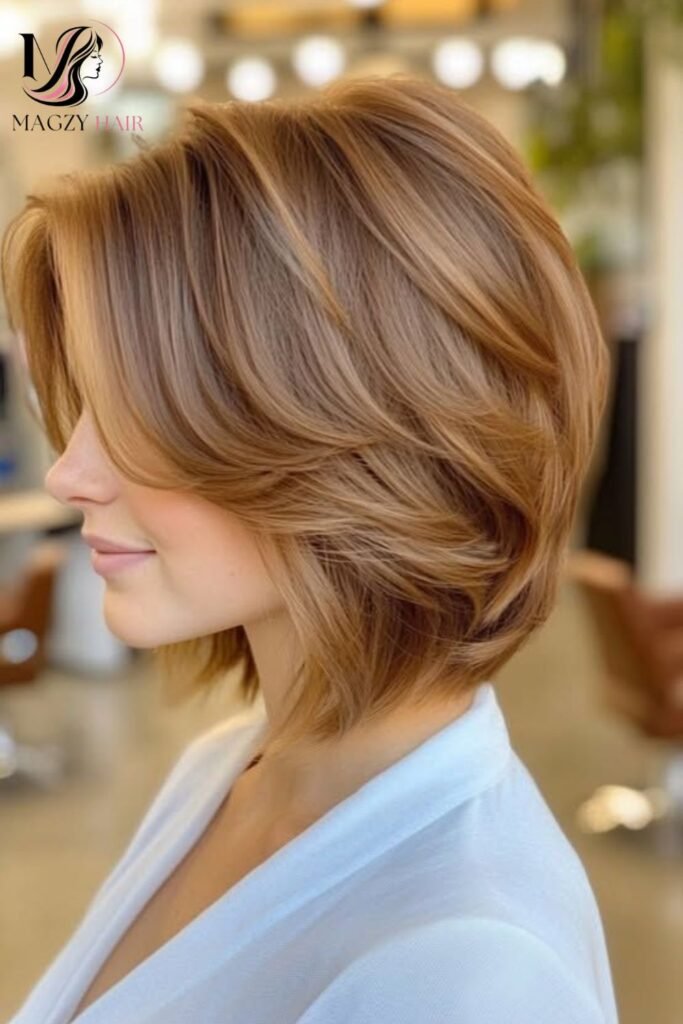
The long bob, or “lob,” updated with strategic layering and face framing pieces, brings a softer, more versatile option to short layered haircuts for thick hair, offering length just past the chin or shoulders while still meaningfully reducing thick hair’s natural bulk. This particular combination requires careful layer placement to avoid the length working against the weight removal goal.
This shade of length tends to look especially flattering across a wide range of face shapes, though the face framing pieces specifically should be tailored to individual features rather than applied uniformly. The layering along these framing sections tends to photograph beautifully and reads as polished across both casual and professional settings.
A helpful example: someone with thick hair who worries a shorter cut will feel too drastic often finds a layered lob offers a genuine middle ground, providing meaningful weight reduction and movement while retaining enough length to feel like a gentler transition. In practice, the face framing layers tend to look genuinely soft and dimensional rather than heavy, particularly when cut using a razor for softer, blended ends.
Because face framing layers see more daily handling and styling than the rest of the cut, regular trims every eight to ten weeks help maintain their shape and prevent them from growing out unevenly.
Curly Layered Cut for Thick, Textured Hair
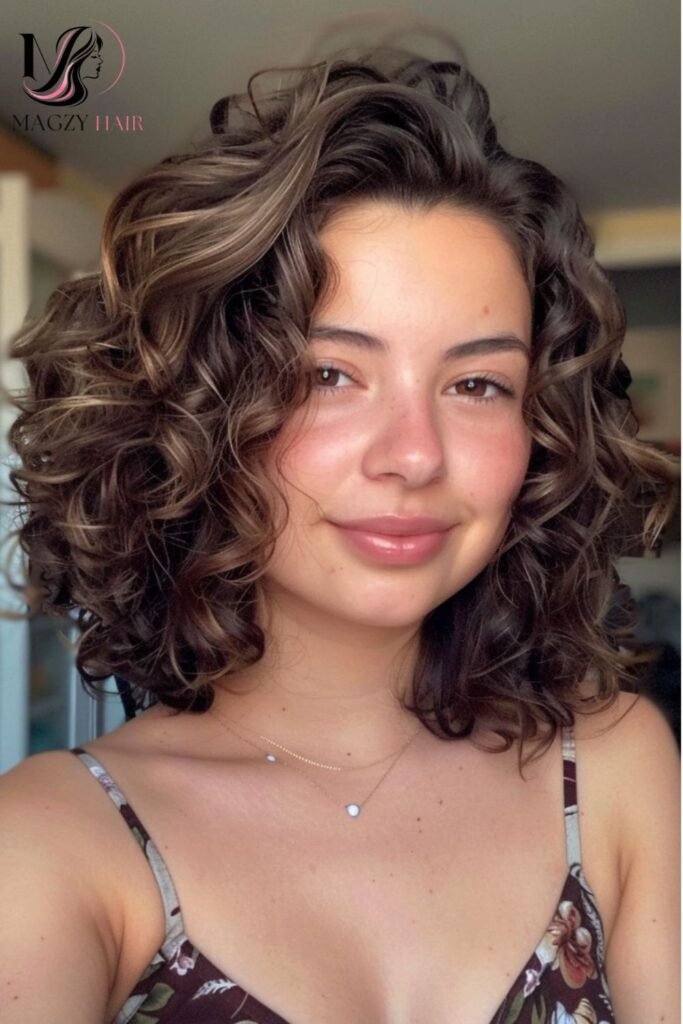
Layering specifically designed around natural curl pattern, rather than cut while hair is stretched straight, creates one of the more transformative short layered haircuts for thick hair with natural texture. This technique requires the stylist to cut curl by curl or in small sections while hair is dry, allowing each curl to spring back into its natural shape before further cutting.
This particular approach tends to work especially well for thick, tightly coiled or wavy hair specifically, since cutting while stretched can result in layers that look uneven or unexpectedly short once the curl pattern fully springs back after the appointment. Dry cutting techniques help stylists account for this shrinkage accurately.
A helpful example: someone with thick, curly hair who has previously had uneven layering from a stylist who cut the hair wet and straightened often finds that switching to a specialist experienced in dry curly cutting resolves years of frustration with layers that never quite look balanced. This makes it one of the more important short layered haircuts for thick hair considerations for anyone with significant natural texture.
Seeking out a stylist with specific curly cutting certification or training, rather than a general stylist, tends to produce considerably more consistent, flattering results for thick, textured hair specifically.
Short Layered Cut with a Side Swept Fringe
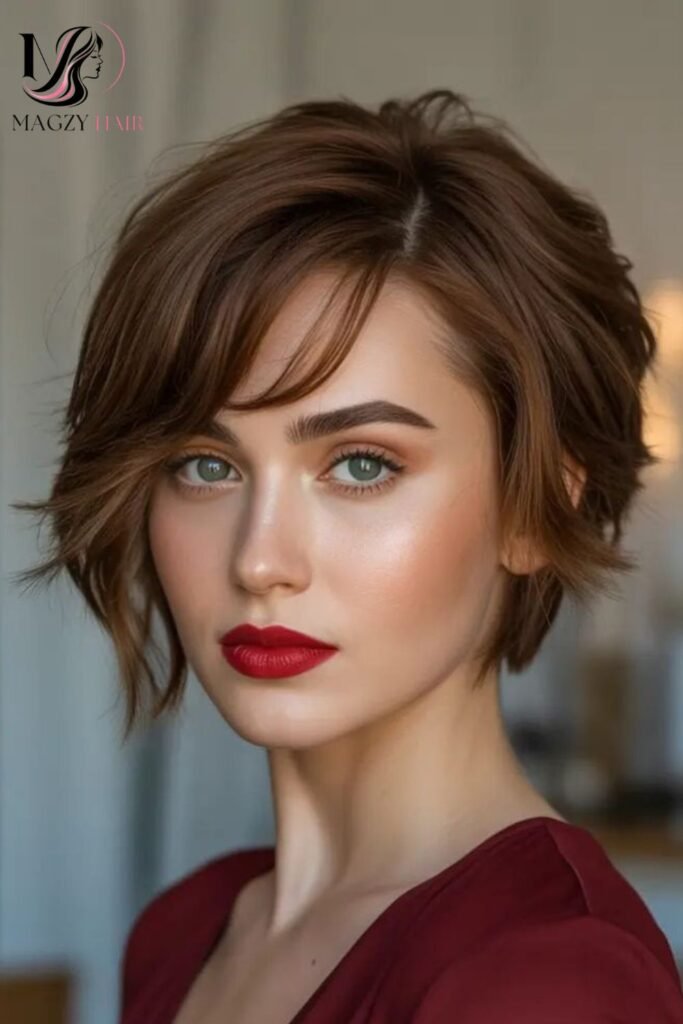
Adding a soft, side swept fringe to an otherwise classic short layered cut brings genuine versatility to short layered haircuts for thick hair, since the fringe can be styled multiple ways or grown out gradually without disrupting the overall layered structure underneath. This particular addition works well because thick hair typically has enough density to support a fringe without it looking thin or sparse.
This particular technique tends to work especially well for softening more angular face shapes, since the swept fringe creates a diagonal line that breaks up strong jaw or forehead angles. The layering underneath should be blended carefully into the fringe itself, rather than treated as a completely separate section, for a more cohesive overall result.
A helpful example: someone with thick hair and a more angular face shape often finds that adding a side swept fringe to their short layered cut softens their overall look considerably, without requiring dramatic changes to the rest of the haircut. This makes it a genuinely useful choice among short layered haircuts for thick hair for those wanting subtle facial softening.
Regular fringe trims every three to four weeks, separate from full haircut appointments, help maintain the swept shape as thick hair tends to grow and thicken the fringe area more quickly than finer hair types.
Blunt Cut Layers for Maximum Thickness Control
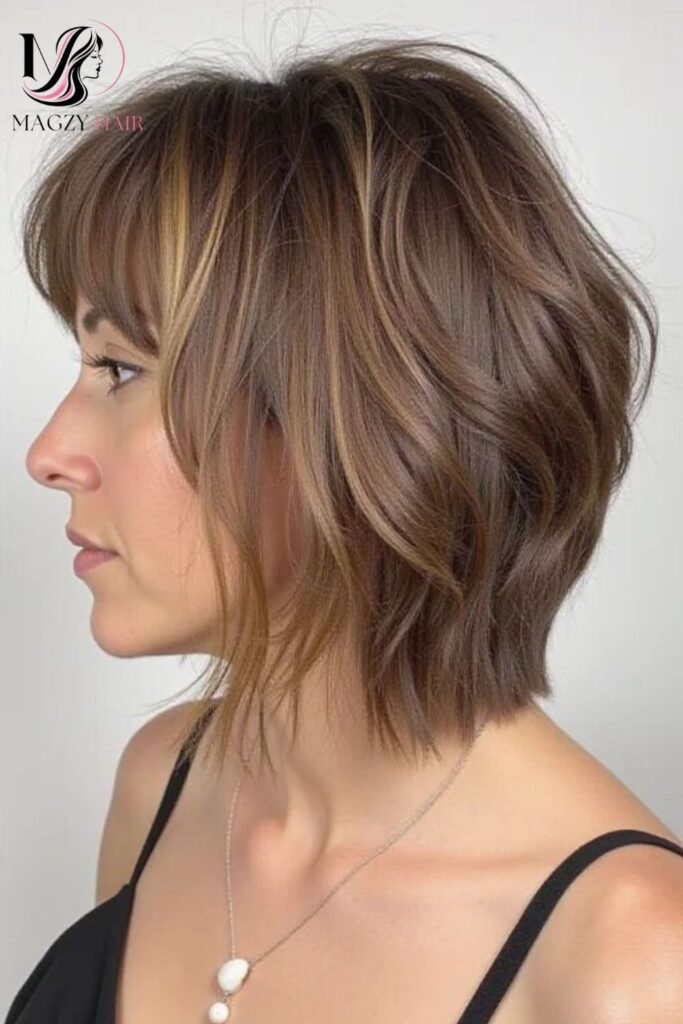
Using precisely blunt cut layers, rather than heavily textured or point cut ends, creates a genuinely controlled approach to short layered haircuts for thick hair, one that relies on strategic length variation rather than texturizing to manage volume. This technique works by cutting distinct length sections that stack to remove weight without creating the choppy, piece-y look more textured layering produces.
This particular approach tends to work especially well for people wanting a more polished, structured appearance rather than a tousled, effortless look, since the clean blunt lines within each layer read as more deliberate and refined. It also suits thick hair that tends to look messy or undefined with heavier texturizing techniques applied.
A helpful example: someone with thick hair who has tried heavily texturized layers in the past and found the result looked unintentionally messy often finds that blunt cut layering achieves the same weight reduction while maintaining a cleaner, more structured overall appearance. This makes it one of the more polished short layered haircuts for thick hair for those preferring definition over texture.
This technique also tends to require slightly less frequent touch ups than heavily textured layering, since blunt lines grow out more gracefully without immediately looking unkempt.
Short Layered Cut with Undercut Detailing
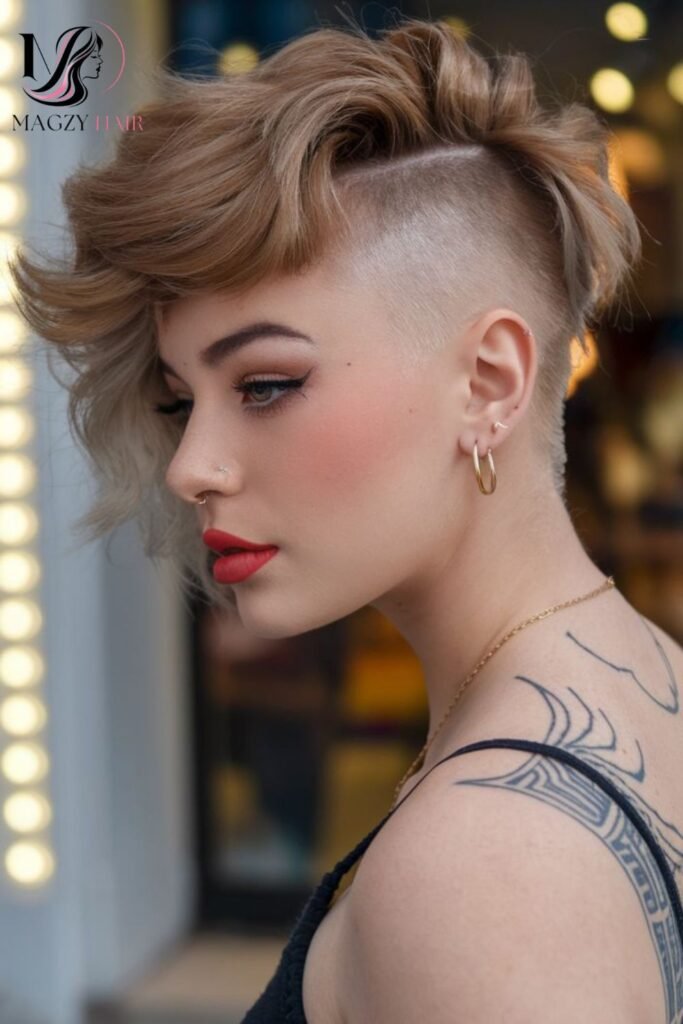
Adding a subtle or more dramatic undercut beneath the top layers introduces a genuinely modern edge to short layered haircuts for thick hair, using the removed weight underneath to make the remaining top layers appear lighter and more manageable by comparison. This technique physically removes bulk rather than simply blending it, making it especially effective for very dense hair.
This particular technique tends to work especially well for thick hair specifically, since the underlying density often means an undercut goes unnoticed in everyday styling while still meaningfully reducing overall weight and heat retention, a practical benefit hot climates or active lifestyles particularly appreciate.
A helpful example: someone with thick hair living in a warmer climate often finds that adding an undercut beneath their short layered style significantly reduces how hot and heavy their hair feels day to day, while the top layers still provide the polished, styled appearance visible to others. This makes it one of the more practical short layered haircuts for thick hair for climate or comfort driven cutting decisions.
Because undercuts require more frequent maintenance to keep the shorter underlying section neat, budgeting for touch ups every four to six weeks helps preserve the style’s intended contrast and shape.
Asymmetrical Layered Cut for Thick Hair
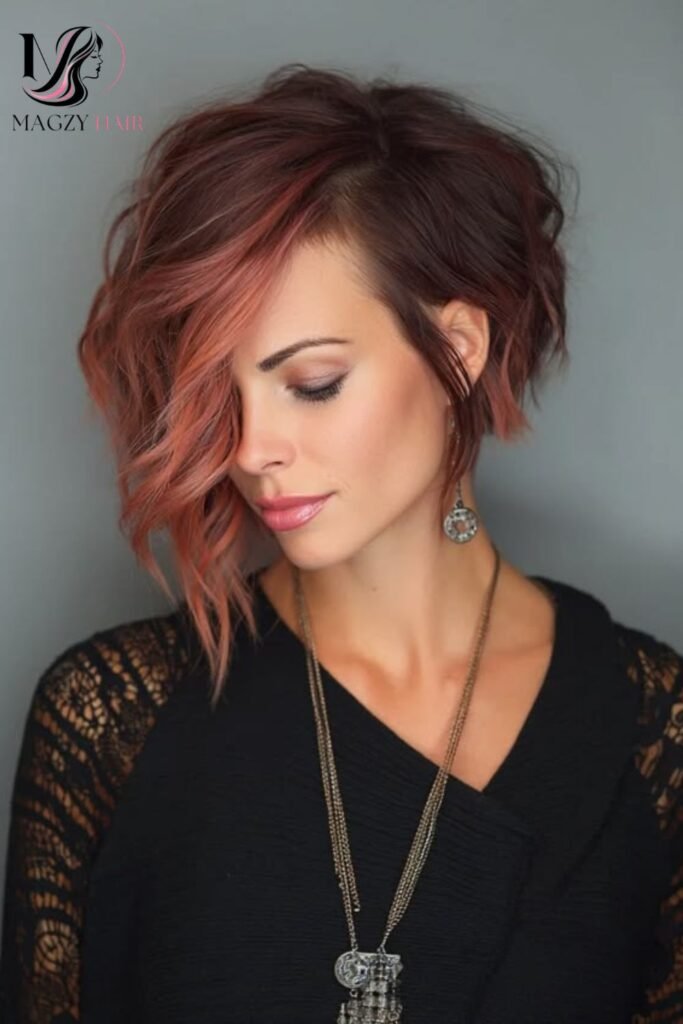
An intentionally asymmetrical layering pattern, with one side cut noticeably shorter or more heavily layered than the other, creates one of the more visually striking short layered haircuts for thick hair available today. This technique relies on deliberate imbalance rather than symmetry, offering a distinctly modern, editorial quality that stands out from more traditional layered cuts.
This particular technique tends to work especially well on thick hair specifically, since the density supports dramatic asymmetry without looking thin or unintentional on the shorter side, an effect that can sometimes look sparse or unbalanced on finer hair types attempting the same style.
A helpful example: someone with thick hair wanting a bold, statement making change without committing to an extremely short overall length often finds asymmetrical layering delivers genuine visual impact while retaining meaningful length on one side. This makes it one of the more accessible, high impact short layered haircuts for thick hair for those wanting drama without an all over drastic cut.
Because asymmetrical cuts show growth unevenly between the two sides, more frequent trims on the shorter side specifically help maintain the style’s intended proportion and contrast over time.
Choosing Short Layered Haircuts for Thick Hair by Face Shape
Face shape plays a meaningful role in how short layered haircuts for thick hair ultimately look, a detail generic style roundups often skip entirely. Those with oval face shapes tend to have the most flexibility, generally suiting nearly any layering pattern or length discussed in this guide without significant adjustment needed.
Those with rounder face shapes specifically tend to benefit from layering that adds height at the crown while avoiding excessive width at the sides, since a fuller, rounder layering pattern paired with an already round face can sometimes emphasize width rather than balancing it. Concentrating layers vertically rather than horizontally still provides meaningful weight reduction without adding unwanted roundness.
A helpful example: someone with a rounder face shape who chooses a heavily layered style with significant width at the cheekbone level might find the cut emphasizes roundness rather than balancing their features. Choosing layering that builds height and length instead still reduces thick hair’s bulk while maintaining better overall facial balance among short layered haircuts for thick hair specifically suited to rounder faces.
Discussing your specific face shape directly with your stylist, rather than choosing a layering pattern purely based on trend photos, helps ensure the final result genuinely flatters your individual features.
Common Mistakes to Avoid With Short Layered Haircuts for Thick Hair
One of the most frequent mistakes is requesting a layering pattern designed for fine or medium hair directly onto thick hair without adjusting the technique, often resulting in a cut that still looks heavy or triangular despite the layering itself. Working with a stylist experienced specifically in cutting thick hair helps avoid this common issue.
Another common error involves choosing an extremely short length without considering how thick hair behaves once cut shorter, since thick hair often appears to “spring up” or sit differently than expected once significant length is removed. Discussing expected outcomes with your stylist before cutting produces more consistently satisfying results among short layered haircuts for thick hair.
Neglecting proper thinning technique is another frequently repeated mistake, since simply cutting length without strategically removing weight can leave thick hair looking bulky despite a shorter overall length. Point cutting, slide cutting, or razor work specifically targeted at reducing density produces a more genuinely lightweight result.
Finally, using heavy styling products on already thick, layered hair undermines the movement and lightness the cut is meant to achieve. Choosing lightweight mousses or creams, rather than heavy pomades or waxes, helps maintain the layered cut’s intended texture and volume balance.
The Future of Short Layered Haircuts for Thick Hair
Short layered haircuts for thick hair continue to evolve alongside broader industry advances in cutting technique, with more stylists receiving specialized training in density specific layering rather than relying on generalized cutting knowledge applied across all hair thickness types.
There’s also a growing emphasis on personalized texture consultation, with more stylists specifically analyzing natural curl pattern, density, and growth direction before recommending a specific layering approach, reflecting broader recognition that thick hair genuinely benefits from customized planning rather than one size fits all cutting.
Product technology is advancing alongside this trend as well, with more brands developing lightweight, thick hair specific styling products designed to enhance movement and texture without adding unwanted weight to already dense, layered hair.
Looking ahead, AI based virtual haircut simulation tools are beginning to help people visualize how different layering patterns and lengths might actually look on their specific hair density and face shape before committing to a cut, potentially reducing the trial and error historically involved in finding the right layered style for thick hair.
Conclusion
Short layered haircuts for thick hair prove that this versatile approach genuinely solves the challenge of managing volume while still delivering style and movement. From a classic textured bob to a bold asymmetrical cut, there’s an option here suited to nearly every face shape and texture type. The key is choosing layering that genuinely works with your hair’s density and growth pattern. Ready to try one of these short layered haircuts for thick hair Bring this guide to your next salon appointment and start the conversation with your stylist.
Ayesha Noor is the founder and lead writer behind Magzy Hair. With 4 years of experience researching hairstyles, hair care, and beauty trends, she enjoys helping readers discover styles that suit their unique personality and lifestyle.


