Layered Haircuts for Long Hair: The Complete Guide to Shape, Color, and Styling

Layered haircuts for long hair remain one of the most consistently requested cutting techniques, and for good reason. Significant length carries genuine weight, and that weight naturally pulls hair flat and heavy the longer it grows, unless layering redistributes it strategically. Getting this right depends on more than simply asking for “layers” the specific technique, placement, and even the color work layered onto the cut all shape the final result considerably.
This guide goes beyond a simple gallery of layered haircuts for long hair. It explains how cutting technique should adapt to your hair’s natural fall, along with details most articles skip entirely like why certain layering styles pair better with specific color techniques than others, and why a cut that photographs beautifully styled one way can look entirely different once you actually wear it day to day. Whether you’re planning your first layered cut or refining one you already have, this is the deeper, more practical guide.
Why Layered Haircuts for Long Hair Deserve a Customized Approach
Layered haircuts for long hair genuinely benefit from customization rather than a one size fits all cutting formula, largely because hair behaves so differently once significant length and varying textures enter the equation. A layering technique that creates beautiful movement on straight, fine hair can look entirely different, sometimes too heavy, sometimes too sparse, once applied to thicker or more textured hair at the same length.
This distinction matters because it directly affects which specific layering approach will actually flatter your hair rather than simply following whatever technique happens to be trending. A stylist who asks detailed questions about your hair’s natural behavior, how it dries, where it naturally parts, how much body it holds, before cutting tends to produce considerably better long term results than one who applies a standard formula regardless of these individual factors.
A helpful example: someone who brings in a reference photo of long layers styled on naturally straight, fine hair, without mentioning their own hair is notably thicker and wavier, often ends up disappointed when their result doesn’t match the photo’s movement and shape. Discussing your hair’s actual natural behavior honestly, rather than assuming any layering technique translates identically across hair types, helps ensure layered haircuts for long hair genuinely suit your specific hair.
Because significant length also takes longer to grow out and correct if something doesn’t work, taking the time to discuss these details thoroughly before cutting proves particularly valuable for layered haircuts for long hair specifically.
Must Read: https://magzyhair.com/medium-length-layered-haircuts/
Long Layers With a U Shaped Perimeter
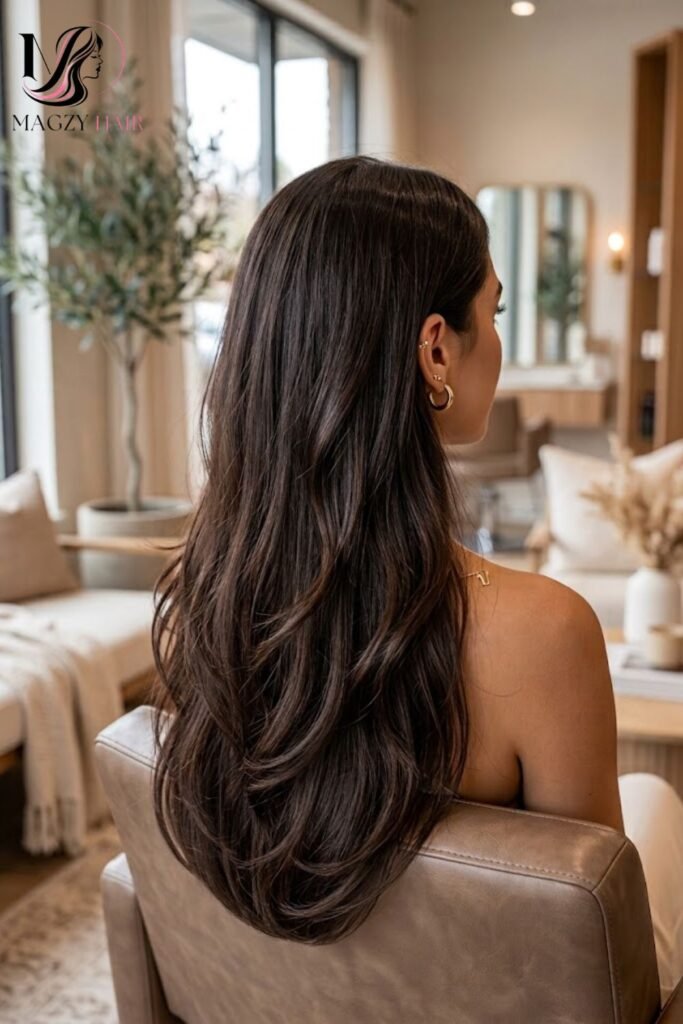
The U cut, featuring a gently rounded, curved perimeter rather than a straight across or sharply pointed one, creates one of the softer, more classically romantic layered haircuts for long hair. This rounded shape tends to read as gentler and more traditionally feminine than either a completely blunt cut or the more dramatic V cut’s sharp point.
This particular perimeter shape works especially well paired with softer, more blended layering throughout the rest of the length, since the U cut’s inherently gentle curve complements subtle movement better than choppy, graphic texturizing would, which can sometimes feel visually at odds with the perimeter’s soft, rounded quality.
A helpful example: someone drawn to long layered haircuts but unsure whether they want anything as structurally dramatic as a V cut might find the U cut offers a genuinely appealing middle ground, providing a deliberate, shaped perimeter without the sharper, more angular statement a deep V creates. This makes it accessible among layered haircuts for long hair for those wanting subtle structure rather than dramatic shaping.
Maintenance for the U cut requires attention to the rounded curve specifically, generally every 8–10 weeks, to prevent the shape from softening into something closer to a standard blunt perimeter as hair grows.
Long Layers With Balayage Placement
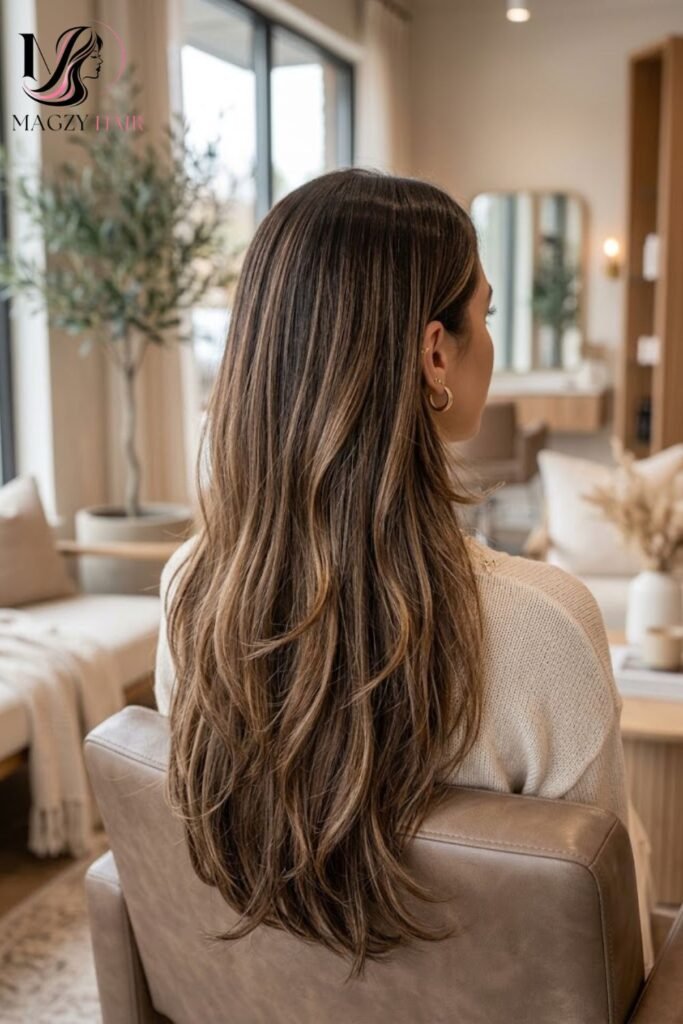
Pairing long layers with balayage introduces genuine dimension to layered haircuts for long hair, using hand painted color placement to enhance the movement the cutting technique already creates. Balayage’s graduated, root free application tends to complement layering particularly well, since both techniques rely on gradual transitions rather than sharp, defined lines.
Color placement matters considerably here, since balayage applied without consideration for where layers actually fall can land unpredictably once the cut settles into its natural shape. Colorists experienced with layered cuts typically place lighter pieces specifically along the layers’ outer edges, where they’ll catch light and emphasize the movement the cut was designed to create.
A helpful example: someone who receives balayage without discussing their layering pattern with the colorist might find the color doesn’t align particularly well with where their layers actually fall once styled, missing an opportunity to have the two techniques work together cohesively. Discussing your cut and color together, ideally with the same person handling both or with clear communication between separate stylists, produces a more intentional result among layered haircuts for long hair.
Maintenance for balayage on layered long hair generally allows for longer stretches between appointments, often 3–4 months, thanks to its inherently graduated, low maintenance regrowth pattern.
Soft Blunt Ended Long Layers
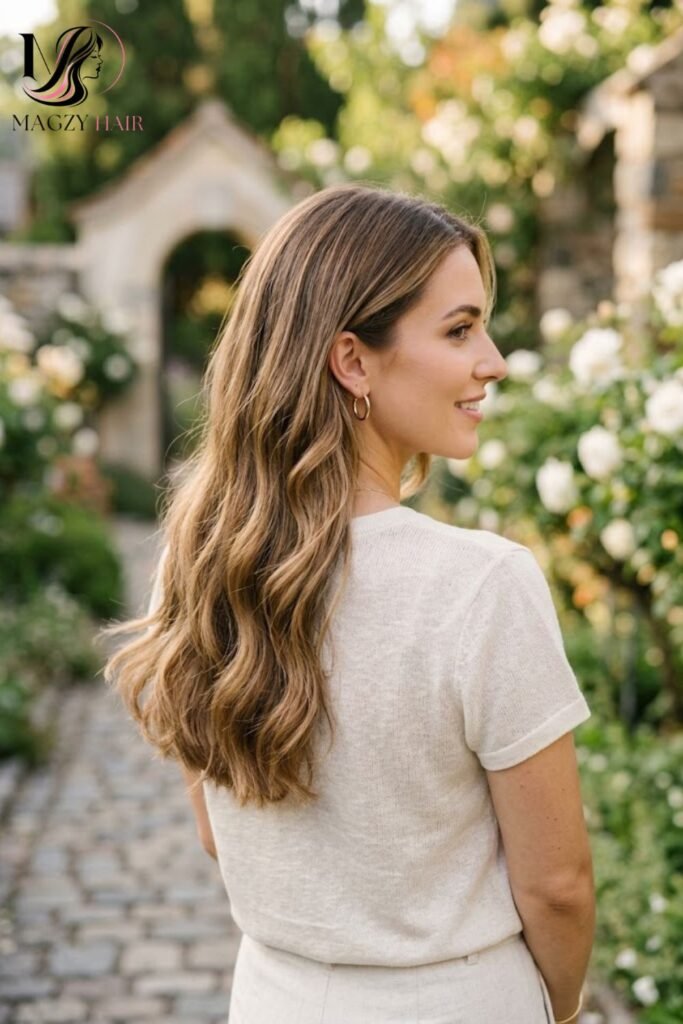
Not every layered cut needs to feel choppy or heavily texturized. Soft, blunt ended long layers maintain a cleaner, more polished perimeter while still incorporating movement higher up in the cut, creating one of the more elegant, refined layered haircuts for long hair available for those who prefer a cleaner overall look.
This approach works by concentrating layering primarily through the interior sections and around the face, while keeping the outermost perimeter relatively blunt and unbroken, striking a balance between movement and the polished, defined line a completely layered cut sometimes lacks.
A helpful example: someone who loves the volume and movement layered cuts provide but has always preferred the cleaner look of blunt ends might find this hybrid approach offers exactly this combination, delivering genuine lift and dimension without sacrificing a defined, polished perimeter. This makes it a genuinely versatile option among layered haircuts for long hair for those bridging both preferences.
This particular style also tends to photograph exceptionally well for formal occasions, since the clean perimeter reads as polished while the interior movement still provides visual interest and dimension.
Long Layers With a Deep Side Part
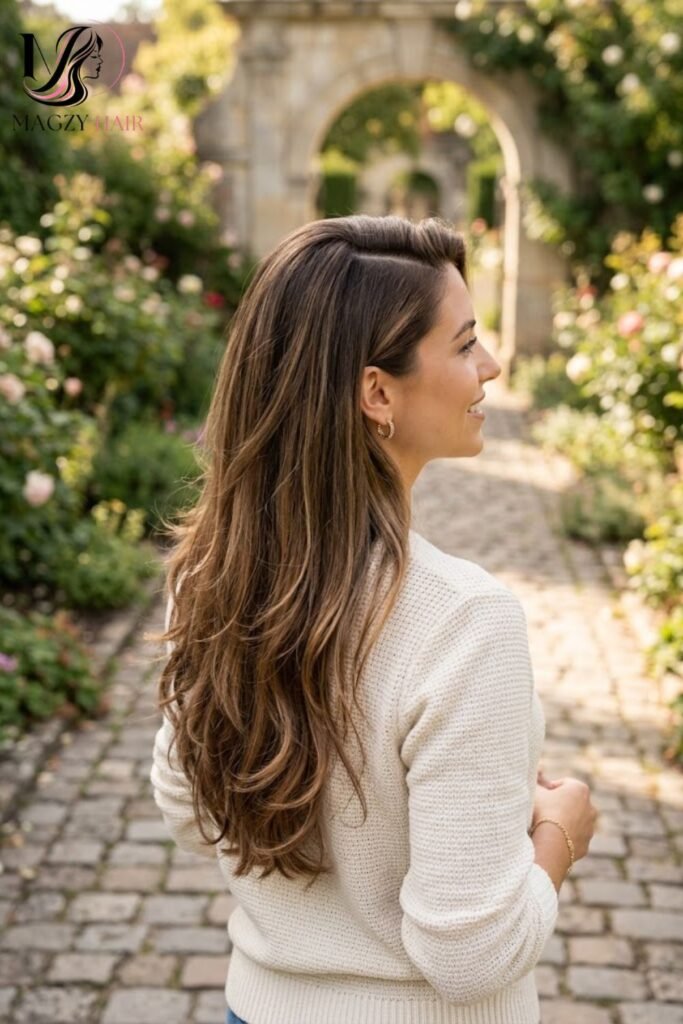
Introducing a deep side part to long layered hair changes the entire silhouette, creating asymmetry that a center part simply doesn’t offer. Among layered haircuts for long hair, this styling adjustment costs nothing beyond how you choose to part your hair, yet it meaningfully affects how the layers themselves fall and catch light.
This particular styling choice works especially well for round or square face shapes, since the deep side part introduces visual asymmetry that helps balance a fuller or more angular facial structure, an effect layers alone don’t always achieve regardless of how they’re cut.
A helpful example: someone with a naturally round face who has always worn a center part might find that simply shifting to a deep side part, without changing the haircut itself at all, creates a noticeably more flattering, elongated appearance. This is a genuinely low cost adjustment worth trying with existing layered haircuts for long hair before considering any actual cutting changes.
Maintaining a consistent deep side part does require slightly more intentional styling than a center part, since hair naturally tends to fall back toward its original growth pattern, though clipping the part in place while blow drying helps train the style to hold.
Long Layers With a Subtle Undercut
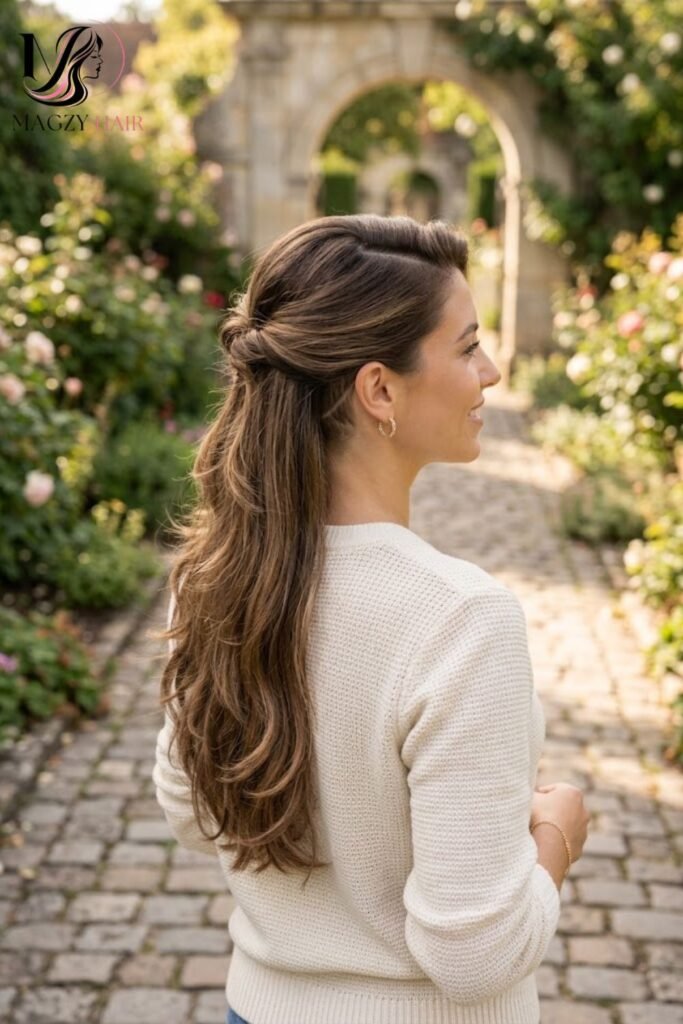
Pairing long layered hair with a subtle undercut, typically placed at the nape and hidden beneath the visible layers, addresses a genuinely practical concern among layered haircuts for long hair: managing bulk and weight for those with particularly thick, heavy hair.
This technique works by removing hair specifically underneath the visible layers, allowing the outer, longer sections to lay smoothly and naturally over the shorter, undercut portion beneath. This reduces overall weight and heat retention at the nape without compromising the length or silhouette visible from the outside when hair is worn down.
A helpful example: someone with thick, heavy long hair who has struggled with their layered cut feeling bulky or hot might find a subtle undercut resolves this issue directly, thinning the hair from underneath rather than through more visible, obvious layering throughout the top sections. This makes the style both more comfortable and easier to manage day to day among layered haircuts for long hair suited to thicker textures.
Maintenance for this style requires attention to the undercut section specifically, generally needing trims every 4–6 weeks to prevent it from growing out and adding back the bulk the technique was originally meant to remove.
Long Layers for Sleek Straight Styling
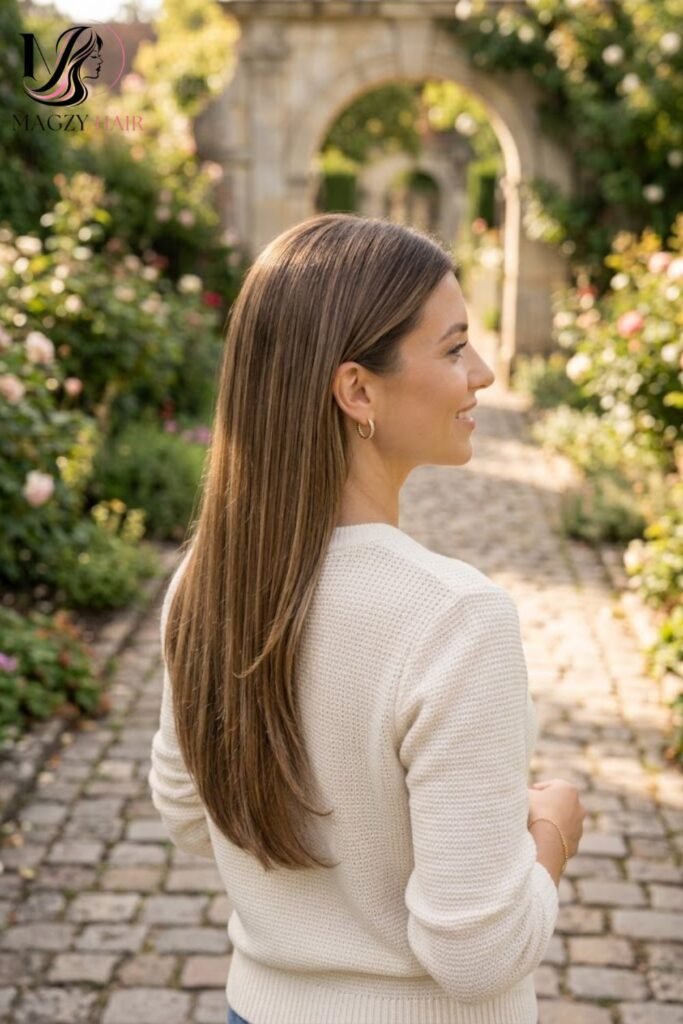
Layered haircuts for long hair styled sleek and straight showcase the layering’s structure with particular clarity, since there’s no wave or curl pattern disrupting how the eye follows the cut’s lines. This makes straight styling an excellent way to display precise, intentional layer placement, especially for cuts with more structured elements like a V cut or U cut perimeter.
Achieving this polished look well typically involves blow drying with a large round brush followed by a flat iron pass, creating smooth, defined movement that particularly flatters layered cuts, since the smooth surface maximizes how light catches and reflects off each individual layer.
A helpful example: someone with a long layered cut who only ever wears it in loose waves might be surprised at how differently the same cut reads once styled sleek and straight, often revealing structural details in the layering that texture had previously obscured. Trying both styling approaches helps you fully appreciate the versatility genuinely built into well executed layered haircuts for long hair.
Regular use of a lightweight, shine enhancing serum applied to the mid lengths and ends helps maintain the glossy, healthy appearance this particular styling approach depends on to look its best.
Long Layers With Root Boosting Crown Cutting
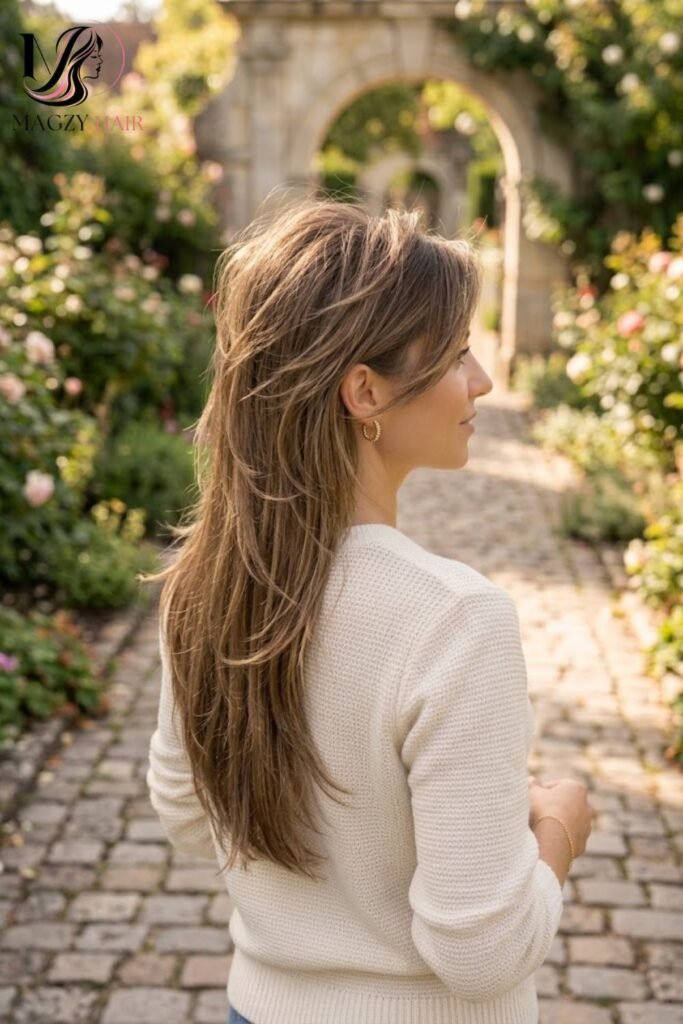
Concentrating shorter, more strategic layering specifically at the crown addresses a common concern among layered haircuts for long hair: flatness at the roots, particularly for those with finer hair or hair that has simply been weighed down by significant length over time.
This technique differs from all over layering by targeting volume precisely where it’s typically needed most, building structural lift through the cut itself rather than relying entirely on styling technique to recreate volume each morning through blow drying or product application alone.
A helpful example: someone whose long hair looks full immediately after a blowout but flattens within a few hours might find that root focused crown layering addresses this issue more permanently, since the cut itself builds in lift rather than requiring it to be recreated daily. This distinction matters significantly for anyone specifically seeking lower maintenance layered haircuts for long hair dealing with persistent root flatness.
Styling this cut typically involves blow drying with a round brush focused specifically at the roots, paired with a lightweight volumizing mousse, to maximize the structural lift the crown layering was designed to create.
Long Layers Styled Half Up for Versatility
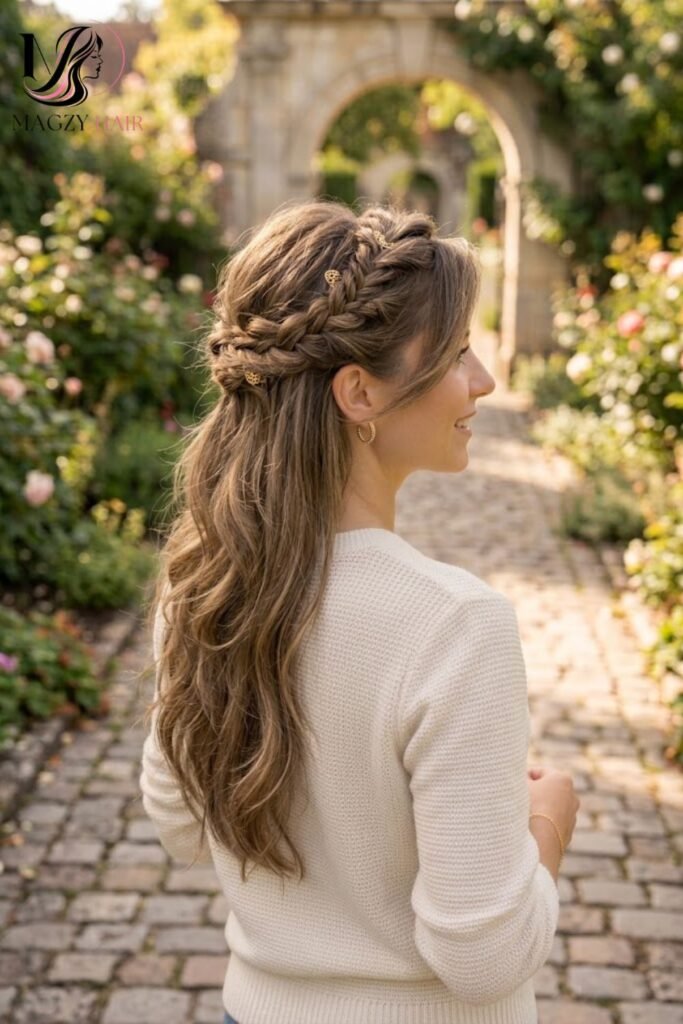
One genuine advantage of layered haircuts for long hair lies in how well they translate into half up styling, since the layers already provide movement and shape that a completely blunt, one length cut can sometimes lack when partially gathered up.
This particular styling approach works because the shorter, face framing layers remain visible and add softness around the face even while the top section is pulled back, creating a more finished, intentional look than gathering completely uniform, unlayered length would typically achieve on its own.
A helpful example: someone transitioning their layered long hair from a polished daytime look into a quick evening style might simply gather the top section up, letting the face framing layers fall naturally around the face, achieving a considerably more put together result than the same quick styling move would on non layered hair. This versatility showcases why layered haircuts for long hair remain so practical for varied daily schedules.
Using a claw clip rather than a tight elastic for this styling approach helps preserve the layers’ natural movement and volume, avoiding the flattening effect a tighter hair tie can sometimes create.
Long Layers for Special Occasion Updos
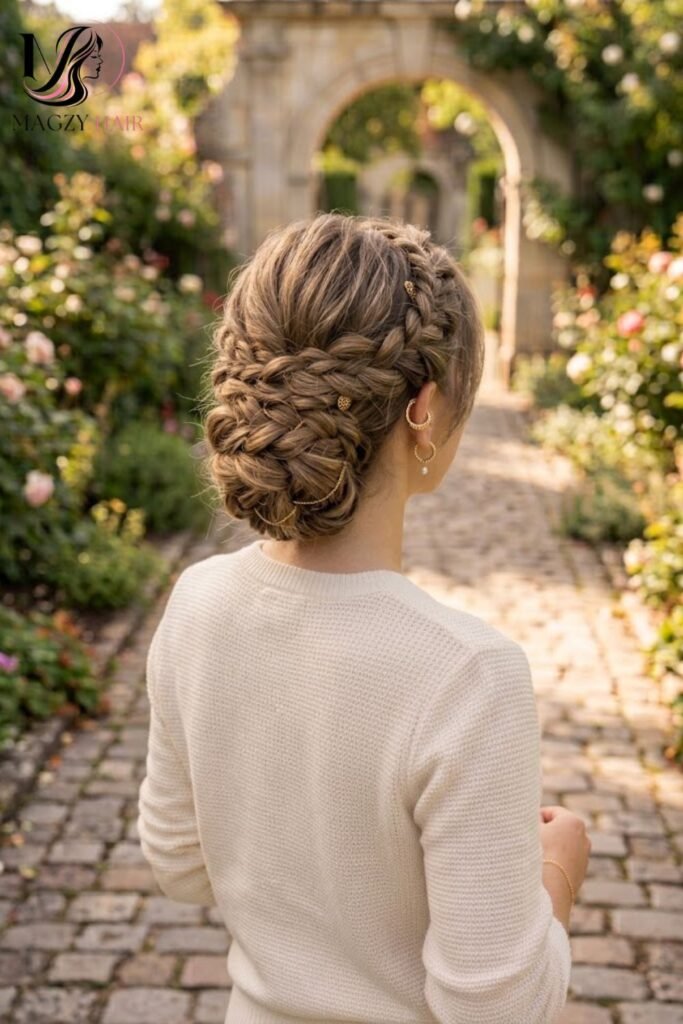
While layered haircuts for long hair often shine in their everyday, down styling, this cutting technique also offers genuine advantages for more elaborate special occasion updos, since the built in movement and texture layering provides gives an updo more visual interest than completely smooth, one length hair typically achieves once gathered.
Face framing layers specifically prove valuable for updo styling, since they can be left loose around the face even while the majority of the hair is pulled back and secured, softening what might otherwise be a more severe, fully pulled back silhouette.
A helpful example: someone preparing for a formal event with layered long hair might find their stylist can create a more textured, dimensional updo than would be possible with completely unlayered hair, since the varying lengths throughout the layered cut add genuine visual interest to the finished style. This advantage is worth mentioning specifically when discussing event styling for layered haircuts for long hair.
Adding loose, face framing pieces left out of the updo, taking advantage of the layers already there, offers an easy way to soften and elevate the overall formal styling result.
Choosing Layered Haircuts for Long Hair by Hair Texture
Hair texture significantly affects which specific layering technique will genuinely work best, a detail worth considering alongside any particular style you’re drawn to. Straight hair tends to showcase precise, structured layering, like a defined V cut or U cut, with particular clarity, since there’s no texture disrupting the clean lines these techniques depend on.
Wavy and curly hair, by contrast, generally benefits from softer, less rigidly structured layering, since natural texture already introduces movement that heavy, uncut length can sometimes flatten. A stylist experienced with textured hair typically adjusts layering intensity and placement specifically to work with, rather than against, natural curl or wave pattern.
A helpful example: someone with naturally curly hair who requests a precisely structured V cut, designed primarily for straight hair, might find the cut doesn’t translate as expected once curls fully form and settle into their natural shrinkage pattern. Discussing your specific texture honestly during the consultation helps ensure the final layered haircut for long hair suits your actual hair type rather than a technique better suited to a different texture entirely.
Fine hair, regardless of overall texture, generally benefits from more conservative layering that maintains weight at the ends, helping preserve the appearance of density that significant length can sometimes work against.
Common Mistakes to Avoid With Layered Haircuts for Long Hair
One of the most frequent mistakes is choosing a layering technique based purely on how it looks in a photo without discussing your own hair’s natural texture and behavior, since the same technique can produce dramatically different results depending on the hair it’s applied to. Honest communication with your stylist about your hair’s actual characteristics helps avoid this common disappointment.
Another common error involves neglecting to discuss color alongside cutting technique, missing the opportunity to have both elements work together cohesively rather than treating them as entirely separate decisions. Planning color placement with your specific layering pattern in mind produces more intentional, dimensional results.
Skipping regular trims is another frequently repeated mistake, since layered haircuts for long hair rely on maintained shape to look intentional, and growing hair softens defined layering more quickly than a simple, blunt cut would show similar wear.
Finally, assuming a single styling approach, always wearing hair the same way, means missing out on the genuine versatility layered haircuts for long hair actually offer, from sleek and straight to loose waves to elaborate updos.
The Future of Layered Haircuts for Long Hair
Layered haircuts for long hair continue to evolve alongside broader advances in personalized, consultation focused cutting approaches, with more stylists prioritizing detailed conversations about hair texture, density, and lifestyle before ever picking up shears, rather than applying a standardized technique regardless of individual differences.
There’s also a growing emphasis on pairing cutting technique with color placement intentionally, reflecting broader recognition that these two elements genuinely work best when planned together rather than treated as entirely separate services handled independently.
Product technology is advancing alongside this trend as well, with more brands developing formulations specifically suited to maintaining shine and movement in long, layered hair across varying textures and styling approaches.
Looking ahead, personalized digital consultation tools, including AI based cut simulation technology, are beginning to help people visualize how different layering techniques might specifically suit their hair texture and face shape before committing to a cut, reducing the historical guesswork involved in choosing the right approach.
Conclusion
Layered haircuts for long hair offer genuine versatility once you understand how technique, texture, and even color work together. From a soft U cut perimeter to layers paired with balayage, there’s an option here suited to nearly every hair type and personal style. The key is choosing an approach tailored specifically to your hair rather than a generic formula. Ready to try one of these layered haircuts for long hair Bring this guide to your next appointment and start the conversation with your stylist.
Ayesha Noor is the founder and lead writer behind Magzy Hair. With 4 years of experience researching hairstyles, hair care, and beauty trends, she enjoys helping readers discover styles that suit their unique personality and lifestyle.


